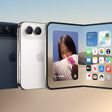

Apple's new iPhone lineup presents an unusual choice: Pay more for a folding display, or spend less on a phone with more advanced cameras and fewer hardware compromises.


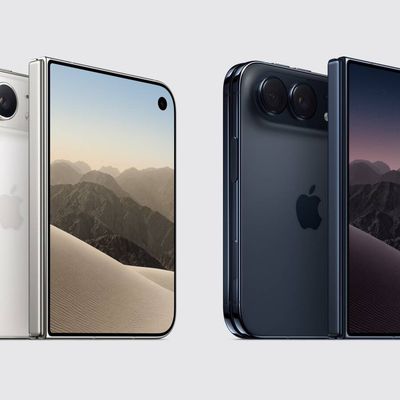
Alongside the iPhone 18 Pro and iPhone 18 Pro Max, which start at $1,199 and $1,299 respectively, Apple now offers the $1,999 iPhone Duo, its first foldable iPhone. All three feature the A20 Pro chip, but their different designs and capabilities make the decision more complicated than simply choosing a screen size.
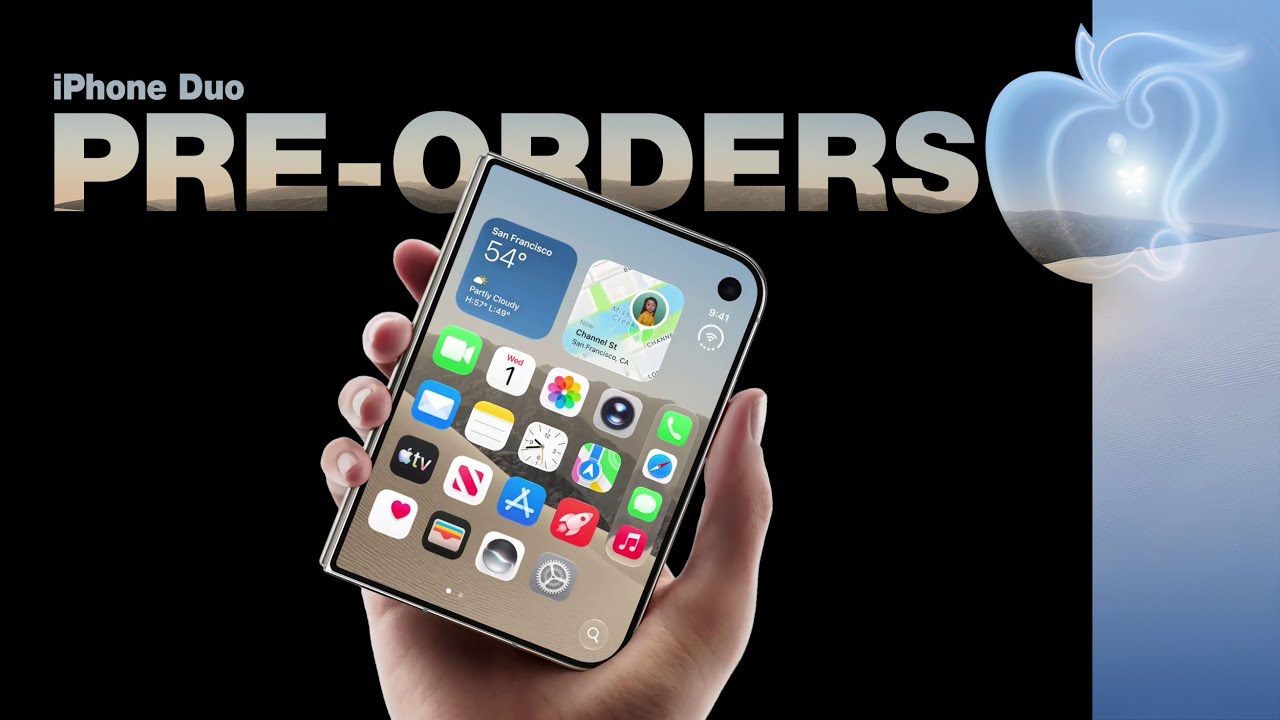
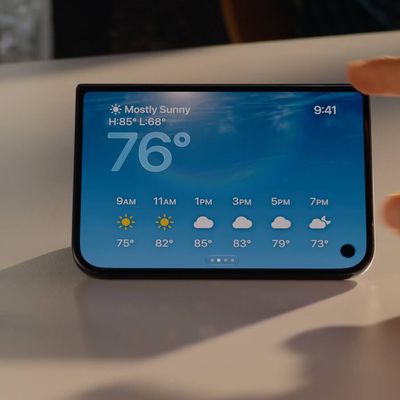
The iPhone Duo's $700 premium over the iPhone 18 Pro Max buys a 7.6-inch folding display, Split View multitasking with two apps side by side, and a design that can stand on its own for watching video and making FaceTime calls. It also supports StandBy without being connected to a charger. These capabilities, alongside the appeal of a radically new kind of iPhone, are its strongest reasons for consideration.
The Pro models offer a more versatile camera system, Face ID, the Action button, and substantially lower prices. Our guide helps to answer the question of how to decide which of these iPhones is best for you.
All three models still share a large amount of hardware. The shared features include:
- A20 Pro chip with a 6-core CPU, 7-core GPU with Neural Accelerators, dual 16-core Neural Engine, and hardware-accelerated ray tracing
- Apple C2 modem (except on the iPhone 18 Pro Max in the United States), N1 wireless networking chip, and the second-generation Ultra Wideband chip
- Super Retina XDR OLED displays with ProMotion up to 120Hz, Always-On display, Dynamic Island, and 3,000 nits of peak outdoor brightness
- Ceramic Shield 2 on the Pro models' front displays and the iPhone Duo's outer display, Ceramic Shield backs, and IP68 water and dust resistance to a maximum depth of 6 meters for up to 30 minutes
- Camera Control, a 48MP Fusion Ultra Wide camera at 13mm and f/2.2, Photographic Styles 3, Dual Capture, smart focus tracking, and 48MP macro photography
- iOS 27, Apple Intelligence, and Siri AI support, subject to feature, language, and regional availability
- Emergency SOS, Roadside Assistance, Messages, and Find My via satellite, plus Crash Detection
- USB-C with USB 3 speeds, MagSafe and Qi2 wireless charging up to 25W, and eSIM support
- 256GB, 512GB, 1TB, and 2TB storage options
The comparison below outlines the key differences between the Pro models and the iPhone Duo:
Display
| iPhone 18 Pro and iPhone 18 Pro Max | iPhone Duo |
|---|---|
| iPhone 18 Pro: 6.3-inch display iPhone 18 Pro Max: 6.9-inch display |
7.6-inch inner folding display and 5.4-inch outer display |
| iPhone 18 Pro: 2622-by-1206 resolution at 460 ppi iPhone 18 Pro Max: 2868-by-1320 resolution at 460 ppi |
Outer display: 1398-by-2034 resolution at 460 ppi Inner display: 1878-by-2670 resolution at 430 ppi |
| Approximately 2.17:1 aspect ratio (19.6:9) | Outer display: Approximately 1.45:1 Inner display: Approximately 1.42:1 |
| Rigid display without a folding crease | Folding inner display with a replaceable polymer cover layer and a crease that can be visible in certain lighting |
| Nano-texture finish and wide-angle OLEDs on the inner display | |
| Split View multitasking with two apps side by side | |
| Apple Pencil (USB-C) support coming later in 2026 |
Design and Build
| iPhone 18 Pro and iPhone 18 Pro Max | iPhone Duo |
|---|---|
| Aluminum unibody | Polished titanium frame with a 3D-printed hinge cover |
| Fixed body | Hinge supports partially open positions for watching video, taking photos, and making calls |
| Action button | |
| Face ID enabled by TrueDepth technology | Touch ID in the side button |
| Dual ambient light sensors | Four ambient light sensors |
| MagSafe accessory compatibility listed by Apple: cases, wallets, and wireless chargers | MagSafe accessory compatibility listed by Apple: cases and wireless chargers |
| eSIM-only in the United States; nano-SIM and eSIM in selected other markets, including the UK | eSIM-only worldwide |
| Black, Silver, Glacier, and Burgundy options | Night Sky and Star White options |
| Made with 40% recycled content, including 85% recycled aluminum in the enclosure, 100% recycled rare earth elements in all magnets, 80% recycled steel in the battery enclosure and vapor chamber chassis, and 100% recycled tungsten in the Taptic Engine | Made with 35% recycled content, including 100% recycled aluminum in the internal structural frame, 85% recycled titanium in the enclosure, and 100% recycled titanium in the 3D-printed hinge cover |
| 50% of manufacturing electricity sourced from renewable electricity | 60% of manufacturing electricity sourced from renewable electricity |
Dimensions and Weight
| iPhone 18 Pro | iPhone 18 Pro Max | iPhone Duo | |
|---|---|---|---|
| Height | 5.91 inches (150.0 mm) | 6.43 inches (163.4 mm) | 4.64 inches (117.8 mm), open or closed |
| Width | 2.83 inches (71.9 mm) | 3.07 inches (78.0 mm) | 3.31 inches (84.1 mm) closed 6.48 inches (164.6 mm) open |
| Depth | 0.34 inch (8.75 mm) | 0.34 inch (8.75 mm) | 0.44 inch (11.3 mm) closed 0.21 inch (5.2 mm) open |
| Weight | 7.44 ounces (211 grams) | 8.78 ounces (249 grams) | 8.96 ounces (254 grams) |
Rear Cameras
| iPhone 18 Pro and iPhone 18 Pro Max | iPhone Duo |
|---|---|
| 48MP Pro Fusion camera system | 48MP Dual Fusion camera system |
| 48MP Fusion Main camera: 24mm, second-generation sensor-shift optical image stabilization, and 100% Focus Pixels | 48MP Fusion Main camera: 26mm, sensor-shift optical image stabilization, and Hybrid Focus Pixels |
| Variable aperture on Main camera: f/1.48, f/1.8, f/2.8, and f/4.0 | Fixed f/1.6 aperture on Main camera |
| 12MP optical-quality 2x sensor crop at 48mm from the Main camera | 12MP optical-quality 2x sensor crop at 52mm from the Main camera |
| 48MP Fusion Telephoto camera: 100mm (4x), f/2.8, tetraprism, and 3D sensor-shift optical image stabilization and autofocus | |
| 12MP optical-quality 8x sensor crop at 200mm, f/2.8, from the Fusion Telephoto camera | |
| LiDAR scanner | |
| 0.5x, 1x, 2x, 4x, and 8x lens and optical-quality zoom options | 0.5x, 1x, and 2x lens and optical-quality zoom options |
| 8x optical-quality zoom in and 2x optical zoom out, for a 16x optical-quality zoom range | 2x optical-quality zoom in and 2x optical zoom out, for a 4x optical-quality zoom range |
| Digital zoom up to 40x for photos and up to 24x for video | Digital zoom up to 10x for photos and up to 6x for video |
| Adaptive True Tone flash | True Tone flash |
| Four studio-quality microphones | Microphone configuration not specified by Apple |
| Smart Take and Duo Preview |
Pro Capture Features and Formats
| iPhone 18 Pro and iPhone 18 Pro Max | iPhone Duo |
|---|---|
| Pro controls for lens aperture, shutter speed, white balance, and viewing histogram | Manual controls including white balance and focus |
| ProRAW | |
| Apple Reference Image, using the Fusion Main camera only; availability varies by region | |
| Spatial photos | |
| Spatial video recording at 1080p at 30 fps | |
| ProRes video recording up to 4K at 120 fps with external recording | |
| ProRes RAW video recording | |
| Apple Log 2 | |
| Academy Color Encoding System (ACES) | |
| Genlock with supported accessories | |
| Image formats captured: HEIF, JPEG, and DNG | Image formats captured: HEIF and JPEG |
| Video formats recorded: HEVC, H.264, ProRes, and ProRes RAW | Video formats recorded: HEVC and H.264 |
| Video playback formats listed by Apple include HEVC, H.264, AV1, and ProRes | Video playback formats listed by Apple include HEVC, H.264, and AV1 |
Front Cameras
| iPhone 18 Pro and iPhone 18 Pro Max | iPhone Duo |
|---|---|
| 18MP Center Stage front camera, f/1.9 | 12MP Center Stage outer camera, f/2.2 |
| Autofocus with Focus Pixels on the front camera | Outer front camera autofocus not specified by Apple |
| Front camera Pro controls, ProRAW, ProRes, ProRes RAW, Apple Log 2, and Academy Color Encoding System | |
| Kid Cue on the outer display | |
| Under-display FaceTime camera on the inner display, f/1.8, limited to 1080p video at 30 or 60 fps, without Night mode, portrait photography, or Photographic Styles | |
| Duo FaceTime | |
| Optical zoom with the rear camera in FaceTime | Zoom with the rear camera in FaceTime |
Battery and Charging
| iPhone 18 Pro and iPhone 18 Pro Max | iPhone Duo |
|---|---|
| Built-in rechargeable battery | Dual built-in rechargeable batteries |
| iPhone 18 Pro: Up to 24 hours typical use iPhone 18 Pro Max: Up to 30 hours typical use |
Up to 24 hours typical use |
| iPhone 18 Pro: Up to 36 hours video playback iPhone 18 Pro Max: Up to 45 hours video playback |
Up to 44 hours video playback using the outer display Up to 31 hours using the inner display |
| iPhone 18 Pro: Up to 33 hours streamed video playback iPhone 18 Pro Max: Up to 40 hours streamed video playback |
Up to 37 hours streamed video playback using the outer display Up to 26 hours using the inner display |
| Up to 50% charge in around 15 minutes | Up to 50% charge in around 20 minutes |
The figures above are Apple's U.S. battery ratings. These wired fast-charging figures require a compatible 60W-capable adapter or higher, sold separately.
Price
| iPhone 18 Pro | iPhone 18 Pro Max | iPhone Duo | |
|---|---|---|---|
| 256GB | $1,199 | $1,299 | $1,999 |
| 512GB | $1,399 | $1,499 | $2,199 |
| 1TB | $1,799 | $1,899 | $2,599 |
| 2TB | $2,399 | $2,499 | $3,199 |
For many buyers, the iPhone 18 Pro or iPhone 18 Pro Max is the better choice. They offer the same A20 Pro chip as the iPhone Duo, a more versatile camera system, and a substantially lower price. Choose the Pro if you prefer a smaller, lighter phone, or pay $100 more for the Pro Max if you want a larger screen and longer battery life.
The camera system is the clearest reason to choose a Pro model. Its variable aperture adjusts automatically during everyday photography, while also giving photographers greater control over depth of field. The dedicated Telephoto camera provides much more flexibility for distant subjects, from performances and sporting events to travel photography. These advantages matter even if you never use professional capture formats.
Buyers who rely on ProRAW, ProRes, Apple Log 2, or the Pro models' full manual-control suite have an even stronger reason to choose an iPhone 18 Pro. While the iPhone Duo does offer some manual camera controls, its selection of tools and formats is much more limited.
The iPhone Duo is worth considering if you would regularly unfold it for reading, documents, viewing photos, watching video, or using two apps side by side. Think through a typical day and identify your specific tasks that would benefit from the inner display, such as keeping a reference document open while writing an email. Apple Pencil support could also make it useful for handwritten notes and annotations, but that support is coming later in 2026.
Being able to prop the phone up for a call or video, give someone a live preview while photographing them, or use StandBy away from a charger may be useful throughout the day. Buyers who want to experience Apple's first foldable may also value the novelty and flexibility of the design, even without a specific productivity need.
You still need to be comfortable with the changes to everyday features. Touch ID replaces Face ID, and there is no Action button for a customizable shortcut. The outer front camera has a lower resolution than the Pro models' camera, while the inner camera is designed around FaceTime and lacks several photography features. If selfies or front-camera video are important to you, those differences deserve consideration alongside the rear cameras.
Try to assess the iPhone Duo when it is closed as well as open. Despite its smaller outer display, it is wider and thicker than either Pro model and slightly heavier than the iPhone 18 Pro Max. Handling it in person in an Apple Store should help establish whether its width, folded thickness, and weight suit the way you normally carry and use your phone.
Battery life also depends on how you use the two displays. Apple's U.S. figures put the iPhone Duo level with the smaller Pro for typical use, below the Pro Max. Its long outer-display video playback rating does not carry over to the inner display, so buyers planning to spend much of the day unfolded should pay particular attention to those separate figures.
The price gap remains significant at every storage tier. A 1TB iPhone 18 Pro Max costs $100 less than the entry-level iPhone Duo, which has 256GB of storage. At the same capacity, the iPhone Duo costs $700 more than the Pro Max or $800 more than the Pro. Buyers who need substantial local storage therefore have another reason to favor a Pro model.
The premium can also extend to repairs and coverage. In the United States, Apple's estimated inner-display repair fee is $999 without AppleCare+, compared with $329 for the iPhone 18 Pro's display and $379 for the Pro Max's. Battery service costs $229, compared with $129 for either Pro model. A separate replacement of the inner display's cover layer is listed at $49 without coverage or $19 with AppleCare+.
Standalone AppleCare+ with Theft and Loss also costs more for the iPhone Duo, at $19.99 per month in the United States rather than $14.99 for either Pro model. Buyers planning to insure their phone should include that recurring difference when comparing ownership costs.
Choose the iPhone Duo if its inner display would meaningfully improve the things you do on your phone, or if experiencing Apple's latest radical rethink of the iPhone is itself worth the premium and compromises to you. If you expect to spend most of your time on the outer display, the Pro models are easier to justify: You would otherwise be paying substantially more while making limited use of the feature that most distinguishes the iPhone Duo.
The iPhone 18 Pro and iPhone 18 Pro Max are available now. iPhone Duo pre-orders begin at 5 a.m. Pacific Time on October 16, ahead of launch on October 23.

/https://forums.macrumors.com/attachments/2664917/)