Satechi today announced the launch of its latest Apple accessory, a USB-C Stand & Hub for the Mac mini with SSD Enclosure, which is designed to combine the functionality of a stand with the additional ports in a hub.
According to Satechi, the Mac mini Stand & Hub was designed to optimize the M1 Mac mini. It connects to a Mac mini over USB-C and adds three USB-A data ports, micro/SD card readers, and a 3.5mm headphone jack, plus it supports an SSD for additional storage.
As with most Satechi accessories, the Mac mini Stand & Hub is made from a brushed silver aluminum alloy to match the color and design of the Mac mini. It is sized to the Mac mini, so it looks like a natural add-on to Apple's smallest desktop computer.
The Type-C Stand & Hub for Mac Mini with SSD Enclosure is available from Amazon or from the Satechi website for $99.99, with a 15 percent discount available when using the code MACMINISSD at checkout.
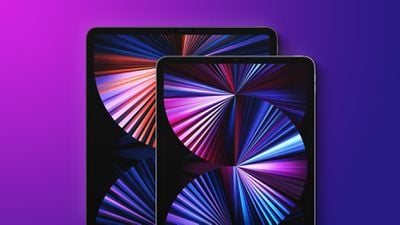
Apple plans to release a 10.8-inch iPad with an OLED display next year, followed by the company's second iPad with an OLED display in 2023, according to a new report from The Elec.
The Elec, which has a mixed track record on reporting on Apple's plans, claims that the iPad being planned for release next year will feature a 10.8-inch screen size, likely hinting it may be the 5th generation iPad Air. According to the report, the iPad will use a rigid OLED display panel that "stacks organic material and inorganic material in alternative layers to protect the organic material from water and oxygen."
Looking out to 2023, Apple is reportedly planning multiple iPads with an OLED display that will use flexible OLED display panels rather than rigid OLED. For the 2023 iPads, the company may also implement LTPO technology which enables ProMotion 120Hz refresh rate, a feature currently exclusive to the iPad Pro.
For the iPads launching in 2023, Cupertino could use flexible OLED over rigid OLED. It could also change the TFT from LTPS to low-temperature polycrystalline oxide (LTPO). The RGB emission layer could also be the "tandem" structure where two layers of them are stacked together.
Today's report, outlining a 10.86-inch screen size, likely means it will be an updated iPad Air. Apple last updated the iPad Air this past fall with an updated all-screen design and the company's flagship A14 Bionic processor. Apple analyst Ming-Chi Kuo also previously reported that an updated iPad Air in 2022 will adopt OLED displays, while mini-LED, just launched this past April in the iPad Pro, will remain exclusive to the high-end iPad.
Ahead of what is expected to be a busy fall season with multiple new product launches, Apple is enlisting additional suppliers of mmWave antennas for the iPhone 13, according to a new report from DigiTimes.
5G mmWave technology debuted in the iPhone 12, and compared to traditional sub-6Ghz, mmWave offers significantly faster speeds but is limited in distance. Currently, mmWave iPhone 12 models are only available in the United States, but this fall, Apple is planning a larger expansion of mmWave iPhones to more countries worldwide.
mmWave technology has increased in adoption in cities; however, with the iPhone 13 expanding the technology to more customers, it may push countries to adopt mmWave infrastructure faster. DigiTimes reports that Apple is planning to boost the ratio of 5G mmWave iPhones to as many as to 60% of its 2021 iPhone lineup, with shipments reaching 90 million units.
Apple is expected to sharply boost the ratio of 5G mmWave devices to 60% of its new iPhone lineup in 2021, with such models estimated to approach 90 million units, the sources said, adding that each mmWave iPhone will require four AiP modules, significantly driving up demand for AiP substrates.
The iPhone 13, expected to be announced between September and October, is rumored to include other significant features such as an improved display, improved cameras, and faster performance. Learn more about everything we're expecting using our guide.
Apple customers in mainland China can now pick up online orders from their local Apple retail store, following the company's decision to offer the option at online store checkout for the first time.
Apple's new delivery and pickup page in China (translated)
In-store pickup has been available for some time now in most countries and has become a popular choice for many Apple customers ordering products online in situations where it would be more convenient or quicker than waiting for home delivery. The service has also allowed Apple to limit footfall in its retail stores, with many customers doing their product browsing via the website instead.
Shoppers can opt to pickup at their local Apple store and receive a notification when their products arrive, and this service has now been extended to China, albeit with one exception.
As noted by 9to5Mac, anyone choosing in-store pickup in China will need to bring proof of ID to show that they personally made the order, whereas in other countries it's possible to designate someone else to collect the order for you.
Apple is not backing down on its plan to return to three days of in-person work a week starting in September, despite employees complaining about the new change.
Earlier this month, Apple CEO Tim Cookpenned an internal letter to employees outlining the company's plan to return to in-person work three days a week in September. Apple, due to the global health crisis, has largely been working remotely over the past year, but companies are now starting to return to in-person work.
Following Cook's letter to staff, a group of Apple employees responded to the CEO with a letter of their own, complaining about the change. In their letter, employees said that without the flexibility of choosing between remote and in-person work, they feel they have to choose between "either a combination of our families, our well-being, and being empowered to do our best work, or being a part of Apple."
Apple has now responded to the complaints. In a video sent to staff, seen by The Verge, Apple's senior vice president of retail and people, Deirdre O'Brien, said that in-person work is "essential" to Apple products and company culture, and that it is key for product launches and development.
“We believe that in-person collaboration is essential to our culture and our future,” said Deirdre O'Brien, senior vice president of retail and people, in a video recording viewed by The Verge. “If we take a moment to reflect on our unbelievable product launches this past year, the products and the launch execution were built upon the base of years of work that we did when we were all together in-person.”
Apple is, however, going to offer some employees the flexibility of remote work. According to The Verge, employees will be allowed to work remotely, but that approval is "on a case-by-case basis with any new remote positions requiring executive approval."
Apple plans to release its second-generation AirPods Pro next year, according to well-respected Apple analyst Ming-Chi Kuo.
In his latest investor note, obtained by MacRumors, Kuo says that demand for AirPods is thought to be "lower-than-expected" for the remainder of this year, revising his forecast to 70-75 million, compared to 75-85 million. According to Kuo, the release of the second-generation AirPods Pro next year will boost shipments to more than 100 million.
Bloombergreported last month that Apple's second-generation AirPods Pro will include "updated motion sensors with a focus on fitness tracking." Apple is reportedly exploring the possibility of using a design similar to the recently launched Beats Studio Buds for the new AirPods Pro, which would eliminate the stem.
T-Mobile has made it easier than ever for iPhone owners contemplating a carrier switch to test out its network, adding eSIM support to its existing Test Drive Program.
As noted by Light Reading (via The Verge), those who have an iPhone that supports eSIM can download the T-Mobile Network Test Drive app to try out the T-Mobile network, a feature that T-Mobile rolled out last week.
T-Mobile says that the T-Mobile Network Test Drive gives customers up to 30 days or 30GB of high-speed data along with unlimited talk and text for free, while maintaining their current phone number and carrier.
To facilitate this, T-Mobile provides a temporary number that can be used for calls and texts if so desired, though by default, a customer's primary number with an existing network provider will be used for calls and texts.
The Network Test Drive app works with the iPhone XS and newer, as eSIM capabilities are required to use it. The iPhone used for the test must be unlocked, it must be on iOS 14.5 or higher, and an eSIM cannot be in use for a customer's existing provider.
Those who want to sign up can download the T-Mobile Network Test Drive app from the App Store, following the installation and activation instructions from there.
T-Mobile has long offered a Test Drive service to allow customers to try its data network before committing, but prior to the introduction of the eSIM (and for those without eSIM functionality), T-Mobile mailed out hotspot devices.
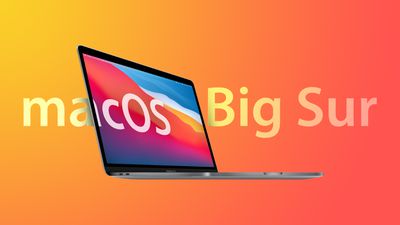
Apple today seeded the fourth beta of an upcoming macOS Big Sur 11.5 update to developers for testing purposes, with the new beta coming two weeks after the release of the third macOS Big Sur 11.5 beta.
Developers can download the macOS Big Sur 11.5 beta using the Software Update mechanism in System Preferences after installing the proper profile from the Apple Developer Center.
macOS Big Sur 11.5 may be a more minor update focusing on under-the-hood performance improvements and bug fixes for issues that weren't able to be addressed in the macOS Big Sur 11.4 update. No new features were found in the first three betas.
Apple today seeded the fourth betas of new iOS and iPadOS 14.7 updates to developers for testing purposes, two weeks after seeding the third iOS and iPadOS 14.7 updates.
iOS and iPadOS 14.7 can be downloaded through the Apple Developer Center or over the air after the proper profile has been installed on an iPhone or iPad.
The new iOS and iPadOS 14.7 updates may be focused on under-the-hood bug performance improvements and bug fixes for issues that weren't able to be addressed in iOS 14.6, but a few minor features have been found.
Apple in iOS 14.7 will expand the Air Quality Index feature to additional countries that include the Netherlands, France, Italy, Spain, and Canada.
When paired with the accompanying HomePod 14.7 software, iOS 14.7 will allow the Home app to set multiple timers on a HomePod or a HomePod mini.
Apple today seeded the fourth beta of an upcoming watchOS 7.6 update to developers for testing purposes, with the new beta coming two weeks after the release of the third beta.
To install the watchOS 7.6 beta, developers need to download the proper configuration profile from the Apple Developer Center. Once the profile is in place, the watchOS beta can be downloaded through the dedicated Apple Watch app on the iPhone by going to General > Software Update.
To update to the new software, the Apple Watch needs to have 50 percent battery life, it must be placed on the charger, and it must be in range of the iPhone.
We don't know what's included in the watchOS 7.6 update, and no new features were discovered in the first three betas.
Apple today seeded the fourth beta of an upcoming tvOS 14.7 update to developers for testing purposes, with the new beta coming two weeks after Apple seeded the third tvOS 14.7 beta.
Designed for the fourth and fifth-generation Apple TV models, the tvOS 14.7 developer beta can be downloaded onto the Apple TV via a profile that's installed using Xcode.
Other than new releases, tvOS updates are often minor in scale, focusing on under-the-hood bug fixes and improvements rather than major outward-facing changes. There's no word yet on what's included in tvOS 14.7 update, but we'll update this article should anything new be found.
Though we don't often know what's new in tvOS during the beta testing process, we let MacRumors readers know when new updates are available so those who are developers can download it upon release.
Apple has dramatically increased the amount of iCloud user data it stores on Google Cloud, according to The Information.
The report claims Apple now has over eight million terabytes of data stored on Google's servers. As of mid-May, Apple was reportedly on track to spend around $300 million on Google cloud storage services this year, which would represent an increase of roughly 50% from all of 2020. Apple is said to be the largest corporate client for Google Cloud, dwarfing other high-profile customers like Spotify.
Google Cloud staffers have apparently even given Apple an internal code name that hints at its size as a customer: "Bigfoot."
Apple relies on a combination of its own data centers and third-party cloud storage services, such as Google Cloud and Amazon Web Services, to store iCloud user data like photos and messages. Apple does not provide third-party cloud storage providers with the keys to decrypt user data stored on their servers, ensuring a strong level of security.
The report speculates that Apple's increased use of Google Cloud suggests the company's rising cloud storage requirements have outpaced its ability to develop and operate its own data centers needed to handle the resulting data.
New MacBooks and AirPods are still on course for launch later this year, according to Taiwanese website Economic Daily News.
Apple suppliers are reportedly hurrying to increase capacity in preparation for the release of new MacBooks and AirPods in the second half of this year. Shipment momentum is expected to be "significantly stronger" from the third quarter of the year at the earliest, improving order fulfillment.
Shin Zu Shing supplies bearings to Apple for MacBooks, AirPods charging cases, and AirPods Max headbands, and is currently believed to be cooperating with Apple to supply bearings for new MacBook and AirPods products. The supplier is said to be struggling to meet demand and is in the process of hiring more manpower to expand production capacity.
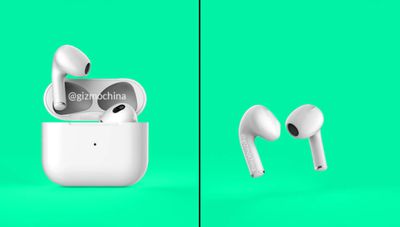
While the report did not state which MacBooks and AirPods are expected to be released, it is highly likely that it refers to redesigned MacBook Pro models featuring Apple Silicon and third-generation AirPods.
The second half of 2021 timeframe lines up with a range of other reports about the redesigned MacBook Pro models. Reliable Bloomberg journalist Mark Gurman said that new MacBook Pro models could launch as soon as this summer, but analyst Ming Chi-Kuo, Nikkei Asia, and TrendForce have given a broader prediction that new MacBook Pro models will arrive in the second half of 2021.
Similarly, Bloomberg and DigiTimes have claimed that third-generation AirPods will arrive later this year, following a spate of rumors about the new earbuds.
Both upgraded devices were rumored to launch earlier this year but have yet to emerge. Other reports have explained this confusion around Apple rescheduling mass-production from May to June to the second half of the year amid shortages and technical issues.
Economic Daily News indicated that there was a shortage of components not related to bearings and Apple ordered an "inventory adjustment" earlier this year, which may suggest that the launch date of updated MacBooks and AirPods was pushed back to later in 2021 by Apple due to shortages. Through the second half of the year, even if the bearing component itself is not subject to shortages, its shipment momentum may still be constrained by the supply of other components for the devices but will improve month by month, according to the report.
The new MacBooks are expected to push MacBook shipments to 23 million units this year for an annual increase of 15 percent. While AirPods shipments are expected to decrease around 25 to 30 percent in the first half of 2021, the launch of an updated model may boost annual sales by 10 to 15 percent in the second half of 2021.
Woot today is offering certified refurbished iPhone 12 models at up to 33 percent off their original prices. This sale will last through tomorrow, June 30 at 12:00 a.m. central time.
Note: MacRumors is an affiliate partner with Woot. When you click a link and make a purchase, we may receive a small payment, which helps us keep the site running.


To start, you can save on a refurbished 64GB iPhone 12 mini, priced at $599.99, down from $729.00. This iPhone is available in Black, White, Blue, Green, and (PRODUCT)Red.
Both iPhone 12 models on sale today at Woot have been inspected and are guaranteed to have minimal cosmetic damage. They've successfully passed a full diagnostic test to ensure like-new functionality and batteries are tested to function at minimum 85 percent capacity.
They're also both factory unlocked devices, and they come with a 90 Day Woot Limited Warranty, not AppleCare. All Amazon Prime members can get free standard shipping on Woot, and right now there's an estimated delivery between July 7 and 9 for the iPhone 12 devices.
Head to our full Deals Roundup to get caught up with all of the latest deals and discounts that we've been tracking over the past week.
Apple today announced a new set of Apple Watch Sport Loop bands with colors representative of 22 countries around the world, alongside custom Apple Watch faces for each of those countries.
The full list of the countries represented within Apple's new "Limited Edition International Collection" can be found below:
Australia
Belgium
Brazil
Canada
China
Denmark
France
Germany
Great Britain
Greece
Italy
Jamaica
Japan
Mexico
Netherlands
New Zealand
Russia
South Africa
South Korea
Spain
Sweden
United States
All of the bands retail for $49.99, each with the normal "soft, breathable, and lightweight" design of the Apple Watch Sport Loop band. Each band is also accompanied by a custom Stripes Apple Watch face with the colors of the country's flag. The new bands are available for purchase and order on Apple's website starting today.
The matching watch faces can be downloaded using an App Clip code on the band packaging, but they're also available right now on Apple's website. To add any of the 22 watch faces, head to the Apple Watch page on Apple's site using the iPhone paired with your Apple Watch, scroll down to the "International Collection" featured section, and tap on "See the countries." From there, you'll be able to view details on each band and face combination and install any of the watch faces.
A new Sensor Tower report claims Apple's App Store generated $41.5 billion revenue globally in the first half of 2021, representing 22.1% growth compared to the same period last year.
The app market research firm says consumer spending on in-app purchases, subscriptions, premium apps and games in the App Store was 1.8 times the revenue generated by Google's Play Store, which generated $23.4 billion over the same period.
Despite App Store spending, however, Google Play is projected to enjoy stronger year-on-year growth overall because of activity in markets still feeling the impact of the global health crisis.
In the first half of 2021, the App Store has grown 22.1 percent from about $34 billion in the H1 2020, a little more than seven percentage points lower than the 29.3 percent growth experienced during 1H20 due to accelerated spending during the onset of the COVID-19 pandemic.
Google Play's revenue in H1 2021 has grown 30 percent from $18 billion in 1H20, over four percentage points higher than the 26.8 percent growth experienced last year when compared to the same period in 2019. The outsized Y/Y revenue growth on Google's marketplace is being driven by markets such as the Philippines, where COVID-19 has resulted in continuing business closures and quarantines.
TikTok maintained its dominance in the top grossing mobile apps worldwide for the first half of 2021. Consumers are believed to have spent more than $920 million on TikTok in the period, up 74% when compared to the year-ago period.
Meanwhile, YouTube held onto its spot as the second highest-grossing non-game app, with an estimated consumer spend of $564.7 million. Tinder ranked third with an estimated revenue of approximately $520.3 million, while Japanese comic reader Piccoma and Disney's streaming platform Disney+ sat in fourth and fifth place, respectively.
An estimated 72.5 billion app downloads took place globally across both stores in 1H21, up 1.7% from 71.3 billion during the year-ago period. That figure pales in comparison to the 25.7% year-on-year growth experienced by app adoption last year when compared to the first half of 2019.
Global app spending reached almost $65 billion across iOS and Android in the same period, with the vast majority of money spent on games, which accounted for approximately $26 billion of the estimated $41.5 billion generated by Apple.
Apple is facing several threats to its highly lucrative App Store model, which has come in for criticism from some developers and antitrust bodies for its commission rate policy and alleged anticompetitive practices, including the pre-installation of Apple's apps on its own devices.
U.S. House lawmakers this month debuted sweeping bipartisan antitrust legislation in the form of six different bills aimed at major tech companies like Apple, Amazon, Facebook, and Google. The legislation targets the companies' market power in the areas of online commerce, advertising, media, and entertainment. One piece of legislation in particular, the non-discrimination bill, would prevent Apple from blocking users from deleting pre-installed apps.
More dummy models of the upcoming iPhone 13 have been shared online, this time by leaker DuanRui, indicating the new diagonal dual-camera layout on the standard-size iPhone 13 and the slightly smaller notch on the front of the iPhone 13 series.
The models mirror previous dummies and schematics covered here on MacRumors that have indicated the new camera arrangement coming to the iPhone 13 and iPhone 13 Mini, as well as a thicker overall design and a larger camera bump on the iPhone 13 Pro, which brings it in lockstep with the bump size expected on the iPhone 13 Pro Max.
This year, Apple is expected to make several notable camera improvements in the iPhone 13. The new "Pro" models are likely to feature an upgraded Ultra Wide camera lens with a wider f/1.8 aperture, a six-element lens, and autofocus, with some rumors suggesting that the Ultra Wide upgrade could come to all four iPhone 13 models.
Sensor-shift stabilization is expected to be expanded across the entire iPhone lineup, introducing improvements in low light performance and stabilization by reducing camera shake, with the feature rumored to be available for the Wide lens and the Ultra Wide lens of the Pro models. One rumor claims the new iPhone models will also be able to take Portrait Mode videos.
In addition, there are also claims that the iPhone 13 models will have astrophotography camera capabilities for capturing the sky. This could involve a special mode that activates when the iPhone is pointed at the sky, allowing the device to detect the moon, stars, and other artifacts and adjust exposure.
If the rumors are accurate, all of these improvements are likely to require a slightly larger camera bump, although individual lenses may protrude less from the device's body, according to one source.
Apple's iPhone 13 lineup will be unveiled in the fall of 2021, with the company aiming to return to its traditional September launch timeframe following last year's later-than-usual iPhone 12 launch.
Pixelmator Pro 2.1 Coral got its public release today. The latest major update to Pixelmator Pro adds a number of notable new features, including the ability to improve the composition of photos with machine learning, a new Quick Fill feature, improved painting tools, and more.
Powered by Core ML, the new ML Crop feature lets users automatically crop photos with a single click. According to the developers, the machine learning algorithm powering this feature has been trained to crop photos in a way that makes them more striking and eye-catching, making it a useful way to get a different perspective on cropping photos.
With ML Crop turned on, hovering over different aspects ratio presets will preview them with ML Crop's suggestions, which are generated by on-device processing to ensure high performance and privacy. In addition, the Crop tool has been redesigned to include perspective correction, crop overlays, and more.
Meanwhile, the new Quick Fill feature lets users change the look of objects in compositions via simple drag and drop. Just drag a color from the new color well in the Pixelmator Pro toolbar and drop it onto any object in your image to change its color. The Quick Fill feature works with every layer type in Pixelmator Pro, including images, shapes, and text layers.
Elsewhere, thanks to the new Stroke with Brush feature, users can now paint brush strokes along paths and around layers with ease. Customizing the look of a brush causes a live preview of its stroke to appear right on the canvas. Brush strokes can be painted around image, shape, and text layers, as well as along vector paths
A new text size slider also means there are now five different ways to change the size of text, while the update also brings advanced paragraph spacing options and the ability to adjust paragraph indents.
The update lands while Pixelmator Pro is still on sale for $19.99, offering customers 50% off the usual $39.99 price, although the sale ends on July 6th. Pixelmator Pro 2.1 Coral is a Universal app, so it runs natively on both M1 and Intel-based Macs. Updates to the image editing app are free for existing users of Pixelmator Pro, which can be downloaded directly from the Mac App Store.