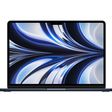
Apple is sending surveys to select owners of the now-discontinued 2015 12-inch MacBook, asking them about their opinion on the laptop's size, feature set, and more.
Apple announced the 12-inch MacBook in 2015 as a super-light and thin laptop aimed at customers needing an ultra-portable notebook. The 12-inch MacBook featured a fanless design, an Intel processor and was the first Mac to feature the butterfly keyboard. The laptop started at $1299.
The 12-inch form factor was considerably popular, as customers enjoyed its thin and light design. Apple updated the MacBook in 2016 and 2017 but discontinued it in 2019 following the launch of the redesigned MacBook Air with Retina Display.
The survey sent out to select customers of the 12-inch MacBook was rather generic. It consisted of simple questions asking customers for their opinion on the laptop's size, features, and what they would change about it.
Although, given the survey, Apple may be beginning to realize the market that exists for ultra-thin and portable laptops and could be contemplating working on a Mac notebook tailored for that market demographic. Alternatively, Apple may feel there's no need for a 12-inch MacBook given its current 11-inch and 12.9-inch iPad Pro offerings with an added Magic Keyboard accessory.
A report last year suggested that an updated 12-inch MacBook would be one of the first Mac laptops to be announced featuring an Apple silicon chip. That did not come true, and Apple instead updated its 13-inch MacBook Air and MacBook Pro.
Update: According to MacRumors readers, Apple is sending surveys about other Macs as well, including the iMac and the 13-inch MacBook Pro. Questions are similar with the MacBook Pro owner asked about ports, screen size, and more.
Apple and Netflix are among the bidders for an "Oscar bait" film starring Jennifer Lawrence as the late Hollywood talent agent Sue Mengers, according to Variety. Bidding for the film has reportedly surpassed $80 million and could climb higher.
Mengers was a prominent Hollywood "superagent" from the 1960s through the 1980s, representing some big names in acting like Barbra Streisand and Burt Reynolds. She was known for her outsized personality while trying to secure the best deal possible for her A-list clients. The film adaptation of her life is directed by Paolo Sorrentino, who won an Academy Award for Italian film "The Great Beauty" in 2014.
Lawrence is best known for playing Katniss Everdeen in the "The Hunger Games" film series and Mystique in the "X-Men" film series, as well as starring in films like "Winter's Bone" and "American Hustle." Lawrence is also set to star alongside Leonardo DiCaprio in the upcoming Netflix film "Don't Look Up," which will tell the story of two low-level astronomers who must go on a media tour to warn mankind of an approaching comet that will destroy Earth.
Apple TV+ is in the midst of securing several star-studded original films, with the streaming service set to gain slavery thriller "Emancipation" starring Will Smith and the high-profile Western crime drama film "Killers of the Flower Moon" starring Leonardo DiCaprio, Robert DeNiro, Brendan Fraser, and several other big names.
Apple appears to be planning to release at least one more update to the iOS 14 operating system ahead of the launch of iOS 15, according to code spotted in Xcode.
There are mentions of all of the released versions of iOS 14 in Xcode, along with a mention of iOS 14.8, which suggests that the new update could be coming in the near future, either ahead of or alongside iOS 15.
MacRumors has also spotted iOS 14.8 in its analytics, which appears to confirm Apple's work on the new version of iOS 14.
Apple typically stops working on prior iOS updates when the launch of new versions of iOS approach in the late summer and fall, so it is unusual to get a 14.8 update. When new iOS updates are coming, Apple drops its work on the current version and it usually only gets critical security updates.
Apple has, in fact, never released a .8 update for the iOS operating system. iOS 11 stopped at iOS 11.4, iOS 12 stopped at iOS 12.5, and iOS 13 stopped at iOS 13.7.
The release schedule may be different this year because Apple plans to offer users a choice between iOS 14 and iOS 15. Apple will allow iPhone and iPad users to remain on iOS 14 and iPadOS 14 even after the launch of the new iOS and iPadOS 15 updates.
iOS now offers a choice between two software update versions in the Settings app. You can update to the latest version of iOS 15 as soon as it's released for the latest features and most complete set of security updates. Or continue on iOS 14 and still get important security updates until you're ready to upgrade to the next major version.
Though this may be aimed at those who are unable to update their devices right away because of restrictions or requirements implemented by work organizations and schools, it will also be appreciated for those who are unwilling to upgrade to iOS 15 after Apple's recent Child Safety feature announcement.
It is not yet clear what will be included in the iOS 14.8 update. It may focus on bug fixes, performance improvements, and other optimizations rather than major new features given Apple's focus on iOS 15.
Amazon today has a new all-time low price on the 32GB Apple TV HD that comes bundled with the new Siri Remote, priced at $129.98, down from $149.00. This beats Amazon's previous sale by about $15, and is the best price around online today.
Note: MacRumors is an affiliate partner with some of these vendors. When you click a link and make a purchase, we may receive a small payment, which helps us keep the site running.

This version is the same fourth generation Apple TV HD device that was released in 2015, but now it's bundled with the revamped Siri Remote. The new accessory features a one-piece aluminum body, tactile clickpad with five-way navigtation, and rearranged buttons.
For the newer model, you can also save on the 2021 32GB Apple TV 4K, priced at $169.00, down from $179.00. Likewise, the 64GB Apple TV 4K is on sale for $189.98, down from $199.00. Similar to the HD model, Amazon's prices on the Apple TV 4K devices represent the best prices you'll find online this week.
Our full Deals Roundup has more information on the latest Apple-related sales and bargains.
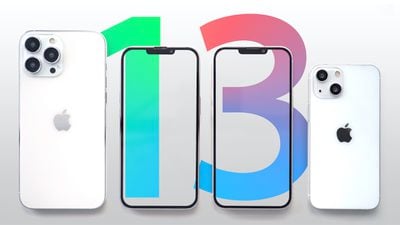
As many as 44 percent of iPhone users intend to upgrade to an iPhone 13 model and displays with 120Hz refresh rates is the most anticipated new feature, according to a new survey by SellCell.
Of the 44 percent of respondents that intend to upgrade to an iPhone 13 model, 38.2 percent intend to buy the 6.1-inch iPhone 13, 30.8 percent intend to buy the 6.7-inch iPhone 13 Pro Max, and 24 percent intend to buy the 6.1-inch iPhone 13 Pro.
Strikingly, a mere seven percent of respondents are interested in the iPhone 13 mini. Apple is expected to discontinue the 5.4-inch mini form factor model next year due to poor sales.
The rumored feature that customers are most excited for in the iPhone 13 lineup is a high-refresh rate 120Hz display, according to 22 percent of survey respondents. 18.2 percent of respondents are hoping for under-display Touch ID, but may be disappointed as this is not expected to come to new iPhone models until 2023. 16 percent are anticipating an always-on display, while 10.9 percent are excited about the prospect of a smaller notch.
The responses also indicated that customers are least excited for new color options, a faster processor, reverse wireless charging, and Wi-Fi 6E connectivity, with these potential features being favored in less than five percent of survey responses.
Some of Apple's other upcoming products, such as the Apple Watch Series 7 and third-generation AirPods aroused little interest from survey respondents. 72.7 percent of respondents said that they were not interested in buying the Apple Watch Series 7 and 87.1 percent of respondents said that they were not interested in buying third-generation AirPods.
Compared to the high level of interest in upgrading to the iPhone 13, the Apple Watch Series 7 and third-generation AirPods appear to be significantly less enticing to potential customers.
SellCell's findings were based on survey responses from more than 3,000 iPhone owners aged 18 or older, based in the United States, between July 28 and August 6.
Verizon is offering a wide selection of discounts on iPhones, Apple Watches, and select accessories at notable discounts this week, as part of its overall back to school sale event.
Note: MacRumors is an affiliate partner with Verizon. When you click a link and make a purchase, we may receive a small payment, which helps us keep the site running.

Starting with an older model iPhone, you can get the 64GB iPhone 11 at no cost with an eligible Unlimited plan and a new line of service. The iPhone 11 is available in six colors at this price, including Purple, Black, Green, White, Yellow, and Red.
If you'd prefer the latest models, Verizon's back to school sale is offering up to $800 off select smartphones with a trade-in. Additionally, if you switch to Verizon you can get up to $500 more off the price of the device. This sale covers the iPhone 12, iPhone 12 Pro, and iPhone 12 Pro Max, as well as the newest Samsung Galaxy devices.
With all of these iPhone sales, you can get a combo deal with an Apple Watch as well. If you buy an eligible smartphone on a 24 monthly payment plan, you can get up to $150 worth of promo credit applied to an Apple Watch plan over 24 months. If you buy two Apple Watch models, you can get up to $250 in promo credit applied to your account over 24 months.
Lastly, Verizon is still discounting a collection of Apple accessories as we enter the new week, including the the new Siri Remote for $49.97, down from $59.00; and the 2021 11-inch iPad Pro Magic Keyboard at $239.19, down from $299.00. These two sales represent record low discounts for these accessories.
Head to our full Deals Roundup to get caught up with all of the latest deals and discounts that we've been tracking over the past week.
A team of Apple employees that are part of Apple Car's development reportedly visited South Korea on a secret business trip to meet with. local companies, such as LG, the SK Group, and others, to discuss Apple's automotive ambitions and possible business opportunities.
That is, at least, according to a report citing South Korean sources from Taiwanese DigiTimes, who claim that during their trip, the employees met with LG and the SK Group, a prominent South Korean company consisting of 95 subsidiary companies, to discuss the Apple Car.
The report says that the meeting was part of Apple's continued efforts to find partners suitable for joining its Apple Car supply chain. Apple is said to be actively seeking new suppliers and major business partners that will help launch its autonomous vehicle.
A separate report by The Korea Times cites a senior executive who said that Apple officials were in South Korea to seek "business partners in Korea for its EV business" and that "without partnerships with Korean vendors, Apple won't be able to complete its EV business plan." The executive said talks are "still in the early stages."
The report continues noting that Apple held "advanced" meetings with subsidiaries of SK Group and LG Electronics. Apple is possibly eyeing partners in South Korea thanks to its alleged plan to use lithium iron phosphate batteries in the Apple Car, which South Korean suppliers are currently mass-producing.
While Apple is seeking suppliers outside of the United States, the company is also reportedly committed to ensuring that the battery used in the Apple Car will be produced in the United States. Speculation may lead some to believe that part of Apple's goal in South Korea was an attempt to convince suppliers to build factories in the United States.
Apple is encouraging as many users as it can to install the latest public betas of iOS 15, iPadOS 15, macOS Monterey, tvOS, and watchOS 8.
In an email sent to users enrolled in its Beta Software Program, spotted by 9to5Mac, Apple told recipients they can "help shape Apple software by test-driving pre-release versions and letting us know what you think."
Apple is expected to release beta 5 of its new operating systems soon, and the company clearly wants as much feedback about the software as possible before it officially releases them to the public in September.
If you're interested in trying out the latest iOS 15 public beta but aren't sure where to start, be sure to check out our how-to guide.
Apple has published a FAQ titled "Expanded Protections for Children" which aims to allay users' privacy concerns about the new CSAM detection in iCloud Photos and communication safety for Messages features that the company announced last week.
"Since we announced these features, many stakeholders including privacy organizations and child safety organizations have expressed their support of this new solution, and some have reached out with questions," reads the FAQ. "This document serves to address these questions and provide more clarity and transparency in the process."
Some discussions have blurred the distinction between the two features, and Apple takes great pains in the document to differentiate them, explaining that communication safety in Messages "only works on images sent or received in the Messages app for child accounts set up in Family Sharing," while CSAM detection in iCloud Photos "only impacts users who have chosen to use iCloud Photos to store their photos… There is no impact to any other on-device data."
From the FAQ:
These two features are not the same and do not use the same technology.
Communication safety in Messages is designed to give parents and children additional tools to help protect their children from sending and receiving sexually explicit images in the Messages app. It works only on images sent or received in the Messages app for child accounts set up in Family Sharing. It analyzes the images on-device, and so does not change the privacy assurances of Messages. When a child account sends or receives sexually explicit images, the photo will be blurred and the child will be warned, presented with helpful resources, and reassured it is okay if they do not want to view or send the photo. As an additional precaution, young children can also be told that, to make sure they are safe, their parents will get a message if they do view it.
The second feature, CSAM detection in iCloud Photos, is designed to keep CSAM off iCloud Photos without providing information to Apple about any photos other than those that match known CSAM images. CSAM images are illegal to possess in most countries, including the United States. This feature only impacts users who have chosen to use iCloud Photos to store their photos. It does not impact users who have not chosen to use iCloud Photos. There is no impact to any other on-device data. This feature does not apply to Messages.
The rest of the document is split into three sections (in bold below), with answers to the following commonly asked questions:
Communication safety in Messages
Who can use communication safety in Messages?
Does this mean Messages will share information with Apple or law enforcement?
Does this break end-to-end encryption in Messages?
Does this feature prevent children in abusive homes from seeking help?
Will parents be notified without children being warned and given a choice?
CSAM detection
Does this mean Apple is going to scan all the photos stored on my iPhone?
Will this download CSAM images to my iPhone to compare against my photos?
Why is Apple doing this now?
Security for CSAM detection for iCloud Photos
Can the CSAM detection system in iCloud Photos be used to detect things other than CSAM?
Could governments force Apple to add non-CSAM images to the hash list?
Can non-CSAM images be "injected" into the system to flag accounts for things other than CSAM?
Will CSAM detection in iCloud Photos falsely flag innocent people to law enforcement?
Interested readers should consult the document for Apple's full responses to these questions. However, it's worth noting that for those questions which can be responded to with a binary yes/no, Apple begins all of them with "No" with the exception of the following three questions from the section titled "Security for CSAM detection for iCloud Photos:"
Can the CSAM detection system in iCloud Photos be used to detect things other than CSAM? Our process is designed to prevent that from happening. CSAM detection for iCloud Photos is built so that the system only works with CSAM image hashes provided by NCMEC and other child safety organizations. This set of image hashes is based on images acquired and validated to be CSAM by child safety organizations. There is no automated reporting to law enforcement, and Apple conducts human review before making a report to NCMEC. As a result, the system is only designed to report photos that are known CSAM in iCloud Photos. In most countries, including the United States, simply possessing these images is a crime and Apple is obligated to report any instances we learn of to the appropriate authorities.
Could governments force Apple to add non-CSAM images to the hash list? Apple will refuse any such demands. Apple's CSAM detection capability is built solely to detect known CSAM images stored in iCloud Photos that have been identified by experts at NCMEC and other child safety groups. We have faced demands to build and deploy government-mandated changes that degrade the privacy of users before, and have steadfastly refused those demands. We will continue to refuse them in the future. Let us be clear, this technology is limited to detecting CSAM stored in iCloud and we will not accede to any government's request to expand it. Furthermore, Apple conducts human review before making a report to NCMEC. In a case where the system flags photos that do not match known CSAM images, the account would not be disabled and no report would be filed to NCMEC.
Can non-CSAM images be "injected" into the system to flag accounts for things other than CSAM? Our process is designed to prevent that from happening. The set of image hashes used for matching are from known, existing images of CSAM that have been acquired and validated by child safety organizations. Apple does not add to the set of known CSAM image hashes. The same set of hashes is stored in the operating system of every iPhone and iPad user, so targeted attacks against only specific individuals are not possible under our design. Finally, there is no automated reporting to law enforcement, and Apple conducts human review before making a report to NCMEC. In the unlikely event of the system flagging images that do not match known CSAM images, the account would not be disabled and no report would be filed to NCMEC.
Apple has faced significant criticism from privacy advocates, security researchers, cryptography experts, academics, and others for its decision to deploy the technology with the release of iOS 15 and iPadOS 15, expected in September.
This has resulted in an open letter criticizing Apple's plan to scan iPhones for CSAM in iCloud Photos and explicit images in children's messages, which has gained over 5,500 signatures as of writing. Apple has also received criticism from Facebook-owned WhatsApp, whose chief Will Cathcart called it "the wrong approach and a setback for people's privacy all over the world." Epic Games CEO Tim Sweeney also attacked the decision, claiming he'd "tried hard" to see the move from Apple's point of view, but had concluded that, "inescapably, this is government spyware installed by Apple based on a presumption of guilt."
"No matter how well-intentioned, Apple is rolling out mass surveillance to the entire world with this," said prominent whistleblower Edward Snowden, adding that "if they can scan for kiddie porn today, they can scan for anything tomorrow." The non-profit Electronic Frontier Foundation also criticized Apple's plans, stating that "even a thoroughly documented, carefully thought-out, and narrowly-scoped backdoor is still a backdoor."
Apple suppliers have begun mass production of the upcoming redesigned 14-inch and 16-inch MacBook Pros, intending to reach as many as 800,000 monthly shipments of the laptop by the end of November, according to new reporting from DigiTimes.
Apple's upcoming 14-inch and 16-inch MacBook Pro have been rumored for what feels like an eternity, but their launch is expected to be close. Multiple reports have suggested Apple is planning a busy fall season of product releases, including new iPhones, Apple Watches, and AirPods.
The 14-inch and 16-inch MacBook Pro, which are expected to feature a brand new mini-LED display, an updated design, and a more powerful Apple silicon chip, will debut before the end of the year. Production of the laptops was widely reported to have started in the third quarter of the year, and DigiTimes' report today has confirmed those reports.
A previous report by DigiTimes indicated that the new laptops would launch in September, presumably alongside the upcoming iPhone 13 and Apple Watch Series 7. While theoretically possible, Apple would likely be more content with hosting a second event this fall dedicated fully to the Mac rather than include it in the expected September iPhone keynote.
Last week, Apple filed multiple unreleased products, including Macs and Apple Watches in the Eurasian database. While the filing only includes the model's IDs, they are likely to be the upcoming MacBook Pros and Apple Watch Series 7.
Apple's living room hardware strategy remains poorly defined and lacks a coherent vision, with engineers allegedly pessimistic about the product line, according to a new report.
In his latest "Power On" newsletter, however, Bloomberg journalist Mark Gurman says that Apple engineers have personally expressed concerns to him about the direction of Apple's living room hardware strategy.
Despite the obvious benefits of an Apple TV for users invested in Apple's ecosystem, Gurman opines that the set-top box is largely failing in a market dominated by cheaper alternatives from the likes of Amazon and Roku, and that Apple needs to introduce a more competitively priced stick-like Apple TV or offer more features if it wants to stay relevant in the living room.
However, "as of now, it's hard to believe that will happen soon," claims Gurman, "especially with Apple engineers telling me that the company doesn't have a strong living room hardware strategy and that there isn't much internal optimism."
Gurman points out that the Apple TV software has gone through more interface redesigns that perhaps any other Apple product, and yet still it has failed to crack the market. Meanwhile, Apple's combined Apple TV-HomePod device remains on schedule for release around 2023.
If that doesn't go well, Gurman suggests "it might be time for Apple to consider putting the Apple TV on the same shelf as other living room products like the iPod HiFi and high-end HomePod."
It was another surprise Apple product launch week, with Apple opening up sales of the new Magic Keyboard with built-in Touch ID on a standalone basis after its debut earlier this year as part of the new 24-inch iMac. Now, users of other M1 Macs can get their hands on the accessory for easy fingerprint authentication.
Apple this week also released some new high-end graphics options for the Mac Pro, while the company brought back a dedicated "Store" section on its website. We also saw evidence of upcoming MacBook Pro and Apple Watch updates and got a preview of several upcoming child safety features that will be coming in updates to iOS, iPadOS, and macOS later this year, so check out our video above and read on below for details on these stories and more!
Apple Makes Magic Keyboard With Touch ID Available for Separate Purchase
Apple has also started shipping the Magic Mouse and Magic Trackpad with braided USB-C to Lightning cables in the box, and the Magic Keyboard with Touch ID is available in an extended Numeric Keypad layout.
Apple Reveals New Child Safety Features, Including Scanning Photos for Known Sexual Abuse Material
Apple has shared support documents walking through the many different display setups that can be used with the GPUs and how to use AMD's Infinity Fabric Link technology for increased performance and faster data transfer between the modules.
Unreleased Apple Watches and Macs Listed in Regulatory Database
The fall season is just around the corner and, as usual, that means we can expect several new Apple products to launch in the coming months.
At a surface level, Wi-Fi 6E offers the features and capabilities of Wi-Fi 6, including higher performance, lower latency, and faster data rates, extended into the 6 GHz band. However, there are a lot more nuances, so the interview is a worthwhile read ahead of the release of iPhone 13 models.
Working AirPower Prototype Shown in Video Clip
A video of a seemingly functional AirPower prototype has been shared on Twitter by Apple device collector Giulio Zompetti, in what appears to be a first-of-its-kind look at the elusive charger in action.
The video shows a unique on-screen iOS animation when the iPhone is placed on the AirPower charging mat, which has only previously been seen in Apple's early marketing materials, making it the first time this animation has been seen in the wild. An iPhone on the AirPower charger would have shown the charge of all of the devices that were placed on the pad.
What's old is new again! Apple this week reintroduced a dedicated online "Store" section on its website, allowing customers to browse products in a centralized place. Apple had removed the section in 2015, but a pandemic-driven surge in online shopping likely prompted the company to reverse its decision.
The page looks very similar to the Apple Store app on mobile devices and also contains information about refurbished products, trade-ins, and other helpful shopping resources.
MacRumors Newsletter
Each week, we publish an email newsletter like this highlighting the top Apple stories, making it a great way to get a bite-sized recap of the week hitting all of the major topics we've covered and tying together related stories for a big-picture view.
With the launch of three new games this morning, Apple's $4.99 per month Apple Arcade service now offers more than 200 games for iPhone, iPad, and Mac users to play.
Apple Arcade first launched in September 2019, so it has taken just under two years for Apple to provide customers with 200 titles to choose from.
With Apple Arcade, all of the games are free and there are no in-app purchase options or ads. The service is priced at $4.99 per month or $49.99 per year, and with that subscription price, all members of the family can access games. Apple also offers a one-month free trial for anyone, a three-month free trial for those who purchase an Apple device, and there are also often promotions for longer trial periods.
Apple has been working with both indie developers and big name gaming companies on Apple Arcade titles since it launched, and in April of this year, Apple began re-releasing classic titles like Fruit Ninja, Monument Valley, Mini Metro, Threes, and more.
Apple Arcade titles can be played on iPhones, iPads, Macs, and Apple TVs, and many games are designed to support controllers, with support available for PlayStation and Xbox controllers. The service is available in more than 150 countries.
New titles are added to Apple Arcade on a regular basis, and in the near future, the service will be gaining "MasterChef: Let's Cook," "Layton's Mystery Journey+," "Asphalt Airborne 8+," "Baldo The Guardian Owls," "Tetris Beat," and "Wurdweb."
Apple today scored a victory in an ongoing patent dispute with Personalized Media Communications (PMC), with the judge overseeing the case tossing out the $308.5 million verdict that Personalized Media Communications won in March, reports Bloomberg.
Apple was a victim of PMC's plan to milk the tech industry for high royalties on old ideas, U.S. District Judge Rodney Gilstrap said when delivering the verdict. The judge decided that PMC's patent for digital rights management is unenforceable because the company delayed its application with the U.S. Patent and Trademark Office in an attempt to get more money.
PMC filed hundreds patent applications in the 1980s and 1990s, but no patents were awarded until 2010. The company took advantage of a loophole that allowed for an indefinite application process and then a patent valid for 17 years. This was addressed in 1995, but didn't apply to the patents used against Apple because they were filed earlier.
PMC delayed receiving its patents until after the technology in the patent had already been adopted, letting it make more money from tech companies.
Internal documentation from PMC suggested the company had thought that Apple would be a "natural candidate" to target with delayed patents, along with Intel, IBM, and Microsoft.
PMC won a $308.5 million verdict against Apple in March after a jury said that Apple infringed on DRM patents with its FairPlay technology that is used to distribute encrypted content through iTunes, the App Store, and Apple Music.
Bags from Saddleback Leather Co., such as the Front Pocket Leather Briefcase that we're giving away, are designed to last a lifetime and come with a 100 year warranty. They're made from a thick full-grain leather that's durable and able to stand up to wear and tear over the years.
The Front Pocket Leather Briefcase, which comes in tobacco, chestnut, black, and dark coffee brown, is sized to hold a MacBook and all of the accessories that you might need to carry with it. There's a dedicated laptop pocket that can accommodate up to a 17-inch laptop and a second pocket inside for holding other items.
Two front pockets are able to hold an iPhone, cables, wallet, and other accessories, plus there are two additional pockets behind them and another two pockets at the sides. For papers and other small items, there's a quick access rear pocket. To hide your most sensitive items like spare cash or a passport, there's a secret false bottom.
There are no zippers, magnets, snaps, or buttons on the Front Pocket Leather Briefcase, so there are no breakable components to deal with. The bag is built with buckles, and all of the stress points are reinforced with rivets and hidden polyester strapping.
The briefcase is made from a tough, water resistant full-grain leather and it is stitched with marine-grade polymer thread that's designed to hold up to sun and the elements. Clasps are made from Stainless Steel that Saddleback Leather Co. says can hold more than 700 pounds.
There's a leather shoulder strap for carrying the briefcase, but it is also able to convert into a laptop backpack, as demoed in the walkthrough video below.
The Front Pocket Leather Briefcase is one of Saddleback Leather Co.'s most premium and spacious offerings, which is why it's priced at $719, but Saddleback Leather Co. has several smaller, lighter, and more affordable bags available too. The company also makes a series of AirTag holders, which are its newest product and came out earlier this year.
Saddleback Leather Co.'s AirTag holders are priced at $19 to $24 and they're made from the same protective full-grain leather that Saddleback bags are made from. There are a huge range of designs, like the eight-sided Rivet and the square-shaped Sleeve, both of which attach to keys, backpacks, bags, and more, plus other fun shapes ranging from bulls to koalas.
Other designs include the Strap and the Double Loop. The Strap can be used as a keyring or a loop thanks to a longer strip of leather, while the Double Loop has a two-loop design that's ideal for attaching to dog collars, backpack shoulder straps, and more.
All of the AirTag holders have a little pocket where the AirTag is housed, and they all have a discreet design that makes them look more like a simple keychain than an AirTag accessory.
We have a Front Pocket Leather Briefcase in the tobacco color and a set of four matching AirTag holders (Rivet, Strap, Double Loop, and Sleeve) to give away to one lucky MacRumors reader. To enter to win our giveaway, use the Gleam.io widget below and enter an email address. Email addresses will be used solely for contact purposes to reach the winners and send the prizes. You can earn additional entries by subscribing to our weekly newsletter, subscribing to our YouTube channel, following us on Twitter, following us on Instagram, or visiting the MacRumorsFacebook page.
Due to the complexities of international laws regarding giveaways, only U.S. residents who are 18 years or older and Canadian residents (excluding Quebec) who have reached the age of majority in their province or territory are eligible to enter. To offer feedback or get more information on the giveaway restrictions, please refer to our Site Feedback section, as that is where discussion of the rules will be redirected.
The contest will run from today (August 6) at 11:00 a.m. Pacific Time through 11:00 a.m. Pacific Time on August 13. The winner will be chosen randomly on August 13 and will be contacted by email. The winner will have 48 hours to respond and provide a shipping address before a new winner is chosen.
Apple this week announced that, starting later this year with iOS 15 and iPadOS 15, the company will be able to detect known Child Sexual Abuse Material (CSAM) images stored in iCloud Photos, enabling Apple to report these instances to the National Center for Missing and Exploited Children, a non-profit organization that works in collaboration with law enforcement agencies across the United States.
The plans have sparked concerns among some security researchers and other parties that Apple could eventually be forced by governments to add non-CSAM images to the hash list for nefarious purposes, such as to suppress political activism.
"No matter how well-intentioned, Apple is rolling out mass surveillance to the entire world with this," said prominent whistleblower Edward Snowden, adding that "if they can scan for kiddie porn today, they can scan for anything tomorrow." The non-profit Electronic Frontier Foundation also criticized Apple's plans, stating that "even a thoroughly documented, carefully thought-out, and narrowly-scoped backdoor is still a backdoor."
To address these concerns, Apple provided additional commentary about its plans today.
Apple's known CSAM detection system will be limited to the United States at launch, and to address the potential for some governments to try to abuse the system, Apple confirmed to MacRumors that the company will consider any potential global expansion of the system on a country-by-country basis after conducting a legal evaluation. Apple did not provide a timeframe for global expansion of the system, if such a move ever happens.
Apple also addressed the hypothetical possibility of a particular region in the world deciding to corrupt a safety organization in an attempt to abuse the system, noting that the system's first layer of protection is an undisclosed threshold before a user is flagged for having inappropriate imagery. Even if the threshold is exceeded, Apple said its manual review process would serve as an additional barrier and confirm the absence of known CSAM imagery. Apple said it would ultimately not report the flagged user to NCMEC or law enforcement agencies and that the system would still be working exactly as designed.
Apple also highlighted some proponents of the system, with some parties praising the company for its efforts to fight child abuse.
"We support the continued evolution of Apple's approach to child online safety," said Stephen Balkam, CEO of the Family Online Safety Institute. "Given the challenges parents face in protecting their kids online, it is imperative that tech companies continuously iterate and improve their safety tools to respond to new risks and actual harms."
Apple did admit that there is no silver bullet answer as it relates to the potential of the system being abused, but the company said it is committed to using the system solely for known CSAM imagery detection.
Note: Due to the political or social nature of the discussion regarding this topic, the discussion thread is located in our Political News forum. All forum members and site visitors are welcome to read and follow the thread, but posting is limited to forum members with at least 100 posts.
Spotify this week confirmed that its plans to add AirPlay 2 support to its iOS app have been placed on indefinite hiatus.
In an online discussion forum post, a Spotify representative said the streaming music service had been working on supporting AirPlay 2, but the company has paused the efforts "for now" due to "audio driver compatibility issues." The representative described AirPlay 2 support as a "bigger project that we won't be able to complete in the foreseeable future."
AirPlay 2 launched as part of iOS 11.4 in May 2018 with several enhancements to the original AirPlay wireless audio protocol, including multi-room audio, Siri voice control, and improved buffering. An app can support AirPlay 2 by implementing AVFoundation framework APIs, with a four-step process outlined on Apple's developer website.
Spotify has also yet to add native support for the HomePod (or its HomePod mini successor), despite Apple opening up the speaker to third-party music services last year. This is despite Spotify filing a complaint against Apple with the European Commission in March 2019 that accused the iPhone maker of "locking Spotify and other competitors out of Apple services such as Siri, HomePod, and Apple Watch."
We've reached out to Spotify for comment and we'll provide an update if we hear back.
Update (Aug 7, 2021): Spotify has reached out and indicates that the original post was not accurate and AirPlay 2 support is still in the works:
A post on one of Spotify’s Community pages contained incomplete information regarding our plans for AirPlay2. Spotify will support AirPlay2 and we’re working to make that a reality.
Amazon today has solid deals on Apple's AirPods, including a new all-time low price on the AirPods with Wireless Charging Case. You can get these for $129.98, down from $199.00. The AirPods are shipped and sold from Amazon, and no coupon is required.
Note: MacRumors is an affiliate partner with Amazon. When you click a link and make a purchase, we may receive a small payment, which helps us keep the site running.

This price beats the typical discount seen on these AirPods by about $20, and it's only available on Amazon as of writing. This is the model of the AirPods that includes the Wireless Charging Case, for charging the headphones on any Qi wireless mat.
For the lower-cost model, Amazon has the AirPods with Wired Charging Case for $119.00, down from $159.00. We've seen this model drop to $109 in the past, but this was a rare sale that hasn't reemerged often since its popularity earlier in 2021.
We track sales for every model of the AirPods in our Best AirPods Deals guide, so be sure to bookmark that page while you shop around for the wireless headphones.