Apple says some new iPhone 14 and iPhone 14 Pro owners may experience iMessage and FaceTime issues after setting up their phone out of the box. This article outlines some potential problems and how to resolve them.
According to Apple, some people with new iPhone 14 models may be facing iMessage and FaceTime activation issues after setting up their phone. Some of the problems encountered may include:
Inability to receive iMessages or FaceTime calls.
Seeing a green message bubble instead of a blue bubble when sending a message to another Apple device.
Conversations in Messages showing up in two separate threads instead of one.
Recipients seeing your messages coming from the wrong account, for example from your email address if you had selected your phone number.
Update Your iPhone 14 Software
Apple says the simplest way to resolve these issues is to update your iPhone 14 to iOS 16.0.1. The update is now available for all iPhone 14 models. To update your device, follow these steps. If you get a notification on your device that says an update is available, tap Install Now. You can also follow these steps:
Plug your device into a power outlet using a Lightning cable and power plug, and make sure you're connected to a Wi-Fi network.
Launch the Settings app.
Tap General, then tap Software Update.
Tap Download and Install.
Enter your passcode if prompted to do so.
If You're Still Having Issues After Updating
If after updating to iOS 16.0.1 you are still experiencing problems, here are a few other steps you can try that may resolve things.
In the Settings app, tap Cellular/Mobile Data. Make sure that your phone line is turned on. If you use multiple SIMs, make sure that the phone number you want to use is selected and turned on.
Go to Settings -> Messages, then tap Send & Receive.
Tap the phone number that you want to use with Messages.
Go Back to the main Settings menu, then tap FaceTime.
Tap the phone number that you want to use with FaceTime.
If none of the above works, you may need to restore your device to iOS 16.0.1 by connecting to a Mac or PC to fix the bug and fully activate your new iPhone.
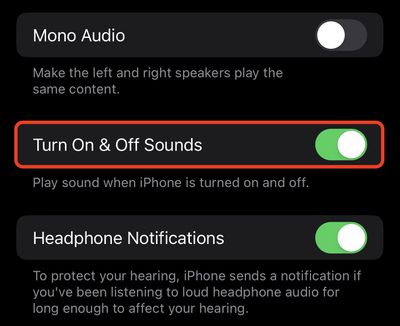
For the iPhone 14 series, Apple has added an optional new accessibility feature that plays a sound when the iPhone is powered on and off. Here's how to enable them.
Apple added the startup and shutdown chimes as a new accessibility feature after many Blind users and people with low-vision reportedly asked the company for a clear way to tell whether their iPhone had restarted, and now anyone can enable them.
iPhone 14 accessibility tidbit: Apple has added a Mac-like startup chime when you boot the phone. My understanding is a lot of Blind and low vision people, even inside the company, wished for a concrete way to tell whether their phone restarted.
— Steven Aquino (he/him) (@steven_aquino) September 7, 2022
Here's how to enable the new feature on iPhone 14, iPhone 14 Plus, iPhone 14 Pro, and iPhone 14 Pro Max.
Launch the Settings app on your iPhone 14.
Scroll down and tap through to Accessibility.
Under "Hearing," tap Audio/Visual.
Toggle on the switch next to Turn On & Off Sounds.
That's all there is to it. You'll now know whenever your iPhone has started up or shut down without even having to look at the screen. To disable the sounds, simply turn off the same toggle in Settings.
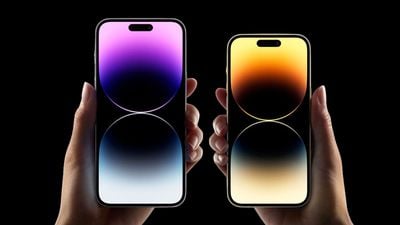
The newly launched iPhone 14 Pro and iPhone 14 Pro Max come with some advanced features not included in the rest of the iPhone 14 series, including an always-on display.
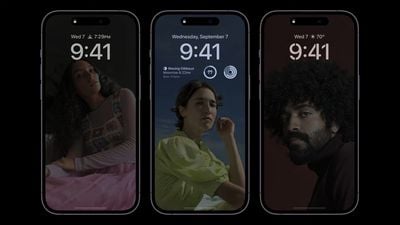
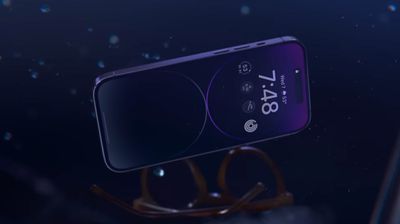
The always-on display is essentially a non-customizable, tinted version of your iPhone's Lock Screen wallpaper, widgets, and any Live Activities that are running.
Apple has been able to bring the always-on display to the iPhone 14 Pro models without having a major impact on battery life thanks to a more power-efficient OLED panel, which has a variable refresh rate as low as 1Hz. In addition to this, the always-on display also pre-renders individual frames for content elements that predictably change, such as the time, and only updates them when appropriate.
Apple has outlined some scenarios where the always-on display will intelligently turn itself off, such as if your iPhone is lying face down, the handset is in your pocket or bag, the Sleep Focus mode is on, or if you're wearing an Apple Watch and leave the room where your iPhone is. Apple says the always-on display uses multiple coprocessors in the A16 Bionic chip to refresh the display using "minimal power," making the display "incredibly power efficient."
But despite Apple implementing the above solutions, some iPhone 14 Pro reviewers have reported the always-on display having a marginal but noticeable impact on battery life. Quite how much of an impact the feature has on battery is still hard to quantify, but if you're concerned about maximizing battery life on your iPhone, or if you just find an always-on display distracting, here's how to disable the feature.
How to Disable the iPhone 14 Pro Always-on Display
Launch the Settings app.
Scroll down and tap through to Display & Brightness.
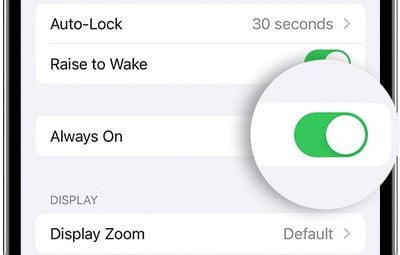
Scroll down and toggle off the switch next to Always On.
That's all there is to it. Your iPhone will now turn off when you press the Side button and remain off until you press it again or pick up the device.
With the launch of iPhone 14 and new Apple Watch models, Apple introduced a new safety feature called Crash Detection. Keep reading to learn what it is, how it works, and how to turn it on and off.
What Is Crash Detection?
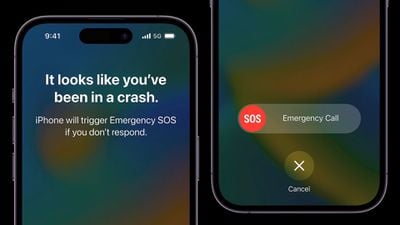
Crash Detection is designed to detect severe car crashes in passenger cars. If you're in a severe crash and unresponsive, your Apple device can automatically call emergency services on your behalf.
How Does Crash Detection Work?
While you're driving or you're a passenger in a motor vehicle, the motion sensor with a high dynamic range gyroscope and high-g accelerometer, GPS, barometer, microphone, and advanced motion algorithms work together in your iPhone or Apple Watch to accurately detect a crash.
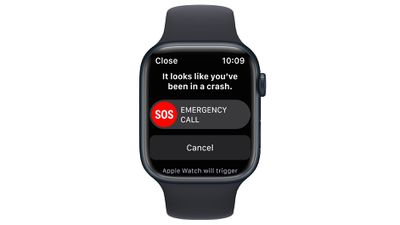
When a severe crash is detected, an alert displays on your Apple Watch or iPhone display for 10 seconds. If you're still responsive, you can swipe the screen to call emergency services immediately or dismiss the alert if you don't need to contact them. If after 10 seconds you haven't interacted with your Apple device, a 10-second countdown will start. When it ends, emergency services are contacted.
When emergency services pick up, the following audio message from Siri begins playing on a loop with five seconds of silence between each replay: "The owner of this iPhone was in a severe car crash and is not responding to their phone." Siri will then relay your estimated location with latitude and longitude and search radius both to emergency services and through your device's speaker.
The message is loudest the first time it is played, after which other replays have a reduced volume in case you are able to speak to emergency services. The message continues to repeat until you tap the Stop Recorded Message button or the call ends.
If you have emergency contacts set up, they will also be notified of the crash after another 10-second countdown, and if you have configured Medical ID information, a slider will appear on the Lock Screen for quick access.
What Kinds of Crashes Can It Detect?
According to Apple, Crash Detection can detect front impacts, side impacts, rear-end collisions, and rollovers.
Which Apple Devices Support Crash Detection?
Crash Detection is supported on the following iPhone and Apple Watch models.
iPhone 14
iPhone 14 Plus
iPhone 14 Pro
iPhone 14 Pro Max
Apple Watch SE (2nd Generation)
Apple Watch Series 8
Apple Watch Ultra
How to Enable Crash Detection
No setup is required. Crash Detection is enabled by default on the above supported devices, so you don't need to do a thing. If you're concerned that the feature could mistakenly register a crash and call emergency services, you can disable it by following the steps below.
How to Disable Crash Detection
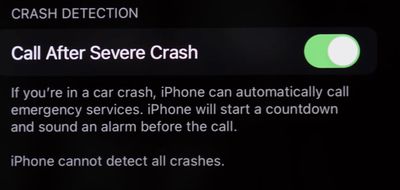
Launch the Settings app on your iPhone.
Scroll down and tap through to Emergency SOS.
Under "Crash Detection," toggle off the switch next to Call After Severe Crash.
If ever you want to enable the feature, simply toggle on the switch again in Settings.
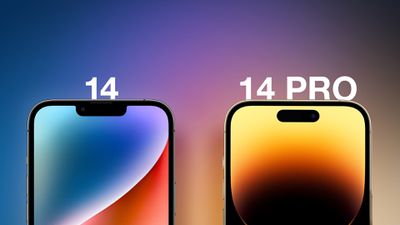
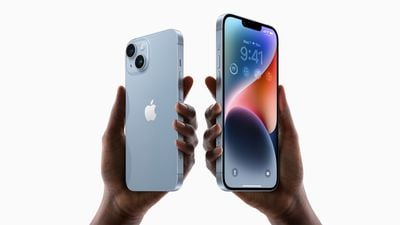
The iPhone 14 and iPhone 14 Pro are among Apple's newest iPhone models and follow the previous year's iPhone 13 and iPhone 13 Pro, but how different are the two latest 6.1-inch iPhone models, and what exactly does a "Pro" device give you?
Last year, the biggest differences between the iPhone 13 and iPhone 13 Pro were ProMotion, 2GB of memory, three hours of battery life, and rear cameras with different apertures. With iPhone 14 and iPhone 14 Pro, both devices share new features like Emergency SOS via satellite, Crash Detection, Action mode, 6GB of memory, Photonic Engine, and an upgraded 12-megapixel TrueDepth front camera with autofocus, but Apple's "Pro" and non-Pro iPhone models are more different than ever.
Our guide helps to answer the question of how to decide which of these two iPhone models is best for you, and serves as a way to clearly see what additional features and upgrades the iPhone 14 Pro brings to the table.
Key Differences
iPhone 14
iPhone 14 Pro
Aerospace-grade aluminum design with glass back
Surgical-grade stainless steel design with frosted glass back
ProRes video recording up to 4K at 30 fps (1080p at 30 fps for 128GB capacity)
–
Macro video recording, including slo‑mo and time‑lapse
146.7mm height
147.5mm height
7.80mm thickness
7.85mm thickness
Weight of 172 grams
Weight of 206 grams
20-hour battery life (during video playback)
23-hour battery life (during video playback)
128GB, 256GB, and 512GB storage options
128GB, 256GB, 512GB, and 1TB storage options
Available in Blue, Purple, Midnight, Starlight, and PRODUCT(RED)
Available in Deep Purple, Space Black, Silver, and Gold
Starts at $799
Starts at $999
Final Thoughts
The iPhone 14 Pro offers a large number of upgrades over the standard iPhone 14. With just $200 difference to obtain a brighter display with ProMotion and always-on functionality, the Dynamic Island, the A16 Bionic chip, and a radically different rear camera set up, not to mention longer battery life and a more premium design, many customers will be able to justify getting the iPhone 14 Pro over the iPhone 14. Due to the scale and breadth of the iPhone 14 Pro's improvements and features, customers should actively choose the high-end model in most cases.
It will only be worth getting the iPhone 14 over the iPhone 14 Pro if you want a lighter device, do not care for the "Pro" rear camera setup or features like ProMotion and the always-on display, or cannot afford the $200 to upgrade to the high-end model. In this instance, you will still benefit from shared features like Emergency SOS via satellite. The iPhone 14 is still a well-rounded device, especially for customers coming from a much older model.
Apple today published a new support document with additional details about the new always-on display mode on the iPhone 14 Pro and iPhone 14 Pro Max. Notably, the document lists eight scenarios where the always-on display temporarily turns off.
To save battery life, Apple says the display goes completely dark when:
Your iPhone is lying face down
Your iPhone is in your pocket or bag
Sleep Focus is on
Low Power Mode is on
Your iPhone is connected to CarPlay
You're using Continuity Camera
You haven't used your iPhone for a while (see paragraph below)
Your iPhone detects that you moved away from it with a paired Apple Watch
According to Apple, the iPhone 14 Pro and iPhone 14 Pro Max can learn your "activity patterns" and turns the always-on display off and on accordingly. For example, Apple says the display can work in tandem with a user's alarm or sleep schedule if they have one set.
Always-on display mode is enabled by default. To turn it off, open the Settings app, tap on the Display & Brightness menu, and turn off Always On.
iPhone 14 Pro models can drop down to a refresh rate as low as 1Hz to ensure that the always-on display does not have too significant of an impact on battery life. Apple says the always-on display uses multiple coprocessors in the A16 Bionic chip to refresh the display using "minimal power," making the display "incredibly power efficient."
Always-on display mode dims the entire Lock Screen, but still shows information like the time, widgets, and wallpaper. Once you raise the iPhone, tap the screen, or press the side button, the display returns to normal brightness. You can also swipe up from the bottom of the display and authenticate with Face ID to wake the iPhone as usual.
Apple has confirmed that customers activating new iPhones may encounter an issue where device activation during initial setup doesn't go through on Wi-Fi, saying the problem is "under investigation."
In a memo seen by MacRumors, Apple says that "there is a known issue for iOS 16 that may impact device activations on open Wi-Fi networks." To resolve the issue, Apple says customers should select "Connect to Mac or to a PC with iTunes" in the initial iOS onboarding process when prompted to connect to a Wi-Fi network and then return to the previous screen and try again on Wi-Fi until the activation goes through successfully.
Apple noted in the memo there are no current official fixes and that support staff should "not create a repair [case] for the issue." Unfortunately, the bug is untimely, as customers worldwide begin receiving their iPhone 14, iPhone 14 Pro, and iPhone 14 Pro Max pre-orders.
For new iPhone 14 customers, there is an available iOS 16.0.1 update that fixes an issue with activation and migration during setup. If you're facing issues activating your iPhone 14 out of the box, you may need to restore with a Mac or PC to iOS 16.0.1 to fix the bug and fully activate your new iPhone.
In a support document, Apple tells new iPhone 14 and iPhone 14 Pro customers that "iMessage and FaceTime might not complete activation" until they've updated their new iPhones to iOS 16.0.1.
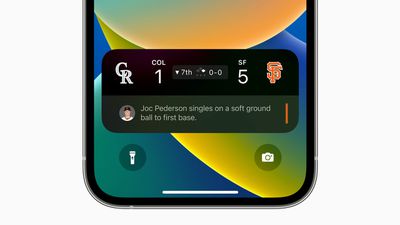
Apple recently announced that iOS 16.1 will enable a new Live Activities feature that allows iPhone users to stay on top of things that are happening in real time, such as a sports game or a food delivery order, right from the Lock Screen.
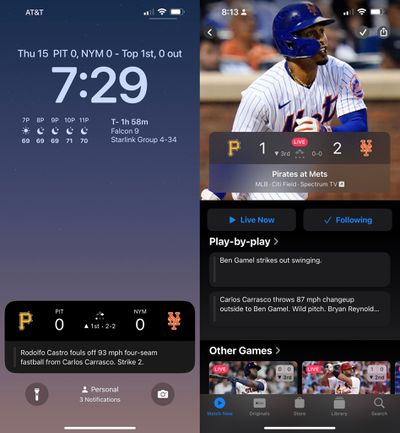
In the first iOS 16.1 beta made available to developers and public testers this week, Apple is testing Live Activities integration with sports games via the TV app.
In the TV app, tapping on the Follow button for a sports game results in a Live Activity appearing on the Lock Screen for the game, complete with a live-updating scoreboard and play-by-play action, such as a baseball player striking out on a fastball.
As shown in the screenshots below, provided to us by reader Alec Cohen, a brief summary of the game is also shown above the time, next to the date.
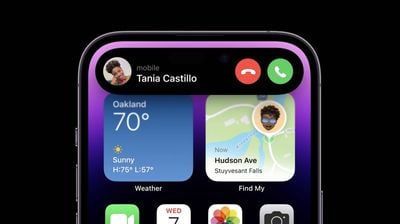
Live Activities appear at the bottom of the Lock Screen on iPhone 13 models and earlier, as well as on the iPhone 14 and iPhone 14 Plus. On the iPhone 14 Pro and iPhone 14 Pro Max, Live Activities will appear at the top of the Lock Screen in the Dynamic Island, a new pill-shaped area surrounding the Face ID sensors and front camera that can expand to display system alerts and other content at a glance.
Apple says iOS 16.1 will be released later this year, bringing Live Activities to the masses. For sports, the feature will be available for MLB games for users in the U.S., Canada, Australia, U.K., Brazil, Mexico, Japan, and South Korea, along with NBA and Premier League games for users in the U.S. and Canada only at launch.
Live Activities also supports timers set in the Clock app, while third-party apps can support the feature too. Once the iOS 16.1 Release Candidate is available, Apple says developers will be able to submit apps with Live Activities to the App Store.
iPhone 14 Pro models launch this Friday in the U.S. and are already starting to arrive to customers in countries such as Australia and New Zealand.
Because of time zone differences, it's already September 16 (aka iPhone launch day) in Australia and New Zealand, which means customers in these countries who preordered a new iPhone 14, iPhone 14 Pro, or iPhone 14 Pro Max are beginning to receive their devices.
Customers receiving new iPhone 14 devices will soon be sharing photos and first impressions on Instagram, Twitter, Reddit, the MacRumors forums, and more. If you have one of the new devices, let us know in the comments below, and feel free to share pictures and your initial thoughts!
The Apple Watch Series 8 and Apple Watch SE are also available as of today, but these incremental updates will undoubtedly be overshadowed by the new iPhones.
Apple does not operate retail store locations in New Zealand, so customers in Australia are always the first to be able to purchase new devices at an Apple Store. Available in-store stock in Australia will provide some insight into what we can expect in other Apple Stores worldwide.
If you did not preorder, purchasing at an Apple Store or another store like Target, Walmart, or Best Buy is the only way to get a new iPhone on launch day. We are expecting Apple Stores to have a decent amount of stock available, but popular iPhone 14 Pro and Pro Max colors might be in shorter supply and could go quick. It's worth noting that iPhone 14 Pro models from the online Apple Store in the United States have October ship dates at the current time, while standard iPhone 14 models are more readily available.
Following New Zealand and Australia, sales and deliveries of new iPhone 14 models and the new Apple Watches will begin in Asia, the Middle East, Europe, and finally, North America. Many Apple Stores around the world will be opening up early at around 8:00 a.m. local time to allow customers to pick up reserved devices and make walk-in purchases.
Make sure to stay tuned to MacRumors tomorrow and throughout next week because we'll have plenty of iPhone 14 Pro coverage coming, including a hands-on, an in-depth look at the cameras, a deep dive into the Dynamic Island, and tons more.
All four iPhone 14 models feature dual ambient light sensors for the first time, according to Apple's tech specs for the devices.
According to TechCrunch's Matthew Panzarino, all iPhone 14 models are equipped with a new ambient light sensor on the back of the devices, whereas previous iPhone models only have a single ambient light sensor above the display. Panzarino said the sensor helps to both adjust display brightness and determine exposure for the rear camera system.
In his iPhone 14 Pro review for Mashable, Stan Schroeder said he held an iPhone 14 Pro and iPhone 13 Pro side by side against bright light, and then immediately went into a dark room, and found the 14 Pro was more responsive at adapting the display's brightness.
Apple today seeded the first beta of an upcoming iOS 16.1 update to public beta testers, opening up the beta testing process to the general public. Today's beta comes one day after Apple provided the beta to developers.
Public beta testers who have signed up for Apple's free beta testing program can download the iOS 16.1 beta over the air after installing the proper certificate from the Public Beta website.
Apple says that iOS 16.1 will introduce Live Activities, an interactive notification feature designed to let you keep an eye on things happening in real time. Live Activities will be available on the Lock Screen and Dynamic Island, but you won't see them in the beta because developers are still working on implementing support.
The update includes a Clean Energy Charging feature in the United States that causes the iPhone to selectively charge at times when lower carbon emission electricity is available, plus it lays the groundwork for Matter, a smart home standard that Apple plans to begin supporting this fall.
Other new features include a deletable Wallet app, changes to the Lock Screen customizing interface, and more, with details available in our iOS 16.1 feature guide. Apple has also seeded a new public beta of iPadOS 16.1.
iPhone 14 and iPhone 14 Plus models are equipped with a removable back glass panel for easier repairs, according to TechCrunch and CNET. This makes these iPhone models the first that can be easily opened from the back side of the device since the iPhone 4S.
To replace the back glass on iPhone 12 and iPhone 13 models, Apple Stores and Apple Authorized Service Providers need to open the device from the display side, disassemble components, and install an "iPhone Rear System" part, which is an iPhone enclosure with all components except the display and rear camera. This part gets affixed to the customer's original display and rear camera, so long as those parts are not damaged too.
For the iPhone 11 and older models with cracked back glass, Apple-authorized technicians simply replace the entire device. The new method for the iPhone 14 and iPhone 14 Plus will be less expensive for Apple and more environmentally friendly.
Early teardowns of the iPhone 14 show that the device can still be opened from the display side as well, so screen repairs should not be impacted by this change. Reviews did not make any mention of the iPhone 14 Pro and iPhone 14 Pro Max having an easily removable back glass panel, suggesting that the change is limited to the standard models.
In the United States, Apple Stores will charge $169 and $199 to replace damaged back glass on the iPhone 14 and iPhone 14 Plus, respectively, for both parts and labor. If the customer has AppleCare+ coverage for the iPhone, the fee is reduced to $29 for both models. These fees may vary at Apple Authorized Service Providers.
iPhone 14 orders will begin arriving to customers this Friday, while the iPhone 14 Plus will be available starting October 7.
The iPhone 14 and iPhone 14 Plus need to be disassembled from the back cover. No need to dismantle the screen. Be careful not to break it. pic.twitter.com/DSRw2H8PV3
— DuanRui (@duanrui1205) September 15, 2022
The iPhone 14 Pro and iPhone 14 Pro Max officially begin arriving to customers on Friday. Apple’s latest high-end phones sport major new features, changes, and design updates that make them an attractive choice for customers still using older models.
If you're getting a new iPhone 14 Pro or iPhone 14 Pro Max tomorrow, you may be slightly overwhelmed or simply interested in what new features and changes you should try out. To try and help, we've outlined five of the iPhone 14 Pro's biggest features you should look forward to using below.
Dynamic Island
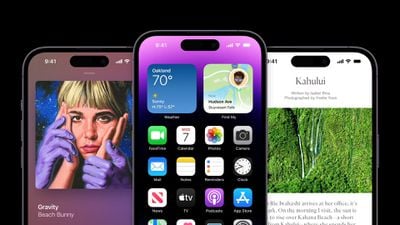
Dynamic Island on the iPhone 14 Pro and iPhone 14 Pro Max is an entirely new way to interact with your iPhone. Instead of the notch at the top of the display, Apple has replaced it with a new pill-shape area made up of two smaller cutouts digitally merged.
Instead of leaving the area unused and intrusive at the top of the display, Apple developed Dynamic Island, which brings system-wide alerts, notifications, and system-related operations to the top of the display. You'll notice Dynamic Island fluidly adapt as you use your phone, from listening to music to starting a timer and more. Here's a quick list of some of the different types of system alerts and notifications Dynamic Island supports straight out of the box:
Learn more about Dynamic Island with our detailed explainer here.
ProMotion Display
If you're upgrading from an iPhone older than the iPhone 13 Pro, as many customers likely are, you'll be experiencing ProMotion for the very first time on iPhone. ProMotion is a technology that Apple first developed for the iPad in 2017 and just last year made its way to the iPhone.
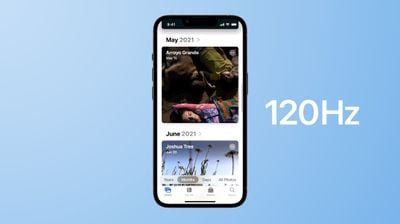
Most displays have a refresh rate of up 60Hz, which means the screen is refreshing 60 times every second. Starting with the iPhone 13 Pro and now the iPhone 14 Pro, the iPhone's display supports a refresh rate of up to 120Hz, which allows it to refresh 120 times every second.
The higher pace of refreshes every second means that when you're scrolling in an app, you'll notice your iPhone feels faster and smoother thanks to the 120Hz refresh rate. Of course, the higher refresh rate also requires more power. Thankfully, on the iPhone 13 Pro and iPhone 14 Pro, iOS intelligently changes the display's refresh rate depending on what you're doing. For example, when you start scrolling, the display will increase its refresh rate compared to if you're viewing a static image.
Always-On Display
Regardless of which iPhone you're upgrading from, you'll be experiencing the first iPhone with an always-on display. An always-on display, as the name suggests, is a display that's always on and displaying information. The display on the iPhone 14 Pro and iPhone 14 Pro Max always shows the time, wallpaper, and widgets from the iOS 16 Lock Screen.
This can be useful when you just want to glance at the time or see relevant information from your Lock Screen widgets without unlocking your iPhone and going directly into an app. With Live Activities coming in iOS 16.1, the always-on display may be even more helpful for some customers.
The display always remains on by intelligently lowering its brightness and refresh rate to as low as 1Hz to save battery life. If you don't like the always-on display, you can turn it off inside Settings -> Display & Brightness, which could help extend your battery life. The always-on display is not currently customizable. Learn more about the iPhone 14 Pro's always-on display here.
The New Cameras
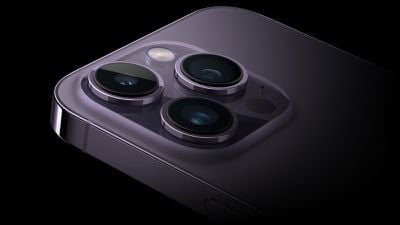
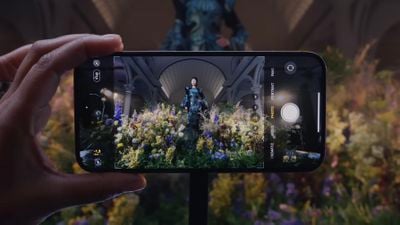
The new iPhone 14 Pro and iPhone 14 Pro Max feature a suite of new camera features and hardware improvements. The most notable you'll be able to take advantage of is a new 48MP Main camera that takes even sharper and more detailed photos.
You'll be able to take 48MP cameras when you use the ProRAW format, which is a format designed by Apple that combines the iPhone's powerful photo-processing with high detail that allows for fine-tune editing. If you're planning to take many 48MP photos, be aware that those photos will take up almost three times the amount of storage on your device.
The front selfie camera on the iPhone 14 Pro and iPhone 14 Pro Max also got an upgrade as it now supports autofocus, which ensures that your photos turn out more detailed and lifelike. All cameras, including the selfie camera, have improved performance for low-light situations, making nighttime pictures clearer and brighter.
Enjoy Longer Battery Life
Thanks to advancements in iOS optimization, more efficient processors, and newer technologies, regardless of the iPhone you're upgrading from, you'll be the beneficiary of longer battery life on the iPhone 14 Pro and iPhone 14 Pro Max.
While it's impossible to say just how much longer your iPhone's battery life will be with your specific usage habits, Apple is claiming that its newer displays and the A16 Bionic chip are more power efficient than older models, yielding longer battery life.
For a rough estimate of how much longer battery life will be, a battery test earlier this week with the iPhone 14 Pro Max showed it lasting two hours longer than last year's iPhone 13 Pro Max, which already held the title for the longest battery life in an iPhone.
There's More!
The iPhone 14 Pro and iPhone 14 Pro Max run iOS 16, the latest version of iOS that has major new features, such as a customizable Lock Screen, the ability to unsend and edit messages in iMessage, new features in Apple Maps, and more.
As you use your new iPhone 14 Pro, you'll also discover iOS 16 and all that it has to offer. Below we've listed some helpful guides and resources on iOS 16 and its features.
All four iPhone 14 models include a new Emergency SOS via Satellite feature that is set to launch in November in the United States and Canada, and a new report today claims that Apple plans to expand the feature to additional countries over time.
Apple reportedly informed Swiss website MacPrime that it plans to announce additional countries for Emergency SOS via Satellite later this year, followed by even more countries next year, but it's unclear exactly when the feature would actually launch in additional countries. We've reached out to Apple for comment on the matter.
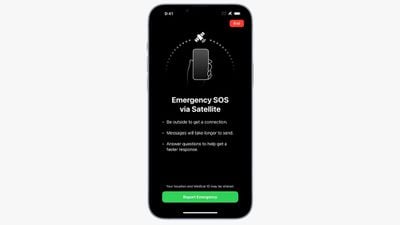
Emergency SOS via Satellite is designed to allow iPhone 14 models to connect directly to a satellite, allowing users to send text messages to emergency services when outside the range of cellular and Wi-Fi coverage. When it launches in the United States and Canada, Apple says the service will be free for the first two years, which suggests that Apple might be planning to charge for the service at some point in the future.
Apple says that in "ideal conditions with a direct view of the sky and the horizon," a message might take 15 seconds to send, but notes it can over a minute for a message to send "under trees with light or medium foliage." On the iPhone, the feature helps users to orient their iPhone towards a satellite to establish a connection.
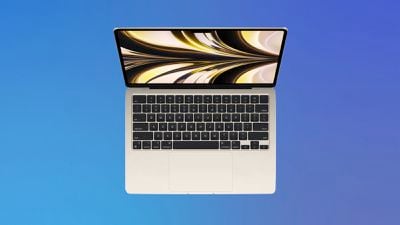
Amazon and B&H Photo today have Apple's new M2 MacBook Air (256GB) for $1,099.00, down from $1,199.00. At both retailers you can get this sale in the Silver and Midnight colors.
Note: MacRumors is an affiliate partner with these vendors. When you click a link and make a purchase, we may receive a small payment, which helps us keep the site running.
At $100 off, this is a match of the all-time low price on the 256GB M2 MacBook Air. On Amazon, shipping estimates provide a window between September 17 and 20 for most places in the United States. B&H Photo provides free expedited shipping and estimates a September 19 delivery date.
You can find even more discounts on other MacBooks by visiting our Best Deals guide for MacBook Pro and MacBook Air. In this guide we track the steepest discounts for the newest MacBook models every week, so be sure to bookmark it and check back often if you're shopping for a new Apple notebook.
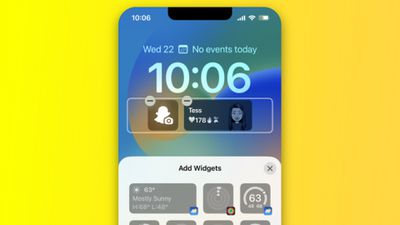
Snapchat has become the latest mainstream app to adopt support for iOS 16's new Lock Screen widgets. Snapchat's new Lock Screen widget allows users to quickly jump into their conversation with their best friend and displays their current streak with them.
Snapchat today also introduced new Chat Shortcuts that make it easier for users to filter unread messages, missed calls, and replies to stories within the app. Chat Shortcuts will also remind users to wish one of their friends a happy birthday in the event they forget. Snapchat also introduced Question Stickers and the availability of Snapchat on the web.
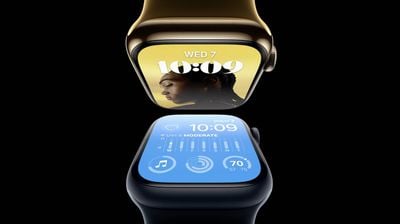
Apple Watch Series 8 and the second-generation Apple Watch SE are set to launch this Friday, September 16, and ahead of time, the first reviews of the devices have now been shared by select media publications and YouTube channels.
Both of the new models are very incremental upgrades compared to the Apple Watch Series 7 and the original Apple Watch SE.
New features for both models include the S8 chip, car crash detection, and international roaming. Given that the S8 chip features the same CPU as the S7 and S6 chips, the Series 8 does not have any notable performance improvements compared to the Series 7 or Series 6, but the new Apple Watch SE is up to 20% faster than the original.
The Series 8 is also equipped with a new temperature sensor to aid with the existing menstrual cycle tracking feature, while the second-generation Apple Watch SE has new color-matched back cases and a lower $249 starting price, versus $279 for the original. Series 8 pricing starts at $399, which is unchanged from the Series 7.
Both models are overshadowed by the all-new Apple Watch Ultra, which is set to launch next Friday, September 23 with a larger 49mm titanium case, a larger display, a more rugged design, a customizable Action button, new bands designed for the outdoors, water resistance up to a depth of 100 meters, and more. Apple Watch Ultra is priced at $799.
We've rounded up both written and video reviews of the Series 8 and new SE below.
The Verge's Victoria Song on the Series 8's new temperature sensing feature for retrospective ovulation estimates and menstrual cycle deviation:
As for accuracy, it's a little hard to say, as I've only had the Series 8 for about a week. I don’t have two cycles' worth of temperature data, and I've only just established a baseline. For the few nights I do have temperature data for, however, it largely corresponds to what I got on my Oura Ring. For example, two nights ago, the Oura Ring said my body temperature was 0.5 degrees higher than normal, while the Series 8 said it was 0.41 degrees higher.
Song also commented on Series 8 battery life:
Fair warning: enabling low-power mode isn't going to magically get you multiday battery life, and I never got the full 36 hours. With regular usage without low-power mode, my Series 8 got around 24 hours before I needed to stick it back on a charger. Low-power mode was mostly a good way to get a bit of extra juice so I could make it home or to get me through the last mile of a long run when I forgot to top up the battery before heading out.
Engadget's Cherlynn Low confirmed that the second-generation Apple Watch SE performs equally to the Series 8 given both models have the same chip:
Otherwise, this year's Watch SE actually packs the same system-in-a-package (SiP) processor as the $400 Series 8, as well as a high-g accelerometer that makes crash detection possible. In my time with it, the SE has, unsurprisingly, been just as responsive as the Series 8, starting workouts and completing heart rate scans in the same amount of time.
MobileSyrup's Patrick O'Rourke said that given the Apple Watch lacks major competition, Apple can get away with incremental year-over-year updates to the device:
Apple is in an interesting position with its Apple Watch. In the iOS space, there's really no viable competition, especially when it comes to the Apple Watch's app ecosystem, and even on Android, the closest is Samsung's Galaxy Watch 5 and Galaxy Watch 5 Pro. This leaves the tech giant with very little reason to really push the wearable forward with each new release.
The iPhone 14 Plus, Apple's 6.7-inch non-Pro iPhone, is facing no delays for delivery nearly a week after pre-orders opened, indicating demand for the new model may be low.
Pre-orders for all models of the iPhone 14 lineup opened last Friday, with delivery for all models except the iPhone 14 Plus beginning tomorrow. While delivery estimates for the iPhone 14, iPhone 14 Pro, and iPhone 14 Pro Max remain delayed by days and even weeks, all models of the iPhone 14 Plus remain available for same-day delivery upon launch on Friday, October 7, with no delays.
The lack of a delay for the iPhone 14 Plus comes amid a report that demand for the new model has been worse than expected. Earlier this week, Apple analyst Ming-Chi Kuosaid demand for the non-Pro 6.7-inch iPhone is far lower than that of the 5.4-inch iPhone 13 mini from last year, which it effectively replaces in the lineup. Kuo said, "Apple's product segmentation strategy for standard models fails this year."
The iPhone 14 Plus is meant for customers who want a larger iPhone without all the features of Apple's high-end models. The iPhone 14 Plus, like the iPhone 14, features the same chip as the iPhone 13 Pro, camera improvements, and other minor enhancements. Reviewers called the iPhone 14 an "iPhone 13S," noting the little improvements and changes compared to its predecessor.


 Note: MacRumors is an affiliate partner with these vendors. When you click a link and make a purchase, we may receive a small payment, which helps us keep the site running.