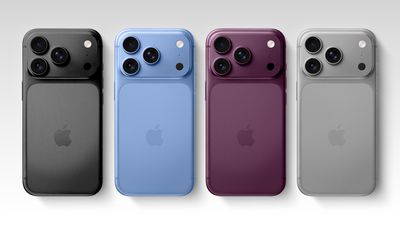
Apple's first foldable iPhone, expected to be called the "iPhone Ultra," is shaping up to launch with a noticeably restrained selection of colors, according to multiple leakers, with sources pointing to as few as two options and a deliberate avoidance of bold or vibrant finishes for the device.
In February, the Weibo leaker known as "Instant Digital" shared a broader account of the foldable iPhone's design, describing it with just two color options, with white as the only "confirmed" shade at the time. The leaker did not reveal the second option. Instant Digital revisited their February report earlier this month without walking back any color details, keeping the two-option account intact.
More recently, Macworld cited a supply chain source to provide new details about the foldable's color options: a classic silver and white model, and an indigo option described as similar to the iPhone 17 Pro's Deep Blue finish. The same source said the device will offer fewer choices than the iPhone 18 Pro models, with no bold or vibrant colors.
The approach is reminiscent of the iPhone X, which similarly launched in just two colors, Silver and Space Gray, when it debuted in November 2017 at a then record starting price of $999. Like the foldable iPhone, the iPhone X was a generational leap that introduced an entirely new design language. The iPhone XS that followed a year later added Gold to the lineup, suggesting Apple may take the same approach with the iPhone Ultra over time.
A limited color offering may also be a practical consequence of the device's constrained production outlook. Supply chain analyst Ming-Chi Kuo warned that early-stage yield and ramp-up challenges could mean smooth shipments may not occur until 2027, with potential shortages lasting through at least the end of 2026. Kuo also clarified that the frequently cited order figure of 15 to 20 million foldable iPhones likely reflects cumulative demand across the product's full two to three year lifecycle, rather than 2026 alone, suggesting that annual volumes will be modest.
Developing and manufacturing each additional color variant adds complexity and cost to an already challenging production process, as well as additional SKUs to stock. With the device expected to be in short supply at launch regardless, there is little commercial incentive for Apple to broaden the initial color palette. At a starting price that Bloomberg's Mark Gurman says will "cross the $2,000 threshold," the iPhone Ultra is also unlikely to attract the kind of buyer who might be swayed by a wider color range, making the calculation even simpler.
The iPhone Ultra is expected to be announced in September 2026 alongside the iPhone 18 Pro and iPhone 18 Pro Max.
B&H Photo has introduced a handful of notable MacBook Pro and MacBook Air discounts this week, all of which beat the current Amazon discounts on these notebooks. B&H Photo is a trusted authorized Apple reseller that sometimes offers great deals on brand new Apple products.
Note: MacRumors is an affiliate partner with B&H Photo. When you click a link and make a purchase, we may receive a small payment, which helps us keep the site running.
MacBook Pro
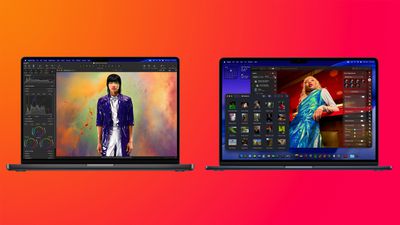
B&H Photo's deal of the day is the 48GB RAM/1TB SSD 16-inch M5 Pro MacBook Pro, available for $2,699.00, down from $3,099.00. This beats the current sale price on Amazon by $200, and represents a new all-time low price on this model.
This sale is part of B&H Photo's daily Deal Zone event, and will disappear later tonight. The discount has been applied automatically and does not require any coupon codes to see the final sale price.
MacBook Air
If you're shopping for the new M5 MacBook Air, B&H Photo is offering a few coupon discounts on the 13-inch and 15-inch models this week. This includes up to $30 in extra coupon savings once you add the notebook to your cart, stacking on the existing $150 discounts on each computer.
If you're on the hunt for more discounts, be sure to visit our Apple Deals roundup where we recap the best Apple-related bargains of the past week.
Deals Newsletter
Interested in hearing more about the best deals you can find in 2026? Sign up for our Deals Newsletter and we'll keep you updated so you don't miss the biggest deals of the season!
With the MacBook Neo, the Mac is more affordable than ever. In the U.S., the laptop starts at just $499 for college students who verify their enrollment.
Social network Reddit recently began blocking mobile visitors to its website while pushing them to download the official Reddit app, and it's fair to say that the move is not going down well with users.
If you visit reddit.com on your iPhone today, you may see a new popup that can't be dismissed, asking you to "get the app to keep using Reddit."
A Reddit spokesperson told Ars Technica that it was "a test for a small subset of frequent logged-out mobile users that prompts them to download the app after visiting the site." They continued: "These users are already familiar with Reddit and we've seen that the experience is much better for them in the app. The app offers a more personalized experience and users can more easily find communities that match their interests."
Users have since taken to subreddits like r/bugs and r/help to voice their displeasure at being blocked out of the website on mobile. "Are my days of anonymously browsing over?" asked one user.
Futurism's Victor Tangermann wrote about the aggressive ad last week, suggesting the change was the latest indication of the platform's "enshittification" – a neologism coined by author Cory Doctorow that describes tech companies deliberately degrading their services in order to maximize profit.
Despite consistent user growth and 121 million daily active users, Reddit has struggled to find a path to monetization since it went public on the stock exchange two years ago. The site's principal revenue is advertising, which explains the push to log users into its mobile app, where it can consistently track their activity.
In 2024, the company also signed a controversial contract with OpenAI that allowed the ChatGPT maker to train its AI models on user-submitted posts. (It's currently in legal battles with Perplexity and Anthropic over alleged unlawful use of its data.)
Over half the population of the U.S. visits Reddit each week, according to the Financial Times, but most of that discovery comes from Google searches, which suggests the so-called "front page of the internet" is walking a tightrope between monetizing interactions and stifling engagement growth.
I am not really a Reddit user.
However, from time to time I am checking few subreddits, like r/Monero, on my mobile device.
But it seems like this is over now, since Reddit decided to not let me use their website anymore:
"Get the app to keep using Reddit", it now says. No way... pic.twitter.com/UuTd6FIwpu
— CR1337 (@CR1337) May 6, 2026
It's not the first time Reddit has alienated some of its users. In 2023, it stopped letting users opt out of ad personalization. Then again in the same year, ahead of its IPO, the company started charging developers for accessing its API, which led to the shutdown of several popular Reddit clients, including Apollo.
Apple hasn't fully abandoned the Vision Pro, but anyone hoping for a successor will be waiting at least two more years, according to Bloomberg's Mark Gurman.
Writing in his latest Power On newsletter, Gurman resisted suggestions that Apple has walked away from the headset entirely. The well-connected reporter says the company continues to develop new technologies and materials behind the scenes with the goal of eventually producing a cheaper, lighter enclosed headset. That said, no such product is apparently in active development, and the long-rumored "Vision Air" was canceled last year.
If a new Vision Pro-style device does materialize, Gurman says he wouldn't expect it for "around two more years at least," given that the bulk of Apple's mixed-reality hardware talent has been pulled onto other projects like lightweight smart glasses.
Indeed, Apple's smart glasses project is now the focus, and former Vision Products Group members have been reassigned to that team, as well as shoring up its Siri chatbot development, not to mention other AI wearables such as the AirPods with cameras and a planned AI pendant.
The Vision Pro's troubled retail launch was recently extensively covered in a book by New York Times labor reporter Noam Scheiber, who argues that Apple's decade-long erosion of its retail workforce directly contributed to the disappointing launch of the $3,499 headset.
Apple refreshed the Vision Pro in October 2025 with an updated model featuring an M5 chip.
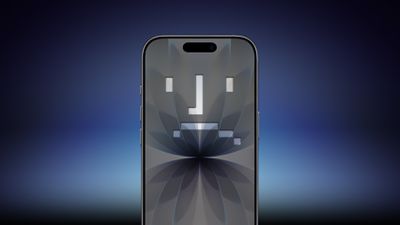
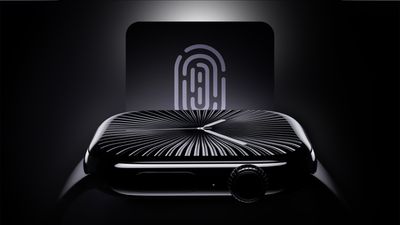
Apple is prioritizing larger batteries and more advanced health sensors over fingerprint authentication for the Apple Watch, according to a new claim from a prominent Chinese leaker.
In a new Weibo post, Instant Digital pushed back on recent speculation about biometric recognition coming to Apple's wearable lineup, claiming instead that the company remains content to let users unlock their devices via their paired iPhone.
Adding Touch ID sensors would introduce extra cost and eat into precious internal space that could otherwise be used for battery capacity, which is a tradeoff Apple apparently isn't willing to make at this stage, suggests the leaker.
Last August, MacRumorsconfirmed lines of code uncovered by Macworld that suggested Touch ID could arrive on the Apple Watch Series 12 or Apple Watch Ultra 4. That discovery led to suggestions that Apple could put the Touch ID sensor under the display or potentially integrate it into the side button, similar to its implementation on the iPad mini and iPad Air.
As things stand, the 2026 Apple Watch models are not expected to feature major design changes, and a design update is unlikely to happen until 2028 at the earliest. When it does, Apple could introduce noninvasive blood glucose monitoring technology, but currently the feature remains in the early stages of development.
WhatsApp has started rolling out its paid WhatsApp Plus subscription to iOS, following beta testing of the new personalization-focused tier amongst a small group of users, reports WABetaInfo.
The plan is light on practical features, and is aimed more at heavier users who want to customize various aspects of the WhatsApp experience. It gives you access to premium sticker packs with fullscreen overlay animations (visible to recipients without the plan) and 18 accent colors that replace the app's default green across the interface. There are also 14 alternate app icons to choose from, ranging from minimal outlines to glittery and artistic designs.
The plan also raises the pinned-chat limit from 3 to 20, adds 10 new ringtones, and allows bulk theme, alert tone, and ringtone settings across chat lists.
The subscription costs €2.49 per month in Europe and $29 in Mexico, but that may not be reflective of the price in other regions. Eligible users may also see a one-week or one-month free trial, depending on the country. If you have a WhatsApp Business account, though, you won't see the subscription option -- it's for regular users only.
WhatsApp's core functionality remains changed, so users with no interest in the plan don't lose anything. Messaging, voice and video calls, status updates, and end-to-end encryption are still free for everyone. WhatsApp Plus is basically an optional add-on providing extras rather than restricting existing features.
The rollout is limited to a small group of iOS users on the latest App Store version, but broader availability is expected over the coming weeks.
In his Power On newsletter today, Gurman said the design changes will help to improve the readability of macOS Tahoe's Liquid Glass interface:
If you've used Tahoe, you're likely familiar with some of the quirks — particularly the transparency effects and shadows that can make lists and other text-heavy areas harder to read. The issue is especially noticeable in Control Center, Finder, and apps with sidebars and dense lists. In several places, the new textures reduce text clarity or create interface confusion. [...]
Apple clearly needs to refine the experience for Mac users and make the software feel more polished. I'm told the company is preparing what people internally consider to be a "slight redesign" for macOS 27. With the next update, Apple aims to address the shadows and transparency quirks.
In addition, Gurman said macOS 27 will have a new Safari feature that can automatically organize browser tabs into groups. This feature, previously revealed by MacRumors, is also expected to be available on iOS 27 and iPadOS 27.
Here is how he described the "Organize Tabs" feature:
I'm told that in test versions of iOS 27, the center-top button that users can tap to move between their tab groups has a new option called "Organize Tabs." You can choose whether you want the grouping to occur automatically or not.
Apple will unveil macOS 27 during its WWDC 2026 keynote on Monday, June 8.
The first developer beta of macOS 27 will likely be available immediately following the keynote, and a public beta typically follows in July. Following beta testing, the software update should be released to all users in September.
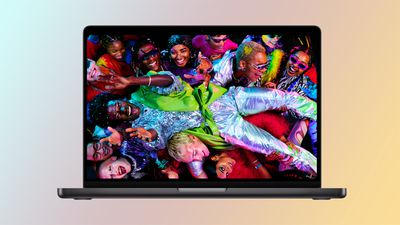
Apple's new 14-inch M5 Pro MacBook Pro with 24GB RAM and 1TB SSD is still available for an all-time low price this weekend on Amazon. It's available for $1,983.94, down from $2,199.00.
Note: MacRumors is an affiliate partner with Amazon. When you click a link and make a purchase, we may receive a small payment, which helps us keep the site running.
This beats the previous deal we tracked on this model by about $17, and as of writing it's only available in Space Black. Amazon provides a free delivery estimate by around May 12, with quicker delivery for Prime members.
You can also get up to $200 off the 16-inch MacBook Pro model right now on Amazon, with the 48GB RAM/1TB M5 Pro model hitting an all-time low price of $2,899.00, down from $3,099.00.
If you're on the hunt for more discounts, be sure to visit our Apple Deals roundup where we recap the best Apple-related bargains of the past week.
Deals Newsletter
Interested in hearing more about the best deals you can find in 2026? Sign up for our Deals Newsletter and we'll keep you updated so you don't miss the biggest deals of the season!
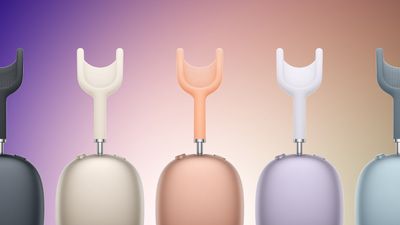
Apple's new AirPods Max 2 just launched last month, and you can get all five color options for $509.00 this weekend on Amazon, down from $549.00.
Note: MacRumors is an affiliate partner with some of these vendors. When you click a link and make a purchase, we may receive a small payment, which helps us keep the site running.
This is a match of the all-time low price on the brand new AirPods Max 2 headphones. Free delivery has the AirPods Max 2 arriving around May 11, while Prime members may be able to find quicker options in select locations.
If you're on the hunt for more discounts, be sure to visit our Apple Deals roundup where we recap the best Apple-related bargains of the past week.
Deals Newsletter
Interested in hearing more about the best deals you can find in 2026? Sign up for our Deals Newsletter and we'll keep you updated so you don't miss the biggest deals of the season!
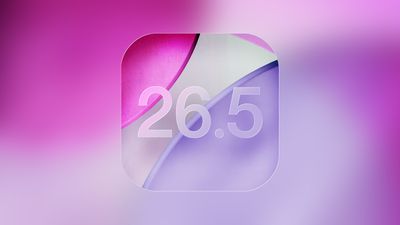
With Apple preparing to unveil iOS 27 and related updates at WWDC in just under a month, iOS 26.5 and friends are now right around the corner with some minor tweaks before we get our first look at the next major update.
This week also saw Apple making more changes to its Mac mini and Mac Studio offerings amid product shortages, while the company is weighing how it can meet strong demand for the new MacBook Neo, so read on below for all the details on these stories and more!
Top Stories
Apple Says iOS 26.5 Adds Three New Features to Your iPhone
As discovered during beta testing, iOS 26.5 enables end-to-end encryption for RCS messaging between iOS and Android devices. Apple says this security upgrade is limited to supported carriers around the world and will continue to roll out.
The second new feature added in iOS 26.5 is "Suggested Places" in Apple Maps. This section of the app provides recommendations based on your location and recent searches, and it will start showing ads in the U.S. and Canada later this year.
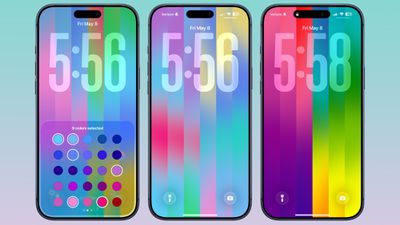
Third, a new Pride Luminance wallpaper that "dynamically refracts a spectrum of colors" is available to download on iPhones and iPads running iOS 26.5 or iPadOS 26.5. Released alongside a new Pride Edition Sport Loop and Pride Luminance watch face, Apple says the wallpaper celebrates LGBTQ+ communities around the world.
Why You Might Want to Wait to Buy a MacBook Pro
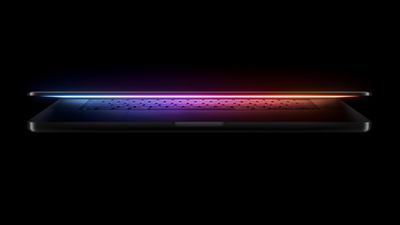
Apple refreshed the 14-inch and 16-inch MacBook Pro with M5 Pro and M5 Max models in March 2026, but depending on your needs and interests, you might want to skip this generation because there's something better in the works.
The M5 Pro and M5 Max MacBook Pro models have faster chips, but the same design that Apple has used since 2021. An updated design with new display technology and faster performance is coming in late 2026 or early 2027. Check out our overview of everything rumored for this upcoming "MacBook Ultra."
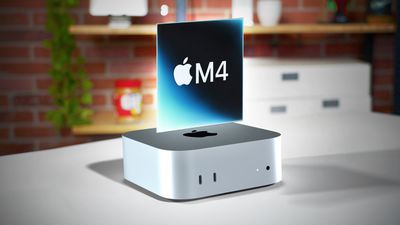
Apple Stops Selling Mac Mini With 256GB of Storage, Starting Price Rises to $799
In the U.S., for example, the Mac mini now starts at $799 with the M4 chip, 16GB of RAM, and 512GB of storage, whereas it previously started at $599 with the M4 chip, 16GB of RAM, and 256GB of storage.
Apple is also continuing to cut other configurations of the Mac mini and Mac Studio as the company has been hit by related issues of memory shortages throughout the industry amid strong demand from customers looking to use these machines for AI-related purposes.
Apple Was Caught Off Guard by MacBook Neo's 'Off the Charts' Demand
Apple's most affordable MacBook ever appears to be a resounding hit with customers, based on comments shared by CEO Tim Cook last week.
Apple has been struggling to meet customer demand for new laptop, and the company is said to be running out the A18 Pro chips used to power them. With Apple rumored to be considering ordering another run of the chips that will add to the cost, plus rising memory costs, tech columnist Tim Culpan believes Apple could be considering dropping the entry-level $599 configuration of the MacBook Neo and perhaps offering it in some additional colors.
iPhone 18 Pro Rumored to Keep Aluminum Finish Amid Durability Complaints
According to the Weibo leaker known as "Fixed Focus Digital," surface chipping on the iPhone 17 Pro has become a common complaint, and that users who have sought recourse from Apple have been told they cannot claim it, with the company classifying the issue as an inherent characteristic of the aluminum alloy material and normal wear and tear. Crucially, they added that the iPhone 18 Pro will "continue to utilize this same design approach" despite its weaknesses.
In recent posts on Weibo, Fixed Focus Digital said that certain parts are interchangeable between the two models, adding that the information originates from a reliable manufacturing source. The leaker described the component overlap as confirmation that the specification convergence between the iPhone 18 and iPhone 18e is real and measurable at the supply chain level. "Take it from me: The standard iPhone 18 model has been downgraded and its launch delayed—this decision is final and will not change," they added.
MacRumors Newsletter
Each week, we publish an email newsletter like this highlighting the top Apple stories, making it a great way to get a bite-sized recap of the week hitting all of the major topics we've covered and tying together related stories for a big-picture view.
Apple is developing a wearable AI device that's been described as a pin or pendant, and that could compete with a similar AI product coming from OpenAI's Jony Ive. It wasn't clear if the wearable would actually make it to launch because Apple sometimes cancels projects, but it is still in the works and could come as soon as next year.
1. It'll Look Like an AirTag
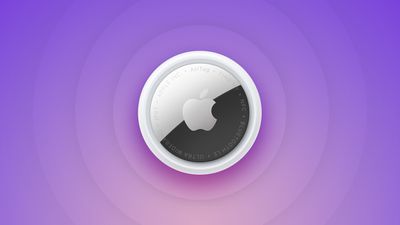
Apple's design plans could change, but rumors suggest the device is a pin or pendant that looks similar to an AirTag. It's been described as having a thin, flat, circular disc shape, with an aluminum and glass shell. A physical control button is included on one edge.
Apple wants the final version of the device to be about the same size as an AirTag, but because of the hardware inside, it could be thicker.
It sounds like the wearable will be versatile. It could have a clip to attach to clothing like a pin, but there's also supposedly a hole in the device so it can be worn as a necklace. Rumors have referred to it as both a pin and a pendant.
2. There Will Be Cameras
Apple's AI wearable is going to have at least one camera, but rumors are mixed on exactly what the camera will be used for.
Bloomberg says the pin will have a low-resolution camera that gives it info about its surroundings rather than a camera for capturing photos and videos. The camera will be always-on and processing visual data, but users will not be able to use it for images.
The Information reports there will be two front cameras, one with a standard lens and one with a wide-angle lens for capturing photos and videos.
Apple's AI device will rely heavily on Visual Intelligence, which is currently an iPhone feature that uses the camera to provide users with more information about places and objects around them.
3. Siri is the Brain
Rumors have described Apple's wearable as an AI pin or pendant, because it's going to be reliant on artificial intelligence. It's one of several AI-equipped devices that Apple is working on, and it will give wearers a way to interface with Siri without having to use an iPhone.
The camera on the pin will give Siri insight, and Siri will be able to answer questions about what the wearer is looking at or the wearer's surroundings.
Apple is planning to completely overhaul Siri in iOS 27, turning the personal assistant into a much smarter chatbot on par with Claude, Gemini, and ChatGPT.
4. iPhone Required
While the AI wearable will have a chip inside, it will be a smaller chip that's similar to the H2 in the AirPods. It won't use a high-powered chip, and most processing will need to be done on the iPhone.
The pin is not meant to be a standalone device, and it will instead be marketed as an iPhone accessory.
5. It'll Listen, But Might Not Talk Back
To listen for voice requests and to pick up sounds around the wearer, the AI pin will have a microphone. Apple has not yet decided whether to add a speaker for back-and-forth Siri conversations and audio playback.
If there's no speaker, responses might be directed to the wearer on the iPhone, Apple Watch, or AirPods.
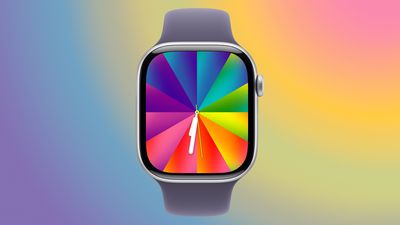
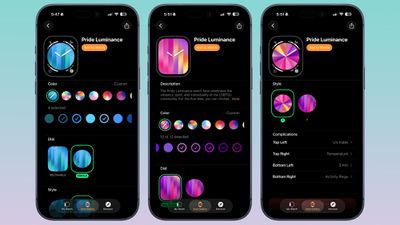
With watchOS 26.5, Apple is introducing a Pride Luminance face, and it's one of the most versatile and customizable watch faces. There are pre-configured color options, but the face also supports custom colors.
You can select 1 to 12 colors from a palette that has every color of the rainbow, some in-between shades, and black, white, brown, and gray.
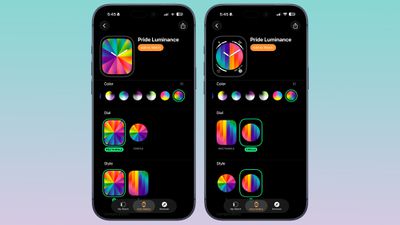
The colors you pick are distributed across the watch face in a gradient, available in either radial or linear styles. The first style looks like a starburst, while the second style is a series of rectangular lines.
The dial can be set to Rectangle for edge-to-edge color, or Circle for a smaller dial that supports four complications.
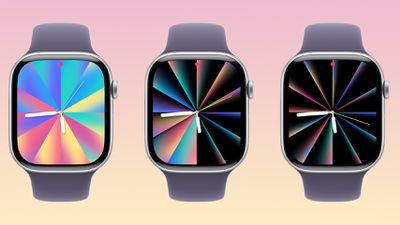
As with most of Apple's faces, the Luminance face is animated. When the wrist is down, it shrinks into slim lines of color on a black background, but when the wrist is raised, the full color palette is displayed. Colors will also shift slowly.
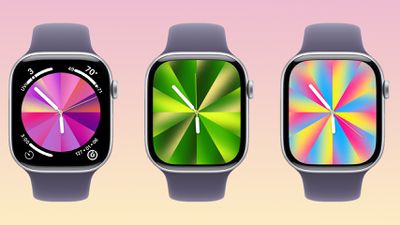
Apple's pre-selected colors represent different Pride flag colors, but with the deep customization options, the Pride Luminance face can match clothing, show off support for sports teams, or just display your favorite colors.
iOS 26.5 also has a matching Pride Luminance Wallpaper option that can be customized in the same way. You can choose up to 12 colors for the Lock Screen and Home Screen. On the Lock Screen, the colors collapse onto a black background when the device is locked.
To get the new watch face, you need iOS 26.5 and watchOS 26.5. Apple has released RCs, and the public versions of the updates are expected as soon as next week.
Note: Due to the political or social nature of the discussion regarding this topic, the discussion thread is located in our Political News forum. All forum members and site visitors are welcome to read and follow the thread, but posting is limited to forum members with at least 100 posts.
While not too much has been reported about the next Apple Watch models, there are a few rumors about potential design changes and watchOS 27 features.
Apple Watch Series 12 and Apple Watch Ultra 4 models are expected to be released in September, and we have outlined some of the key rumored hardware and software changes below. A new Apple Watch SE is not expected this year, as that model was just updated last year and it typically goes two to three years between refreshes.
Apple will unveil watchOS 27 during its WWDC 2026 keynote on Monday, June 8, and a developer beta will likely be available immediately afterwards. A public beta typically follows in July, and the update should be widely released in September.
Touch ID would likely be built into the Apple Watch's side button, enabling users to unlock the device with their fingerprint instead of a passcode.
Even though new Touch ID references were discovered within the code, there is no guarantee that Apple will move forward with this plan either this year or ever. In addition, credible sources such as Bloomberg's Mark Gurman and Apple supply chain analyst Ming-Chi Kuo have yet to mention Touch ID coming to the Apple Watch this year.
New Chips After One-Year Hiatus
While the Apple Watch Series 11, Apple Watch Ultra 3, and Apple Watch SE 3 all contain the same S10 chip as the previous year's models, the leaked Apple code indicated that the Series 12 and Ultra 4 will get a new chip. It is unclear if the chip will have S11 or S12 branding, but performance improvements are expected either way.
On watchOS 26, the following Apple Intelligence features are available on an Apple Watch when it is paired with an iPhone 15 Pro or newer:
Workout Buddy
Live Translation in Messages
Notification Summaries
When it announced the dates for WWDC 2026, Apple promised to unveil "AI advancements" across its platforms, and it can be reasonably assumed that watchOS 27 will include some additional Apple Intelligence features powered by the iPhone.
New Satellite Features
Apple Watch Ultra 3 has built-in satellite connectivity, enabling Emergency SOS, Find My, and Messages via satellite without any reliance on an iPhone.
Amazon last month announced plans to acquire Globalstar, the satellite company that powers Apple's satellite features on the iPhone 14 and newer and the Apple Watch Ultra 3. In turn, Amazon announced that it has signed an agreement with Apple to provide satellite connectivity for current and future iPhone and Apple Watch features.
As of today, end-to-end encryption for Instagram direct messages is no longer available. DMs that you send to people on Instagram will no longer feature full encryption, and your conversations are not protected from Meta.
Meta can potentially see what's in messages shared between users on Instagram, and that information can be shared with law enforcement agencies worldwide.
End-to-end encryption has been an opt-in messaging feature on Instagram since 2023, but Meta quietly removed it. Meta told The Guardian earlier this year that it is removing the encryption feature because not enough people adopted it. At the same time, Meta did not turn it on by default, nor did the company alert users that it was an option. Sending an encrypted message required turning it on for each individual conversation by tapping into a buried per-conversation setting. Meta also never rolled the feature out to all Instagram users.
"Very few people were opting in to end-to-end encrypted messaging in DMs, so we're removing this option from Instagram in the coming months," Meta said. Meta suggests that people who want end-to-end encryption should use WhatsApp, which is another messaging app that it owns. iMessage and other apps like Signal that are not Meta-owned also offer end-to-end encryption.
Law enforcement agencies and child safety advocates have long pushed for Meta to remove encryption, but Meta could also be getting something out of the feature's removal. It's possible the company will be able to use direct messaging content for advertising algorithms or training chatbots. Meta says that content in DMs is not used for targeted ads right now, but there is wording that allows for product improvement.
Meta's decision to remove Instagram's end-to-end encryption comes 11 days before the Take It Down Act takes effect. The actf will require platforms to remove non-consensual intimate imagery like deepfakes within 48 hours of a takedown notice, but with E2EE in place, Meta can't access the content needed to comply.
Instagram users who have end-to-end encrypted chats have been given instructions on how to download media or messages that they want to keep.
Last year, Meta started using private generative AI conversations to personalize content and customize ad recommendations for Facebook, Instagram, WhatsApp, and Messenger users, so there seems to be little limit on the data that it will use to generate revenue. WhatsApp and Messenger continue to have end-to-end encryption for the time being.
After more than a year of discussion, Apple and Intel established a preliminary agreement that will see Intel manufacturing processors for Apple devices, reports The Wall Street Journal.
Intel would make chips based on Apple chip designs, much like TSMC. Prior rumors on Intel's Apple talks have suggested Intel could make some of the lower-end processors used in Apple devices, including the lowest-end M-series chip used in select iPad and Mac models.
Before Apple adopted Apple silicon, it used Intel-designed chips for its Macs, but had to deal with continual chip delays. Apple now designs its own Arm chips that are manufactured by TSMC, allowing it to provide updates at a more regular cadence.
Intel makes its own chips, but it also makes chips for other companies. Apple has not previously eyed Intel as a supplier because it has lagged behind other chip makers like TSMC and Samsung, and because of the history between the two companies. Intel replaced CEO Pat Gelsinger with Lip-Bu Tan last year, and Tan has led an effort to revitalize Intel's chip manufacturing business.
Tan has been focusing on Intel's most advanced process node, 14A, which will reach production in 2028. Intel has been seeking customers for its 14A 1.4nm node. Intel also makes 18A chips built on a 1.8nm node, along with chips built on older process nodes.
Apple has been working to diversify its supply chain, because Taiwan Semiconductor Manufacturing Co. (TSMC) is currently its sole Apple silicon manufacturer. During Apple's latest earnings call, CEO Tim Cook said iPhone 17 models had been constrained during the quarter because Apple could not get enough A19 and A19 Pro chips from TSMC.
TSMC is one of the world's largest chip manufacturers, and along with making chips for Apple, it makes chips for other companies like Nvidia. With the AI boom and huge demand for AI servers, TSMC has more limited capacity for chips made for consumer devices, and Apple has less leverage to convince TSMC to make its chips.
Apple today seeded new release candidate versions of upcoming iOS 26.5 and iPadOS 26.5 updates to developers for testing purposes, with the software coming five days after the first RC. It's not clear what's changed in the second RC, but Apple typically sends out another candidate if there are bugs that need to be addressed.
Registered developers can download the betas from the Settings app on the iPhone or iPad by going to the General section and selecting Software Update.
iOS 26.5 and iPadOS 26.5 do not include new Siri capabilities, suggesting any Siri updates are being held until iOS 27. The Maps app has a Suggested Places feature for recommending locations to visit nearby based on trends and recent searches, plus Apple is laying the groundwork for ads in the Apple Maps app.
Apple is continuing to test end-to-end encryption (E2EE) for RCS messages between iPhone and Android users. Apple included the feature in the iOS 26.4 beta, but removed it before the update launched to the public.
There is a new Pride wallpaper to go along with the Pride Apple Watch band for this year.
More detail on what's new in iOS 26.5 can be found in our iOS 26.5 beta features guide. iOS 26.5 is likely to see a launch next week.
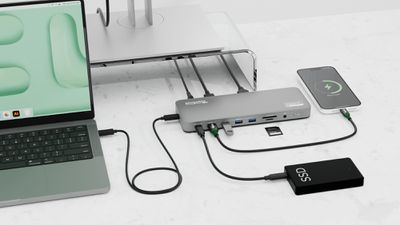
Plugable makes a wide range of accessories for Apple devices, and it is perhaps best known for its hubs and docks. There are several dock and hub options that work well with Apple's new low-cost MacBook Neo, and Plugable's solutions are affordable.
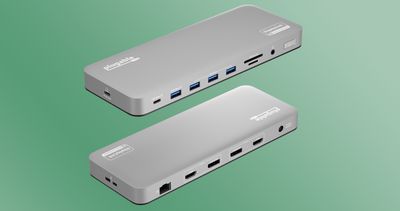
The UD–6950PDH USB-C 14-in–1 Dock is priced at $180, and it adds multiple ports to the MacBook Neo or another Mac. There's a 5Gb/s USB-C port that also provides power for accessories, four 5Gb/s USB-A ports (one of which can power peripherals), microSD and SD card reader slots, a 100W USB-C port for charging a connected MacBook, a 1Gb/s Ethernet port, two HDMI ports, two DisplayPorts, and a K-Lock for security.
The dock supports two 4K 60Hz displays connected via HDMI or DisplayPort, and it uses DisplayLink software to get around display limitations on the MacBook Neo and other Macs. Even though the MacBook Neo only supports one external 4K display natively, with the dock, it can power two displays.
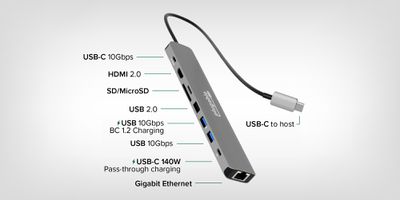
For those who only need a single display, Plugable has the $50 9-in–1 USB-C Hub. It connects to the MacBook Neo or another Mac via USB-C, adding several useful ports. Unlike the dock, it does not need an external power source because it is bus-powered.
The hub has a 10Gb/s USB-C port, an HDMI 2.0 port, microSD and SD card slots, a USB 2.0 port, two 10Gb/s USB-A ports (one offers 15W charging for accessories), a USB-C port for 125W passthrough charging to the connected Mac, and a Gigabit Ethernet port. Plugable currently has a 15% discount on the 9-in–1 Hub on Amazon.
Plugable's MacBook Neo accessory lineup is rounded out with a compact $24 USB-C Charger Block, which comes in either black or white. The power adapter provides 30W for the MacBook Neo, which is ideal. It uses GaN technology so it's small in size, and it has collapsible prongs, making it ideal for travel. Plugable is offering a 16% discount on the power adapter on Amazon this week.
We have a MacBook Neo and a Plugable accessory kit to go along with it for one lucky MacRumors reader. To enter to win, use the widget below and enter an email address. Email addresses will be used solely for contact purposes to reach the winner(s) and send the prize(s). You can earn additional entries by subscribing to our weekly newsletter, subscribing to our YouTube channel, following us on Twitter, following us on Instagram, following us on Threads, or visiting the MacRumorsFacebook page.
Due to the complexities of international laws regarding giveaways, only U.S. residents who are 18 years or older are eligible to enter. All federal, state, provincial, and/or local taxes, fees, and surcharges are the sole responsibility of the prize winner. To offer feedback or get more information on the giveaway restrictions, please refer to our Site Feedback section, as that is where discussion of the rules will be redirected.
The contest will run from today (May 8) at 9:00 a.m. Pacific Time through 9:00 a.m. Pacific Time on May 15. The winner will be chosen randomly on or shortly after May 15 and will be contacted by email. The winner will have 48 hours to respond and provide a shipping address before a new winner is chosen.



 Note: MacRumors is an affiliate partner with B&H Photo. When you click a link and make a purchase, we may receive a small payment, which helps us keep the site running.

 Note: MacRumors is an affiliate partner with Amazon. When you click a link and make a purchase, we may receive a small payment, which helps us keep the site running.
 Note: MacRumors is an affiliate partner with some of these vendors. When you click a link and make a purchase, we may receive a small payment, which helps us keep the site running.