When introducing the new Pixel 9 models today, Google didn't miss an opportunity to denigrate Apple Intelligence. All of the new Pixel 9 devices are integrated with Google's AI technology, Gemini, and there are a host of new AI features that Google introduced.
Like Apple Intelligence, Gemini works using on-device processing power, but Google made sure to point out that Gemini is capable enough to answer complex queries without handing a task off to another AI service. The comment was a dig at Apple's plan to add ChatGPT integration to Siri, as ChatGPT will be able to do things that Siri can't. From Google:
Gemini is deeply integrated with Google apps and Android and can handle complex queries without hand-off to third-party AI providers you may not know or trust.
Apple will use ChatGPT for things like generating text from scratch, something that Apple Intelligence doesn't do. Apple did add Writing Tools, but it is limited to rewriting content that you've already written to change the tone or style. ChatGPT will also be able to generate images that Image Playground cannot, such as photorealistic content, and it will handle requests like generating meal recipes.
When a user asks Siri something that Siri cannot handle, the personal assistant will ask for permission to hand it over to ChatGPT. ChatGPT integration is entirely optional, and OpenAI is partnering with Apple to bring it to iPhone users for free.
Rumors suggest that Apple also plans to add Gemini integration to the iPhone, allowing iPhone users to choose their preferred AI service. It's not quite clear if Apple Intelligence is incapable of handling full text generation and photorealistic image creation, or if these are capabilities that Apple feels are a little too questionable to touch given the sentiment about AI-created content.
Google's new Pixel devices have several interesting AI features, including Pixel Studio, a new image generator that uses an on-device diffusion model. It will generate stickers and images using text prompts, similar to Image Playground.
AI will be able to edit photos to add objects that weren't originally in the image, plus Google plans to use it for custom weather reports. The camera app has an option to merge two photos together so that the person taking a group photo can be in the picture, and it can catalog and remember information from screenshots. There's also a feature called Call Notes, which mimics Apple's call recording feature by recording and summarizing phone calls.
Google has also added Gemini Live to the Pixel 9 devices and accompanying earbuds, with Gemini Live allowing users to have full free-flowing conversations with Gemini.
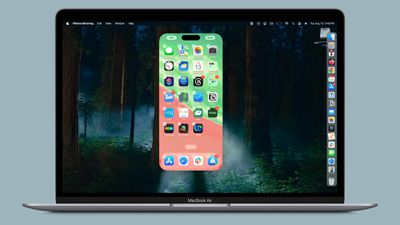
With the latest betas of iOS 18 and macOS Sequoia, Apple added new functionality to iPhone Mirroring, the feature that lets you control your iPhone from your Mac. When iPhone Mirroring first debuted in the betas, there was no support for managing the Home Screen, but that's now changed.
Apple added an option to get into jiggle mode, as noted by 9to5Mac. After activating the iPhone Mirroring app, you can click and hold on the iPhone's Home Screen to activate jiggle mode. In this mode, you can do everything you can in jiggle mode on the iPhone itself, from deleting and rearranging apps to managing widgets.
You can add widgets, change widget sizes, activate app long press functionality, turn on dark mode icons, or opt into icon tinting. There is no option to get to the Lock Screen or Control Center, though, and notifications can only be viewed through the Mac notification center.
Apple added the new jiggle functionality in the iOS 18, iOS 18.1, macOS 15, and macOS 15.1 betas, so if you have any of the developer or public betas, you should be able to use the new iPhone Mirroring functionality as of now.
Apple will host its annual National Parks Apple Watch activity challenge on Sunday, August 25. The event is designed to celebrate national parks across the United States.
Apple Watch owners can earn an Apple Watch activity award by doing a workout that lasts for 20 minutes or more on August 25, 2024.
As with all of the activity challenges, the award will come with animated stickers that can be used in the Messages app.
Apple often offers other national parks-themed content in August, including an Apple Pay donation program, Apple TV+ content, Apple Music songs, books, podcasts, and more.
Google today announced the launch of several new smartphones in its Pixel lineup, including the Pixel 9 Pro Fold, the Pixel 9, the Pixel 9 Pro, and the Pixel 9 Pro XL, all of which have new Gemini-powered AI capabilities. There's also a new Pixel Watch 3 and Pixel Buds Pro 2 earbuds.
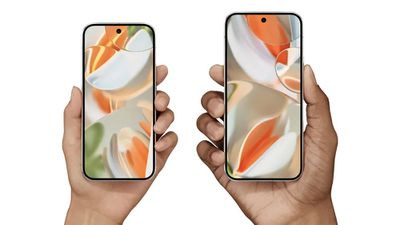
Google is offering two sizes of its Pro model for the first time, with the Pixel 9 Pro and 9 Pro XL available in 6.3-inch and 6.8-inch sizes, respectively. The standard Pixel 9 has a 6.3-inch display, while the Pixel 9 Pro Fold has a 6.3-inch cover display that unfolds into an 8-inch display.
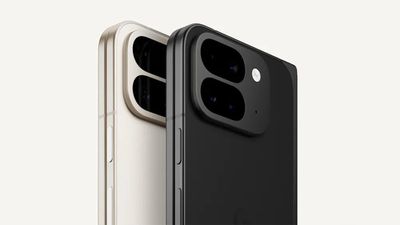
The Pixel 9 models have a redesigned rear camera bar that's centered at the back of the device. Other design details include a matte glass back and polished metal sides, and Google says the new devices are twice as durable as the Pixel 8 smartphones. The Fold has a thinner chassis, a fluid-friction hinge, and a rectangular camera setup on one half of the device.
Google is using new OLED displays that it calls "Super Actua" for the Pro, Pro XL, and Fold, and all three are brighter than prior-generation models. The Pixel 9 Pro Fold is 80 percent brighter than the Pixel Fold. Google is also using Corning Gorilla Glass Victus 2.
The new Pixel smartphones are equipped with the Google Tensor G4, which Google says was custom built for AI like Gemini. It is faster and more power efficient than Google's prior processor, with Google also adding more RAM (12GB for the Pixel, 16GB for the Pixel Pro models). There are also improvements to battery life and camera technology across the board, with the Pixel 9 Pro models adopting a 5x telephoto lens with 20x Super Res Zoom.
Gemini is the AI assistant on the Pixel smartphones, and it is "deeply integrated" into Google apps with support for Gemini Live on the Pro models. Gemini Live requires a Gemini Advanced subscription and offers a "mobile conversational experience" for "free-flowing conversations" with the AI. Pixel users can communicate with Gemini using text, images, or voice. Pixel Studio is a new app that features an on-device image generator that creates stickers and images using text-based prompts.
There are several photographic capabilities available, such as Add Me, a feature that uses augmented reality and AI to add the photographer into the shot by combining multiple images together. Auto frame allows images to be reframed for better composition, Zoom Enhance fills in missing pixels so you can zoom in further after taking a shot, and the Magic Editor supports editing photos with text prompts. Google says you can do things like adding wildflowers to an open field.
Google is using AI to supplement the weather app for custom weather reports, create lists in Google Keep, summarize emails and messages, and save, recall, and organize information from screenshots. Call Notes is an option that saves a private summary of a conversation after a phone call. Satellite SOS, a feature that has been available on the iPhone since 2022, is now available on the Pixel 9 smartphones.
The Pixel Buds Pro 2 are lighter and smaller than the Pixel Buds Pro, and Google is using AI and a faster Tensor A1 chip to improve Active Noise Cancellation. Gemini integration is built in, including the Gemini Live feature for conversing with Gemini AI. Other features include Find My Device integration, Clear Calling for cutting down on ambient noise, and Conversation Detection for disabling ANC when someone speaks.
The Pixel Watch 3 with circular design comes in two sizes, including 41mm and a new larger 45mm option, with smaller bezels for larger display sizes. Both are more power efficient thanks to new display technology that's also brighter than before.
The watch has a new health feature that is able to detect if a person loses pulse, placing a call to emergency services for assistance. It is also able to automatically detect sleep and enter Bedtime mode to conserve battery, and it can last for up to 36 hours. Other features include Daily Readiness, Cardio Load, and Target Load, which are similar to capabilities Apple is introducing with watchOS 11.
All of Google's new devices can be pre-ordered today. The Pixel 9 starts at $799, the Pixel 9 Pro starts at $999, the Pixel 9 Pro XL starts at $1,099, and the Pixel 9 Pro Fold starts at $1,799. The Pixel Buds Pro 2 are priced at $229, and the new Pixel Watch 3 is priced starting at $349.99.
Apple today released the fourth beta of watchOS 11 to public beta testers, allowing non-developers to give the new features a try ahead of when the software launches this fall. The fourth beta comes two weeks after the third beta.
watchOS 11 can be downloaded after signing up on Apple's beta software website and upgrading your iPhone to the public beta version of iOS 18. You'll need to open up the Watch app on iPhone, go to General, select Software Update, and choose the watchOS 11 Public Beta option under Beta Updates.
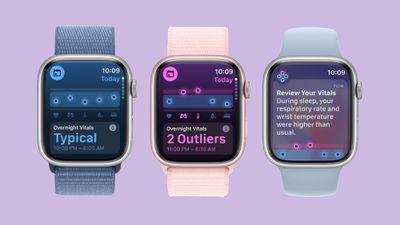
With watchOS 11, Apple added a new Vitals app that can be used to give you a daily overview of your health metrics, letting you know if anything is out of the ordinary. It compares information collected at night like heart rate, sleep, respiratory rate, and oxygen level to your levels over the previous weeks.
Smart Stack has new widgets like Translate and Shazam, plus it's smarter because it is able to suggest widgets based on time, date, location, and daily routine. Interactive widgets let you access app features from the Smart Stack, and it also supports Live Activities.
Training Load is a new way of measuring how the intensity and duration of workouts impact the body over time, with Apple providing an effort level for cardio-based workouts to help you know when to rest and when to push harder.
You can now customize your Activity Ring requirements for different days of the week, and Apple added support for rest days. Taking a break from activity will no longer ruin a streak because you can pause for a day, a week, a month, or more.
Other new features include more workout types, Check In for Messages, a revamped Photos watch face, improvements to Double Tap, and more, with additional information available in our watchOS 11 roundup.
India's Competition Commission has recalled two investigative reports accusing Apple of antitrust violations after the company raised concerns about the disclosure of confidential commercial information (via Reuters).
The Competition Commission of India (CCI) has withdrawn two key reports that alleged Apple breached local competition laws. The recall, which is highly unusual, comes after the company filed a complaint claiming that the reports contained sensitive commercial data that was improperly disclosed to its competitors, including Tinder-owner Match Group. The commission has not publicly detailed the exact nature of the confidential information in question, but it is believed to primarily concern financial data related to Apple's operations in India.
The reports were part of a prolonged investigation into Apple's practices in the Indian market, focusing on allegations that the company abused its dominant position in the app store market to force developers to use its proprietary in-app purchase system. The system, which charges commissions of up to 30%, has been a subject of scrutiny around the world, with regulators in Europe, Japan, South Korea, and the United States raising similar concerns about its impact on competition and market fairness.
Apple's defense in the case centers on its argument that it is a minor presence in India, where only 3.5% of the country's 690 million smartphones are iPhones, according to data from Counterpoint Research. Despite this relatively small market share, the CCI's initial findings suggested that Apple had exploited its position to the detriment of app developers, users, and other payment processors.
The recall is expected to delay the investigation by several months as the CCI undertakes the process of redacting the sensitive information and potentially reissuing revised reports.
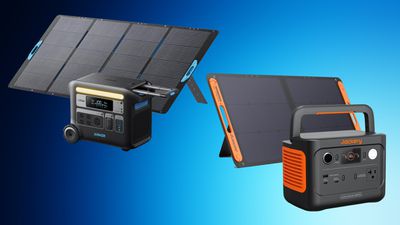
Today we're tracking a big selection of discounts on Anker's and Jackery's best portable power stations on Amazon, with as much as $1,750 in savings on these devices. These accessories are high-capacity portable batteries that can provide backup power to a wide variety of devices, from laptops to RVs.
Note: MacRumors is an affiliate partner with Amazon. When you click a link and make a purchase, we may receive a small payment, which helps us keep the site running.
For the Anker deals, you'll need to have a Prime membership in order to see some of these discounted prices, while others require an on-page coupon to be clipped before you see the final deal price. In regards to the Jackery discounts, only one requires an on-page coupon and all of the others have been automatically applied.
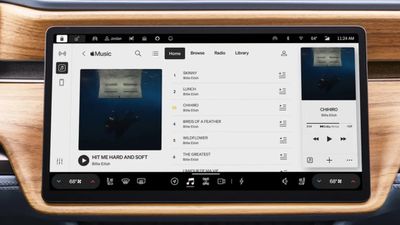
Apple Music with spatial audio is now available in Rivian electric vehicles as part of the company's Connect+ subscription.
Rivian's latest software update brings a unique, built-in Apple Music app to the company's electric vehicles, such as the R1T truck and R1S SUV. The Apple Music app allows users to access a library of over 100 million songs, 30,000 curated playlists, and global live-streaming radio stations as part of a fully-integrated experience in Rivian's infotainment system.
Rivian's Connect+ subscription is required to access streaming services like Apple Music and Spotify. The subscription is priced at $14.99 per month or $149.99 annually and enables other features such as Wi-Fi hotspot capabilities, satellite imagery, and enhanced voice commands via Alexa.
Vehicles equipped with Rivian's Premium Audio system, which includes an 18-speaker, 960-watt surround sound setup, can also play Dolby Atmos Apple Music songs with spatial audio, enabling music to be experienced in a more three-dimensional space in the vehicle. Rivian is offering a two-month free trial of Connect+ starting today.
Rivian CEO RJ Scaringe recently explained that the company has no plans to introduce support for Apple CarPlay in its vehicles, remarking that "we just believe that it is such an important piece of real estate, the digital ecosystem, that it was something we want to retain" and "we have taken the view of the digital experience in the vehicle wants to feel consistent and holistically harmonious across every touchpoint."
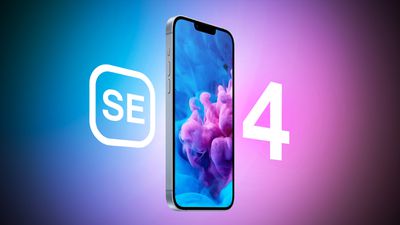
Next year's iPhone SE 4 will almost certainly come with 8GB of RAM, up from 4GB in the 2022 model, due to the hardware requirements of Apple Intelligence.
Currently in Apple's smartphone lineup, only the iPhone 15 Pro models support Apple Intelligence, Apple's suite of AI features coming in iOS 18.1, because the features require a minimum of 8GB of RAM. There is only 6GB RAM in the iPhone 15 and 15 Plus, so they will miss out.
Following the release of the iPhone 16 lineup in September, Apple will release the fourth-generation iPhone SE as early as the beginning of 2025, according to Bloomberg reporter Mark Gurman, and he says "you can bet that it will have Apple Intelligence."
So unless Apple discontinues the iPhone 15 models this year when the iPhone 16 series debuts, this will leave Apple's smartphone lineup in an unusual position, with a sub-$500 device in the iPhone SE 4 able to run Apple's latest AI features while the standard iPhone 15 models cannot.
The fourth-generation iPhone SE is rumored to feature an iPhone 14-like design, Face ID instead of Touch ID, a USB-C port, an Action button, an Apple-designed 5G modem, an A18 processor, and an all-screen look that does away with the Home Button. The device's display is expected to grow in size from 4.7 inches to 6.06 inches and use OLED for the first time.
Apple suppliers are expected to begin ramping up mass production of the device in October of this year. The device could be released ahead of the Lunar New Year in January 2025. However, all three existing iPhone SE models were announced in March over the years, so a March 2025 release seems quite possible too.
With the release of iOS 18.1 beta 2, Apple has apparently opened up access to Apple Intelligence for English speakers located in the European Union, something that was not possible in previous versions.
One of the reasons Apple limited region access to Apple Intelligence was that it only supports US English. Another reason Apple Intelligence was previously not available in the EU was because Apple geo-locked access within the bloc, likely due to regulatory issues related to the Digital Markets Act. On the face of it, those issues still remain, and it's still not clear whether they will be resolved by the time iOS 18.1 is released in October. But at least for now, there doesn't seem to be anything stopping users in the EU who have a US App Store ID from testing out Apple Intelligence in the beta if their device supports it.
Supported Devices
Apple Intelligence encompasses a range of capabilities, including composing text and emails, automating actions across various apps, generating images, summarizing documents and texts, and more. However, these features require a lot of on-device computing power, so before you do anything, it's worth checking if your device is compatible. iPhone users need either an iPhone 15 Pro or iPhone 15 Pro Max to run Apple Intelligence, while only iPads powered by M1 or later Apple silicon processors are compatible.
Install Beta Software
If your device is supported, the first thing you need to do is install the iOS 18.1 developer beta for your device. Once you've followed the instructions provided in the linked article and your device is up and running with the latest beta, follow these steps on your iPhone or iPad.
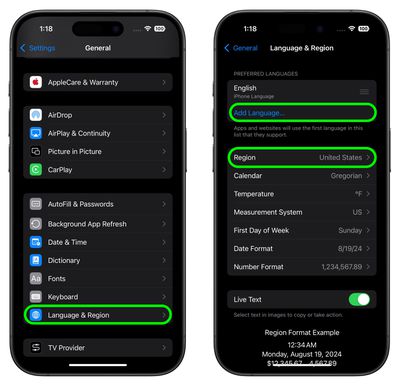
Open Settings, then tap through to General ➝ Language & Region.
Tap Add Language.. and choose English (US).
Tap Region and choose United States. (Note that this won't affect your App Store regions or purchases.)
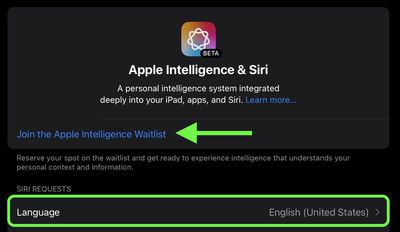
Return to the main Settings menu and tap Apple Intelligence & Siri.
Tap Language and choose English (United States).
You will now be able to join the Apple Intelligence waitlist, which in most cases gets accepted in just a few minutes. Under the Apple Intelligence header text, tap Join Waitlist.
After what should hopefully be a short wait, the message will change to Turn On Apple Intelligence. Tap it, and a welcome message should appear, indicating you have sucessfully enabled the AI features on your device.
You can learn more here about all of the Apple Intelligence features available in the second iOS 18.1 developer beta. Note that some of the Apple Intelligence additions won't be coming until later next year.
Article revised to add that this method appears to require that the device is signed in with a US App Store ID, according to some user reports.
TikTok is rolling out new direct messaging features for its app, including "highly requested" group chats with support for up to 32 people, the company has announced.
Group chats allow users aged 16 and over to share and comment on TikTok videos with friends and family members without having to open a separate messaging app like WhatsApp or Messenger.
Starting a group chat can be done in a couple of ways. Users can tap a Chat button at the top of the TikTok inbox and select the names of people they want to include, or they can tap Start Group Chat when sharing a post with several people.
TikTok says it has built safety into the design of group chats for teens, and taken steps to block communication with strangers. Like regular direct messages, group chats are not available to users aged between 13 and 15.
Additionally, users in the next 16-17 age bracket can only join a group chat if they have at least one mutual friend included. If they create a group chat, they have to review and manually approve anyone new who joins.
Owner ByteDance notes that the new group chat feature "isn't currently available everywhere," but its support page does not provide further details on when that may change.
Lastly, TikTok is also bringing stickers to direct messages, allowing users to communicate with each other more visually. Users can now create and upload custom stickers to the platform for anyone to use.
Opera has released its artificial intelligence-powered Opera One browser for iOS, following several weeks in beta testing.
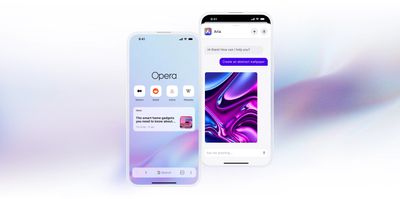
The iPhone app mimics the minimalist aesthetic of the company's desktop browser, and "intelligently hides unnecessary elements" to make the browsing experience free from distractions. When scrolling on a page, for example, the browser hides the bottom and the top bar for a full-screen view.
The search bar sits at the bottom of the interface for easier access, provides quick search suggestions while typing, and includes Aria AI assistant integration. There's also a new swipe-to-search gesture that lets users activate the search bar with a simple swipe down, similar to when users search for apps from the iPhone's Home Screen via Spotlight. The placed search bar is the default option, but users can alternatively choose Standard Navigation or Fast Action Button style.
Aria can assist with a wide range of tasks, from web searches to generating text and images, according to Opera. With Voice Input, Aria allows users to speak queries instead of typing them, making it convenient when on the move or in need of hands-free operation. Aria can also create images using Google's Imagen2 model, enabling users to generate visuals simply by providing a prompt.
Additionally, there's a new start page carousel that is designed to keep users informed without cluttering up the interface, integrating news, live scores, and product tips into the wallpaper background. Opera also includes a built-in ad blocker, a free VPN service, and several theme customization options.
It will likely be years before Apple Intelligence has a compelling enough feature set that people will pay for, Bloomberg's Mark Gurman said in this week's Power On newsletter. Apple Intelligence is still so new that Gurman expects it will "take three years" for Apple to create a product that's worth charging for, and even that "may be the best-case scenario."
Gurman suggested last month that Apple's long-term plan is to develop something like Apple Intelligence+, with add-on features that users would pay a monthly fee to access. Apple already has a tiered subscription setup for iCloud, so Apple Intelligence could work similar to that.
iCloud provides 5GB of free storage to all users, but for a fee, iCloud+ subscription plans include more storage and also access to features like iCloud Private Relay. In the future, basic Apple Intelligence access could continue to be free, with more advanced features requiring a subscription. OpenAI and other companies charge for AI queries and image generation after a set free limit due to the computing power and costs associated with AI.
As of right now, the first Apple Intelligence features are only partially available in the iOS 18.1, iPadOS 18.1, and macOS Sequoia 15.1 betas. Apple has added Writing Tools, some basic Siri improvements, smart replies in Messages and Mail, and a few other features like a Memory Maker option in Photos, but Image Playground, Genmoji, and the bulk of the Siri upgrades won't be coming until later in 2024 and 2025.
In addition to fully rolling out the first Apple Intelligence features that were announced at WWDC 2024, Apple still needs to work to expand the functionality to more countries, including China and the European Union. The features that Apple showed off in June likely won't all be available until 2025, and there's no word yet on when it might expand to more countries (including other languages), so it's not hard to see how it could take until 2027 or beyond to have a robust product.
As another reference point, Apple introduced Emergency SOS via satellite alongside the iPhone 14 in 2022, a feature that the company plans to eventually charge a fee to use, but it will be at least 2025 before the first iPhone owners have to pay for it. Apple's fee for Emergency SOS has not yet been announced.
When Apple does start charging for Apple Intelligence, it could be baked into existing iCloud+ plans or included as part of Apple One, Apple's subscription bundle. Counterpoint Research analyst Neil Shah recently speculated that Apple could charge between $10 and $20 for Apple Intelligence, with the fee rolled into an Apple One plan. The basic Apple One plan is priced at $19.95 per month right now, and it includes 50GB iCloud+ storage, Apple TV+, Apple Music, and Apple Arcade.
Apple is beta testing iOS 18 and the first update to iOS 18 concurrently, and we got the second betas of iOS 18.1, iPadOS 18.1, and macOS Sequoia 15.1 today alongside the sixth betas of iOS 18, iPadOS 18, and macOS Sequoia 15.
Many of the changes in iOS 18.1 are focused on bringing the .1 betas in line with the standard betas, which recently received updates to Photos and Safari, while updates in iOS 18 are to finalize features and prepare it for launch.
Photos Redesign (iOS 18.1)
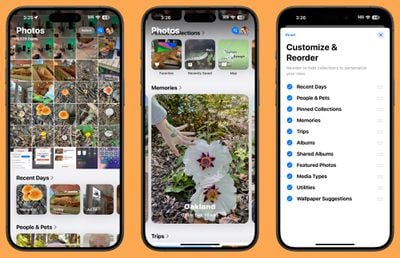
The redesigned Photos app in iOS 18 has proven to be not so popular with some users, so Apple streamlined it ahead of launch. The all-in-one design remains, but Apple removed the carousel to make the app less confusing and less repetitive. Apple introduced these design changes in the standard iOS 18 update last week, and has now brought them to iOS 18.1.
With prior versions of iOS 18, you could swipe left to right to get to various Collections, but now Collections are accessed solely by scrolling down from the main library view. Collections include your custom albums and content that was previously in the For You section, such as featured images, videos, favorites, memories, and more.
The Photo Library now displays more images at once in the photos grid, and Apple moved albums higher by default to make it easier for users to get to them. Recently Saved content has been integrated into Recent Days, so it's simpler to find too.
Distraction Control in Safari (iOS 18.1)
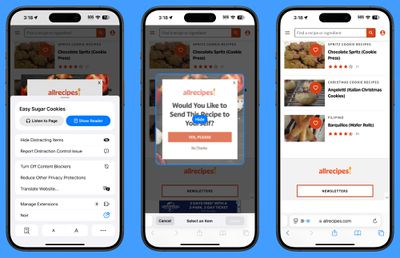
Distraction Control is a new Safari option that lets you hide distracting elements from webpages and articles. You can use the feature to get rid of sign-in windows, cookie preference popups, newsletter signup videos, GDPR banners, and autoplay videos, among other things.
What you can't use Distraction Control for is hiding ads. Apple has been clear that Distraction Control is not an ad removing tool, and while you can temporarily hide an ad, it pops right back when the ad or webpage refreshes. Distraction Control is designed for static content, not dynamic content, so anything that refreshes can't be hidden from view.
You can get to Distraction Control by opening up Safari, selecting the page settings, and tapping on Hide Distracting Items. From there, you can tap on an element on the page that you want to hide from view. If you're not seeing the Hide Distracting Items option, tap on the three dots in the settings and then choose Edit and you'll be able to add it to your quick access options.
What you've hidden will remain blocked from view as long as it's not dynamic content, but you can restore a webpage to default by going into the same options and tapping on Show Hidden Items.
Note that if you hide a cookie banner or GDPR popup, it is the same as closing the banner without submitting your website preferences. Distraction Control settings are on-device and will not sync from one device to another, so you will need to set it up on each of your devices.
Distraction Control was added to iOS 18 and iPadOS 18 last week, and now the feature is also in the .1 betas.
Photo App Collection (iOS 18 Beta 6)
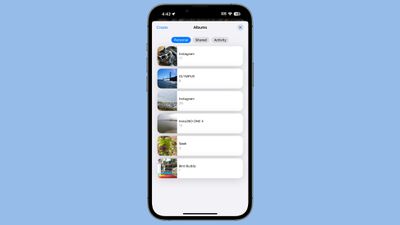
Apple has further tweaked the Photos app in iOS 18 beta 6, introducing a redesigned look for the Albums Collection. Each album has a separate card, with a main thumbnail on the left. Prior versions had the album name on the left and a collection of small thumbnails.
Control Center (All Betas)
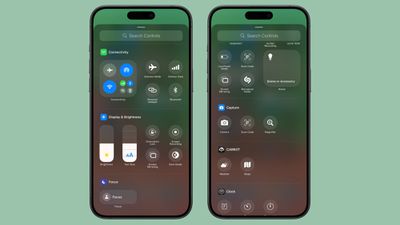
In Control Center, there is a new toggle for turning Bluetooth on and off. It is separate from the general communication controls that are all lumped together, and it can be added to any Control Center page.
You can also add the Bluetooth toggle to the Lock Screen in place of the Camera or the Flashlight or assign it to the Action Button on the iPhone 15 Pro and Pro Max.
There have been some tweaks to the way Control Center icons are organized in the gallery. A "Capture" section, for example, has Camera, Scan QR Code, and Magnifier options, and Silent Mode has been added under Sounds.
Dark Mode Notification Icons (All Betas)
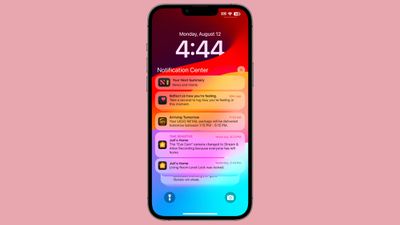
When you have Dark Mode icons turned on, notifications that you receive from apps with a Dark Mode icon will show with that icon properly rather than showing with the Light Mode icon.
Note that in iOS 18.1 beta 2, both Dark Mode and Dark Mode icons need to be turned on for notifications to have the darker icon. In iOS 18 beta 6, dark mode icons will show up with the darker icons turned on. Dark Mode is not required.
Splash Screens (All Betas)
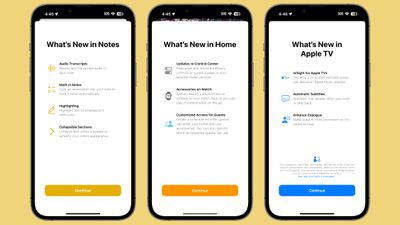
As Apple prepares for the launch of iOS 18, there are new splash screens for Photos, Translate, Podcasts, Home, Apple TV, Calculator, and Notes. The addition of splash screens suggests that we are nearing the end of planned changes for the base version of iOS 18, which will be installed on iPhone 16 models.
Apple Intelligence Localization (iOS 18.1)
Apple Intelligence includes new localized versions of English in the second 18.1 beta. Options include Canada, Ireland, New Zealand, South Africa, India, and Singapore, which are in addition to the previous U.S., UK, and Australia localization options.
No support for non-English languages has been added at this time, and Apple says that support for other languages will come later this year and in 2025.
Apple Intelligence in EU (iOS 18.1)
Multiple people located in the European Union have been able to turn on and use Apple Intelligence by setting their region to the United States and language to U.S. English.
Icon Tints (All Betas)
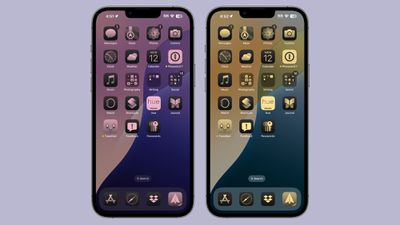
Tints that you apply to your icons to match wallpapers are now linked to that wallpaper rather than the system. When you change your wallpaper, your icons will change as well if you've tailored them to be tinted to a wallpaper color.
Apple Music (All Betas)
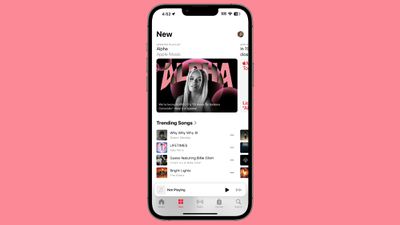
The Browse tab in Apple Music is now the "New" tab.
Lock Screen (iOS 18.1)
There is no longer an option to get to Spotlight search by swiping down from the Lock Screen in iOS 18.1 beta 2, but based on it being listed a known issue in the release notes, this is a bug.
Mail - Upgrade Warning
Apple says that developers who have iOS 18 beta 5 and who are thinking of upgrading to the iOS 18.1 beta might have all their mail redownloaded.
More Features
Know of something that we left out? Let us know in the comments below.
The macOS Sequoia 15 and 15.1 betas that Apple provided to developers today officially introduce new macOS Sequoia wallpapers that first popped up last week.
The wallpapers feature the sequoia trees that macOS Sequoia is named for. The imagery likely comes from Sequoia National Park, located in the southern Sierra Nevada mountains of California. There are three separate versions of the wallpaper for different times of day: Sequoia Sunrise, Sequoia Morning, and Sequoia Night.
Each wallpaper is animated and will shift slightly at the Lock Screen when you unlock your Mac, plus there is an option to set it as a screen saver.
You will need the latest macOS Sequoia betas to see the official wallpapers, but downloadable versions are available on other machines. The Sequoia wallpapers will be available to all macOS Sequoia users when the operating system is released this fall.
Apple today released a third beta firmware for the AirPods Pro 2, including both the Lightning and USB-C versions. The updated firmware has a build number of 7A5266c, up from 7A5244b, and it is available to developers at the current time. This is the third firmware update that Apple has released since announcing new AirPods Pro 2 features in June.
There are multiple features that are coming to the AirPods Pro 2 as part of iOS 18, and these features are included in the firmware update.
With head gestures, users can control Siri on the AirPods Pro with a shake or a nod of the head. If you get a phone call, for example, you can shake your head no if you don't want to answer it, or nod to accept the call. Siri interactions can be used for responding to incoming messages, calls, and notifications.
Apple is adding Voice Isolation to the AirPods Pro to cut down on loud background sounds to make you easier to hear, and there is a new Personalized Spatial Audio feature specific to gaming. Game developers will be able to incorporate spatial audio into their games for a more immersive audio experience.
The new firmware requires a device running iOS 18 to install, and it won't be available to the public until this fall.
Apple today provided developers with the second betas of iOS 18.1, iPadOS 18.1, and macOS Sequoia 15.1 to continue testing Apple Intelligence features. The second betas come two weeks after Apple seeded the first iOS 18.1, iPadOS 18.1, and macOS Sequoia 15.1 betas.
A device capable of supporting Apple Intelligence is required to download the updates, which includes the iPhone 15 Pro and Pro Max, Apple silicon iPads, and Apple silicon Macs. The updates can be downloaded from the Settings app on a compatible device, with developers able to choose between the standard iOS 18/iPadOS 18/macOS Sequoia 15 betas or the .1 betas with Apple Intelligence functionality.
Apple Intelligence includes Writing Tools that are available wherever text can be selected and edited, and it can be used for spell checking, fixing grammar, rewriting with a new tone, and summarizing text.
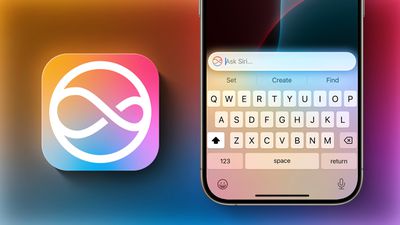
Siri has a new design with a subtle glow around the display, and there is a Type to Siri feature so you don't have to speak to Siri. Siri can follow along if you stumble over your words, and can maintain context between requests. Safari can summarize articles, and there's a new Reduce Interruptions Focus Mode.
Smart replies are available in Messages and Mail, plus the Mail app surfaces time sensitive messages and puts them at the top of your inbox. Photos has a Memory Movie feature for creating slideshows based on text descriptions, and you can record, transcribe, and summarize phone calls. Transcription and summarization are also available for any audio recording.
Apple has split Apple Intelligence into a separate set of betas because these features will not be available in the initial launch versions of iOS 18, iPadOS 18, and macOS Sequoia. Apple Intelligence will be available to the public later in the fall after a developer testing period.
Apple today seeded the sixth betas of upcoming iOS 18 and iPadOS 18 updates to developers for testing purposes, with the software coming a week after the release of the fifth betas.
Registered developers are able to opt into the betas by opening up the Settings app, going to the Software Update section, tapping on the "Beta Updates" option, and toggling on the iOS 18/iPadOS 18 Developer Beta setting. Note that an Apple ID associated with a developer account is required to download and install the beta. The iOS 18 and iPadOS 18 beta track is now separate from the iOS 18.1 and iPadOS 18.1 beta track, with the .1 betas adding support for Apple Intelligence on devices that are able to run the features.
iOS 18 introduces Apple Intelligence, a set of AI features that are built deeply into the operating system. Apple Intelligence won't be coming until later in the beta testing process, but it includes features for refining and editing writing, generating images and emoji, and most notably, improving Siri and search. Siri is gaining a better understanding of natural language, improved contextual awareness, and the personal assistant will integrate with ChatGPT to answer more complex queries.
Apple Intelligence features are limited to the iPhone 15 Pro models and iPads with an M-series chip, but there are a number of other features that are coming. Apple is allowing users to rearrange Home screen apps to have open spaces, plus there's a dark mode for app icons and tinting options.
The Control Center is customizable and third-party developers can add controls for their apps, with the Lock Screen Flashlight and Camera icons able to be replaced or removed. Messages is gaining Rich Communication Services support to improve conversations with Android users, the option to schedule texts to be sent later, new text effects, messages over satellite when there's no cellular, and the option to use any emoji for Tapback responses.
There's a dedicated Passwords app for logins, passkeys, Wi-Fi passwords, and verification codes, and there's now an option to lock and hide apps, which means they can't be opened without secondary Face ID or Touch ID authentication even when your phone is unlocked.
Safari has a highlights feature that summarizes articles and surfaces key information on websites, the Photos app interface has been overhauled, and there's a new Tap to Cash feature for privately and securely transferring money using Apple Cash. Other features include equation solving and voice memo transcription in Notes, a game mode for improving game performance, and an option to respond to Siri on AirPods with head gestures.
Apple will release iOS 18 and iPadOS 18 to the public this fall.







 Note: MacRumors is an affiliate partner with Amazon. When you click a link and make a purchase, we may receive a small payment, which helps us keep the site running.