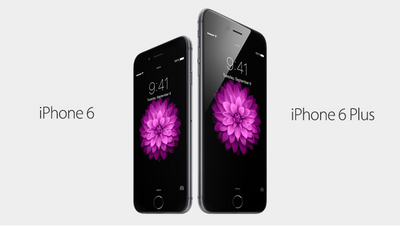
Apple today announced that opening weekend sales of the 4.7-inch iPhone 6 and the 5.5-inch iPhone 6 Plus topped ten million units, breaking the previous record of nine million units set by the iPhone 5s and iPhone 5c last year.
“Sales for iPhone 6 and iPhone 6 Plus exceeded our expectations for the launch weekend, and we couldn’t be happier,” said Tim Cook, Apple’s CEO. “We would like to thank all of our customers for making this our best launch ever, shattering all previous sell-through records by a large margin.
As with previous years, the company also claims that demand for the iPhone 6 and iPhone 6 Plus has been very high, as more orders will be fulfilled over the coming weeks. Apple announced last Monday that it processed four million first-day pre-orders on September 12.
Currently, shipping estimates for new iPhone 6 orders remains at 7-10 business days, while the iPhone 6 Plus is still showing a shipping delay of 3-4 weeks. The iPhone 6 and iPhone 6 Plus will also be available in 20 more countries including Austria, Belgium, Finland, Ireland, Italy, Netherlands, New Zealand, Norway, Portugal, Russia, Spain, Sweden, Switzerland, Taiwan, Turkey, United Arab Emirates, and more on September 26.
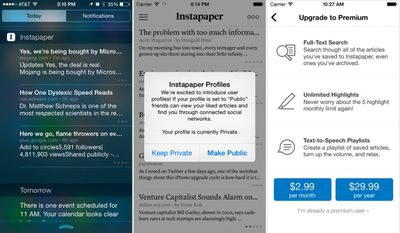
Popular read-it-later app Instapaper today received a significant update for iOS 8, bringing a redesigned user interface, enhanced saving capabilities, and deeper integration with notifications. The app is also now available for free, as users also have the option to pay for premium features.
Users can now save content to Instapaper from any application that supports iOS' built-in share functionality by way of a new app extension. The app also includes text-to-speech functionality, and curates saved articles in iOS 8's Notification Center on a daily basis. A $2.99 per month or $29.99 per year subscription to Instapaper Premium unlocks a number of other features, including full-text search, unlimited highlighting in articles, and text-to-speech playlists.
Instapaper is a free app for iOS devices and can be downloaded from the App Store. [Direct Link]
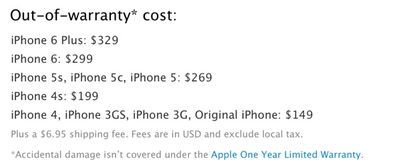
With the iPhone 6 and the iPhone 6 Plus now available to customers, Apple has updated its support information to include U.S. repair pricing for the two devices. While all new devices include a standard one year warranty that can be extended with AppleCare+, the standard warranty does not cover accidental damage.
Repairs for screen damage, which includes cracked or shattered displays, will cost $109 for the iPhone 6 and $129 for the iPhone 6 Plus, along with a $6.95 shipping fee.
Accidental damage (water damage, for example) or out-of-warranty damage to an iPhone will require users to pay a fee of $299 for the iPhone 6 or $329 for the iPhone 6 Plus, along with the $6.95 shipping fee. That’s far more affordable than the cost of a new device, but it is still more expensive than iPhone 5s repairs, which are priced at $269.
Apple also quotes a $79 flat fee for a battery replacement, but devices that have a defective battery will be eligible for free repairs for the entirety of the one year warranty that comes standard with iOS devices.
Apple does offers AppleCare+, which covers two incidents of accidental damage for a $79 service fee each time, cutting down on the cost of a replacement device. AppleCare+ is available directly from Apple for $99 in the United States.
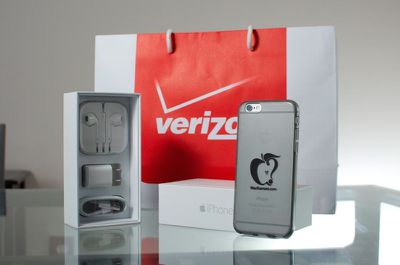
Verizon began rolling out its Advanced Calling service earlier this week, enabling voice over LTE (VoLTE) capabilities for select devices that support the service, which includes the iPhone 6 and the iPhone 6 Plus.
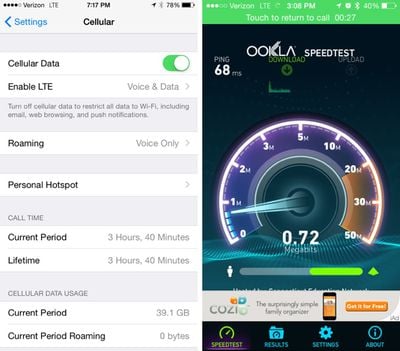
Numerous iPhone 6 and 6 Plus users are reporting that the VoLTE service is now functional, allowing Verizon iPhone 6 and 6 Plus users to use simultaneous voice and data capabilities for the first time when connected to a 4G LTE network. MacRumors has confirmed that VoLTE is indeed working, enabling users to browse the web or access apps while on a voice call.
In addition to enabling simultaneous voice and data, Verizon's Advanced Calling features also allow for High-Definition voice calls, which are said to be more "natural-sounding" and Verizon-branded video calls.
Advanced Calling 1.0, a first-generation service suite enabled by Voice over LTE, or VoLTE, technology, is now available on America's largest and most reliable 4G LTE network with XLTE. With Advanced Calling 1.0, there is a clear difference. You will be able to enjoy natural-sounding High-Definition (HD) Voice and a Video Calling experience that's as simple as making a traditional voice call.
Users can enabled Advanced Calling features by visiting the Verizon website and adding the feature to their accounts. Users also need to make sure both Voice and Data are turned on in the iPhone's Settings app. Go to Settings --> Cellular --> Enable LTE --> Tap Voice & Data.
Verizon's Advanced Calling features are limited to the iPhone 6, the iPhone 6 Plus, the LG G2, and the Samsung Galaxy S5.
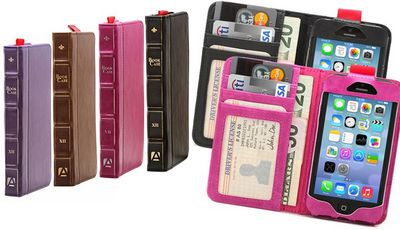
With the iPhone 6 and the iPhone 6 Plus in the hands of millions of customers as of today, many users will be looking to purchase cases for their new devices. Despite the fact that the phones were just released, there are already quite a few options on the market as many case makers began preparing cases for the devices months ago.
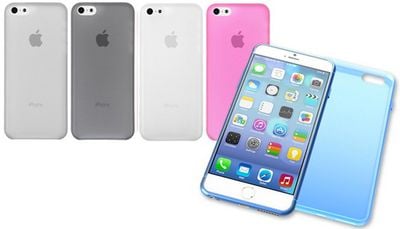
We've rounded up some of the available iPhone 6 and 6 Plus cases below, with options ranging from ultra thin and light to those that offer complete protection.
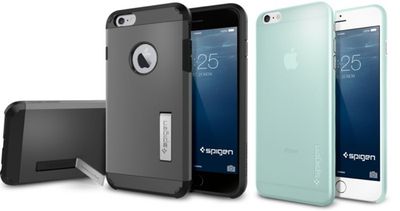
Spigen - Spigen has a range of iPhone 6 and 6 Plus cases available, each offering varying degrees of protection. The Tough Armor case, for example, advertises "extreme" protection with a foldable kickstand, while the Air Skin is advertised as the thinnest case ever made at 0.4mm thick. Spigen's cases range in price from $14.99 to $34.99, with most shipping out in 7 to 10 business days. Spigen's range of cases can also be found on Amazon at somewhat lower prices.
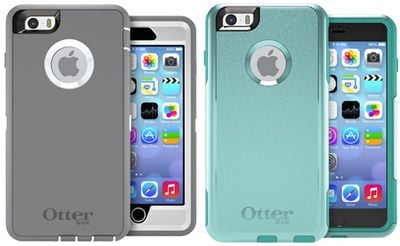
Otterbox - Otterbox has a selection of cases for both the iPhone 6 and the iPhone 6 Plus, including the ultra protective Defender series, which is a three-layer rugged case designed to offer full protection for the iPhone's display. The Defender series is bulky, so Otterbox also offers the thinner Symmetry line and the Commuter series. Priced from $39.90 to $69.90, Otterbox plans to make its cases available soon.
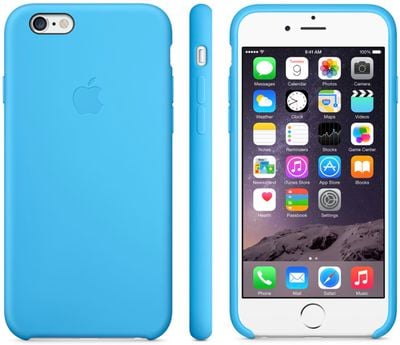
Apple - Apple is selling its own line of cases, specifically designed to complement the iPhone 6 and 6 Plus. Cases are available in leather and silicone, in several different colors. Apple's cases are available through the Apple online store or through its retail stores beginning today. Prices range from $35 to $49.
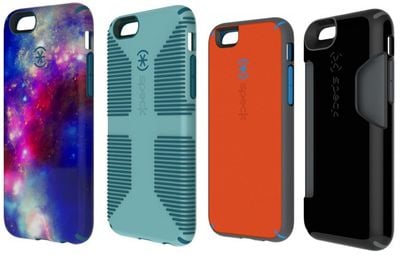
Speck - Speck is selling several different cases designed for the iPhone 6 and the iPhone 6 Plus, with prices ranging from $40 to $45. The traditional CandyShell case is available in multiple variations, including a Grip version that makes the iPhone easier to hold, an Inked version that comes with high-res graphics, and the Card version that has room for a credit card and cash. Speck also has the MightyShell case, which offers extra protection. Some variations are in stock immediately, while others are coming soon.
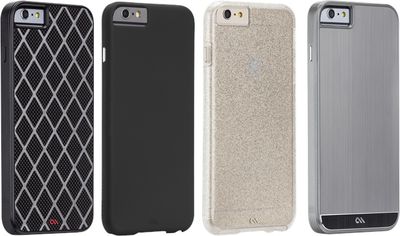
Case-Mate - Case-Mate has a selection of particularly flashy cases available for the iPhone 6 and 6 Plus, with designs ranging from gold glitter to a carbon alloy in a diamond design. Case-Mate also has a few less flashy cases available, including the Barely There case that's designed to be thin and the Slim Tough Case that includes a shock-resistant bumper. Case-Mate's cases are available now and range in price from $20 to $80.
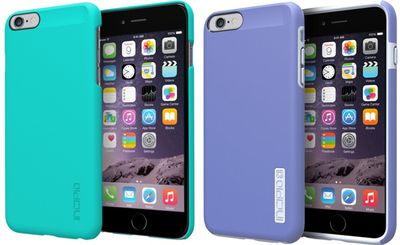
Incipio - Incipio has a huge selection of cases for both the iPhone 6 and the iPhone 6 Plus, most of which are thin and affordable. The company's well-known Feather case, for example is thin and lightweight, constructed from polycarbonate with an EVA interior liner. Another case, the DualPro, is slightly thicker but provides two layers for extra protection. Incipio's cases range in price from $20 to $45.
Society6 - Society6 takes a blank iPhone 6 or iPhone 6 Plus case (in slim or "tough") and customizes it with one of hundreds of images. Designs run the gamut from scenic vistas to abstract art to silly pictures like a panda in an astronaut suit or a llama in a taxi. Cases are priced at $35 to $38.
Groupon - Groupon has several iPhone 6 and 6 Plus cases from a variety of manufacturers that are available for pre-order at discounted prices. Custom cases that are user-designed from MyCustomCase can be purchased for $20, a $25 savings. Groupon has a pre-order for the iHome Folio available for the iPhone 6 for $12.99, and the iHome Sheer case for the iPhone 6 for $9.99.
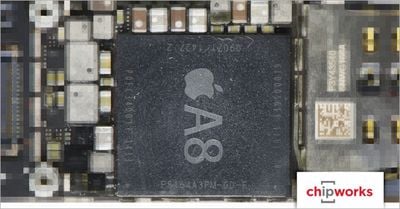
Apple's 20-nanometer A8 processor in the new iPhone 6 and 6 Plus was fabricated by Taiwan Semiconductor Manufacturing Company (TSMC), according to Chipworks (via iFixit). Chipworks has been analyzing the various parts in the iPhone 6 and the iPhone 6 plus following its release today.
While the iPhone 5s used a 28-nanometer processor, the iPhone 6 and the 6 Plus have a 20-nanometer processor, as has been widely rumored. According to TSMC, its 20-nanometer process technology can result in speeds that are much higher than its 28-nanometer chips. The 20-nanometer process also results in a physically smaller chip that draws less power.
Ahead of the launch of the iPhone 6 and 6 Plus, there were multiple back and forth rumors that made it unclear whether Samsung or TSMC was manufacturing the chips destined for the new iPhones. Previous generation chips, such as the A7 in the iPhone 5s, were manufactured by Samsung, but Apple reportedly entered into a partnership with TSMC in an effort to reduce its reliance on rival Samsung. The shift is also part of a larger effort by Apple to diversify its supply chain, which cuts down on potential manufacturing issues.
Though TSMC created the 20-nanometer chips for the iPhone 6 and the 6 Plus, rumors have suggested that Apple hasn't ended its relationship with Samsung entirely. The company is rumored to be producing the 14-nanometer chips that will be used in future iOS devices next year, indicating that Apple has plans to continue having both TSMC and Samsung create chips for its devices.
According to Apple, the A8 chip in the iPhone 6 and 6 Plus offers a 25 percent faster CPU and 50 percent better graphics performance compared to the A7 in the iPhone 5s.
The iPhone 6 and 6 Plus were subjected to their first drop test yesterday after the two devices went on sale in Australia. While the 6 and 6 Plus fared well when dropped on their backs, the screens did see significant shattering when dropped face down on the concrete.
A second drop test conducted today saw somewhat different results. Android Authority dropped the iPhone 6 and the iPhone 6 Plus in several different ways, including face down, and the two devices saw little damage aside from scuffs. Even when dropped on their faces with a decent amount of force from waist high, the screens remained intact.
A similar result was seen after a genuine accidental drop. The first person to receive an iPhone 6 in Australia opened up the package on camera and immediately dropped the phone on the hard ground, where it miraculously came away unscathed.
It's impossible to determine the overall durability of the screen in the iPhone 6 and 6 Plus based on a limited number of drop tests that were conducted under different conditions, but this additional data does serve to reassure users that the devices do have the potential to survive a fall.
Still, given the increased size of the iPhone 6 and the iPhone 6 Plus, it may be advisable for users to purchase a case. In fact, several reviews of the iPhone 6 and 6 Plus conducted by tech sites suggested the devices "need" a case, and described them as slippery. The Verge, for example, said the iPhone 6 Plus "works better in a case" because it makes the phone easier to hold, hides the camera bump, and covers "the weird lines on the back."
Apple's iPhone 6 and 6 Plus went on sale today, and the devices are now in the hands of millions of customers around the world as customers pick up phones from the Apple Store and receive their pre-orders. New orders for the devices from the Apple Store will ship in 7 to 10 days for the iPhone 6 and 3 to 4 weeks for the iPhone 6 Plus.
With Apple's retail stores beginning sales of the iPhone 6 and 6 Plus today, customers have been lining up to either pick up their pre-ordered devices or take their chances on launch-day supplies without reservations. Piper Jaffray analyst Gene Munster conducted his annual line count at Apple's flagship Fifth Avenue store in Manhattan and found a record 1,880 people in line at 8:00 AM, an increase of 33% over last year's line.
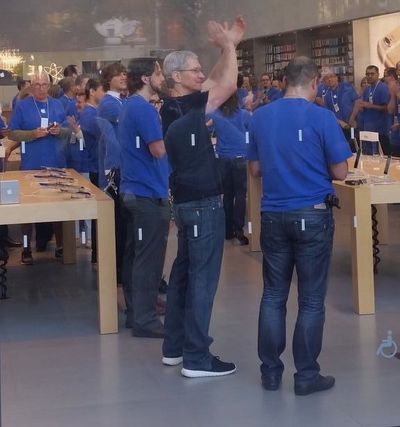
Tim Cook at final employee meeting before opening doors of Palo Alto store (via @CNBCnow)
Apple executives are also getting into the spirit of the iPhone launch, with CEO Tim Cook making his traditional visit to the Palo Alto store to greet customers. Cook walked the line and posed for photos with customers before heading into the store to meet with staff and open the door to welcome customers.
Several other executives are also out and about, with new retail chief Angela Ahrendts presiding over her first iPhone launch by visiting the flagship store in Sydney, Australia, and Internet software and services chief Eddy Cue making an appearance at the Stanford store.
Phenomenal start to a historic day and an honor to be with our incredible team and first customers in Sydney. pic.twitter.com/28aww07wGj
— Angela Ahrendts (@AngelaAhrendts) September 18, 2014
Nearly all Apple retail stores in launch countries have now opened for business today, with only the three stores in Honolulu, Hawaii yet to begin sales of the iPhone 6 and 6 Plus.
While the official reviews of the iPhone 6 and 6 Plus were published several days ago, with the devices now making their way into customers' hands we are starting to see broader first impressions of the larger iPhones.
Case from MacRumors giveaway, based on rumored design specs (Photo by @adam_moreno)
Several posters in our forums have highlighted the high-quality "Retina HD" displays on the iPhone 6 and 6 Plus, but have observed that apps yet to be optimized for the larger displays appear "quite blurry" or "'big' and disgusting" due to scaling issues.
Another aspect being noticed by users is the much louder vibration on the iPhone 6 and 6 Plus, something highlighted by John Gruber in his review earlier this week.
The iPhone 6 has a noticeably stronger vibrator to me, and with the iPhone 6 Plus, it’s so powerful it’s actually a bit noisy — the sound made by the 6 Plus vibrator is so strong, I wonder if there are going to be complaints that it’s not “silent” at all.
As someone who runs his iPhone in silent mode much of the time, I definitely appreciate the stronger vibrator.
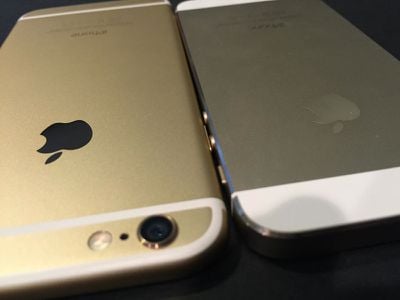
Gold iPhone 6 (left) vs. gold iPhone 5s (Photo by @horwitz)
As for size, some customers have been concerned about placing orders for the iPhone 6 Plus without having a good idea of just how big the device really is. Reactions now that users are getting their hands on them seem to be mixed, with some saying they "love every inch" of the 5.5-inch display while others have found it too big for their tastes. Some in-store customers were able to compare the two sizes before purchasing, helping make the decision easier.
For ongoing coverage of photos and first impressions, readers are welcome to follow our consolidated thread stickied in our iPhone forum.
Following launches in a number of other countries around the world earlier today, the iPhone 6 and 6 Plus have now begun going on sale in the U.S. and Canada, with 8:00 AM Apple launch times in the eastern and central portions of the countries having already occurred.
As expected, supplies of the iPhone 6 Plus have been tight in some cases, although perhaps not as low as originally thought. Apple's own stores appear to have the strongest supplies of the iPhone 6 Plus, with carrier stores in some cases having barely a handful of units to distribute.
iPhone 6 line at Toronto's Eaton Centre Apple store snaking through multiple levels (via @KristinaParts)
Lines at most stores, particularly Apple's own locations, are long in most cases, despite the company having offered pre-orders for delivery this year. As of 6:00 AM, the line at Apple's flagship Fifth Avenue store in Manhattan stretched for twelve city blocks, according to Business Insider. Other locations are obviously seeing shorter lines, but many customers are reporting lines numbering in the hundreds at their stores.
For those with pre-orders going out for delivery today, our forums remain busy as users track their orders minute-by-minute. MacRumors forum members in the U.S. are generally organizing in one of a number of threads depending on where they ordered from.
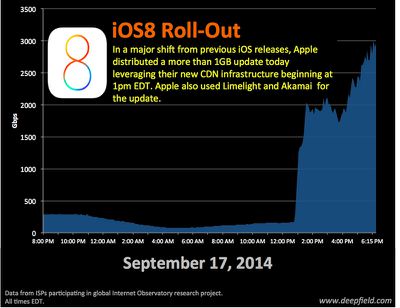
According to data from internet research firm DeepField, Apple relied on its content delivery network along with Akamai and Limelight to handle the rollout of iOS 8 publicly this week (via The Wall Street Journal). The release of iOS 8 caused web traffic to more than double in some areas as millions of iOS users rushed to update their iOS devices.
“It really was a significant coming out party for the Apple CDN,” DeepField Chief Executive Craig Labovitz said. “This is definitely a realization that Apple is not just a software player. They’re not just a maker of PCs. They have an Internet backbone and an international Internet presence.”
Apple has not commented publicly on its content delivery network, but the company reportedly has been working on the network for several years. The CDN was believed to have gone live in the US and Europe in July of this year when Apple used the network to deliver smaller OS X updates.
In the future, the CDN likely will be used to delivery software updates, such as the upcoming OS X Yosemite release, to customers worldwide. Apple also is expected to gradually migrate its iTunes and App Store away from Akamai and other Level 3 CDNs as it strives to deliver data reliably to its customers by bringing this content delivery under its direct control.
With the launch of the iPhone 6 and iPhone 6 Plus already underway in several countries, many companies have begun performing tests and benchmarks on the device. PhoneBuff has taken the two devices and put them through a drop test, dropping each on its back, side and front.
The iPhone 6 did well when dropped on the side and back, but unsurprisingly suffered when dropped on its face. The 6 Plus, on the other hand, cracked when it landed on the side. However, it sustained little further damage when falling on its face.
Based on this one test, both phones may have performed worse than the iPhone 5 design which was described as "very durable" and survived similar drops in a previous drop tests. Without standardized testing, it's hard to draw definitive conclusions.
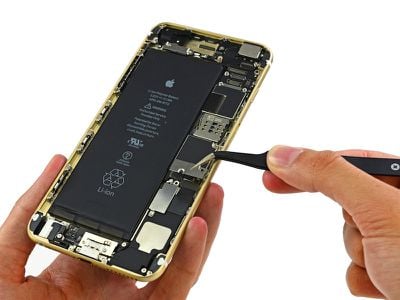
iFixIt is in the process of taking apart the new iPhone 6 Plus, currently on sale in Australia. Surprisingly, the team points out that the internal layout of the device is extremely similar to that of the iPhone 5s, except at a larger scale and with a bigger battery. The teardown's findings reveal the battery capacity of the device and some internal reorganization.
In removing the front panel from the rest of the device, the iFixIt team notes that there are "no noticeable booby traps", referring to the iPhone 5s' cable that ran from the Touch ID sensor to the Lightning port. The battery in the device is listed at 2915mAh at 3.82 volts, in line with the previously leaked battery prototype for the device and giving the 6 Plus double the battery capacity of the iPhone 5s' 1560mAh and much larger than the iPhone 6's 1810mAh battery.
The teardown also revealed that the vibrator is now located under the logic board and to the right of the battery.
iFixIt's teardown is still in progress and this post will be updated if anything significant is revealed.
Update 7:45 PM: iFixit has exposed Apple's new A8 processor in their teardown, which reveals the F8164A3PM inscribed on the chip. The second digit in that sequence, 8, corresponds to 8 Gigabits (1 GB) of RAM in Micron's catalog.
Update 11:38 PM: iFixit has assigned the iPhone 6 Plus a repairability score of 7 out of 10, which is an improvement over the iPhone 5s' score of 6 out of 10. The largest difference being the absence of the cable connecting the Touch ID Home button to the Lightning port, which resulted in the cable being torn if one is not careful opening the phone.
Cerner and Athenahealth, two of the leading electronic health record providers in the United States, will be developing apps that work with Apple's Health app, according toReuters.
Cerner and Athenahealth representatives said they are building integrations with HealthKit and working with Apple. Previously, Apple announced a partnership with rival electronic health record company Epic Systems. Apple did not respond to a request for comment.
The new apps are likely to be similar to Epic's MyChart [Direct Link] app, which gives users access to lab results, appointment information, medication and more. The MyChart app also uses Apple's HealthKit as a traffic controller to send some information about a patient, like weight, in the opposite direction, Epic toldVentureBeat.
Yesterday, Apple found a last-minute bug in HealthKit that forced the company to pull compatible apps from the App Store. Apple is currently working on a fix, which it promises will arrive by the end of September.
Apple's iPhone 6 and 6 Plus will launch in the United States tomorrow, with Apple retail stores, carrier stores, and several major retailers offering the two devices for sale.
We've gathered up a list of U.S. locations that will be selling the iPhone 6 and 6 Plus, listed below, along with general opening times. Customers hoping for an iPhone 6 or 6 Plus are encouraged to call their local stores for specific information on opening times and potential stock.
- Apple retail stores - 8 a.m local time - Verizon Wireless - 8 a.m. local time (Not all stores are accepting walk-up purchases, and opening times will vary) - AT&T - 8 a.m. local time - T-Mobile - 9 a.m. - 10 a.m local time, but opening times vary - Sprint - 8.a.m local time - RadioShack - 9 a.m. - 10 a.m. local time, but opening times vary - Best Buy - 8 a.m. local time - Sam's Club - 8 a.m. local time - Target - Availability will vary - Walmart - Availability will vary - Staples - Availability will vary
At Apple Store locations, procedure will be slightly different than it has in past years as Apple will also be handing out iPhone 6 and 6 Plus units to customers who opted for Personal Pickup when pre-ordering online last week.
All customers will be directed to wait in one line until approximately 5 a.m, at which point they will be split into two lines: one for Personal Pickup and one for customers hoping to purchase a device on launch day.
Apple will hand out refreshments like coffee and water, as it does every year, and ahead of the store's opening, customers in the walk-in line (who did not pre-order) will be given a digital Reservation Pass (sent via email or SMS) to guarantee them an iPhone. This year's Reservation Passes replace the paper cards that have been handed out in past years.
Walk-in customers planning to wait in line should aim to arrive as early as possible. Many people hoping to get their hands on an iPhone 6 or 6 Plus are already waiting in line across the United States, and will wait through the night. According to multiple sources, supplies of the iPhone are expected to be low, with the iPhone 6 Plus being in extremely short supply.
The iPhone 6 and 6 Plus are already on sale in Australia, and initial reports have suggested that supplies of the iPhone 6 Plus are indeed constrained. According to one MacRumors reader, many stores in Melbourne, Australia received only one iPhone 6 Plus unit.
Apple employees in Australia giving an iPhone to the first customer in line
As for customers who pre-ordered and plan to do Personal Pickup, arriving early is also generally recommended as the pickup line can get long as well.
Customers who pre-ordered early and selected at home shipping will also begin receiving their devices on Friday, September 19, with most shipments listing guaranteed delivery by the end of the day. MacRumors readers who are expecting shipments can join in on several threads in our forums, where readers are tracking their shipments and order statuses:
Following the launch of iOS 8 to the public yesterday, Apple employees in Cupertino are working to locate and remedy iOS 8 bugs that are popping up. As described by one Reddit user, the company has a "War Room" at Apple where employees are tracking down issues on social media.
After installing iOS 8 yesterday afternoon, Reddit user Kiggsworthy tweeted about a problem he was having with Family Sharing. Shortly afterwards he was contacted by an Apple employee on Twitter, who requested details about the issue.
According to the employee, Kiggsworthy was experiencing a bug the team had been attempting to track down, but couldn't reproduce, but his experience was able to help them solve the problem and push a fix to other users.
Turns out it was some subset of iTunes content that was uploaded over 8 years ago in a bad format that Family Sharing wasn't playing nice with. They now know what bad content to look for and are going about putting re-encoded versions of all this media on their servers so that people will not get this error going forward.
I was telling him how surprised and impressed I was with this service, given how busy a day Apple was having, for them to just see something I tweeted (I don't even have 300 followers) and follow up with me so quickly. He said that they had a "War Room" at Apple trawling through social media and everything they could find looking for anyone having issues (particularly with Family Sharing) so they could address them ASAP.
Earlier this month, Bloomberg writer Adam Satariano detailed a program that Apple runs for iOS devices, called early field failure analysis (EFFA), which helps the company fix bugs almost as soon as they originate. It appears there's a similar program in place for iOS 8, with the company aiming to solve issues as quickly as possible.
Apple employees on the early field failure analysis team and those working on iOS 8 will likely be working overtime this weekend as the first iPhone 6 and 6 Plus devices with iOS 8 installed will be in the hands of customers tomorrow.
With every iteration of the iPhone, Apple aims to bring significant improvements to the device's camera. The iPhone 6 and 6 Plus are no exception, packing in several new features like Focus Pixels, Exposure Control, Panorama improvements, Slo-Mo video enhancements, and Optical Image Stabilization for the iPhone 6 Plus.
Professional photographer Austin Mann partnered with The Verge to test the cameras in both the iPhone 6 and the iPhone 6 Plus in Iceland and came away with some impressive results.
One of the major new features in the new devices is Focus Pixels, which is the result of a new image signal processor. As described by Apple, Focus Pixels provides the sensor with more information about an image, which results in faster autofocusing.
In a video, Mann demonstrated Focus Pixels, showing much faster autofocusing on the iPhone 6 and 6 Plus. As seen in the still below, taken from the video, the iPhone 6 Plus is able to refocus on a scene much more quickly after an object placed in front of the camera causes the lens to refocus.
According to Mann, Focus Pixels keeps objects in focus in photographs, but it really shines when capturing video because it vastly speeds up refocusing. Focus Pixels are also highly useful in low-light situations -- where previous iPhones might have had trouble focusing in low light, the iPhone 6 and 6 Plus work well, even better than some DSLRs.
Combined with optical image stabilization in the iPhone 6 Plus, the results are impressive. A comparison of an image shot with Phone 5s (top) and the iPhone 6 Plus (bottom) in low light is below.
Another improvement made to iOS 8 and thus the iPhone 6 and 6 Plus is Exposure Control, which allows for manual control over exposure and thus more control over the way photos turn out. Two shots, one with exposure control (left) and one with no exposure control (right) are shown off below.
Also new to the iPhone 6/6 Plus and iOS 8 is time-lapse video and improved Slo-Mo video. In iOS 7, Slo-Mo allowed users to capture up to 120 frames per second (fps) at 720p, but in iOS 8, that's been improved to 240fps, allowing for much improved slow motion video capabilities. Both the iPhone 6 and 6 Plus are also capable of shooting 1080p video at up to 60fps.
While Mann doesn't spend too much time focusing on comparisons between the iPhone 5s and the iPhone 6/6 Plus, he does have a few shots that show much improved picture taking capabilities. Mann also doesn't make comparisons between the 6 and the 6 Plus, the latter of which has optical image stabilization, but photos taken with the two devices are equally impressive.
The iPhone 6 and 6 Plus pack in new innovations that make the camera experience better and more fun. What I love most about these innovations is they focus on enabling iPhone users to better capture and share life rather than just beefing up tech specs. The Apple team clearly understands their user base very well and incessantly strives to create devices that solve technical challenges and simplify experiences and they've done that yet again with the iPhone 6 and 6 Plus.
Photographers are really going to enjoy this upgrade... with way better low light, a massive viewfinder and new tools like timelapse that work flawlessly I really couldn't ask for much more out of the iPhone 6 and 6 Plus camera.
Austin Mann's complete overview of the camera in the iPhone 6 and 6 Plus is well worth reading, as it contains a multitude of gorgeous images he was able to capture with the devices.
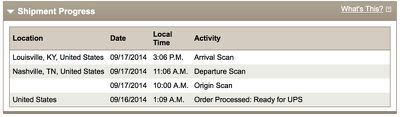
Apple began shipping out early iPhone 6 and 6 Plus pre-orders on Thursday morning, and FlightAware, a site that offers live flight tracking, has created a tool that allows users to track the flights carrying their iPhones after receiving a tracking number.
According to FlightAware, users can check the "departure scan" in their UPS tracking information which may match a departure time and flight listed on the tracking page. Currently, the page is tracking UPS flights from Shenzhen, China to Anchorage, Alaska and Anchorage to Louisville, Kentucky, all of which are standard flight rounds for shipping companies.
Currently, many iPhones that will be shipping out to customers overnight and in the morning are aggregated in Kentucky, a worldwide UPS air hub known as Worldport. Apple appears to have shipped the majority of iPhone units using Next Day Air.
The first iPhone 6 and 6 Plus shipments are expected to arrive on Friday, September 19, but oftentimes, some lucky customers receive their shipments early due to shipping company errors. Apple will also begin selling the devices in stores on Friday, but supplies are expected to be tight, especially for the iPhone 6 Plus.
MacRumors readers who are waiting for an iPhone 6 or 6 Plus may also want to join in on the dedicated Apple pre-order thread on the forums, where users share tracking information and socialize while waiting for their devices to arrive.
Apple's first foldable iPhone, with a book-style design featuring a 5.4-inch outer display and a 7.6-inch inner display with a minimal crease down the middle.





 Cerner and Athenahealth, two of the leading electronic health record providers in the United States, will be developing apps that work with Apple's Health app,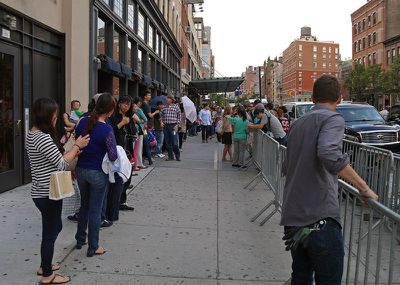

 Following the launch of iOS 8 to the public yesterday, Apple employees in Cupertino are working to locate and remedy iOS 8 bugs that are popping up. As