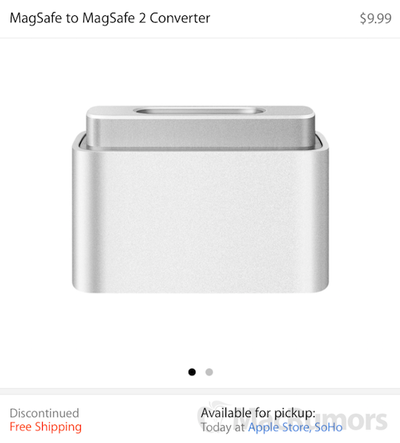
Apple has quietly listed the MagSafe to MagSafe 2 converter as discontinued on the Apple Online Store in the United States and Canada this week. The converter is required to charge a MagSafe 2-equipped MacBook Air or MacBook Pro when the notebook is connected to a Thunderbolt Display or Cinema Display. The converter still appears to have in-store availability, although for how long remains unknown.
Apple discontinuing the MagSafe to MagSafe 2 converter would prove problematic for Thunderbolt Display and Cinema Display users. The company does include the converter in the box for the Thunderbolt Display, but not being able to purchase a replacement if you misplace one would be an issue. Given that, it is possible that Apple could have larger plans in store.
It could be theorized that Apple may be planning a Thunderbolt Display refresh with MagSafe 2, USB 3.0 and Thunderbolt 2, although that is purely speculation. Rumors have also called for a 5K Thunderbolt Display, but several Mac models would need to be updated to support that technology. We have reached out to Apple for comment and will update this story if we hear back.
(Thanks, Chris!)
Update 5:35 PM PT: The MagSafe to MagSafe 2 converter is now back in stock in the Apple Online Store.
MacBook Air and 13" Retina MacBook Pro shipping times have slipped on the Apple Online Store from "in stock" to "1 business day" ahead of Apple's upcoming "Spring Forward" media event on Monday. Earlier this week, we reported that a MacBook Air refresh with the latest Intel Broadwell processors and Intel HD 6000 graphics appears imminent, and it is plausible that Apple also updates the MacBook Pro with similar hardware.
The shipping dates have slipped across North America, with the Apple Online Store in the United States, Canada and Mexico showing the longer "1 business day" estimate. A spot check of the United Kingdom and Australia online storefronts still shows regular shipping times. In-store availability of the MacBook Air and MacBook Pro in the also appears unaffected in the United States based on Apple Stores in New York and California.
Intel's Broadwell processors are available for all MacBook Air models and the 13-inch MacBook Pro, although more powerful chips for the 15-inch MacBook Pro are not expected until later this year. Nevertheless, Apple may choose to focus its March 9 media event solely on the Apple Watch and could hold off on refreshing its MacBook Air and MacBook Pro lineups until a later date.
As rumors gear up surrounding the revamped Apple iTunes/Beats music service, a new report claims that the company will opt out of offering a free advertising-supported base tier for its upcoming streaming service (via Re/code).
The company will allow customers an initial trial period of some kind, but following that users will have to pay to continue listening to music, the cost of which most recent rumors agree will be around $7.99.
With the slow decline of digital downloads and the steady rise of streaming services, sources close to Apple media head Eddy Cue and Beats Music founder Jimmy Iovine state that the two agree the music industry, and streaming specifically, “needs to get behind a paywall."
Apple executives have been telling the music industry it can help them roll back the tide of free digital music by relaunching its own subscription streaming service this year. Unlike Spotify and YouTube, Apple’s service won’t offer a free “tier” of music interspersed with ads — after an initial trial period, you’ll need to pay to play.
Now Apple is negotiating with the music labels for licenses for a revamped version of Beats. Sources say Apple would like to make a splash by getting high-profile artists to distribute their music with Apple before it makes its way to other services.
If made official by Apple, the move would be a direct contrast to a service like Spotify, which allows its 60 million worldwide users (15 million of which are paid subscribers) to listen to anything they want for free, with ads interspersed within the music.
Jonathan Prince, head of communications and public policy for Spotify, said that the company's research found that 12 percent of iTunes users have migrated to Spotify, with 40 percent of that group paying for the premium Spotify service. Prince uses this statistic to claim that, despite the service's immense popularity, they aren't single-highhandedly the culprit behind the declining digital download sales of recent years.
Despite these new reports, similar sources say that the company plans to keep the iTunes Radio service intact, claiming web-based radio won't directly impede music sales. The most recent news regarding the long-rumored Apple music service suggests an official unveiling by the company at WWDC this year, with Apple tweaking aspects of the current state of iTunes all the way up to the launch of the revamped service.
Apple will be joining the Dow Jones Industrial Average, according to S&P Dow Jones (via The Wall Street Journal). Apple will be added to the Dow Jones at the close of trading on March 18, replacing AT&T as one of 30 members on the major price-weighted index. Apple is listed on Nasdaq with a pre-market share price hovering around the $128 mark as of this writing.
“Apple is the clear choice for the Dow Jones Industrial Average, the most recognized stock market measure,” says David M. Blitzer, chairman of the Index Committee at S&P Dow Jones Indices.
The addition of Apple on the Dow Jones Industrial Average will occur just weeks after the iPhone maker recorded the most profitable quarter of any company ever, posting record-breaking quarterly revenue of $74.6 billion and quarterly net profit of $18 billion on sales of 74.5 million iPhones during the first quarter of the fiscal year. Apple is currently the world's most valuable company with a market cap exceeding $735 billion.
The Dow Jones Industrial Average provides a price-weighted average of 30 significant stocks traded on the New York Stock Exchange and the Nasdaq, which offers valuable insight into how the stock market is performing at any given time. Other members of the Dow Jones include American Express, Boeing, Chevron, Coca-Cola, Disney, Exxon Mobil, Goldman Sachs, IBM, Intel, JPMorgan and Chase, Microsoft, Verizon and Visa.
Apple has long been an ideal candidate for inclusion in the Dow Jones Industrial Average, although its above-$700 share price before splitting 7-for-1 last year would have inflated the price-weighted index. The stock split brought the price of Apple shares down to around the $100 mark, making it a more suitable option to be included in Dow Jones.
A total of 379 companies, including Apple, Facebook, Microsoft, and Google, have joined together to urge the Supreme Court to rule in favor of blanketed nationwide support for marriage equality (via The Verge).
The companies filed an amicus brief yesterday, represented by law firm Morgan Lewis, in the on-going Obergefell v. Hodges case, wherein two men are arguing that the state of Ohio discriminates against legal out-of-state same-sex marriages. Apple, along with the 378 other companies, angled towards a business-focused case for supporting every couple's right to marry.
Apple at the 44th Annual Pride Parade in San Francisco
The brief claims that due to "a fractured legal landscape with no uniform rule on same-sex marriage", both employees and employers face increasingly burden-filled relationships, making it difficult to conduct proper business practices. The coterie of companies isn't represented by just well-known tech companies, but small family-owned businesses and other big non-tech brands like Nike, Coca-Cola, and United Airlines, as well.
“The competition for top talent crosses state and even national borders. State laws that prohibit same-sex marriage make it harder for businesses to recruit and retain talented employees,” says Morgan Lewis Partner Susan Baker Manning, counsel of record on the brief. “The patchwork of inconsistent state marriage laws makes it challenging and more costly for employers to administer benefits systems when some employees are unable to marry, and other employees’ marriages are not recognized by the state. This burdens businesses by costing them both time and money.”
Obergefell v. Hodges will enter the Supreme Court in April, and is one of a few others it will hear regarding the marriage equality issue. The main issue expected to be covered is whether the Constitution protects all same-sex couples in their right to marry regardless of their state, or if individual states will retain the right to prohibit gay marriage.
Apple has, unsurprisingly, voiced support for same-sex marriage in the past and marched in pride parades in San Francisco, with CEO Tim Cook coming out as gay in a letter written to Bloomberg Businessweek just last October. Most recently, last December the company voiced support in naming a proposed bill in Alabama after the Apple CEO that would focus on anti-discrimination in regards to sexual orientation in the work place. Currently, there are 36 states, and Washington, D.C., that support gay marriage.
Note: Due to the political nature of the discussion regarding this topic, the discussion thread is located in our Politics, Religion, Social Issues forum. All forum members and site visitors are welcome to read and follow the thread, but posting is limited to forum members with at least 100 posts.
Apple design chief Jonathan Ive recently discussed the meticulous process that went into creating the Apple Watch in a new profile with Financial Times. Ive describes the Apple Watch as "the most personal product" that Apple has ever made, with "thousands and thousands of hours of evaluation and testing" invested into the device.
“Even now, when the design of the Apple Watch is incredibly mature and has gone through thousands and thousands of hours of evaluation and testing, we’re still working and improving. You are trying to keep everything fluid for as long as possible because everything is so interconnected. The best products are those where you have optimized each attribute while being very conscious of other parts of the product’s performance.”
The iconic designer adds that he appreciates the convenience afforded by the Apple Watch, describing the wrist as the perfect place for the technology. The device, for example, will have a Glances feature on the watch face that delivers real-time information such as weather, stock quotes and upcoming calendar events without needing to take your iPhone out of your pocket.
“One of the things that struck me,” says Ive, “was how often I’d look at my watch and have to look again quite soon afterwards, because I hadn’t actually comprehended what the time was. If I had looked at something on my phone, because of the investment involved in taking it out of my pocket or my bag, I would certainly pay attention. I quite like this sense of almost being careless and just glancing. I think for certain things the wrist is the perfect place for this technology.”
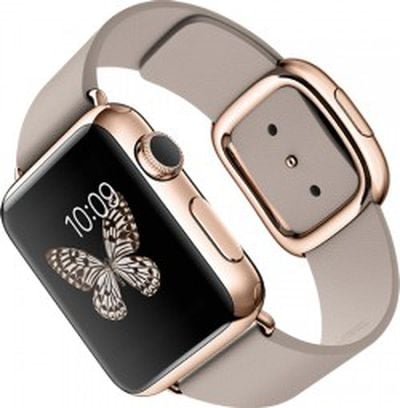
In what could be amounted to a mistake, the profile claims that both the anodized aluminum Apple Watch Sport and stainless steel Apple Watch will start at $349. It has been widely speculated that the stainless steel Apple Watch would have a starting price of at least $499, especially given that the mid-tier model is equipped with a sapphire crystal display. The report speculates the Apple Watch Edition will start at around $4,500.
"He runs through the three ranges of Apple Watch with their different materials – the stainless-steel Apple Watch, the anodised-aluminium Apple Watch Sport (both from $349) and the Apple Watch Edition in 18ct yellow or rose gold (with an as yet unconfirmed price of around $4,500)."
Ive's so-called "fanatical" attention to detail extends beyond the Apple Watch to the packaging of the wrist-worn device. The box for the Apple Watch Edition in particular will be crafted from premium materials, including aniline-dyed leather on the outside and an ultra-suede material on the inside. The small box is capable of charging the Apple Watch and its bottom half slides out based on friction, similar to past iPhone, iPad and iPod packaging.
“We didn’t want the packaging to be a sort of shorthand for value, where the box needs to be big and we have to include expensive materials. We’ve always liked the idea that if we are heavy in our thinking, we can be much lighter in the implementation. So there’s huge virtue, I think, in keeping the packaging small: at least, it is the right choice environmentally, it’s easier to move things around and you don’t end up with your wardrobes full of large watch boxes that you don’t use.”
Apple is expected to provide more details about the Apple Watch at its highly-anticipated "Spring Forward" media event on March 9th in San Francisco. Ahead of time, the company has been working closely with developers in a top-secret lab to create what will be some of the first apps for the wrist-worn device. Apple Watch will be available in April starting at $349 for the entry-level model.
Update: Apple has confirmed to MacRumors that FT's statement regarding both aluminum and stainless steel versions starting at $349 is incorrect.
Three weeks ago, it was reported that Apple was inviting developers to the company's Cupertino headquarters to receive help finalizing Apple Watch apps. A new report from Bloomberg Business provides a look into the secret lab where Apple is helping developers, offering a look at Apple's strategy for Apple Watch apps as well as the security around the project.
Developers from Facebook, BMW, Starwood Hotels and others have been making multiple trips to Cupertino, with each visit requiring confidentiality.
Apple, which will share more details about the gadget at a March 9 event, uses extreme measures to keep the work secret. Internet access is blocked inside the rooms, and no outside materials can be brought in to the labs with the test watches, a person who attended said. The companies, sometimes sharing a room, must bring in source code for their apps on a computer hard drive that can't leave Apple's headquarters. To prevent information from leaking out, Apple is storing the code and sending it to the companies closer to the watch's introduction date, the person said.
The unreleased Apple Watch is also available for the developers to test out their apps, allowing them to check for glitches and optimize user experience for the Digital Crown and Force Touch, two of the watch's unique interface options.
One of the challenges for both Apple and its developers has been to balance the apps so that they are useful but not annoying. Apple has recommended that developers be "judicious" about interrupting users with alerts that would constantly buzz or drain the battery. Instead, they suggest that apps should be used for no longer than 10 seconds at a time.
Another challenge for developers has been working on an unreleased product, as developers have noticed problems that still need to be worked through. One developer tells Bloomberg that the Bluetooth connection between the iPhone and Apple Watch caused lag with some applications. Additionally, some developers like Starwood have had to use computer simulations and cardboard cutouts to explain to the designers who weren't invited to Cupertino how its app would work.
Apple is expected to show off the Apple Watch apps developers have been working on, as well as more information about the new device, at its "Spring Forward" event on Monday, March 9 at 10:00 a.m. Pacific Daylight Time. Apple plans to provide live coverage for the event on its website and through a channel on Apple TV, and MacRumors will also be covering the event with both a live blog on MacRumors.com and through our MacRumorsLive Twitter account.
For years, Oracle has been bundling an Ask.com search toolbar with Java for Windows, relying on what some call deceptive methods to get users to install the add-on to their browsers. Now, the company has extended its adware strategy to Java for Mac, according to ZDNet.
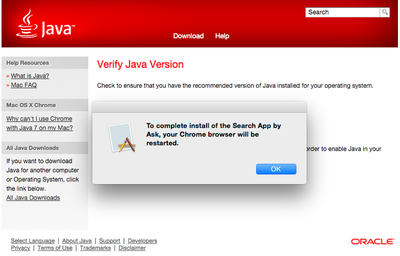
The unwelcome Ask extension shows up as part of the installer if a Mac user downloads Java 8 Update 40 for the Mac. In my tests on a Mac running that latest release of OS X, the installer added an app to the current browser, Chrome version 41. (In a separate test, I installed Java using the latest version of Safari, where it behaved in a similar fashion.)
The Java installer selects the option to install the Ask extension by default, which means that users casually clicking through the dialogue boxes would find the extension installed and enabled on their browser of choice. Oracle has also updated its installation instructions for Mac to account for the change.
As noted by ZDNet, Ask.com typically provides low-quality search results and numerous ads with little distinction between ads and organic results. Ask.com parent company IAC pays a commission to Oracle and other companies that bundle the Ask extension with its products.
Users who want to remove the Ask toolbar can do so from the Help menu for the Ask toolbar on Chrome. Alternatively, users can go to the Chrome menu bar, then Preferences, then the settings page, then Manage Search Engines to remove Ask, followed by removing the extension from the Extension tab. Safari users can do so by going to Extensions in the Safari preferences and turning it off.
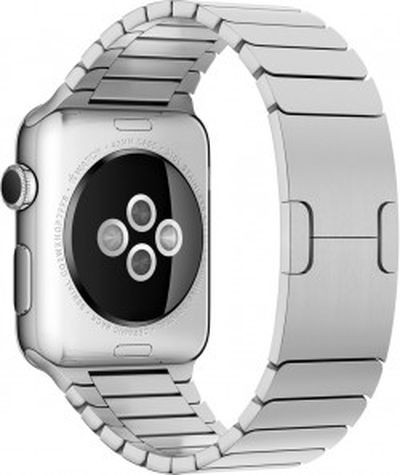
Ahead of Monday's media event where Apple is expected to provide final details on the Apple Watch, a new report from TechCrunch details a hidden "diagnostic port" inside one of the channels on the Apple Watch where watch bands slip into place. While the port is currently used only for diagnostic purposes, the report argues it could be used in the future to interface with "smart band" accessories bringing additional functionality to the watch.
The port has a 6-dot brass contact array inside the groove for the ‘bottom’ strap connector slot. Several sources have confirmed its existence and placement to me. It is very similar to the connector for the Lightning connector in iPhones, as that connector currently only uses 6 of its 8 available pins. Apple recently began opening up the Lightning port for use by third parties. A source says that this port is currently for diagnostic purposes only — but that there is nothing preventing it from being a connection port for future accessories.
TechCrunch's Matthew Panzarino is careful to state that he has no knowledge of any plans by Apple to launch such smart band accessories, but the idea remains an intriguing one. Possibilities for such bands include additional sensors, external batteries integrated into a band, and more.
Apple revealed a number of high-level details about the Apple Watch at the device's unveiling last September, but even now with a launch set for next month there is still much that remains unknown, including pricing details beyond the $349 starting price. Apple will undoubtedly address many of the details at Monday's events, but some of the technical details will likely need to wait until the device launches and users and technical experts can get a closer look at the device.
Update 2:13 PM: The diagnostic port will not be included on the Apple Watch that ships to consumers, according to 9to5Mac.
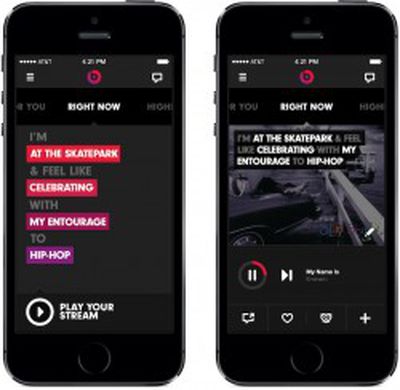
Apple will launch a revamped streaming music service in June at the company's annual Worldwide Developers Conference, according to 9to5Mac and TechCrunch. The report claims the new Beats-based service will debut at Apple's WWDC keynote, likely during the week of June 8, as opposed to an announcement taking place at the upcoming "Spring Forward" media event on March 9.
"Apple currently plans to launch the new music service as part of an iOS 8.4 upgrade for the iPhone, iPad, and iPod touch following WWDC, but a final decision has not yet been made. It’s possible that the service will be bundled into iOS 9 this fall, which is expected to have a significant focus on bug fixes and stability improvements."
As detailed last month, the purported streaming music service is expected to cost up to $7.99 per month, a few dollars cheaper than Apple-owned Beats Music and competitors such as Spotify, Rdio and Google Play Music. The service will be deeply integrated into iTunes on Mac and the stock Music app for iPhone, iPad and iPod touch, and apps will also be available for Apple TV and Android.
Apple is developing its first in-house Android application for the upcoming streaming music service, one of the rarer times that the iPhone maker offers cross-platform support for its products and services. Nevertheless, as the release of iTunes for Windows in the early 2000s helped drive sales of the iPod, expanding beyond the iPhone, iPad and Mac will provide Apple with a much larger pool of potential subscribers in the competitive streaming music market.
Apple is also reportedly wrapping up development of its next-generation Apple TV set-top box that could ship with an improved, tactile remote control and all-new operating system bundled with an App Store. Apple allegedly planned to release a new Apple TV as soon as this month, but the release may be delayed until later this year or beyond until Apple reaches agreements with more content providers like HBO Now.
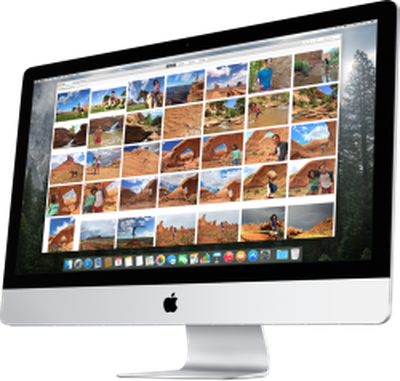
Apple has sent an email to Aperture customers this afternoon as a reminder about the impending removal of the professional photo editing software from the Mac App Store. The email confirms that Aperture will be removed from the Mac App Store upon the release of Photos for OS X as we initially reported last month.
"When Photos for OS X launches this spring, Aperture will no longer be available for purchase from the Mac App Store. You can continue to use Aperture on OS X Yosemite, but you will not be able to buy additional copies of the app.
You can migrate your Aperture library to Photos for OS X, including your photos, adjustments, albums, and keywords. After migrating, your Aperture library remains intact. However, Aperture and Photos do not share a unified library, so any changes made after the migration will not be shared between the apps."
Aperture users will be able to continue using the software on OS X Yosemite following its discontinuation, although the app will no longer be available for purchase on the Mac App Store and new feature updates are not planned. Aperture users can migrate their photo libraries to Photos for OS X, including photos, adjustments, albums and keywords.
Photos for OS X will be available this spring for OS X Yosemite.
Google on Thursday updated Gmail for iOS with a trio of notable new features: quick actions, the ability to email files from other apps and a new attachment viewer. Gmail users on iPhone and iPad can now attach photos and documents to Gmail from other apps such as Instagram using the updated in-app share sheet, and open attachments from Gmail into any app.
Taking advantage of Apple's addition of interactive notifications in iOS 8, quick actions enable Gmail users to archive or reply to emails directly from a notification without leaving the app. The functionality also works for notifications in Notification Center and on the Lock screen. The latest release of Gmail for iOS pushes the app to version 4.0 on the App Store.
What's New in Version 4.0 • Take quick actions - Archive or reply to messages directly from a notification • Email files from other apps - Attach photos and documents to Gmail right from your favorite apps • New attachment viewer - Open attachments from Gmail into any app
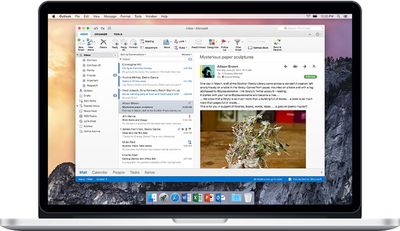
Microsoft is today introducing a preview of the next iteration of its office software designed for Mac users, Office 2016. Office 2016 for Mac is the company's first major Mac release since Office 2011, and it brings new versions of Word, Excel, and PowerPoint with redesigned Retina-optimized interfaces, new features, and a heavy focus on collaboration and cloud integration.
Office 2016 for Mac, which is free to all Mac users running OS X Yosemite during the preview period, is the next step in Microsoft's plan to make its Office products available anywhere, anytime, on any device, and as such, it's been designed to work with Office 365 and OneDrive. Users will get the best experience when signed into Office 365 because that allows them to access all of their documents on all of their devices, but an Office 365 account is not required to use the software.
Office 2016 for Mac has adopted many elements previously found in both the Windows version of Office and in the mobile Office apps, released last year. There's a new Ribbon that reorganizes tools and formatting options, a task pane interface for greater graphics customization within all three apps (which can be manipulated and repositioned within each app), new themes and styles, and there's a Yosemite-style look that takes advantage of features like full-screen support.
Office 2016 for Mac is powered by the cloud so you can access your documents anytime, anywhere, and on any device. It’s unmistakably Office – but thoughtfully designed to take advantage of the unique features of the Mac. The new apps offer full retina display support with thousands of retina-optimized graphics, full screen view for native immersive experiences, and even little Mac affordances like scroll bounce.
Microsoft believes that cloud connectivity is a key feature that people have come to expect from their software, so that's become a focal point for the company. With cloud support, Office 2016 for Mac lets users access a list of files created on any device, keep files up to date on all of their devices, and collaborate with other users. Each of Microsoft's new Office apps have received several new cloud-based features and other updates, as outlined below.
Word 2016 focuses heavily on collaboration. It's designed to improve the multi-author experience, with a consistent sharing interface at the top right of the app. Through this menu, users can invite coworkers to work on a document, send out links, and see who a document has been shared with.
Threaded comments have been added to the Mac for the first time and in Word's new Styles pane, users can make detailed edits on styles within the app as they can on Office for Windows.
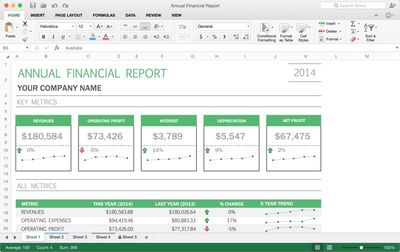
Excel 2016 has deeper data analysis functionality with advanced statistical functions. There are also Slicers in PivotTables, a popular Windows feature that should make it easier for users to analyze large chunks of data to find patterns. With Office 2011, many users were frustrated that the Mac shortcut keys were not the same as the Office for Windows shortcut keys, so Microsoft has made all Windows shortcuts available on the Mac. Users already used to existing Mac shortcuts can continue to use them.
PowerPoint 2016 has a revamped presenter view, which is similar to the presenter view in the PowerPoint for iOS app. In the top left, the presenter sees exactly what the audience sees, including animations in real time. There's also a visual preview of the next slide, access to notes, a timer, and thumbnails for the entire slide deck.
As with the other two apps, there are deeper editing tools available through the right-side pane, which allows for functions like customized animations or shapes, with results that can be seen in real-time.
Along with Word, Excel, and PowerPoint, Microsoft's Office 2016 for Mac preview also includes Outlook for Mac, which was released in October, and Microsoft OneNote for Mac, released last March. Outlook for Mac has been limited to Office 365 users since its release, but as of today, it's available for anyone to use.
The Office 2016 for Mac preview has a built-in feedback mechanism, which Microsoft is hoping its customers will use to report bugs and share what they like and don't like about the software. Customer feedback will be an important tool that helps Microsoft decide on the next features to add to its software. According to Microsoft, the company is "data obsessed" and reads all of the feedback it receives.
Though it's been years since Microsoft last delivered a software update, the company plans to introduce bug fixes and feature updates quickly in the future, as such updates are possible now that the Microsoft Office experience is unified as a service across a range of devices.
Microsoft's Office 2016 for Mac preview is available today at no cost for all Mac users. It is officially supported on machines running OS X Yosemite. Microsoft has plans to launch the software in the summer following this beta testing period.
Apple may give customers the ability to engrave personalized messages onto the upcoming Apple Watch, according to French Apple and tech site iPhonote [Google Translate].
According to the website's source, who remained anonymous due to their "involvement at Apple", the company would offer an engraving option similar to that of products like the iPhone, iPad, and iPod lines.
The contact, however, remains unsure of whether the feature would be available on the Apple Watch's launch date or not. They remain "almost certain", however, that the customization option will emerge for the device eventually.
An engraving option certainly makes sense for Apple's new fashion-focused wearable, especially considering that essentially all of the company's mobile products include the personalization option, but the small footprint of the Watch does raise questions on where the actual engraving would be located.
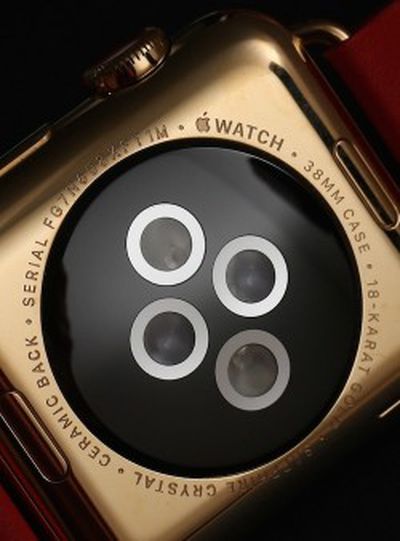
The heart rate sensor located on the device's backside takes up nearly all of the real estate of the 38mm or 42 mm device, although drastic character count limitations could perhaps fit truncated messages around the sensor. There's also a possibility that more room could be found on the device's side opposite the Digital Crown, but until Apple officially announces the engraving service, it remains to be seen where the personal messages would fit onto the wearable.
Despite being announced nearly six months ago, a number of details on the Apple Watch have yet to be revealed in the lead-up to its April launch. Last week, the company sent out invites for the "Spring Forward" media event to take place Monday, March 9 and for which most evidence points towards a heavy focus on pricing and launch day details for the new wearable device.
After initially reporting that iOS 8.2 would be released to the public this week, BGR now claims that the upcoming software update will arrive next week as Apple decided to seed one last beta to employees and carrier partners for testing. The final GM carries a build number of 12D508 and includes Health app improvements, stability enhancements and bug fixes.
While the initial report was incorrect, this new timeframe appears more plausible given Apple's upcoming "Spring Forward" media event for the Apple Watch on March 9. Apple also promised that a fix would be prepared by next week for the recently discovered "FREAK" security vulnerability affecting devices such as the iPhone, iPad and Mac. The security flaw was disclosed to Apple well in advance of the public.
The release notes for iOS 8.2 outline several improvements to Apple's stock Health app, including the ability to select units of measurement for body temperature, weight, height, distance and blood glucose. The software update also delivers stability enhancements for Mail, Flyover in Maps, Music, VoiceOver and Made for iPhone hearing aids.
Health App improvements
Adds the ability to select the unit of measurement for body temperature, weight, height, distance, and blood glucose
Improves stability when dealing with large amounts of data
Includes the ability to add and visualise workout sessions from 3rd-party apps
Addresses an issue that may have prevented users from adding a photo in Medical ID
Fixes units for vitamins and minerals
Fixes an issue where Health data wouldn’t refresh after changes data source order
Fixes an issue where some graphics showed no data values
Adds a privacy setting that enables turning off tracking of steps, distance, and flights climbed
A number of bug fixes have been made in iOS 8.2, including a long-awaited fix for the so-called "GMT bug" causing calendar syncing issues for several iPhone and iPad users. Google quietly fixed the GMT bug on their backend early last month, but Microsoft Exchange calendar users have still been experiencing syncing issues. Other bug fixes are outlined in the full release notes shared in the MacRumors discussion forums.
iOS 8.2 will also include support for the Apple Watch ahead of its launch in April.
The U.S. Patent and Trademark Office today published a patent application created by Apple, detailing a method for the extensive waterproofing of various components within a device, possibly an iPhone, thus creating a completely waterproof smartphone without the need of a special case (via Patently Apple).
Originally filed in September of 2013, the patent application describes a "hydrophobic coating" to be layered onto integral parts within a device, like its printed circuit board. Apple describes achieving this using a "plasma-assisted chemical vapor deposition (PACVD) process" that would adhere the coating substance onto the surface of the printed circuit board in such a way as to not take up much additional room in the already small casing of a smartphone.
In the bigger picture, immersing electronic devices in water generally has predictably negative results. Through testing it has been determined that high voltage power components are more likely to short or malfunction after only brief exposure to liquids or moisture. More specifically, exposed metal areas having high voltage differentials in close proximity can easily experience short circuit events when corrosion or water immersion bridges the gap between such areas.
By providing an insulating layer or barrier around these highly susceptible parts, water resistance can be substantially increased without obscuring functional openings leading into a device housing of a particular electronic device. A thin hydrophobic (i.e., water resistant) conformal coating having a thickness between at least one and ten microns can be applied to a substrate using a plasma-assisted chemical vapor deposition (PACVD) process. The PACVD process charges the surface of the substrate so that the coating can be bonded to the charged surface.
Though not completely waterproof as Apple's new patent intends a device to be, Tim Cook recently stated that the company's upcoming Apple Watch will in fact be a bit more water resistant than previously thought. He stated that he wears his personal Apple Watch everywhere, "even in the shower." If so, the Watch will be the company's first device with such a water resistant claim.
While the patent application doesn't specifically state what device the waterproof process could be attributed to, it's easy to see the company reasoning the method for use on iPhone and iPad. Although, like with all other patents, the practicality of a completely waterproof iPhone launching anytime soon is highly unlikely, but it's always an interesting glimpse behind the scenes regarding what the company may be considering for its future.
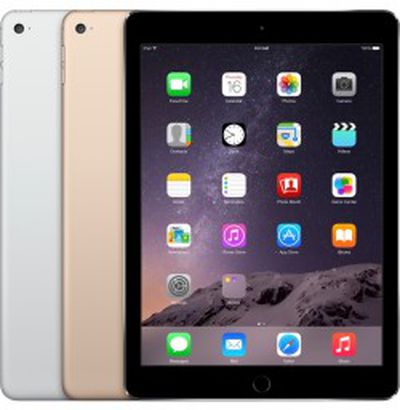
Apple's much-rumored 12.9-inch "iPad Pro" could have Oxide LCD display technology and will enter mass production in the third quarter of 2015, according to DigiTimes. The report, citing sources within the supply chain, claims that Apple has elected to use oxide panels for the tablet after weighing the cost versus performance of display technologies a-Si, TFT LCD and Oxide LCD.
"Market rumors over the last six months have stated that Apple would aim to release the device in the first half of the year, with mass production occurring in the first quarter. The company, however, has been assessing different panel technologies ranging from a-Si, TFT LCD and Oxide LCD in terms of cost versus performance, and has only recently decided to move forward with Oxide technology."
The report adds that Sharp, LG Display and Samsung Display have been sending Apple display samples as they compete to secure component orders for the iPad Pro. Sharp is expected to be the main supplier due to its advantages in Oxide LCD display production, with LG also in the running to be a secondary vendor. The panel suppliers will reportedly produce limited supply in May and begin mass production in July and August.
KGI Securities analyst Ming-Chi Kuo, who has a respectable track record at reporting on Apple's upcoming product plans, also forecasted in November that the iPad Pro would be equipped with an oxide panel for "high resolution, quick response, and high color saturation," with manufacturing difficulties pushing mass production of the tablet into the second quarter of 2015.
Oxide LCD technologies, one of the most popular being "IGZO," have been used since the original iPad Air and allow for thinner and more power efficient displays. Expected to have a large 12.9-inch screen, it would make sense for the iPad Pro to have an Oxide LCD display to ensure that the extra screen real estate is not a drain on battery life.
Bloomberg Businessreported late Wednesday that Apple missed the mark on second quarter production of the iPad Pro and that manufacturing of the tablet is now slated to begin around September. The larger-screened tablet, rumored to potentially have USB 3.0 ports for faster data transfer, could help Apple reverse four quarters of declining iPad sales as overall tablet market growth has slowed.
German carmaker BMW on Thursday denied that its discussions with Apple involved developing an electric car, according to Reuters. German automotive magazine Auto Motor und Sportreported hours earlier that Apple and BMW were in close negotiations about developing the automaker's all-electric i3 vehicle into a so-called "Apple Car."
"The BMW spokesman said: 'We are in regular talks with companies from the IT and telecommunications sector, including Apple, concerning topics like connected vehicles. Developing or building a car is not a topic of these discussions.'"
The German report claimed that the electric car could be manufactured by BMW and sold at Apple Stores, with Apple developing a full-fledged operating system for the vehicle that integrates with the car's fuel consumption and driving data. It is plausible that Apple is working to expand its CarPlay efforts on the dashboard, but it remains to be seen how closely integrated the platform will be with future vehicles.
Multiple reports claim that Apple is working on an electric car that is possibly self-driving and could enter production in 2020. Some other reports, however, downplay the rumors by suggesting that Apple is working on expanding its presence in vehicles through CarPlay. Any electric car project at Apple is likely in the early stages of research and development at this time.




 As rumors gear up surrounding the revamped Apple iTunes/Beats music service, a new report claims that the company will opt out of offering a free advertising-supported base tier for its upcoming streaming service (via
  Apple will be joining the Dow Jones Industrial Average, according to S&P Dow Jones (via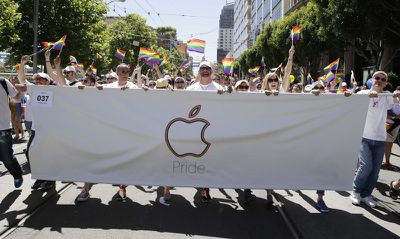
 Apple design chief Jonathan Ive recently discussed the meticulous process that went into creating the Apple Watch in a new profile with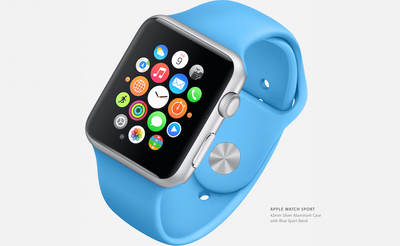
 Ahead of Monday's media event where Apple is expected to provide final details on the Apple Watch, a
  Apple will launch a revamped streaming music service in June at the company's annual Worldwide Developers Conference, according to
  Apple has sent an email to Aperture customers this afternoon as a reminder about the impending removal of the professional photo editing software from the Mac App Store. The email confirms that Aperture will be removed from the Mac App Store upon the release of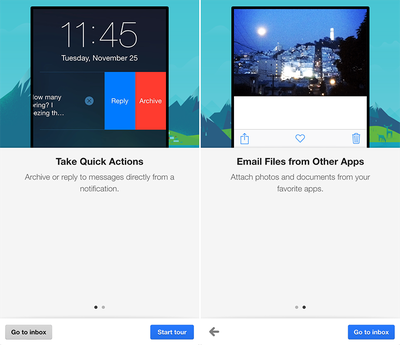


 Apple may give customers the ability to engrave personalized messages onto the upcoming Apple Watch, according to French Apple and tech site
  After initially reporting that iOS 8.2 would be released to the public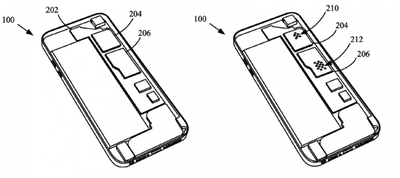
 Apple's much-rumored 12.9-inch "iPad Pro" could have Oxide LCD display technology and will enter mass production in the third quarter of 2015, according to