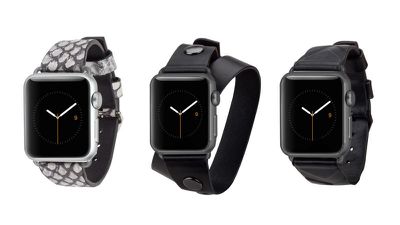
As New York Fashion Week gets underway, designer Rebecca Minkoff has debuted a new set of fashion-focused tech accessories for Apple's iPhones and Apple Watch. The fashion brand teamed up with accessory maker Case-Mate to create the new line of products (via Mashable).
Minkoff debuted a trio of new Apple Watch bands retailing from $80 to $100. The first band is a snakeskin leather band, the second is a leather double wrap and the third is a traditional leather band with designs etched into it.
The fashion brand also debuted a set of phone-charging wallets and wristlets, which Minkoff says will provide two and half full charges for iPhone. The first is a charging wristlet folio that retails for $120 that'll come in black, cobalt and almond. The second is a fringe cross body that retails for $100 and works with both iPhone 6 / 6s and 6 / 6s Plus.
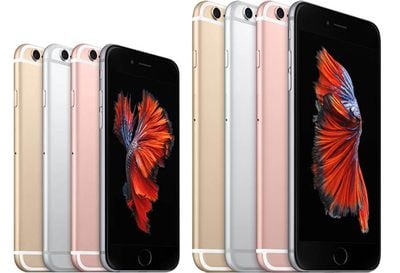
Apple has taken its online storefront down in order to prepare for the launch of the iPhone 6s and iPhone 6s Plus pre-orders, which will begin at 12:01 a.m. Pacific Time or 3:01 a.m. Eastern Time on Saturday, September 12. Pre-orders will be available on Apple's site, via the Apple Store app, and on several carrier sites.
Ahead of when pre-orders kick off, people planning to make a purchase should check their upgrade eligibility and pricing options on Apple's website, using the new "Get ready for pre-order" tool.
Apple will accept pre-orders in first wave launch countries including Australia, Canada, China, France, Germany, Hong Kong, Japan, New Zealand, Puerto Rico, Singapore, the UK, and the United States.
The iPhone 6s is available in 16, 64, and 128 GB capacities in the United States for $199, $299, and $399, respectively, with a two-year contract. Contract-free pricing begins at $649. Apple's higher-priced iPhone 6s Plus is available in 16, 64, and 128 GB capacities for $299, $399, and $499, respectively, with a two-year contract. Contract-free pricing on the larger-screened device starts at $749.
Apple is also offering its own iPhone Upgrade Program in the United States, letting users pay a monthly fee for their iPhone with a trade-in option available after 12 months of payments. Pricing, which includes AppleCare+, starts at $32.41 per month for the entry-level 16GB iPhone 6s and goes up from there. Participating in this program requires an in-store purchase, but Apple is accepting online reservations at 12:01 a.m. Pacific Time on September 12 for in-store appointments.
Recently, Apple has been quick to point out that security and privacy for its users is a priority for the company, repeatedly noting that Apple does not rely on serving ads based on user data to make money. Yesterday, Apple announced two new features, Live Photos and 'Hey Siri', that have raised questions about the privacy and security about the features. The company explained its privacy procedures to TechCrunch.
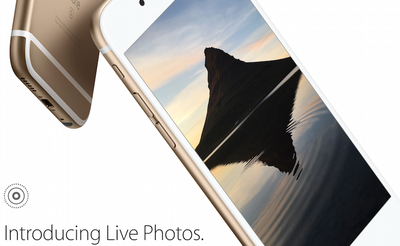
Live Photos are treated like any other photo or video on an iPhone, which means that the Live Photo is encrypted at all times. The only way a Live Photo leaves a device is when a user decides to share it or selects to use iCloud. Live Photos record the 1.5 seconds before and after your picture, though Apple says the camera is restricted in what it can save.
“Although the camera is “recording” while you’re in Live Photo mode, the device will not save the 1.5 seconds before until you press the camera button,” says Apple. “The pre-captured images are not saved to the user’s device nor are they sent off the device.”
This means that the camera is always recording the last 1.5 seconds of footage it sees, though it will continuously delete that footage unless it's "saved" when a user takes a photo. The 1.5 seconds after a photo is taken is also saved when a user takes a photo. Live Photos is turned on by default, but a user can turn it off by clicking the orange Live icon in between the HDR and timer icons.
Hey Siri allows a user to active Apple's personal assistant with their voice, which means that the iPhone has to constantly "listen" for a user's vocal activation. However, Apple tells TechCrunch that nothing a user says is recorded until Hey Siri is activated.
The feature can only be activated in a two-step matching process. First, the iPhone must "hear" the general "Hey Siri" activation phrase. The phone then must match that activation phrase with the personalized way the user says "Hey Siri", which prevents the feature from activating when other people say the phrase. If the phone "hears" "Hey Siri" but it's not a vocal match for its owner, the feature will not activate. This process is done locally on the device, and no audio is sent off of the iPhone.
After "Hey Siri" is activated, the privacy and security protocols in place work similarly to how Siri works now. Audio is sent off to Apple and associated with a device using a random identifier rather than an Apple ID or other personal information. If a user turns off Siri, Apple will delete all the User Data associated with the random identifier.
"Hey Siri" is an optional feature that a user must opt into during iOS 9's setup process. Users, if they choose, can opt to never enable the feature.
Apple today announced that it is now allowing developers to submit apps for review that take advantage of the new features in iOS 9, OS X El Capitan, and watchOS 2 as the company prepares to launch iOS 9 and watchOS 2 to the general public next Wednesday.
Developers are also able to seed apps with iOS 9 and watchOS 2 features to external beta testers using TestFlight. Prior to today, only internal testing was available, giving developers little time to beta test their apps.
You can now submit your apps that take advantage of the latest features in iOS, OS X, and watchOS. Build your apps using Xcode 7 GM seed, test with the GM seeds of iOS 9, OS X El Capitan, and watchOS 2, and submit them for review.
Apple normally allows developers to begin submitting apps directly after golden master versions of new software are released, but this year, the iOS 9, watchOS 2 and OS X El Capitan GMs were released on Wednesday, but submissions were not allowed until this afternoon.
Following reviews by Apple's App Store review team, iOS 9 and watchOS 2 apps will begin appearing in the iOS App Store in time for the iOS 9 launch.
iOS 9 and watchOS 2 will be released on Wednesday, September 16. OS X El Capitan will be released two weeks later on Wednesday, September 30.
Apple introduced the iPhone 6s and iPhone 6s Plus with several new features this week, one of the most significant being 3D Touch. The pressure-sensing technology enables iPhone users to perform additional multi-touch gestures called "Peek" and "Pop" to access Quick Action shortcut menus or preview content within apps.
Apple added a 3D Touch page to its website earlier this week with some examples of what Peek and Pop gestures can be used for, including previewing emails and websites, viewing photos you've taken while taking new ones, quickly accessing your contacts, taking a selfie, quick compose and more.
One of the more useful actions that 3D Touch makes possible is pressing the iPhone screen to turn the on-screen keyboard into a virtual trackpad (pictured on left).
One press turns your keyboard into a trackpad. Press the keyboard within apps such as Notes, Mail, and Messages, and your keyboard behaves just like a trackpad. You can then use a cursor to easily select and manipulate text with precision.
Existing iPads running iOS 9 will also have similar functionality, with users able to control an on-screen cursor by moving two fingers anywhere on the screen, including over the QuickType keyboard, to select, edit and move text.
3D Touch also enables iPhone 6s and 6s Plus users to press the left side of the Home screen to switch to multitasking view, press lightly for finer lines or more deeply for thicker ones in Notes, swipe left to delete an email or swipe right to mark it as unread in Mail and more.
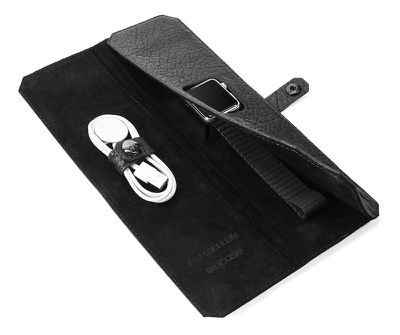
The Apple Watch Travel Folio is Incase's newest product that's made in partnership with Parabellum, a maker of premium leather goods. Its exterior is full-grain North American bison leather and its interior is genuine suede. It has a snap closure and features cut-outs and a magnetic flap to hold the Watch in place and charge it while it's inside the folio. The Folio is available in black and pumpkin and retails for $250.
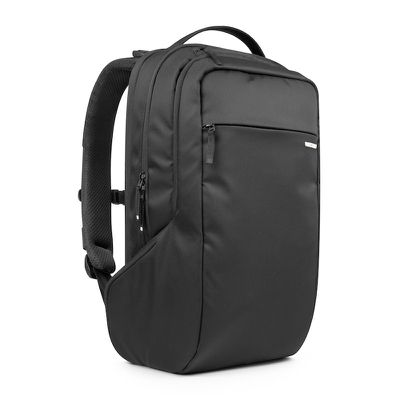
The Icon Backpack has a padded compartment for laptops up to 15 inches, adjustable padded shoulder straps, and a dedicated side-access iPad pocket. Made of sturdy 840D nylon, it's available in black, moss green, gray, and red and retails for $199.95.
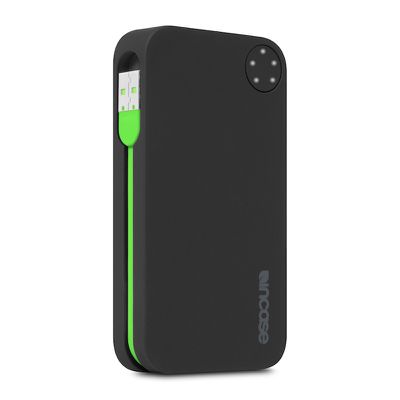
The Incase Portable Power 5400 is a battery park for charging USB devices on the go and works with the iPhone, iPad, and more. It features a 5400 mAh battery and a built-in USB cord to make it easy to charge, and offers 2.1 Amp charging via its USB port to charge your iPhone or other device quickly. The Portable Power 5400 retails for $79.95.
Three winners will be chosen for this giveaway. The first winner selected will receive the Portable Power 5400 battery pack. The second winner selected will receive an Icon backpack. The third winner selected will receive a black Apple Watch Travel Folio.
To enter to win, use the Rafflecopter widget below and enter your email address. Your email address will not be given to any third party and will be used solely for contact purposes to reach the winners. You can earn additional entries by subscribing to our weekly newsletter, subscribing to our YouTube channel, following us on Twitter, or visiting the MacRumorsFacebook page. Due to the complexities of international laws regarding giveaways, only U.S. residents who are 18 years of age or older are eligible to enter.
This contest will run from today (September 11) at 12:00 pm Pacific time through 12:00 pm Pacific time on September 18. The winners will be chosen randomly on September 18 and will be contacted by email. The winners have 48 hours to respond and provide a shipping address. The prizes will be shipped to the winners for free.
Incase is also offering a spectacular deal for MacRumors readers. With the purchase of an Apple Watch Folio, MacRumors readers will get a Portable Power 5400 battery pack for free with coupon code MacRumor915, a value of $79.95.
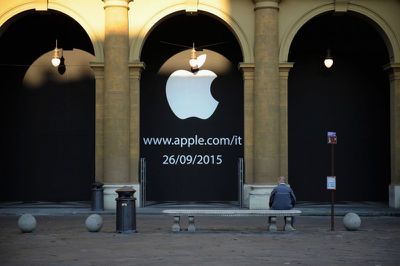
Apple has announced that two new Apple Stores will hold their grand openings in Nanjing, China and Florence, Italy on September 19 and September 26 respectively at 10 AM local time. Each store will offer traditional services such as the Genius Bar, Workshops and JointVenture.
Apple's upcoming retail store in Florence, Italy opens September 26
The new Florence store will be located in Republic Square (Piazza della Repubblica) and open on Monday-Sunday between 10 AM and 8 PM local time. Meanwhile, the store in Nanjing, the capital of Jiangsu, will be located at the Rainbow Joy shopping mall and open on Monday-Sunday between 10 AM and 10 PM local time.
Two days after its jam-packed "Hey Siri" event that saw the debut of several new products, Apple has uploaded a full video of its presentation to its YouTube channel. The same video is also available on Apple's own event website.
Apple's "Hey Siri" event presentation was well-organized but fast-paced, as it covered the iPhone 6s and 6s Plus, the iPad Pro and its Pencil/Smart Keyboard accessories, the iPad mini 4, the Apple TV, and several new Apple Watch products, from new Rose Gold/Gold finishes for the Apple Watch Sport to exclusive Hermés Apple Watch models.
Rumors have suggested Apple's big fall extravaganza will be its final event this year, meaning there won't be a second event in October as there has been in years past. Apple has, however, split its upcoming product releases up over September, October, and November. The iPhone 6s and 6s Plus will launch on September 25, while the Apple TV will come in late October and the iPad Pro will launch in November.
Apple co-founder Steve Jobs famously dismissed the need for a stylus when introducing Multi-Touch on the original iPhone over eight years ago, touting the finger as the best pointing device in the world.
"Who wants a stylus? You have to get them, and put them away, and you lose them. Yuck. Nobody wants a stylus. So let’s not use a stylus."
Macworld 2007 was quite awhile ago, however, and Apple on Wednesday ultimately reversed course and introduced the Apple Pencil for iPad Pro, which it refers to as a creative tool for scribbling, sketching, annotating and editing.
Apple Pencil features a pointed tip with highly responsive sensors that allow for precise input down to a single pixel. To achieve this, Apple engineered the Apple Pencil and iPad Pro display to work together to detect position, force and tilt.
For example, as seen in the video below, you can press lightly for a thinner stroke, or press harder for a darker, bolder stroke. Likewise, you can draw with the Apple Pencil on an angle to produce broad, shaded strokes.
The iPad Pro's subsystem scans the Apple Pencil's signal 240 times per second, providing the tablet with twice the data points it would normally collect for a finger. This results in the Apple Pencil being very responsive, with almost indistinguishable latency, as seen in TechCrunch's hands-on video below.
Apple Pencil has a built-in rechargeable battery that lasts up to 12 hours on a single charge, but more interesting is its ability to gain 30 minutes of battery life from just 15 seconds of charging. A magnetic cap hides a male Lightning connector that allows the Apple Pencil to be plugged into the iPad Pro to charge.
Apple Pencil will be available in November for $99 alongside the new Smart Keyboard. While the Apple Pencil is officially compatible with the iPad Pro, it remains to be seen if the tool will work with older iPads as a traditional stylus.
It appears that EA has quietly removed a handful of classic iOS titles from the App Store, including games like Bejeweled 2, Flight Control, Real Racing, and more. The official removal of the games actually happened on September 1, but was just discovered overnight by our sister site Touch Arcade. The full list of games removed by EA includes:
Bejeweled 2
Burnout™ CRASH!
Dead Space
Don't Fall Off
Flight Control
Flight Control Rocket
Fly With Me
Lemonade Tycoon
MASS EFFECT™ INFILTRATOR
MMA by EA SPORTS™
Need for Speed Shift
Real Racing
Sims Medieval by EA
Skate It by EA
Spore™ Creatures
Spore™ Origins
SPY Mouse
As the company mentions in the support document posted to its website, the move means that every game on the list won't be supported or updated moving forward, with the decision to focus its "efforts on developing new and exciting titles, as well as bringing new content and updates to existing popular games." Fortunately, if players still have the game downloaded to their iPhone, EA mentioned that users should still be able continue their game and play as normal.
...And now they're gone, along with other fabulous iOS games. They didn't even get a proper send off, beyond silently announcing they're being removed on a obscure web page hidden deep inside of EA's support site on the same day they were removed. I can't find anyone else reporting on this either, meaning this plan worked surprisingly well, as it's been ten days before we even figured out that these games were gone.
As Touch Arcade points out, about a year ago EA did the same thing with a slightly larger list of iOS games that included some well-known titles like Zuma's Revenge and Alice: Madness Returns. Although players with the games still installed don't have much to worry about, everyone else who may want to revisit any of these titles in the future are now out of luck.
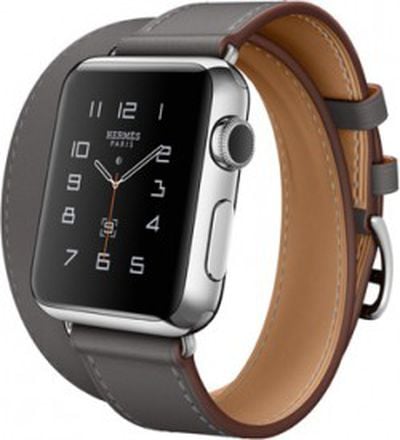
Apple design chief Jony Ive and Hermès artistic director Pierre-Alexis Dumas recently spoke with The Wall Street Journal about how the Apple Watch Hermès came to be.
Interestingly, the two companies began collaborating on the premium Apple Watch last year, several months before the wrist-worn device was released.
“It’s something highly unusual for Apple to do—to talk about an unannounced project,” said Mr. Ive, 48 years old. They decided to partner over lunch in Paris, where Hermès is based, last October.
Jony Ive believes that, while the Apple Watch Hermès was the most expensive product introduced at Apple's media event earlier this week, the premium watch does not make Apple an "exclusive" company. He later compared the Apple Watch Hermès to the Apple Watch Sport, stating that the same amount of time and effort went into designing both models.
“We don’t think in those terms,” Mr. Ive said in an interview Wednesday, after the Apple Watch Hermès was unveiled. “I’m not comfortable with words like exclusive.” […]
“Look at this next to one of the sport collection,” he says, referring to the $349 rubber-bracelet version that accounts for the majority of watch sales to date, according to people familiar with the matter. “There’s not one that had more care invested in its designing or making.”
Nevertheless, Apple's partnership with luxury goods maker Hermès is further evidence the Apple Watch is being positioned to both the high-end technology and fashion industries. The returns could be lucrative, with the Apple Watch Hermès lineup ranging in price from $1,100 to $1,500.
Apple Watch Hermès watches feature leather straps handmade in France, with ten different models to choose from in Single Tour, Double Tour and Cuff designs. The collection will be available for purchase in October at select Apple Store and Hermès locations in Los Angeles, Miami, New York, San Francisco and Toronto.
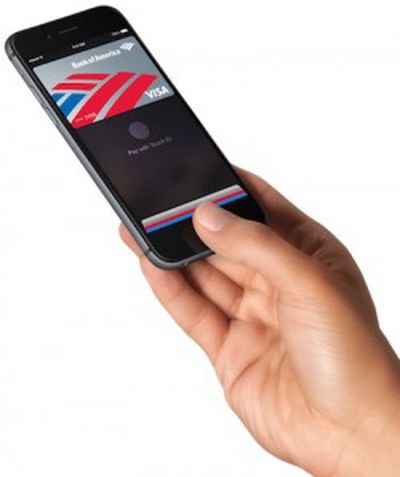
A few banks out of the United Kingdom today have announced Apple Pay support for their customers, including Lloyds Bank, Bank of Scotland, and Halifax (a division of Bank of Scotland). Lloyds had previously told its customers that Apple Pay support would be coming "very soon" back in August.
The three new banks join a growing list of UK Apple Pay participating issuers including: American Express, MBNA, Nationwide, NatWest, Royal Bank of Scotland, Santander, Ulster Bank, First Direct, and HSBC.
Still listed on the Coming Soon section of the UK Apple Pay website are M&S Bank and TSB, and although Barclays confirmed "imminent" support of Apple Pay in the UK back in July, it has yet to join in support of the service.
Apple Pay officially launched in the UK on July 13 with more than 250,000 retail locations backing the contactless payments service. In the weeks following its announcement, the service has grown its roster of supporting retail partners and financial institutions, along with expanding the upper limit for transactions on the service to £30 per transaction instead of £20.
Update: M&S Bank has begun a roll-out process of support for Apple Pay, mentioning that some customers will be able to add their M&S Bank-issued credit and debit cards into Apple Pay during the roll-out.
Pad & Quill has unveiled a new Traveler bumper-wallet case for iPhone 6, iPhone 6 Plus, iPhone 6s and iPhone 6s Plus alongside a new Timber Nightstand for Apple Watch. Pad & Quill's existing lineup of wallet cases, including the Valet Sleeve and The Luxury Pocket Book, are also compatible with the iPhone 6s and iPhone 6s Plus.
The new Traveler case is handcrafted from American full grain leather, with an orange hand stitched accent, camera aperture opening, parachute grade stitching and two pockets on the back for holding cash and up to 6-8 credit cards or IDs. The cases ship in late September for $79.95 in Dark Chocolate or Whiskey Brown.
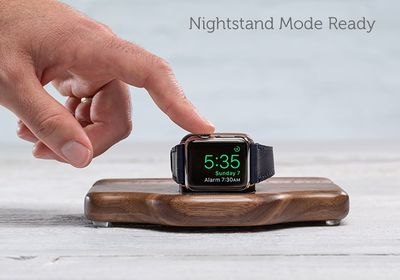
The new Timber Nightstand docks the Apple Watch in landscape orientation for Nightstand Mode on watchOS 2, and also has a slot for keys, extra watch bands or other jewelry. The nightstand, handcrafted from a single piece of hardwood, ships in 7-10 business days for $89.95 (American Cherry) or $119.95 (American Walnut).
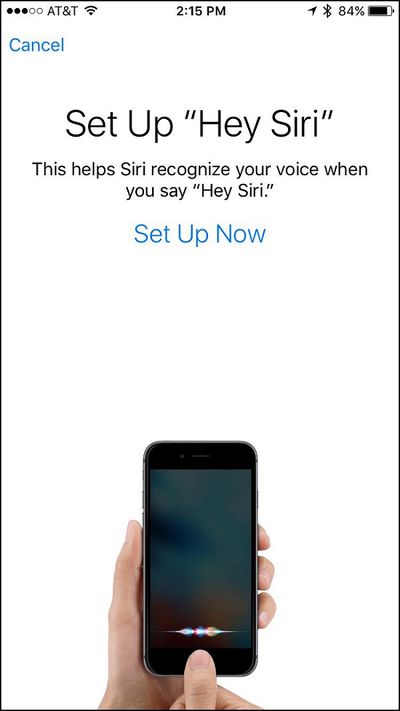
Following the release of the first public beta for iOS 9.1 yesterday, along with the GM version on Wednesday, a few of the testers have come across a new feature introduced in the update. Somewhere in the Settings app, it appears that Apple has quietly added a set-up process for the new "Hey Siri" feature coming to the iPhone 6s and iPhone 6s Plus, thanks to a built-in M9 motion coprocessor that enables the phones' always-on functionality.
Although unconfirmed by Apple, the discovery in iOS 9.1 suggests that Siri will be able to begin detecting specific user voices and determine whether or not the owner of the iPhone in question is speaking to her. Similar in vein to the way Apple aimed its Touch ID feature to work better and better the more you unlocked an iPhone using the fingerprint scanning sensor, it seems the set-up process will guide users into stating words or phrases to better acclimate Siri with each iPhone owner.
Found in General > Siri > Allow 'Hey Siri', the new always-on feature is the next step-up in the technology by Apple, allowing users to ask Siri questions or make changes within the iPhone's apps by simply stating "Hey Siri" near the iPhone. The new set-up process discovered today could also just be a way for Siri to work better detecting voices in general, and not be specific to each user. With the iPhone 6s and iPhone 6s Plus launching in just two weeks, it won't be long until everyone can find out for themselves.
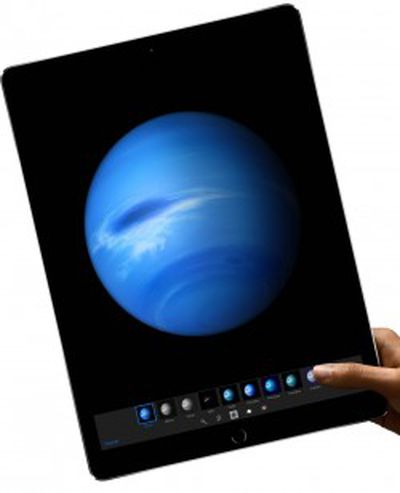
Apple's new iPad Pro is powered by a 64-bit A9X processor that delivers up to 1.6 times faster performance over the iPad Air 2, with up to twice as fast graphics. Apple also says the tablet is faster than 80% of portable PCs shipped in the last 12 months.
Apple's website notes the underlying technology behind the iPad Pro's desktop-class performance is a new storage controller that increases read and write speeds so that large files, such as 4K videos or RAW photos imported from an HD camera, can be opened much quicker (via AppleInsider).
The A9X chip is capable of processing data so quickly, it demanded a new memory architecture. iPad Pro features a revamped storage controller that helps deliver performance better than some desktop computers. This increases read and write speeds, so you can quickly open even the largest files. Like the big 4K movie you just edited or all the RAW images you imported from your HD camera.
iPad Pro launches in November in Silver, Space Gray and Gold, starting at $799 for a 32GB Wi-Fi only model. A 128GB Wi-Fi only model will cost $949 and a Wi-Fi + LTE 128GB model will cost $1,079. A new Apple Pencil and Smart Keyboard will launch alongside the tablet for $99 and $169 respectively.
One of the novel new features coming in the iPhone 6s is the new Live Photos feature which captures an additional 3 seconds of video surrounding photos on the new iPhones. The new feature is on by default and allows you to take photos as usual. Apple describes it:
A still photo captures an instant frozen in time. With Live Photos, you can turn those instants into unforgettable living memories. At the heart of a Live Photo is a beautiful 12‑megapixel photo. But together with that photo are the moments just before and after it was taken, captured with movement and sound
Live Photos will be viewable on existing iPhones, iPads, Macs and Apple Watch devices with the latest operating systems. Apple is also opening up the API for developers to support the new format in their own apps. Facebook has already committed to supporting Live Photos in their iOS app later this year.
While few details about the new image format has been released, TechCrunch's Matthew Panzarino reveals in a video that the new format will take up approximate twice the space of a normal 12MP photo. Panzarino describes that even the current iPhones start taking photos the moment the Camera app is launched, and that traditionally, only the last photo the moment the shutter is pressed is stored. The new system will simply take the surrounding photos and compress them into this new format.
Meanwhile, @DanMatte reveals that the new Live Photos format is a bundle of images based on the JPEG file format, allowing them to be easily sent as a still image to devices that don't support Live Photo. Apple's developer documents indicate that you can share the image as a regular JPEG if desired.
More details should come out as the new iPhones begin shipping on September 25th.
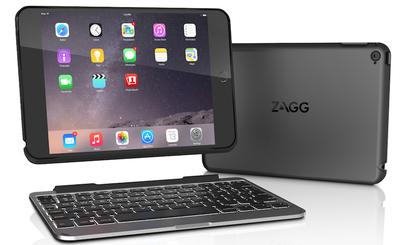
Just a day after Logitech announced the first third-party keyboard case for the iPad Pro, Zagg revealed its keyboard case lineup for Apple's newest iPad line. However, unlike Logitech's keyboard, which was developed with Apple and utilizes the new Smart Connector, ZAGG's cases require a Bluetooth connection.
The first keyboard case for the iPad Pro is the Slim Book Pro, which will retail for $139.99. The iPad Pro's Slim Book is essentially a larger version of the same keyboard case that's available for the iPad Air and iPad Mini, which is a keyboard that comes with a detachable case for the iPad. The second case is a new product called the Messenger Universal, which will retail for $69.99. Zagg has not yet detailed how the Messenger Universal works or what it looks like.
Zagg also announced the new line of keyboard cases for the new iPad Mini 4. The Slim Book with backlit keys will retail for $119.99 and be available on September 15. Two Folio cases will be available on September 25, with the backlit keys option available for $99.99 and the non-backlit option available for $79.99.
The Slim Book Pro and Messenger Universal for iPad Pro will both be available for purchase in November. Zagg also hints that it will offer a full range of accessories for both the iPad Pro and iPad Mini 4, including InvisibleShield screen protector and power and audio products.
The Wall Street Journal today revealed that Apple CEO Tim Cook will speak at the WSJ.D conference in October. The conference brings together tech CEOs, founders and pioneers to "explore the most exciting tech opportunities emerging around the world."
This marks the second consecutive year Cook has spoken at the conference. Last year, Cook commented on an array of topics, including Apple Watch, Apple Pay, the discontinuation of the iPod Classic and more. Last year's highlights included the revelation that the Apple Watch only needed to be charged daily and that the iPod Classic was discontinued because the Cupertino company couldn't get the parts any longer.
Earlier today, Re/code also announced that Apple Pay head Jennifer Bailey will speak at the Code/Mobile conference, which takes place October 7 - 8 in Half Moon Bay, California.
This year's WSJ.D conference takes place October 19 - 21 at The Montage in Laguna Beach, California and will also feature CBS CEO Les Moonves, Sony CEO Kazuo Hirai and more.



 Apple today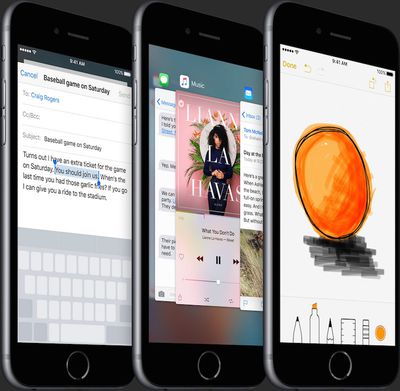
 Apple co-founder Steve Jobs famously dismissed the need for a stylus when introducing Multi-Touch on the original iPhone over eight years ago, touting the finger as the best pointing device in the world.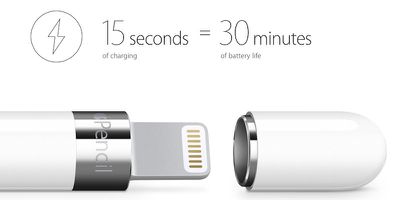

 Apple design chief Jony Ive and Hermès artistic director Pierre-Alexis Dumas recently spoke with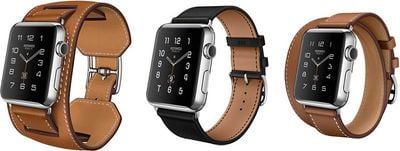
 A few banks out of the United Kingdom today have announced Apple Pay support for their customers, including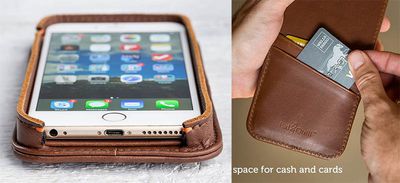
 Apple's new iPad Pro is powered by a 64-bit A9X processor that delivers up to 1.6 times faster performance over the iPad Air 2, with up to twice as fast graphics. Apple also says the tablet is faster than 80% of portable PCs shipped in the last 12 months.