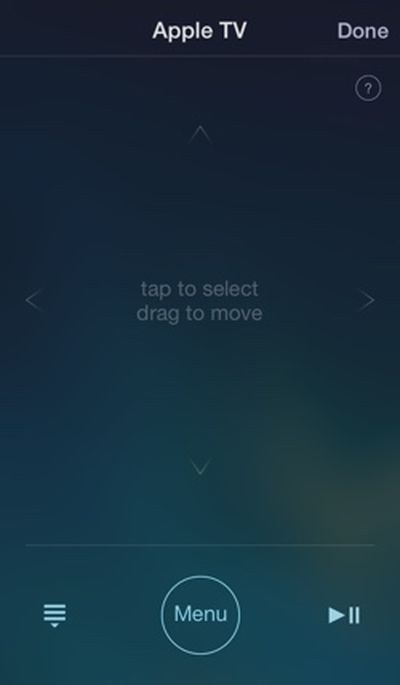
Today's tvOS 9.1 update for the fourth-generation Apple TV enables a feature that many have been missing - support for the Remote app on iOS devices and Apple Watch. Prior to today, the new Apple TV was not compatible with the Remote app that has long allowed iPhone and iPad users to control their second and third-generation Apple TVs with their iOS devices.
Apple likely skipped implementing Remote support for the new Apple TV initially because it includes a touch-based remote control that enables many of the same gestures, but users have expressed some disappointment that the app didn't work. The Remote app may mimic the touch-based interface of the physical Apple TV remote control, but it will be handy in a pinch should that remote become lost or misplaced.
Being able to use the Remote app will also remedy one of the most frustrating aspects of the new Apple TV -- text entry. Prior to today, it was necessary to use the swipe controls on the physical Apple TV remote with an on-screen keyboard to enter text. The Remote app will allow iPhone and iPad owners to use their devices to enter text much more quickly.
The Remote iOS app does not require updating to work with the fourth-generation Apple TV, but the set-top box does require tvOS 9.1 to be installed. Today's iOS 9.2 update is also not required and we have confirmed that the Remote app works with iOS devices running earlier versions of iOS 9.
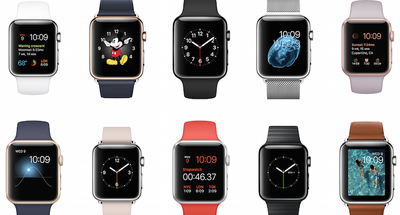
Apple today released a new software update for the Apple Watch, upgrading watchOS 2 from version 2.0.1 to version 2.1. The update comes six weeks after Apple first released watchOS 2.0.1 to the public and two and a half months since the public launch of watchOS 2, the first operating system upgrade for the Apple Watch.
The 2.1 update can be downloaded through the dedicated Apple Watch app on the iPhone by going to General --> Software Update. To install the update, the Apple Watch must have 50 percent battery, it must be placed on the Apple Watch charger, and it must be in range of the iPhone.
watchOS 2.1 includes a range of bug fixes to improve the performance of the device and it also includes support for several new languages. There's now system language support for Arabic, Czech, Greek, Hebrew, Hungarian, Malay, Portuguese, and Vietnamese, along with expanded dictation and Siri support for several languages. Bug fixes address issues in Calendar, Power Reserve mode, third-party apps, and more.
Apple today released iOS 9.2 to the public, marking the second major update to the iOS 9 operating system since its September launch. Prior to being released, iOS 9.2 was in testing since late October after being seeded to developers and public beta testers one week after the launch of iOS 9.1.
Today's iOS 9.2 release is available as an over-the-air update to all iOS 9 users. Though it is the second major update, iOS 9.2 is actually the fourth update to iOS 9 in total, following the launches of iOS 9.0.1, iOS 9.0.2, and iOS 9.1. Xcode 7.2 is also available today.
iOS 9.2 includes a huge list of bug fixes, which we've outlined below.
This update contains improvements and bug fixes including:
- Apple Music improvements --You can now create a new playlist when adding a song to a playlist --Your most recently changed playlist is now listed at the top when adding songs to playlists --Download albums or playlists from your iCloud Music Library by tapping the iCloud download button --See which songs have been downloaded with the new download indicator next to each song in My Music and Playlists --See works, composers, and performers while browsing Classical music in the Apple Music catalog - A new Top Stories section in News so you can stay up to date with the most important news of the day (available in the United States, United Kingdom, and Australia) - Mail Drop in Mail for sending large attachments - iBooks now supports 3D Touch to peek and pop pages from the table of contents, your notes and bookmarks, or from search results inside a book - iBooks now supports listening to an audiobook while you browse your library, read other books, or explore the iBooks Store - iPhone support for the USB Camera Adapter to import photos and videos - Improved stability of Safari - Improved stability of Podcasts - Fixing an issue that caused mail attachments to be inaccessible for some users with POP email accounts - Resolving an issue for some users that caused attachments to overlap text in mail - Fixing an issue where Live Photos could have turned off after restoring from a previous iCloud backup - Addressing an issue that could cause search in Contacts to display no results - Resolving an issue that could have prevented Calendar from displaying all seven days in week view - Fixing an issue where Camera screen on iPad could be black when attempting to capture video - Addressing an issue that could cause instability in the Activity app when viewing the day of Daylight Savings Time transition - Fixing an issue that could prevent data from appearing in Health - Fixing an issue that could prevent Wallet updates and Lock screen alerts from displaying - Addressing an issue where updating iOS could prevent an alarm from going off - Fixing an issue where some users were unable to login to Find my iPhone - Fixing an issue that prevented some manual iCloud Backups from completing - Addressing an issue where using the iPad keyboard could unintentionally trigger text selection mode - Improved keyboard responsiveness when using Quick Reply - Improved punctuation input on the 10-key Chinese (Pinyin & Stroke) keyboards with new expanded view of punctuation symbols and better predictions - Fixing an issue on Cyrillic keyboards where caps lock would be enabled when typing in URL or email fields - Siri support for Arabic (Saudi Arabia, United Arab Emirates) - Accessibility improvements --Fixing issues with VoiceOver when using Camera face detection --Adding support for VoiceOver to wake up the screen --Adding support for VoiceOver to invoke app switcher with 3D Touch gesture --Fixing an issue with Guided Access when trying to end phone calls --Improved functionality for Switch Control users when using 3D Touch --Fixing an issue with speech rate of Speak Screen
Beyond bug fixes, iOS 9.2's biggest change is a tweak to the way the Safari View Controller works within third-party apps. The Safari View controller is what allows a pop-up Safari window to be used within third-party apps, and with iOS 9.2, the Safari View Controller supports third-party Action Extensions, letting apps like 1Password to be accessed in the Safari view of other apps like Tweetbot.
In the Hipchat app for iOS, clicking a link brings up an in-app browser. In iOS 9.1, seen on the left, there's no option for third-party extensions. In iOS 9.2, seen on the right, there's support for third-party extensions like 1Password.
The Safari View Controller has also been updated with the ability to long tap on the Reload button to reload content without content blockers and it now supports the request desktop site function and an edge swipe to dismiss the Safari window.
iOS 9.2 also includes support for AT&T's NumberSync Wi-Fi calling feature, allowing AT&T users to accept calls on any device even when their phone is not nearby.
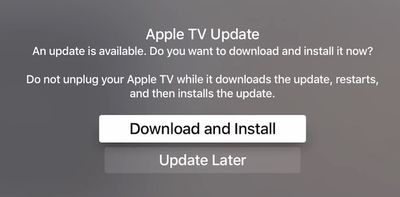
Apple today released tvOS 9.1, the first major update to the tvOS operating system that runs on the fourth-generation Apple TV. tvOS 9.1 has been in testing since November 3, just a few days after the final version of tvOS was released alongside the new Apple TV in October.
tvOS 9.1 can be downloaded over-the-air through the Settings app on the fourth-generation Apple TV by going to System --> Software Update.
tvOS 9.1 betas introduced support for Siri search for Apple Music, allowing fourth-generation Apple TV owners to ask Siri to play content from Apple Music. Siri for Apple Music on the Apple TV works similarly to Siri for Apple Music on iOS devices, enabling queries like "What was the top song in 1980?" or "Play Adele's latest single." It is not yet clear if this feature made it into the final version of tvOS 9.1.
The tvOS update includes several bug fixes for issues discovered in the current version of tvOS, and according to beta testing notes, it features improvements to networking and scrolling.
tvOS 9.1 is the first major update to tvOS, but it's the second update overall. Apple previously released tvOS 9.0.1 with under-the-hood bug fixes and performance improvements.
Update: According to Apple's release notes for tvOS 9.1, the update includes support for the Remote app for iOS and Apple Watch and it introduces Siri support for Apple Music on the device.
This update includes general software and performance improvements and these features:
- Siri for Apple Music: Search, play, and control your music on Apple TV.2 - Remote app for iOS: Use your iOS device to quickly enter text on screen and navigate Apple TV. - Remote app for Apple Watch: Use your Apple Watch to navigate Apple TV.
Apple today released OS X 10.11.2 to the public, marking the launch of the second update to the El Capitan operating system that was first released on September 30. In testing since late October, OS X 10.11.2 follows the October 21 release of OS X 10.11.1, an update that introduced Office 2016 bug fixes and new emoji, among other improvements.
The OS X 10.11.2 update can be downloaded through the Software Update mechanism in the Mac App Store. It is currently rolling out to all users who are running OS X El Capitan and should be available soon.
Throughout the beta testing period, OS X 10.11.2 did not appear to include any outward-facing changes, instead focusing on under-the-hood bug fixes and performance improvements to address issues discovered since the launch of OS X 10.11.1. Bug fixes introduced in today's update were outlined in Apple's release notes and are listed below.
The OS X El Capitan 10.11.2 update improves the stability, compatibility, and security of your Mac.
This update:
-Improves Wi-Fi reliability -Improves the reliability of Handoff and AirDrop -Fixes an issue that may cause Bluetooth devices to disconnect -Fixes an issue that prevented Mail from deleting messages in an offline Exchange account -Fixes an issue that prevented importing photos from an iPhone to a Mac using a USB cable -Improves iCloud Photo Sharing for Live Photos
OS X El Capitan has only been available for two months, but it has already received multiple updates to address bugs and other issues. Apple will continue to push regular updates to El Capitan to keep it running smoothly until the next major operating system update, expected in late 2016.
Apple continues to ramp up promotion of the new Apple TV, building on its series of advertisements focusing on the television shows and games available to users on the set-top box. As noticed by MacRumors reader Jordan, the company has begun to expand its previous colorful billboard campaign by featuring content available on the new box, including an ad themed after The Simpsons.
The billboard is similar in theme to the multi-colored advertisement campaign Apple introduced following the launch of the new Apple TV. Over the weekend, the company used its official App Store Twitter account to continue the campaign and share a few new tie-in ads. So far it has promoted various games, apps like Nat Geo TV, and television shows including Veep and Game of Thrones.
Apple began its new Apple TV campaign in the middle of November, a few weeks after the device launched in late October. Some of the earlier commercials included promotions of Crossy Road, Orange is the New Black, and The Muppets, all playing on the fourth-generation Apple TV.
Apple may be planning to host an event in March of 2016 to unveil the next-generation Apple Watch, reports 9to5Mac citing sources with knowledge of Apple's plans. The updated device could then ship a month later in April, marking one full year between Apple Watch releases. Apple released the first-generation Apple Watch on April 24, 2015.
Rumors about the second-generation Apple Watch started leaking out well before the original Apple Watch launched, as there were health-related features Apple was forced to shelve because of inconsistent performance. Apple experimented with sensors for measuring things like skin conductivity, blood pressure, and blood oxygen, and some of these could make their way into the next-generation device following a year or work on improving the technology.
Apple CEO Tim Cook recently said the company's efforts in the health arena would be conservative, because it does not want to deal with the FDA. "We don't want to put the watch through the Food and Drug Administration (FDA) process," he said.
Other features rumored for the next-generation Apple Watch include a front-facing FaceTime camera to allow Apple Watch users to make and receive FaceTime calls and a new Wi-Fi chip that may allow the Apple Watch to do more without a connection to an iPhone.
Today's report on the Apple Watch also says the much-rumored iPhone 6c could also be unveiled at the event, in line with rumors that have pointed towards an early 2016 launch. The iPhone 6c is a next-generation lower-budget 4-inch phone designed to follow in the footsteps of the iPhone 5c. It's rumored to include an aluminum shell, an upgraded A8 or A9 processor, Touch ID and Apple Pay support, and a curved edge cover glass like the iPhone 6.
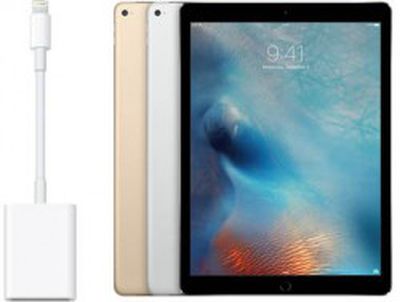
Apple has released a new Lightning to SD Card Camera Reader with support for up to USB 3.0 speeds on iPad Pro, and USB 2.0 speeds on all other iPad and iPhone models, as spotted by iDownloadBlog. The dongle retails for $29 on the Apple Online Store in the U.S. and is available to ship for delivery within approximately one week.
Last month, it was discovered that the iPad Pro's Lightning port supports USB 3.0 transfer speeds, allowing for data transfer speeds upwards of 60MB/s to a theoretical max of 625MB/s. All other iPads and iPhones can only transfer data at USB 2.0 speeds of around 25 to 35MB/s, since only the iPad Pro has the necessary hardware -- a Fresco Logic FL1100 4-port USB 3.0 Host Controller.
Apple has not updated its Lightning to USB Camera Adapter or other accessories to support the iPad Pro's USB 3.0 speeds, but multiple sources have previously confirmed that adapters are in the works. It remains unclear, however, if Apple plans on introducing new Lightning cables that will enable USB 3.0 speeds when transferring files from a computer to an iPad Pro.
Apple's new Lightning to SD Card Camera Reader is also available for £25 in the U.K. and $35 in Canada. Prices vary in other countries.
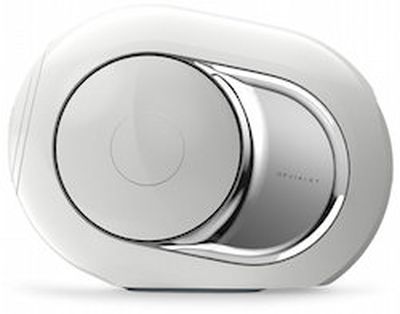
French audio company Devialet has reached a partnership with Apple that will see its high-end Phantom speaker sold at the top fourteen Apple Stores in the U.S. starting today, reports TechCrunch.
The 750-watt Phantom will sell for $1,990, while the 3000-watt Phantom Silver will cost $2,390, the same prices as purchasing either speaker directly from Devialet.
The Phantom and Phantom Silver, along with the $149 remote and the $329 Dialog bridge for connecting multiple phantoms, will initially be available at five NYC Apple Stores, two in Los Angeles, and one each in San Francisco, Palo Alto, Portland, Chicago, Dallas, Miami and Washington, D.C. They’ll cost the same as buying straight from Devialet.
Devialet's Phantom is a high fidelity wireless speaker that emits "implosive sound" based on patented technologies called Analog Digital Hybrid (ADH), Heart Bass Implosion (HBI) and Active Cospherical Engine Loudspeaker (ACE).
The single speaker system, capable of producing "20X the power of speakers the same size," has received positive reviews from Bloomberg, TechCrunch, Wired and dozens of other media publications since launching in 2014.
By expanding and contracting its walls, it produces 1.2 tons of pressure to produce 20X the power of speakers the same size. The device required 10 years of development and $25 million in R&D. Devialet has scored over 77 patents and 37 awards for sound and design since it released its first amplifiers in 2010.
Devialet product manager Romain Salzman told TechCrunch that the company's "dream was to find an important partnership to deploy Phantom quickly all around the world."
Luckily, Salesforce CEO Marc Benioff was a big fan and hooked them up with a meeting with Angela Ahrendts, Apple’s senior vice president of retail and online stores. During their meeting at 1 Infinite Loop, Salzman tells me Ahrendts exclaimed "I love it, I want it, and we’re going to bring you all over the world."
Phantom display models will be paired with iPhones at select Apple Stores in the U.S., accompanied by a special Devialet app for testing high fidelity music.
Apple's new first party iPhone 6s Smart Battery Case launched quietly overnight onto the company's online store, and now this morning a handful of sites around the web are publishing reviews for the new accessory. Most reviewers agree that it's time Apple acknowledged the lesser battery life of the 4.7 inch iPhone 6s, when in comparison to its 5.5 inch iPhone 6s Plus alternative, but some still aren't convinced that the case's design, power, and price point are justified.
Image via Engadget
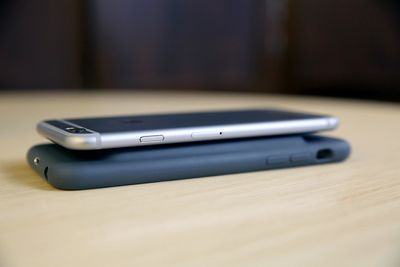
The Verge appreciated Apple's attempts at expanding the case's functionality beyond a simple battery extension, like its built-in antennas to improve cellular performance or the iOS integration that showcases the accessory's current battery level. Still, the site had issues with the protruding lump on the back of the case and the fact that it doesn't fully charge a dead iPhone from 0 to 100 percent due to its slightly weaker (when in comparison to comparable third party cases) 1,877 mAh battery.
The Verge also noted that the Smart Battery Case doesn't allow users to choose when the case begins or ends charging, it just starts the moment you plug the iPhone 6s into the case's Lightning adapter, perhaps a downside for more intensive iPhone users. In the end, they noted that casual, passive users who want to stay within the Apple family will get what they need out of the case, but that there are cheaper alternatives with more battery life selling points on the market.
Apple’s smart battery case is good, then, if you want a softer case or a "passive" battery charging experience, with zero control over or understanding of how the case actually charges your phone. Maybe that’s what Apple is hoping: that buyers of this thing will slip it on and never take it off, charging their iPhones entirely through the case’s Lightning port going forward, forgetting about its big ol’ bump in the back. They will be pleased, finally, with their iPhone 6’s or 6S’s battery life, and the memory of spending an extra $99 for it, rather than having it just work that way in the first place, will eventually fade away.
It’s fine if you don’t want exterior indicator lights, or a even a case that gives you a 0 to 100 percent charge. After all, this one was designed for the iPhone, by the same company that made your iPhone. For some people, that’s a big draw.
As opposed to The Verge's dislike over any lack of outward LED indicator lights regarding the Smart Battery Case's charge level, The Wall Street Journal appreciated Apple's attempt at discreetness. The site was overall more positive on the new product, noting that while the case's fully charged battery only brought an iPhone from 0 to 83 percent, it still provided about 5 hours more use time in a standard looping video battery test and alleviated most battery life quibbles the reviewer had with the iPhone 6s previously.
After five days of living with the Smart Battery Case wrapped around my iPhone, I no longer feel so powerless. Even better, Apple fixes many of the issues I’ve had with cases over the years. It uses the same Lightning cable as the iPhone to charge, and it tells you how much power is remaining right on the phone’s screen. Besides, the case doesn’t feel like the stuff plastic forks are made of.
For all its virtues, the Smart Battery Case is still a Band-Aid for Apple’s iPhone battery problem. We need longer-lasting batteries and easier ways to charge them—not silly battery backpacks. I plan to spend the $99, but I hope one day the Smart Battery Case will just be an artifact from a time before iPhones could run for days.
Engadget admitted to disliking the design of the case's battery bump upon initially viewing it, but grew to become familiar with the battery protrusion. The site noted that while some may dislike the visual design of the accessory, it "isn't cumbersome" to hold for extended periods of time and is "actually pretty comfortable," although the usual stickiness of silicone in tight jean pockets will remain an issue for some. In a similar vein to other reviews, Engadget ended with stating that those tied into the Apple ecosystem will benefit from the Smart Battery Case's iOS integration, but most others can find cheaper alternatives.
Image via Engadget
Apple's first battery case works, and it works well. Here's the rub, though: There are plenty of cheaper, more capacious options, and some of those are prettier too. What the Smart Battery Case offers over its rivals is a sense of cohesiveness that stems from Apple controlling both the hardware and software experience. The convenience of a Lightning pass-through for easy data transfers and power reminders in iOS might make the case's $99 price worth it for some of you, but everyone else could spend half that on a third-party case.
Those interested in trying out the iPhone 6s Smart Battery Case for themselves, or purchasing it for someone as a Christmas present, can visit the Apple online store to order the new accessory. Shipping estimates currently sit at 1-3 business days, and those who live near an Apple Store will be able to select a personal pickup option, as well.
Apple has announced that its 28th retail store in China opens Saturday, December 12 at 2:00 p.m. local time. The store will be located in the MixC shopping mall at 136 Minzu Avenue in Nanning's Qingxiu District.
MixC shopping mall in Nanning, China (Image: WeekendNotes)
The new store will be open between 10 a.m. and 10 p.m. local time on Monday-Thursday and Sunday, with extended hours on Friday and Saturday, and offer traditional Apple Store services, including the Genius Bar, Workshops and JointVenture.
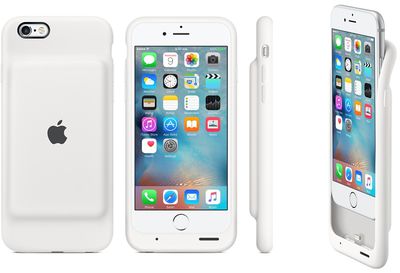
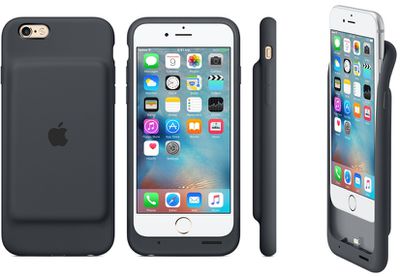
Apple today quietly launched a new iPhone 6s Smart Battery Case that will prolong the smartphone's talk time and internet use up to a total of 25 and 18 hours respectively (via CNET). The case's outside material compares similarly to the company's previous line of silicone accessories, with an added hump sitting in the middle of the backside where the extra battery rests.
Charge your iPhone and battery case simultaneously for increased talk time up to 25 hours, Internet use up to 18 hours on LTE, and even longer audio and video playback.* With the Smart Battery Case on, the intelligent battery status is displayed on the iPhone Lock screen and in Notification Center, so you know exactly how much charge you have left.
As the first official Apple-made iPhone battery case, the new product comes in Charcoal Gray and White color options and costs $99 on Apple's online store. A new feature will allow the case's battery life status to be displayed for users on both the lock screen and in Notification Center, so it's easy to determine how much life the accessory has left. The company also promised that the Smart Battery Case supports all Lightning products, including the iPhone's bundled-in Lightning cable and the official iPhone Lightning Dock.
The company's storefront doesn't specifically disclose the mAH capacity of the Smart Battery Case, aside from the estimated hours given to tasks like talking on the phone and browsing the internet. There's also no version for the iPhone 6s Plus currently announced, but users of last year's 4.7-inch iPhone 6 model may be able to use the new case due to its design similarities to the iPhone 6s.
Shortly after its PlayStation Experience 2015 event in San Francisco this weekend, Sony has released a brand new app called PlayStation Messages, which allows PlayStation 4 owners to chat with their friends on the go. While the standard PlayStation app had built-in messaging functionality, it's been split into its own app like how Facebook did with Facebook Messenger.
The app allows PlayStation Network users to send their friends text, voice and picture messages in addition to stickers of PlayStation game characters like Knack and Uncharted's Nathan Drake. The app also allows for group messaging.
The standard PlayStation app was also updated today with the ability to follow verified users and the removal of the messaging functionality.
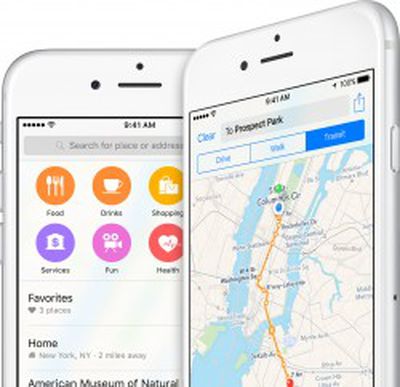
When Apple Maps first debuted alongside iOS 6, it drew significant criticism for its inaccuracies in mapping data, errors when locating points of interest, lack of transit information and odd 3D mapping imagery. Many users opted not to upgrade to iOS 6 due to the app's flaws, and iOS 6 adoption jumped 29 percent once Google released a native Maps app for Apple's platform. Three years later, Apple tells the Associated Press that Apple Maps is now used three times more than Google Maps on iPhone.
Apple says its mapping service is now used more than three times as often as its next leading competitor on iPhones and iPads, with more than 5 billion map-related requests each week. Research firm comScore says Apple has a modest lead over Google on iPhones in the U.S., though comScore measures how many people use a service in a given month rather than how often.
While a lot of the usage gains for Apple Maps can be attributed to Apple Maps being a built-in app that's the default mapping solution for features like Siri and Mail and third-party apps like Yelp, the AP notes that many users who once spurned by Apple Maps have returned. Additionally, many new iPhone users did not experience the troubles of Apple Maps, instead using the newer, more improved version.
Although Apple now holds the lead in mapping on iOS, Google still dominates among all U.S. smartphone owners, with Google Maps having two times more users than Apple Maps. However, much of this is attributed to Apple Maps only being available on iOS while Google Maps is available on both Android and iOS.
In recent years, Apple has made numerous efforts to improve its mapping service. Apple has purchased companies like GPS firm Coherent Navigation and mapping company Placeable in addition to expanding its in-house teams and making data-sharing deals with companies like Foursquare. The Cupertino company has also beefed up Apple Maps with a fleet of mapping vehicles capturing data and introducing new features like Transit directions and, in the future, indoor mapping.
In total, Apple now gets data "from more than 3,000 sources" for business listings, traffic and more. For its new Transit features, Apple even sent out teams to map out subway entrances and signs.
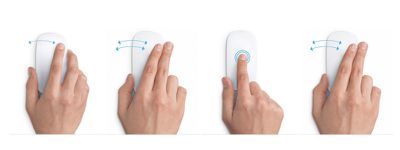
While the Magic Mouse has been around for quite some time, Apple recently updated the accessory with an integrated rechargeable battery and other changes, so some MacRumors readers deciding to give the device a try may be new to it. If you're coming from a more traditional mouse, you should know there's a lot the Magic Mouse can do that might not be obvious. Rather than merely serving as a point and click device, the Magic Mouse and Magic Mouse 2 use swiping and tapping gestures along with the traditional clicks.
Because the Magic Mouse incorporates taps and swipes, some of its features may be hidden or confusing to someone that's never used one before. We've created this quick how-to guide for readers who are new to the Magic Mouse, covering the ins and outs of the device to help you get the most out of it.
First off, we want to note that tapping is not the same as clicking. The latter, as with traditional mouse buttons, requires that you press on the mouse until you hear a clicking noise or feel a clicking action.
Tapping is not a common feature on a traditional mouse, but is one of Apple's Magic Mouse specialties. When you tap on the mouse lightly, as if you were tapping on your iPhone screen, you are triggering a different action than clicking.
The Magic Mouse supports tapping or double tapping with one finger and tapping or double tapping with two fingers, all of which trigger different actions, depending on what you have enabled.
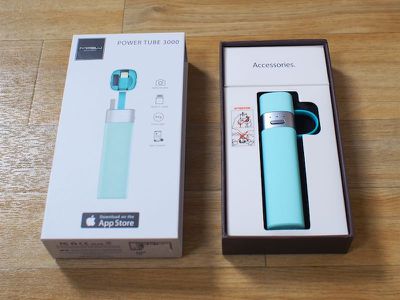
There are hundreds of external battery packs available for the iPhone, but only a small subset of those are given the Apple seal of approval and offered in Apple retail stores and the Apple online store. MiPow's 3,000 mAh Smart Power Tube is one of the newest portable batteries Apple offers, with a lot of perks like built-in charging cables and an accompanying app.
Design and Features
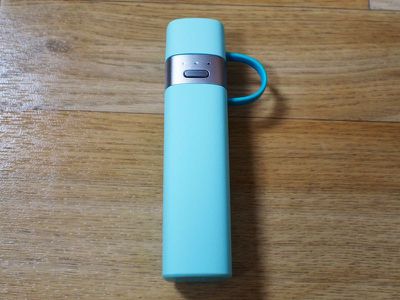
MiPow's Smart Power Tube is, as the name suggests, tube shaped. While it's small enough to fit comfortably in a bag or a purse at just over four inches long and an inch thick, it's an odd shape for a pocket and it isn't as convenient to use while charging an iPhone like the flatter Mophie-style battery packs. It comes with a little matching carrying pouch so it can be dropped in a bag without worrying about scratches and scuffs.
The Smart Power Tube is available in black, white, gray, and a handful of bright candy colors: turquoise, green, and pink. A smooth, soft-touch material covers the outside of the Smart Power Tube and a metal band separates the body from the cap of the device. On the metal band there are three LEDs that display the power level and a button that activates the Tube when it's plugged into an iPhone.
Underneath the cap, there's a USB connector for charging the internal battery and a cleverly placed Lightning cable that connects the Power Tube to an iPhone and also holds the cap of the device in place. On the whole, the Smart Power Tube feels like a premium product with coordinated colors, clean lines, and quality materials.
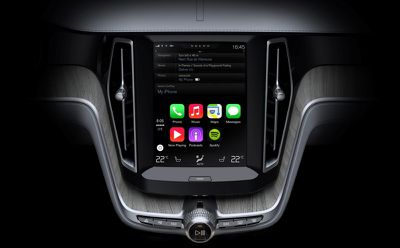
After long promising to implement CarPlay support in its vehicles, Volvo recently announced that the new 2016 XC90 is the company's first CarPlay-enabled car in the United States, reports CNET.
The new vehicle is equipped with a 9-inch touchscreen in the center console, with the CarPlay interface featured on the bottom half of the screen. Volvo's Sensus Connect controls remain at the top of the screen, offering access to features like directions, media playing, temperature, and more.
A button on the steering wheel brings up Siri, allowing users to compose messages, place phone calls, and access built-in CarPlay apps.
Like most CarPlay vehicles, Volvo owners will need to connect their iPhones directly to the vehicle using the built-in Lightning connector. Volvo has said it will support wireless CarPlay features in the future, but wireless capabilities are not yet available.
All 2016 XC90 vehicles are eligible for CarPlay support. Those who already purchased a 2016 XC90 can make a service appointment with their dealer to get the update installed.
Though CarPlay was first announced in 2014, it's taken many months for car manufacturers to get on board. Late 2015 and early 2016 will see more than a dozen car makers releasing their first vehicles with CarPlay support, and we've compiled a comprehensive list of all upcoming CarPlay cars.
Facebook today ended its Creative Labs project, which was designed to allow its engineers to come up with unique and innovative smartphone and tablet apps. With the shuttering of Creative Labs, several of the apps that came out of the program are being shut down and removed from the App Store.
Slingshot, Rooms, and Riff, all apps that were released across 2014 and 2015, are no longer available in the App Store. Slingshot, announced in June of 2014, was an ephemeral messaging app modeled after Snapchat, but with a slight twist. Before viewing a message or a photo, the recipient was required to send a message back.
Rooms, launched in October of 2014, allowed users to create anonymous invite-only chat rooms based around specific themes, while Riff, announced in April 2015, was designed to let users create collaborative video mashups with their friends.
Despite being backed by Facebook, none of the now-defunct apps managed to catch on with users and thus received a limited number of updates from the company. Riff, for example, was never updated since it was released in April, and Slingshot and Rooms were last updated in March and July of 2015, respectively.
A Facebook spokesperson confirmed the end of Creative Labs in a statement to CNET, noting none of the apps had been updated for some time and many of the features have been added into the company's primary apps. "Since their launches, we've incorporated elements of Slingshot, Riff and Rooms into the Facebook for iOS and Android apps."
While none of the apps are available for download, Slingshot continues to be functional for existing users for the time being, while Rooms will be available until it's closed on December 23.
Paper, the first and most successful app to come out of Facebook's Creative Labs effort, remains available in the App Store.


 Today's tvOS 9.1 update for the fourth-generation Apple TV enables a feature that many have been missing - support for the Remote app on iOS devices and Apple Watch. Prior to today, the new Apple TV was not compatible with the Remote app that has long allowed iPhone and iPad users to control their second and third-generation Apple TVs with their iOS devices.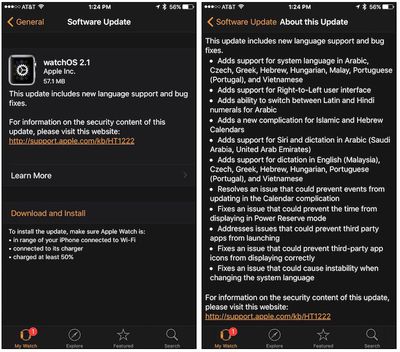
 Apple today released iOS 9.2 to the public, marking the second major update to the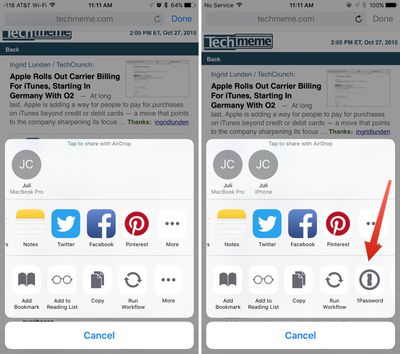


 Apple has released a new
  French audio company Devialet has reached a partnership with Apple that will see its high-end Phantom speaker sold at the top fourteen Apple Stores in the U.S. starting today, reports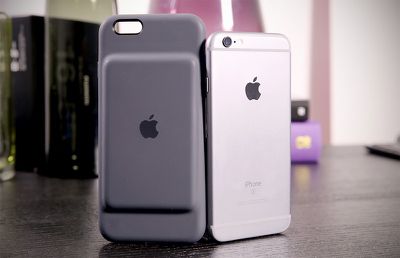

 The company's storefront doesn't specifically disclose the mAH capacity of the Smart Battery Case, aside from the estimated hours given to tasks like talking on the phone and browsing the internet. There's also no version for the iPhone 6s Plus currently announced, but users of last year's 4.7-inch iPhone 6 model may be able to use the new case due to its design similarities to the iPhone 6s.
 When Apple Maps first debuted alongside iOS 6, it drew