Apple to Drop Support for Encrypted Mac OS Extended Drives Next Year - MacRumors
Skip to Content

Apple to Drop Support for Encrypted Mac OS Extended Drives Next Year

Apple yesterday published a new support document warning that macOS 28 will no longer support encrypted Mac OS Extended (HFS+) volumes, meaning affected external drives will need to be decrypted or reformatted ahead of the update.
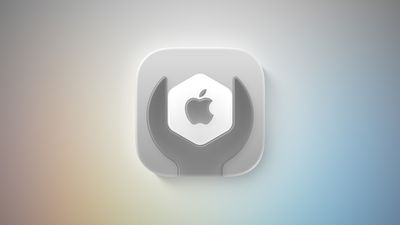
Disk Utility Feature
Starting with macOS 28, "the Mac OS Extended file system format will be supported only for volumes (disks and other storage devices) that aren't encrypted." Any encrypted HFS+ disks, such as older encrypted external hard drives, will stop working with the Mac unless users take action before upgrading.

Apple has not given a specific reason for the change. APFS, which natively supports encryption, has been the default file system on the Mac since macOS High Sierra launched in 2017, and dropping encrypted HFS+ support looks like a further nudge toward retiring the older format altogether.

The transition will start showing up before macOS 28 arrives. Apple says that beginning with macOS 26, a Mac might notify users if it detects an encrypted Mac OS Extended disk that will not carry over to macOS 28 or later, identifying the affected volume by name.

Users can also check manually through Disk Utility by selecting a volume and looking at the format details listed beneath its name; a volume showing both "Mac OS Extended" and "Encrypted," such as "CoreStorage Logical Volume • Mac OS Extended (Case-sensitive, Journaled, Encrypted)," will be incompatible.

Unencrypted Mac OS Extended volumes are not affected. Apple says macOS 28 and later will continue to support them, and notes that Mac OS Extended is also known as HFS Plus, or HFS+.

For anyone who wants to keep using an affected drive after upgrading, Apple recommends backing up its contents first, then either reformatting or decrypting it. Reformatting means erasing the volume and setting it up again in APFS or APFS (Encrypted) format through Disk Utility, which permanently deletes existing data but ensures the drive keeps working in future versions of macOS.

Decrypting is the alternative for anyone who wants to preserve their existing data on the drive. That involves connecting the drive, unlocking it with its encryption password, then Control-clicking its icon in the Finder or on the desktop and choosing Decrypt, entering the password a second time to begin the process. Apple notes that decryption "takes time, especially for large volumes," and progress can be checked in Terminal.

Once decryption finishes, users can optionally convert the volume to APFS without erasing it via Disk Utility's Convert to APFS option, and re-encrypt it afterward if desired. Apple notes that this decryption path does not apply to encrypted Time Machine backup disks.

Related Roundup: macOS Golden Gate

Popular Stories

iphone mirroring blue

macOS 27 Lets You Resize iPhone Mirroring in New Aspect Ratios

Tuesday June 9, 2026 4:25 am PDT by
macOS 27 Golden Gate brings a major improvement to iPhone Mirroring, allowing users to resize the window beyond the iPhone's fixed aspect ratio for the first time. Until now, iPhone Mirroring has been limited to the iPhone's native aspect ratio in a small window. Users could adjust the window's overall size somewhat, but its proportions remained locked. With macOS 27, users can now change...
macos golden gate wallpaper

Apple Unifies iOS 27, macOS, and Even CarPlay Wallpapers for First Time

Tuesday June 9, 2026 4:44 am PDT by
Apple has taken a new approach to its stock wallpapers with iOS 27 and macOS 27 Golden Gate, using variations of the same artwork across all platforms for the first time. In previous years, most platforms shipped with their own distinct wallpaper. This year, they all share a design called "Celosia," featuring sweeping, overlapping curves and soft shadows inspired by layered flower petals or...
Apple Golden Gate

macOS 27 Golden Gate Gains Native Ultrawide Display Support

Tuesday June 9, 2026 4:53 am PDT by
Apple adds native ultrawide display support in macOS 27 Golden Gate, bringing higher resolutions and persistent display arrangements to users of widescreen monitors. The update allows ultrawide displays to run at resolutions up to 5K at 120Hz. Apple also says that display arrangements are now preserved across connections, so the layout automatically restores exactly as the user left it each...

Top Rated Comments

!!! Avatar
4 hours ago at 09:07 am

Older File System being dropped with a newer, more secure system already been in place since almost 10 years?

Good.
Or: An older, well used, well documented, trusted file system that works well with HDs which are far cheaper and more economical for mass storage, is being removed in favor of an undocumented, backwards-incompatible, hard-to-clone filesystem designed for SSDs which dangles nice features, like snapshotting, behind proprietary and inaccessible APIs.

I'd be more interested in APFS if I could just manage my own snapshots, yet Apple tells me I'm not allowed to manage my own hardware like that, I have to pay $100/year just to be rejected for an "entitlement" to use my own hardware.
Score: 29 Votes (Like | Disagree)
Localcelebrity Avatar
4 hours ago at 09:25 am
Ugh. I hate the idea of finding one of my old external drives and plugging it into my Mac at some point in the future and finding out that it can’t be read unless I go to an older Mac and decrypt it.

I feel like it makes sense to stop allowing MacOS to boot off of/run on one, but they should keep allowing the Finder to read/decrypt them for a long time, even if support for it is something that needs to be downloaded ad-hoc when the system detects an encrypted HFS+ drive.

Or JUST allow Disk Utility to decrypt it with the password but nothing else.
Score: 10 Votes (Like | Disagree)
3 hours ago at 10:22 am

A random hard drive accessed from an operating system that won't be released until 2027
...and which will probably be the only one that Macs bought in 2028 can run, and unsupported after 2030.

But hey, any data more than 6 years old is worthless, right?


blah, blah - similar chatter when floppy disks and cd/dvd 's became special cases
Apple started phasing out the floppy nearly 30 years ago, yet I can still plug in a 3.5" floppy drive and read discs today (and, yes, most of them still work apart from a bunch that were baked, frozen and flooded in my garage). The first MacBook Pros with no optical drive came out in 2012, but 14 years later I can plug in an external drive and read CDs/DVDs (I must finish re-ripping my music CDs as FLAC at some point).

Of course, nobody wants or needs a modern computer with a bulky CD or floppy drive built in - I'd already replaced the optical drive in my MacBook with a HD by the time Apple dripped them... but that's a lot different from dropping support for a format - and rendering people's media collections and data archives useless - after somewhere between 5-10 years.

I believe that there's a HFS+ module for Linux - don't know if it supports encryption.
Score: 8 Votes (Like | Disagree)
4 hours ago at 09:24 am

Or: An older, well used, well documented, trusted file system that works well with HDs which are far cheaper and more economical for mass storage, is being removed in favor of an undocumented, backwards-incompatible, hard-to-clone filesystem designed for SSDs which dangles nice features, like snapshotting, behind proprietary and inaccessible APIs.

I'd be more interested in APFS if I could just manage my own snapshots, yet Apple tells me I'm not allowed to manage my own hardware like that, I have to pay $100/year just to be rejected for an "entitlement" to use my own hardware.
That’s a fair criticism of Apple’s direction, but this update is narrower than “HFS+ is being removed.” Unencrypted HFS+ volumes remain supported. The practical issue is that anyone with encrypted HFS+ archive drives will need to decrypt them or migrate to APFS. This might be frustrating for people using large HDDs for long-term storage, where HFS+ has been stable and generally simple (for advanced users), but it’s still not accurate to say Apple is removing HFS+ altogether.

HFS+ was released back in 1998 though. It is time to move on. It's also important to recognize that HFS+ will fall victim to the 2040 date limit so it's not good for really long-term backups.
Score: 8 Votes (Like | Disagree)
retta283 Avatar
2 hours ago at 10:54 am

HFS+ was released back in 1998 though. It is time to move on. It's also important to recognize that HFS+ will fall victim to the 2040 date limit so it's not good for really long-term backups.
I find this to be poor reasoning. Mechanical hard drives can last decades, possibly a full lifetime in cold storage. I don't believe it's a good idea to strip access to data just because the format it's sitting on became outdated, despite the data being intact. It's not like we burn books that aren't printed on modern paper. There's plenty of useful records and information sitting on HFS+ drives across the world, you never know what could be lost.

Also macOS still supports FAT32 which is an even older filesystem that is barely updated from the mid 80s and was never even used by Macintosh systems. FAT is an objectively bad filesystem by every metric but it is still supported by Macs, in fact it's easier to format a new disk as FAT on Mac than on Windows where the option to do so is not visible in GUI. HFS+ should not be a priority for removal at all even if we are sending things to the chopping block.
Score: 7 Votes (Like | Disagree)
4 hours ago at 09:18 am

Or: An older, well used, well documented, trusted file system that works well with HDs which are far cheaper and more economical for mass storage, is being removed in favor of an undocumented, backwards-incompatible, hard-to-clone filesystem designed for SSDs which dangles nice features, like snapshotting, behind proprietary and inaccessible APIs.

I'd be more interested in APFS if I could just manage my own snapshots, yet Apple tells me I'm not allowed to manage my own hardware like that, I have to pay $100/year just to be rejected for an "entitlement" to use my own hardware.
You should switch to Linux.
Score: 7 Votes (Like | Disagree)