iPhone 18 Pro Could Use Qualcomm Modem in the US and C2 Elsewhere - MacRumors
Skip to Content

iPhone 18 Pro Could Use Qualcomm Modem in the US and C2 Elsewhere

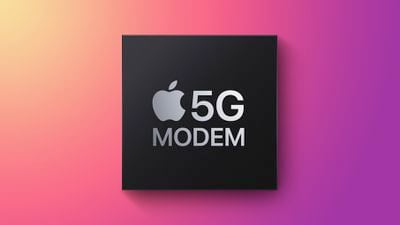
Stolen data from Apple manufacturing partner Tata Electronics appears to reveal that the iPhone 18 Pro will use different modem chips depending on the market it is sold in, with U.S. models retaining Qualcomm hardware while international models will feature Apple's in-house C2 modem.
Apple 5G Modem Feature Triad

The finding emerged from a wide-ranging cyberattack on Tata, which alongside Foxconn assembles the iPhone. More than 630GB of confidential data was stolen by a ransomware group calling itself "World Leaks" and has been circulating online. The material was obtained illegally and MacRumors has not seen the stolen files directly. AppleInsider conducted an analysis of the stolen files and said it could confirm the authenticity of several key documents.

Among the information that has attracted particular is a bill of materials apparently related to the U.S. variant of the ‌iPhone 18 Pro‌, which lists multiple Qualcomm components rather than Apple's C2 modem, codenamed Ganymede. The Qualcomm parts referenced include the SDX80M, SDR875, QDM8771, QDM8720, PMK75, PMX75, and QET7100A, components associated with mmWave 5G support. International ‌iPhone 18 Pro‌ models, by contrast, are said to use the "C2," which would succeed the C1 and C1X modems currently found in the iPhone Air, iPhone 17e, and M5 iPad Pro.

The implication, as AppleInsider notes, is that the C2 still lacks mmWave capability, and that Apple is once again relying on Qualcomm to fill that gap for American carriers.

mmWave is the ultra-high-frequency band of 5G offered primarily by Verizon, delivering very fast download speeds over short distances. Apple's C1 and C1X modems are widely regarded as more power efficient than their Qualcomm counterparts, meaning U.S. ‌iPhone 18 Pro‌ buyers may see somewhat worse battery life than those purchasing the same device elsewhere.

Daring Fireball's John Gruber offered analysis of the practical tradeoffs involved. While 5G outpaced LTE in his tests, Gruber argued the difference has no meaningful impact on how the phone actually feels to use:

Having a phone that can pull 320 Mbps down over cellular is like having a car that can go 320 MPH — an interesting technical feat, but of no practical value to me whatsoever. I never feel like I'm waiting for anything to load because I'm on LTE. LTE is fast enough, and regular 5G is more than fast enough. 5G mmWave is simply a waste of battery life as far as I'm concerned.

On why Apple would not simply deploy the C2 everywhere rather than retaining Qualcomm for the U.S. market, Gruber pointed the finger squarely at carrier economics:

Faster-than-you-practically-need download speeds are a carrier bragging point. Longer battery life and plenty-fast-enough download speeds are an Apple bragging point. Verizon — and to a lesser extent, AT&T — spent a fortune building out mmWave networks. They don't want to sell flagship phones that don't support them. Apple's flagship iPhones have supported those networks since 2020. If Zivkovic's analysis of this stolen data from Tata is correct, and Apple is going to use Qualcomm's modems only in iPhone 18 Pro models sold in the U.S., I think the reason why is Verizon and AT&T bragging points, not any practical user benefit. And the result may be that U.S. iPhone 18 Pro models get somewhat worse battery life than those in the rest of the world.

The C2 modem has been a rumored feature of the iPhone 18 Pro for years as part of Apple's broader effort to reduce its reliance on Qualcomm. A split deployment, with the C2 handling most of the world while Qualcomm covers the U.S., would represent a significant step in that direction even if it falls short of a complete transition.

The ‌iPhone 18 Pro‌ and ‌iPhone 18 Pro‌ Max are expected to launch in the fall alongside the first foldable iPhone.
Related Roundup: iPhone 18 Pro

Popular Stories

TMRS 199 Rising Costs Thumb

The MacRumors Show: iPhone 18 Pro Has a Pricing Problem

Friday June 26, 2026 9:16 am PDT by
On this week's episode of The MacRumors Show, we discuss potential price rises for the iPhone 18 lineup following Apple's wave of hikes yesterday, as well as plans for the Apple Watch Ultra 4 and camera-equipped AirPods. Subscribe to The MacRumors Show YouTube channel for more videos Apple yesterday raised prices across most of its lineup, including HomePod mini, HomePod, Apple TV, the...
Dynamic Island iPhone 18 Pro Feature

iPhone 18 Pro and Pro Max May See $200 Price Increase

Friday June 26, 2026 12:17 pm PDT by
Apple's iPhone 18 Pro models could be up to $200 more expensive, according to a prediction from analytics firm IDC. IDC expected Apple to raise iPhone 18 prices, but prior to yesterday's Mac and iPad price hike, the prediction was a $100 increase for the 18 Pro and Pro Max, and a $50 increase for the base models. IDC Senior Director of Data & Analytics Nabila Popal says the magnitude of...
a20 chip feature

Leaked A20 Pro Image Hints at iPhone 18 Pro Performance Gains

Monday June 29, 2026 4:57 am PDT by
An alleged image of the iPhone 18 Pro motherboard has leaked online, showing the A20 Pro chip will use a new packaging technology that should offer notable performance gains over the previous model. The leaked image, which has been shared by the accounts "WHYLAB" and "Ice Universe" on Weibo, appears to show the A20 Pro chip integrated into TSMC's new packaging architecture, known as...

Top Rated Comments

HouseLannister Avatar
3 weeks ago

the differences between the 17 pro and 18 pro continue to shrink. why not call it a 17”S” pro?
Because then the number doesn't go up.
You see, this model is one better.


Attachment Image
Score: 28 Votes (Like | Disagree)
xARx2 Avatar
3 weeks ago
the differences between the 17 pro and 18 pro continue to shrink. why not call it a 17”S” pro?
Score: 10 Votes (Like | Disagree)
MacUserFella Avatar
3 weeks ago
A bit strange but a good move considering the quality of the C1 and C1X
Score: 9 Votes (Like | Disagree)
3 weeks ago

I don't think you do get it. You think cellular internet is just used on phones? How about laptops with WWAN moving real data? I want the fastest. How about WIFI hotspots that use 5G technology to power internet in homes and businesses? Again, the faster the better.

I also wish you'd actually back up your statement with some sort of support, in particular, why mmWave 5G is "dead end technology".
No need to be rude, but I will happily explain why mmWave is a dead end technology.

mmWave functions at a very high frequency (b/w about 30-60GHz). Radio waves at this frequency cannot travel very far (a couple of blocks at most) and are easily blocked by pretty much anything (including your own hand, and even rain or snow). As such, you will only find mmWave in larger cities where they can have cell antennas every few blocks (you'll never have mmWave in rural areas precisely because it requires antennas every few blocks). In addition, the signal has to be broadcast at a very high power to even make it those few blocks, thus preventing it from being used near certain radio-sensitive areas.

Furthermore, any 5G enabled device needs to have a separate modem AND antenna for mmWave - which requires both extra space and extra power. If you've ever paid attention to iPhones (or any phone for that matter) that supports mmWave, you'll notice a separate cutout somewhere on the phone just for the mmWave antenna - typically in an area away from where your hand holds the phone.

In addition, mmWave is pretty much only found in the US (which is why Apple could use the C2 modem everywhere but the US), more or less as a means for the big 3 cell carriers to advertise how fast they are (despite those speeds being rarely if ever seen by the average person).

Those are all of the downsides to mmWave, but why exactly is it a dead end technology? Well because the fundamental issue of short travel distance and inability to penetrate simple walls isn't something that can be engineered around. You're literally running up against the laws of physics. Power usage, modem size/antenna size are things that will get better, and have gotten better - specifically with Qualcomm being able to combine the regular 5G and mmWave 5G modems on to a single SoC - but mmWave will never be able to travel more than a few blocks and will never be able to penetrate a person's hand or travel through rain.

With all of that being said, the ONLY possible future for mmWave is in super dense settings like a sports venue or an airport. Those are fairly confined spaces where multiple antennas can be installed in close proximity to each other and won't have very many obstacles in b/w a person's device and the antenna. But that's literally the only situation where mmWave has any true tangible benefit.
Score: 8 Votes (Like | Disagree)
3 weeks ago
mmWave 5G is such a dead end technology I kinda wish Apple wouldn’t support it in the States, as that would help hasten its end. But I get why they need to, as other phone manufacturers will absolutely point out how much slower the iPhone 18 Pro is compared to their phones, even if that comparison is only applicable in very, very rare conditions.
Score: 8 Votes (Like | Disagree)
JPack Avatar
3 weeks ago
We’ve seen this before, Apple kneecapping Qualcomm to meet the specs of the other modem. It’s a bit unfortunate Apple chose to stick with X80 rather than adopt X85.
Score: 8 Votes (Like | Disagree)