Apple Watch Risks US Import Ban After Biden Administration Upholds Patent Ruling
The Biden administration has declined to overrule a U.S. International Trade Commission decision that the Apple Watch infringes patents from medical device company AliveCor, potentially paving the way for an import ban on Apple's smartwatch depending on how the appeals process pans out.
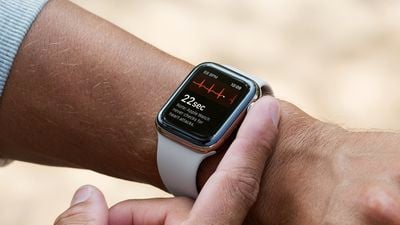
California-based AliveCor said in a statement that it was informed the Biden administration would not overrule a December decision from the ITC that found the Apple Watch infringed AliveCor health monitoring patents related to electrocardiogram technology. From AliveCor's press release:
"We applaud President Biden for upholding the ITC's ruling and holding Apple accountable for infringing the patents that underpin our industry-leading ECG technology," said Priya Abani, CEO of AliveCor. "This decision goes beyond AliveCor and sends a clear message to innovators that the U.S. will protect patents to build and scale new technologies that benefit consumers."
In the December ruling, the ITC recommended a limited exclusion order and a cease-and-desist order for Apple Watch models with ECG features. Were it to be enforced, Apple would no longer be able to import new Apple Watch models that support the ECG app. Apple plans to appeal the ITC's decision in a federal courthouse.
While the ITC decision could end up in an Apple Watch ban, the US Patent and Trademark Office in December also invalidated some of AliveCor's patents, which the medical tech company says it will appeal. At the time, Apple said the ITC's decision confirms that the patents AliveCor asserted in the ITC against Apple cannot be infringed.
AliveCor and Apple are embroiled in several legal battles, as AliveCor has also filed an antitrust lawsuit against Apple and Apple has sued AliveCor for patent infringement. Apple is also battling a patent infringement case brought by medical technology company Masimo, which asserts Apple Watch models that use light sensors to measure blood oxygen levels infringe its pulse oximeter patents.
Popular Stories
Apple today confirmed to Reuters that it has acquired Q.ai, an Israeli startup that is working on artificial intelligence technology for audio.
Apple paid close to $2 billion for Q.ai, according to sources cited by the Financial Times. That would make this Apple's second-biggest acquisition ever, after it paid $3 billion for the popular headphone and audio brand Beats in 2014.
Q.ai has...
Apple today introduced its first two physical products of 2026: a second-generation AirTag and the Black Unity Connection Braided Solo Loop for the Apple Watch.
Read our coverage of each announcement to learn more:Apple Unveils New AirTag With Longer Range, Louder Speaker, and More
Apple Introduces New Black Unity Apple Watch BandBoth the new AirTag and the Black Unity Connection Braided...
Alongside iOS 26.2.1, Apple today released an updated version of iOS 12 for devices that are still running that operating system update, eight years after the software was first released.
iOS 12.5.8 is available for the iPhone 5s and the iPhone 6, meaning Apple is continuing to support these devices for 13 and 12 years after launch, respectively. The iPhone 5s came out in September 2013,...
Update: Apple Creator Studio is now available.
Apple Creator Studio launches this Wednesday, January 28. The all-in-one subscription provides access to the Final Cut Pro, Logic Pro, Pixelmator Pro, Motion, Compressor, and MainStage apps, with U.S. pricing set at $12.99 per month or $129 per year.
A subscription to Apple Creator Studio also unlocks "intelligent features" and "premium...
On an earnings call with equity analysts today, Apple CEO Tim Cook responded to fast-rising RAM and SSD storage chip prices in the supply chain.
Prices for RAM and NAND storage chips are surging lately due to high demand from companies building out AI servers, resulting in supply constraints.
Cook said that rising memory chip prices had a "minimal impact" on Apple's gross margin in the...