Kuo: Apple AR Headset Coming in Late 2022 With Mac-Level Computing Power
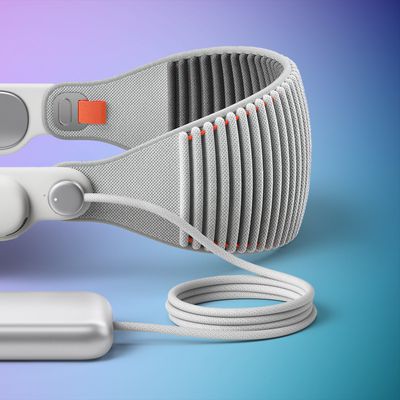
Apple's long-rumored augmented reality (AR) headset project is set to bear its first fruit late next year with the launch of the first device carrying a pair of processors to support its high-end capabilities, according to a new research report from noted analyst Ming-Chi Kuo seen by MacRumors.
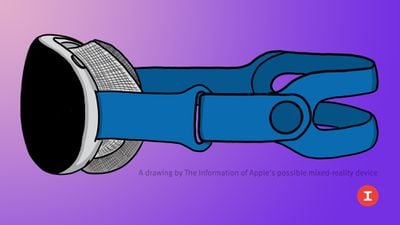
According to Kuo, the higher-end main processor is said to be similar to the M1 chip Apple introduced for its first set of Apple silicon Macs last year, while a lower-end processor will manage the sensor-related aspects of the device.
Kuo says the initial AR headset will be able to operate independently without needing to be tethered to a Mac or iPhone, and Apple is intending it to support a "comprehensive range of applications" with an eye toward replacing the iPhone within ten years.
We predict that Apple's AR headset to be launched in 4Q22 will be equipped with two processors. The higher-end processor will have similar computing power as the M1 for Mac, whereas the lower-end processor will be in charge of sensor-related computing.
The power management unit (PMU) design of the high-end processor is similar to that of M1 because it has the same level of computing power as M1.
In addition to AR, Kuo says the headset will also be able to support virtual reality (VR) experiences thanks to a pair of 4K Micro OLED displays from Sony, which require the computing horsepower of an M1-like chip.
Apple’s AR headset requires a separate processor as the computing power of the sensor is significantly higher than that of the iPhone. For example, the AR headset requires at least 6-8 optical modules to simultaneously provide continuous video see-through AR services to users. In comparison, an iPhone requires up to 3 optical modules running simultaneously and does not require continuous computing.
Last week, Kuo said that both the upcoming headset and the iPhone 14 coming next year will support Wi-Fi 6E technology, which offers the increased bandwidth and lower interference needed for AR and VR experiences.
Popular Stories
Apple today announced it will be permanently closing three retail stores in the U.S. in June, including Apple Trumbull in Trumbull, Connecticut, Apple North County in Escondido, California, and Apple Towson Town Center in Towson, Maryland.
Apple Towson Town Center in Maryland
Apple issued the following statement to MacRumors:At Apple, we are constantly striving to deliver exceptional service...
Apple today released a minor iOS 26.4.1 update for the iPhone 11 and newer. While the release notes for the update only mention unspecified "bug fixes," we have since learned about two specific changes that are included in it.
First, 9to5Mac spotted an Apple Developer Forums thread suggesting that iOS 26.4.1 fixes an iOS 26.4 bug that affected iCloud syncing in some apps.
Second, an...
As we wait for WWDC to kick off next Monday, Apple today announced the winners of its annual Apple Design Awards, recognizing apps and games for their innovation, ingenuity, and technical achievement.
The 2025 Apple Design Award winners are listed below, with one app and one game selected per category:
Delight and Fun - CapWords (App) and Balatro (Game)
Innovation - Play (App) and PBJ -...
Popular Stories
A new book by New York Times labor reporter Noam Scheiber argues that Apple's decade-long erosion of its retail workforce directly contributed to the disappointing launch of the Apple Vision Pro in early 2024 (via WIRED).
The book, Mutiny: The Rise and Revolt of the College-Educated Working Class, draws on interviews with Apple Store employees to document how staffing cuts, reduced training, ...
Apple today provided developers with the first betas of upcoming watchOS 26.5, tvOS 26.5, and visionOS 26.5 betas for testing purposes. The software comes a week after Apple launched the 26.4 versions of each platform.
The software updates are available through the Settings app on each device, and because these are developer betas, a free developer account is required.
There's no word on...
Apple Vision Pro owners have a new Apple Immersive video available to watch from today. "Debut at the BBC Proms" is a full classical music concert filmed at the Royal Albert Hall during the 2025 Proms season, courtesy of BBC Arts.
Filmed by Livewire Pictures using Blackmagic's URSA Cine Immersive cameras, the experience follows Austrian piano sensation Lukas Sternath as he takes to the stage ...