Apple Launches Study into Whether Apple Watch Can Detect COVID-19
Apple is launching a study into whether the Apple Watch can be used to detect respiratory illnesses such as coronavirus or flu, in partnership with the University of Washington and the Seattle Flu Study.
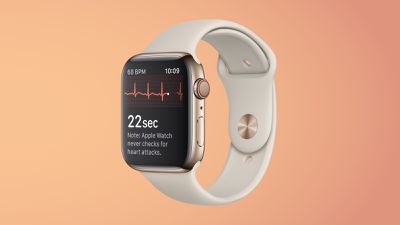
Apple initially announced the study at its Time Flies event in September last year, it but has only recently launched, as spotted by Apple Insider.
The goal of the study is to see if the information collected by the Apple Watch and iPhone can detect early signs of respiratory illnesses like COVID-19. If you are eligible and decide to participate, you will be provided an Apple Watch to wear. The watch will collect information about your health and activity. You will also be asked to answer simple survey questions in the Apple Research app on your iPhone about respiratory symptoms and lifestyle on a weekly and monthly basis.
If you get sick during the study, you will be provided with a free, at-home nasal swab to be tested for COVID-19 and other respiratory illnesses, and you will be asked to take some additional health measurements using your Apple Watch.
The study is expected to take "up to six months" and participants accepted into the program will be provided with an Apple Watch for research purposes, which they will be expected to wear "throughout the study, both day and night." Enrolment is open now for individuals in the greater Seattle area who are age 22 or older and have an Apple iPhone 6s or newer.
A previous independent study by Mount Sinai researchers found that an Apple Watch can effectively predict a positive COVID-19 diagnosis up to a week before current PCR-based nasal swab tests, which may be reinforced by the findings of this new study.
Previous independent Apple Watch studies have shown that the smartwatch's heart sensors may be able to detect early signs of diabetes and provide early warning signs of atrial fibrillation.
Popular Stories
Apple today confirmed to Reuters that it has acquired Q.ai, an Israeli startup that is working on artificial intelligence technology for audio.
Apple paid close to $2 billion for Q.ai, according to sources cited by the Financial Times. That would make this Apple's second-biggest acquisition ever, after it paid $3 billion for the popular headphone and audio brand Beats in 2014.
Q.ai has...
Apple today introduced its first two physical products of 2026: a second-generation AirTag and the Black Unity Connection Braided Solo Loop for the Apple Watch.
Read our coverage of each announcement to learn more:Apple Unveils New AirTag With Longer Range, Louder Speaker, and More
Apple Introduces New Black Unity Apple Watch BandBoth the new AirTag and the Black Unity Connection Braided...
Alongside iOS 26.2.1, Apple today released an updated version of iOS 12 for devices that are still running that operating system update, eight years after the software was first released.
iOS 12.5.8 is available for the iPhone 5s and the iPhone 6, meaning Apple is continuing to support these devices for 13 and 12 years after launch, respectively. The iPhone 5s came out in September 2013,...
Update: Apple Creator Studio is now available.
Apple Creator Studio launches this Wednesday, January 28. The all-in-one subscription provides access to the Final Cut Pro, Logic Pro, Pixelmator Pro, Motion, Compressor, and MainStage apps, with U.S. pricing set at $12.99 per month or $129 per year.
A subscription to Apple Creator Studio also unlocks "intelligent features" and "premium...
On an earnings call with equity analysts today, Apple CEO Tim Cook responded to fast-rising RAM and SSD storage chip prices in the supply chain.
Prices for RAM and NAND storage chips are surging lately due to high demand from companies building out AI servers, resulting in supply constraints.
Cook said that rising memory chip prices had a "minimal impact" on Apple's gross margin in the...