U.S. Carriers Fix SMS Routing Vulnerability That Let Hackers Hijack Texts
Major carriers in the U.S. like Verizon, T-Mobile, and AT&T have made a change to how SMS messages are routed to put a stop to a security vulnerability that allowed hackers to reroute texts, reports Motherboard.
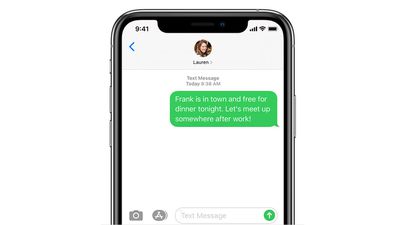
Carriers introduced the change after a Motherboard investigation last week revealed how easy it is for hackers to reroute text messages and use the stolen information to break into social media accounts. The site paid a hacker $16 to reroute texts using the tools of a company called Sakari, which helps businesses with mass marketing.
Sakari offered a text rerouting tool from a company called Bandwidth, which was supplied by another company called NetNumber, resulting in a confusing network of companies contributing to a vulnerability that left SMS texts open to hackers (Motherboard has more information on the process in its original article). The hacker hired by Motherboard was able to access Sakari's tools without any authentication or consent from the rerouting target, successfully getting texts from Motherboard's test phone.
Sakari is meant to allow businesses to import their own phone number for sending mass texts, which means a business is able to add a phone number to send and receive texts through the Sakari platform. Hackers could abuse this tool by importing a phone number of a victim to get access to the person's text messages.
Aerialink, a communications company that helps route text messages, said today said that wireless carriers are no longer supporting SMS or MMS text enabling on wireless numbers, something that "affects all SMS providers in the mobile ecosystem." This will prevent the hack demonstrated by Motherboard last week from working.
It is not clear if this text rerouting method was widely used by hackers, but it was easier to pull off than other smartphone hacking methods like SIM swapping. A Security Research Labs researcher said that he had not seen it before, while another researcher said it was "absolutely" in use.
Popular Stories
Apple's iPhone development roadmap runs several years into the future and the company is continually working with suppliers on several successive iPhone models at the same time, which is why we often get rumored features months ahead of launch. The iPhone 18 series is no different, and we already have a good idea of what to expect for the iPhone 18 Pro and iPhone 18 Pro Max.
One thing worth...
2026 could be a bumper year for Apple's Mac lineup, with the company expected to announce as many as four separate MacBook launches. Rumors suggest Apple will court both ends of the consumer spectrum, with more affordable options for students and feature-rich premium lines for users that seek the highest specifications from a laptop.
Below is a breakdown of what we're expecting over the next ...
Though it's been just a few months since iOS 26 launched, we're already hearing rumors about the next-generation version of iOS, iOS 27. iOS 27 will be introduced at Apple's June WWDC 2026 event before it launches in September 2026.
We don't know all of the details about iOS 27 yet, but we do have some information about what to expect.
"Snow Leopard" Update
iOS 27 will apparently focus...
CES 2026 has just provided a first glimpse of the folding display technology that Apple is expected to use in its upcoming foldable iPhone. At the event, Samsung Display briefly showcased its new crease-less foldable OLED panel beside a Galaxy Z Fold 7, and according to SamMobile, which saw the test booth before it was abruptly removed, the new panel "has no crease at all" in comparison.


The ...
Apple has lost another senior figure from its Safari team as a lead designer departs for The Browser Company, extending a pattern of high-profile exits from Apple's browser team amid intensifying competition around AI-driven browsing.
Marco Triverio was a lead designer for Safari and has now joined The Browser Company, the developer of the Arc and Dia browsers. The move was confirmed by The...
iOS 26 is showing unusually slow adoption among iPhone users months after release, according to third-party analytics.
Usage data published by StatCounter (via Cult of Mac) for January 2026 indicates that only around 15 to 16% of active iPhones worldwide are running any version of iOS 26. The breakdown shows iOS 26.1 accounting for approximately 10.6% of devices, iOS 26.2 for about 4.6%, and ...
The Unicode Consortium has published a draft list of emoji that could come to smartphones and other devices in the future. The list shared by Emojipedia outlines 19 emoji candidates under consideration for Emoji 18.0, which is expected to be finalized in September 2026.
Among the proposed additions are a squinting face emoji, left- and right-pointing thumb gestures, a pickle, a lighthouse, a ...