Rosetta May Be Removed From M1 Macs in Some Regions on macOS 11.3
Installing the upcoming macOS 11.3 software update on an M1 Mac may result in Rosetta 2 being removed in one or more regions around the world.
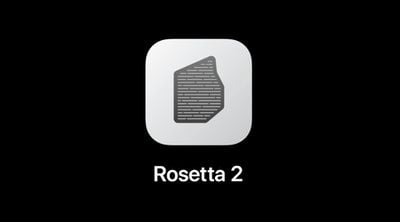
In the third beta of macOS 11.3 seeded to developers for testing today, MacRumors contributor Steve Moser uncovered new strings in the beta's code indicating that "Rosetta will be removed upon installing this update." Another new string reads "Rosetta is no longer available in this region. Applications requiring Rosetta will no longer run."
Apple did not specify which regions where Rosetta 2 would be "no longer available," and no further details are known at this time.
Rosetta 2 enables Macs powered by Apple silicon like the M1 chip to run x86 apps built for an Intel-based Mac. The translation layer
works in the background when a user opens an app compiled only for Mac computers with an Intel processor, and automatically translates the app for use with Apple silicon the first time the app is run.
It's unclear why macOS 11.3 might remove Rosetta 2 on M1 Macs in some regions, but perhaps there are legal or copyright reasons involved. Apple did not immediately respond to our request for comment, but we'll provide an update if we hear back.
The third beta of macOS 11.3 also adds some new settings with imagery for mapping game controller buttons to keyboard layouts, according to Moser's code-level findings, but we are not fully sure what this entails.
Popular Stories
2026 could be a bumper year for Apple's Mac lineup, with the company expected to announce as many as four separate MacBook launches. Rumors suggest Apple will court both ends of the consumer spectrum, with more affordable options for students and feature-rich premium lines for users that seek the highest specifications from a laptop.


Below is a breakdown of what we're expecting over the next ...
Apple's iPhone development roadmap runs several years into the future and the company is continually working with suppliers on several successive iPhone models at the same time, which is why we often get rumored features months ahead of launch. The iPhone 18 series is no different, and we already have a good idea of what to expect for the iPhone 18 Pro and iPhone 18 Pro Max.
One thing worth...
The Unicode Consortium has published a draft list of emoji that could come to smartphones and other devices in the future. The list shared by Emojipedia outlines 19 emoji candidates under consideration for Emoji 18.0, which is expected to be finalized in September 2026.
Among the proposed additions are a squinting face emoji, left- and right-pointing thumb gestures, a pickle, a lighthouse, a ...
Back in late 2022 and early 2023, Apple rolled out a new architecture for its Apple Home platform to deliver improved performance and compatibility, although the rollout came with some hiccups that forced Apple to pull and later re-release the upgrade.
Three years later, Apple is now on the verge of ending support for the old version of the Home architecture, which may result in access to...
In a letter to Apple CEO Tim Cook and Google CEO Sundar Pichai, U.S. Senators Ron Wyden, Ben Ray Lujan, and Edward Markey have requested that Apple and Google remove X Corp's X and Grok apps from their app stores over recent incidents of "mass generation of nonconsensual sexualized images of women and children."
X has come under fire over the past week amid reports of Grok's AI image...
iOS 26 is showing unusually slow adoption among iPhone users months after release, according to third-party analytics.
Usage data published by StatCounter (via Cult of Mac) for January 2026 indicates that only around 15 to 16% of active iPhones worldwide are running any version of iOS 26. The breakdown shows iOS 26.1 accounting for approximately 10.6% of devices, iOS 26.2 for about 4.6%, and ...
The iPhone Fold will be the first Apple device to adopt a Samsung-made OLED technology called CoE (Color Filter on Encapsulation), which could make the display brighter and thinner than previous panels, reports The Elec.
In a traditional OLED panel, a polarizing film sits above the display to cut reflections and improve contrast. The drawback is that this film also absorbs some of the OLED's ...