Google Misled Users Over Data Privacy, Says Australian Regulator
Australia's competition regulator has today accused Google of misleading users to get permission for use of their personal data for targeted advertising, reports Reuters.

In Australian Federal Court, the Australian Competition and Consumer Commission (ACCC) accused Google of not explicitly getting consent or properly informing consumers of a 2016 move to combine personal information in Google accounts with browsing activities on non-Google websites. This allowed Google to link the browsing behavior of millions of users with their names and identities, providing it with "extreme market power." As the change was "worth a lot of money to Google," the commission alleges that it was "achieved through misleading behavior."
Google argues that the change was optional and consumer consent was sought through prominent and easy-to-understand notifications. "If a user did not consent, their experience of our products and services remained unchanged," a Google spokesperson commented, adding that the company fully intends to defend its actions.
In June 2016, Google changed the wording of its privacy policy to remove a statement that it would not combine cookies from its advertisement display business, DoubleClick, with users' personal information. The new policy read, "Depending on your account settings, your activity on other sites and apps may be associated with your personal information in order to improve Google services."
The regulator believes that Google did not sufficiently inform Australian consumers about what it sought to do with their personal information, including internet activity on websites not related to Google itself. The case intends to clarify the common law on what providers in various jurisdictions could do, and is seeking a fine "in the millions".
Popular Stories
In addition to updating many of its existing products, Apple is expected to unveil five all-new products this year, including a smart home hub, a Face ID doorbell, a MacBook with an A18 Pro chip, a foldable iPhone, and augmented reality glasses.
Below, we have recapped rumored features for each product.
Smart Home Hub
Apple home hub (concept)
Apple's long-rumored smart home hub should...
Apple is working on a small, wearable AI pin equipped with multiple cameras, a speaker, and microphones, reports The Information. If it actually launches, the AI pin will likely run the new Siri chatbot that Apple plans to unveil in iOS 27.
The pin is said to be similar in size to an AirTag, with a thin, flat, circular disc shape. It has an aluminum and glass shell, and two cameras at the...
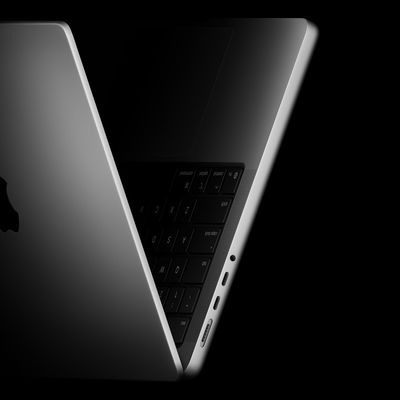
Apple is expected to release MacBook Pro models with M5 Pro and M5 Max chips soon, but you might want to pass on them, as bigger changes are around the corner.
It has been reported that the MacBook Pro will be receiving a major redesign in late 2026 or in 2027. Six new features have been rumored so far, including an OLED display, touch capabilities, a Dynamic Island, M6 Pro and M6 Max chips...
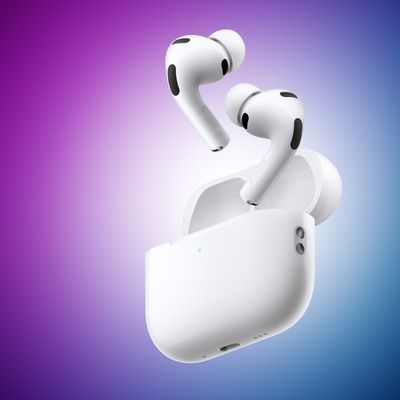
Apple is planning to debut a high-end secondary version of AirPods Pro 3 this year, sitting in the lineup alongside the current model, reports suggest.
Back in September 2025, supply chain analyst Ming-Chi Kuo reported that Apple is planning to introduce a successor to the AirPods Pro 3 in 2026. This would be somewhat unusual since Apple normally waits around three years to make major...
For now, rumors have settled on the iPhone 18 Pro and iPhone 18 Pro Max featuring a smaller Dynamic Island, and now a leaker has revealed its alleged size.
iPhone 18 Pro with a smaller Dynamic Island (mockup via Ice Universe)
The account "Ice Universe" today claimed the Dynamic Island cutout on the iPhone 18 Pro models will be approximately 35% narrower than it is on the iPhone 17 Pro models. ...