Apple Reportedly Dropped Plans for End-to-End Encrypted iCloud Backups After FBI Objected
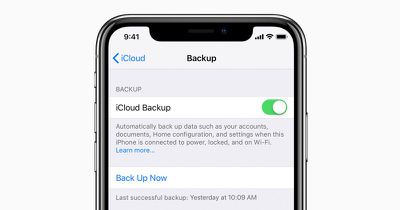
More than two years ago, Apple informed the FBI that it planned to roll out end-to-end encryption for iCloud backups, according to Reuters. Apple ultimately dropped the plan at some point after the FBI objected, although the report notes that it is unclear if the federal agency was a factor in the decision.
A former Apple employee told Reuters that the company did not want to risk scrutiny from public officials for potentially protecting criminals, being sued for making previously accessible data out of reach of government agencies, or the move encouraging new legislation against encryption.
"They decided they weren't going to poke the bear anymore," the person said, after Apple's legal battle with the FBI in 2016 over unlocking an iPhone used by a shooter in the San Bernardino, California attack. In that case, the FBI ultimately found an alternative method of unlocking the iPhone.
Apple faces a similar standoff with the FBI over refusing to unlock two passcode-protected iPhones that investigators believe were owned by Mohammed Saeed Alshamrani, the suspect of a mass shooting at a Naval Air Station in Florida last month. Apple said it has provided the FBI with all data in its possession.
Apple has taken a hard line on refusing to create a backdoor into iOS that would allow the FBI to unlock password-protected iPhones to assist in their investigations, but it does provide data backed up to iCloud to authorities when lawfully requested, as outlined in its semiannual Transparency Reports.
Note: Due to the political nature of the discussion regarding this topic, the discussion thread is located in our Political News forum. All forum members and site visitors are welcome to read and follow the thread, but posting is limited to forum members with at least 100 posts.
Popular Stories
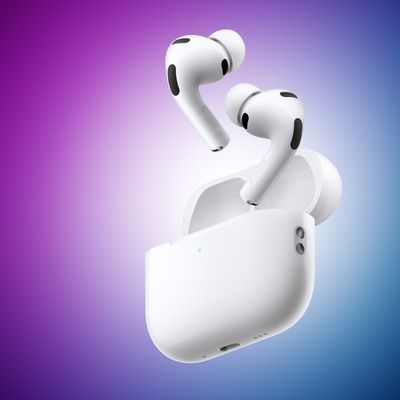
Apple is planning to debut a high-end secondary version of AirPods Pro 3 this year, sitting in the lineup alongside the current model, reports suggest.
Back in September 2025, supply chain analyst Ming-Chi Kuo reported that Apple is planning to introduce a successor to the AirPods Pro 3 in 2026. This would be somewhat unusual since Apple normally waits around three years to make major...
iOS 27 is still many months away, but there are already plenty of rumors about new features that will be included in the software update.
The first beta of iOS 27 will be released during WWDC 2026 in June, and the update should be released to all users with a compatible iPhone in September.
Bloomberg's Mark Gurman said that iOS 27 will be similar to Mac OS X Snow Leopard, in the sense...
MacBook Pro availability is tightening on Apple's online store, with select configurations facing up to a two-month delivery timeframe in the United States.
A few 14-inch and 16-inch MacBook Pro configurations with an M4 Pro chip are not facing any shipping delay, but estimated delivery dates for many configurations with an M4 Max chip range from February 6 to February 24 or even later. At...
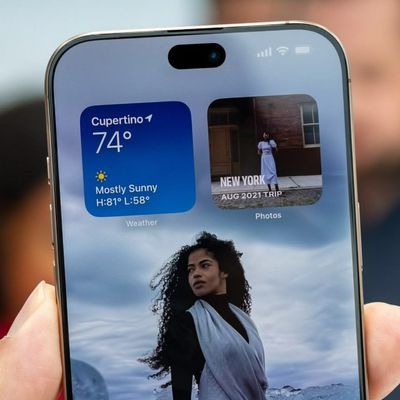
Over the last few months, rumors around the iPhone 18 Pro's front-panel design have been conflicted, with some supply-chain leaks pointing to under-display Face ID, reports suggesting a top-left hole-punch camera, and debate over whether the familiar Dynamic Island will shrink, shift, or disappear entirely.
Today, Weibo-based leaker Instant Digital shared new details that appear to clarify the ...
While the iPhone 18 Pro and iPhone 18 Pro Max are not expected to launch for another eight months, there are already plenty of rumors about the devices.
Below, we have recapped 12 features rumored for the iPhone 18 Pro models, as of January 2026:
The same overall design is expected, with 6.3-inch and 6.9-inch display sizes, and a "plateau" housing three rear cameras
Under-screen Face ID...