Apple Watch Series 4 Wins 'Displays of the Year' Award
The Apple Watch Series 4 was today named one of the Displays of the Year by The Society for Information Display (SID) during the 2019 Display Industry Awards announced at Display Week, a yearly symposium and trade show.
The Displays of the Year awards highlight "the high-quality innovative work taking place in the display industry at every level." The specific category the watch won focuses on "the most significant technological advances and/or outstanding features."
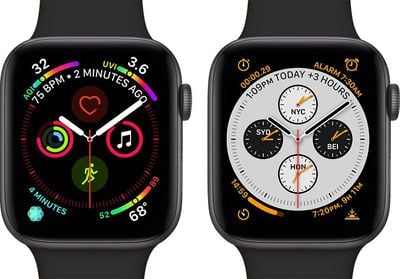
The Apple Watch Series 4 received an award because it features an OLED display that's 30 percent larger than the previous display, without an increase in device size. Additionally, it uses a new display technology called LTPO for improved efficiency, leading to longer battery life.
While retaining the original signature design, the fourth-generation Apple Watch has been refined, combining new hardware and software enhancements into a singular, unified form. The striking display, which is more than 30 percent larger at 40 mm or 44 mm, depending on the model, seamlessly integrates into the thinner, smaller case, while the new interface provides more information with richer detail. The display is the defining feature of Apple Watch, and Series 4 pushes that feature farther than ever. The challenge for designers was to make the display bigger without noticeably increasing the size of the case or compromising the battery life. Narrower borders enable a viewing area that's more than 30 percent larger, while a new display technology called LTPO improves power efficiency, helping users get through the day on a single charge.
The 2019 awards cover products that were available for purchase during the 2018 calendar year, and no other Apple devices received awards this year. Last year, both the iPhone X and iPad Pro won "Displays of the Year" awards.
Other 2019 winners include Samsung for "The Wall" modular microLED 8K display, and Sony for its Crystal LED Display System that also uses microLED technology.
Popular Stories
Apple today confirmed to Reuters that it has acquired Q.ai, an Israeli startup that is working on artificial intelligence technology for audio.
Apple paid close to $2 billion for Q.ai, according to sources cited by the Financial Times. That would make this Apple's second-biggest acquisition ever, after it paid $3 billion for the popular headphone and audio brand Beats in 2014.
Q.ai has...
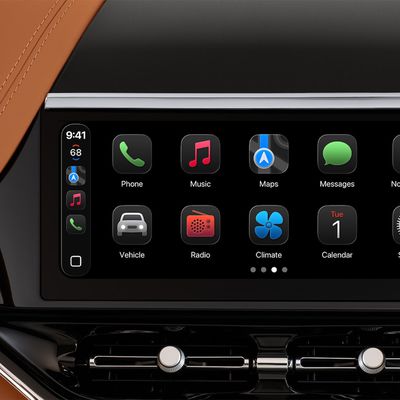
Last year, Apple launched CarPlay Ultra, the long-awaited next-generation version of its CarPlay software system for vehicles. Nearly nine months later, CarPlay Ultra is still limited to Aston Martin's latest luxury vehicles, but that should change fairly soon.
In May 2025, Apple said many other vehicle brands planned to offer CarPlay Ultra, including Hyundai, Kia, and Genesis.
In his Powe...
Apple recently updated its online store with a new ordering process for Macs, including the MacBook Air, MacBook Pro, iMac, Mac mini, Mac Studio, and Mac Pro.
There used to be a handful of standard configurations available for each Mac, but now you must configure a Mac entirely from scratch on a feature-by-feature basis. In other words, ordering a new Mac now works much like ordering an...
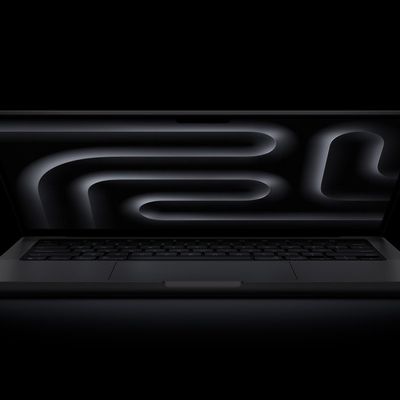
The calendar has turned to February, and a new report indicates that Apple's next product launch is "imminent," in the form of new MacBook Pro models.
"All signs point to an imminent launch of next-generation MacBook Pros that retain the current form factor but deliver faster chips," Bloomberg's Mark Gurman said on Sunday. "I'm told the new models — code-named J714 and J716 — are slated...
Apple is planning to launch new MacBook Pro models with M5 Pro and M5 Max chips alongside macOS 26.3, according to Bloomberg's Mark Gurman.
"Apple's faster MacBook Pros are planned for the macOS 26.3 release cycle," wrote Gurman, in his Power On newsletter today.
"I'm told the new models — code-named J714 and J716 — are slated for the macOS 26.3 software cycle, which runs from...