Google's iOS and Android Apps Track and Store Location Data With Location History Disabled

Some Google apps on iOS and Android devices continue to store location history even with the setting disabled, according to a new AP report citing data collected by computer science researchers at Princeton.

Location History, a feature available in Google apps like Google Maps, is an option that allows the app to display the locations that you've visited in a timeline. Princeton researcher Gunnar Acar turned off the Location History option in his Google account, but his devices continued to record the locations he had visited.
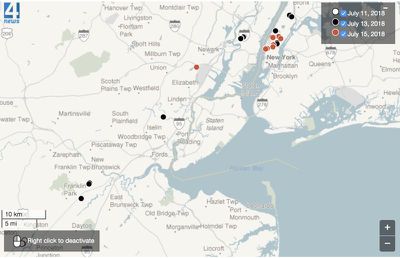
googledatacollection

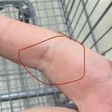
Data collected from a Princeton researcher on an Android phone with Location History disabled

It appears that even with Location History paused, some Google apps are ignoring the setting and continue to store time-stamped location data, due to confusing data collection policies that allow other app features to also store location information.

For example, Google stores a snapshot of where you are when you merely open its Maps app. Automatic daily weather updates on Android phones pinpoint roughly where you are. And some searches that have nothing to do with location, like "chocolate chip cookies," or "kids science kits," pinpoint your precise latitude and longitude -- accurate to the square foot -- and save it to your Google account.

While Princeton's research focused on Android devices, independent AP testing confirmed that iPhones are exhibiting the same behavior when used with Google apps.

In response to a query about the Location History tracking, Google said that it is clear about its location policies. As it turns out though, the way Google collects location data is confusing and misleading.

"There are a number of different ways that Google may use location to improve people's experience, including: Location History, Web and App Activity, and through device-level Location Services," a Google spokesperson said in a statement to the AP. "We provide clear descriptions of these tools, and robust controls so people can turn them on or off, and delete their histories at any time."

According to Google, users need to turn off "Web and App Activity," a setting enabled by default, to prevent all location data on iOS and Android devices from being saved to a Google account. Leaving "Web and App Activity" enabled while turning off "Location History" prevents Google from adding movements to the built-in timeline, but it does not stop Google from collecting other location information.

This location data collected by Google can be found under myactivity.google.com, but as the AP points out, this information is scattered under different headers often unrelated to location.

To be clear, Google is not illicitly collecting location data, but it is obfuscating its location data policies and collecting data through features that do not mention location information. Many people may not know these Google features are enabled at all, as it's a default setting.

Google's only mention that it may continue storing some location data is in a popup that appears when Location History is disabled through the Google account settings. This popup states that "some location data may be saved as part of your activity on other Google services, like Search and Maps."

On iPhone, when Location History is disabled via settings in Google apps, it says "None of your Google apps will be able to store location data in Location History." As the AP points out, this statement is true but misleading, because while location data isn't stored in Location History, it's still stored under "My Activity."

Location information stored in "My Activity" is used for ad targeting purposes.

Both "Web and App Activity" and "Location History" need to be disabled to prevent Google from collecting any location data, which can be done through the user settings of a Google account. On iOS devices, not using Google apps and disabling location services for Google apps is also an effective method for preventing Google from collecting location data.
Tag: Google

Popular Stories

iPhone Top Left Hole Punch Face ID Feature Purple

iPhone 18 Pro Launching Later This Year With These 12 New Features

Thursday January 15, 2026 10:56 am PST by
While the iPhone 18 Pro and iPhone 18 Pro Max are not expected to launch for another eight months, there are already plenty of rumors about the devices. Below, we have recapped 12 features rumored for the iPhone 18 Pro models, as of January 2026: The same overall design is expected, with 6.3-inch and 6.9-inch display sizes, and a "plateau" housing three rear cameras Under-screen Face ID...

iPhone Top Left Hole Punch Face ID Feature Purple

New Leak Reveals iPhone 18 Pro Display Sizes, Under-Screen Face ID, and More

Wednesday January 14, 2026 7:09 am PST by
While the iPhone 18 Pro models are still around eight months away, a leaker has shared some alleged details about the devices. In a post on Chinese social media platform Weibo this week, the account Digital Chat Station said the iPhone 18 Pro and iPhone 18 Pro Max will have the same 6.3-inch and 6.9-inch display sizes as the iPhone 17 Pro and iPhone 17 Pro Max. Consistent with previous...
2024 iPhone Boxes Feature

Apple Adjusts Trade-In Values for iPhones, Macs, and More

Thursday January 15, 2026 11:19 am PST by
Apple today updated its trade-in values for select iPhone, iPad, Mac, and Apple Watch models. Trade-ins can be completed on Apple's website, or at an Apple Store. The charts below provide an overview of Apple's current and previous trade-in values in the United States, according to the company's website. Most of the values declined slightly, but some of the Mac values increased. iPhone ...
Apple MacBook Pro M4 hero

These 5 Apple Products Will Reportedly Be Upgraded With OLED Displays

Friday January 16, 2026 7:07 pm PST by
Apple plans to upgrade the iPad mini, MacBook Pro, iPad Air, iMac, and MacBook Air with OLED displays between 2026 and 2028, according to DigiTimes. Bloomberg's Mark Gurman previously reported that the iPad mini and MacBook Pro will receive an OLED display as early as this year, but he does not expect the MacBook Air to adopt the technology until 2028 at the earliest. A new iPad Air is...
Verizon New

Verizon Offering $20 Credit After Major Outage, Here's How to Get It

Thursday January 15, 2026 7:37 am PST by
Verizon today announced it will be offering customers a $20 account credit after a major outage on Wednesday, and action is required to receive it. The carrier said affected customers can accept the credit by logging into the My Verizon app, but it might take some time before this option shows up in the app. Affected customers will receive a text message when the credit is available. On...

Top Rated Comments

Santabean2000 Avatar
97 months ago
Is anyone really surprised..?
Score: 69 Votes (Like | Disagree)
RedGala Avatar
97 months ago
Enough of a reason to ditch android and all google apps
Score: 61 Votes (Like | Disagree)
macduke Avatar
97 months ago
If you didn't expect this then you've been living under a rock. This is Google all day every day. I'd be more surprised if they didn't do this.
Score: 46 Votes (Like | Disagree)
rtomyj Avatar
97 months ago
Is anyone really surprised..?
Exactly. I cannot fathom how people can use Google services anymore. All their services have decent alternatives (yes even search).

Now they’re are double dipping: ads/tracking and premium prices on hardware... Do no evil my ass.
Score: 38 Votes (Like | Disagree)
m0sher Avatar
97 months ago
Well looks like I’ll be moving to Apple Maps exclusively.

I’m glad Apple has been doing a lot of revamping and getting it up to par, couldn’t come at a better time.

Apple data privacy is hands-down better than Google’s data mining activity where Goggle even does it against your will.

Can’t wait for iOS 12 this fall.
Score: 28 Votes (Like | Disagree)
0071284 Avatar
97 months ago
Isn’t this a violation of Apple’s terms of service? If so, time to remove their apps like others who are removed for violations.
Score: 23 Votes (Like | Disagree)