Apple's OLED Suppliers Won't Be Able to Meet Demand for 2017 iPhone
Apple's four main OLED suppliers won't be able to meet the production capacity necessary to match demand for the 2017 iPhone, according to a new report from Bloomberg. Supply constraints are expected to last until 2018.
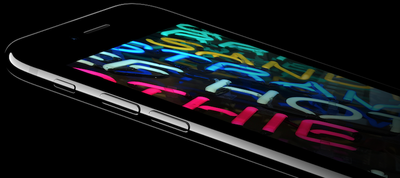
OLED screens are more difficult to produce in mass quantities than LCD screens, which means Apple is "at the mercy" of suppliers who are willing to produce them in the necessary quantities. Bloomberg notes that the supply constraints may force Apple to either restrict OLED use to one version of the next iPhone or push adoption of the technology back.
While Apple and Samsung have an exclusive OLED deal for 2017, it doesn't guarantee that the company will be able to meet Apple's demand. For example, Samsung's OLED supplies have already been constrained due to its own smartphones, like the Galaxy S7 and S7 Edge.
Apple's OLED screen order is for displays larger than 5 inches, according to Bloomberg. The Cupertino company has ordered an initial round of 100 million units over the next year, but Samsung will only be able to provide a portion of that for the Holiday 2017 quarter. Apple may face troubles if Samsung can't meet its demand.
If Samsung sees supply constraints in its ramp up of OLED panels for the fall 2017 iPhone launch, Apple may not have another major provider to fall back on. That’s why Apple usually has multiple suppliers for key components. For example, it has sourced LCD panels from all of the major Asia-based display makers. For next year, at least, it appears that OLED supply chain may be a single-company affair.
On Tuesday, KGI Securities analyst Ming-Chi Kuo said that he believes Apple will launch an all-new OLED iPhone alongside 4.7-inch and 5.5-inch LCD iPhones. While all three iPhones are likely to sport a new design with a glass back, the new OLED iPhone will have a curved edge-to-edge display. Kuo previously said the OLED iPhone would sport a 5.8-inch display with a bezel-free design.
Popular Stories
Apple today confirmed to Reuters that it has acquired Q.ai, an Israeli startup that is working on artificial intelligence technology for audio.
Apple paid close to $2 billion for Q.ai, according to sources cited by the Financial Times. That would make this Apple's second-biggest acquisition ever, after it paid $3 billion for the popular headphone and audio brand Beats in 2014.
Q.ai has...
Apple today introduced its first two physical products of 2026: a second-generation AirTag and the Black Unity Connection Braided Solo Loop for the Apple Watch.
Read our coverage of each announcement to learn more:Apple Unveils New AirTag With Longer Range, Louder Speaker, and More
Apple Introduces New Black Unity Apple Watch BandBoth the new AirTag and the Black Unity Connection Braided...
Alongside iOS 26.2.1, Apple today released an updated version of iOS 12 for devices that are still running that operating system update, eight years after the software was first released.
iOS 12.5.8 is available for the iPhone 5s and the iPhone 6, meaning Apple is continuing to support these devices for 13 and 12 years after launch, respectively. The iPhone 5s came out in September 2013,...
Update: Apple Creator Studio is now available.
Apple Creator Studio launches this Wednesday, January 28. The all-in-one subscription provides access to the Final Cut Pro, Logic Pro, Pixelmator Pro, Motion, Compressor, and MainStage apps, with U.S. pricing set at $12.99 per month or $129 per year.
A subscription to Apple Creator Studio also unlocks "intelligent features" and "premium...
On an earnings call with equity analysts today, Apple CEO Tim Cook responded to fast-rising RAM and SSD storage chip prices in the supply chain.
Prices for RAM and NAND storage chips are surging lately due to high demand from companies building out AI servers, resulting in supply constraints.
Cook said that rising memory chip prices had a "minimal impact" on Apple's gross margin in the...