BlackBerry CEO Says U.S. Government Should Force Apple to Expand iMessage to Other Platforms
BlackBerry CEO John Chen yesterday published a blog post adaptation of a letter in which he presses U.S. government officials to support not only net neutrality but also "application/content neutrality". In Chen's view, all apps and content should be available on all platforms, and he points specifically to Apple's iMessage and Netflix's streaming services as examples of discrimination against BlackBerry.

Unlike BlackBerry, which allows iPhone users to download and use our BBM service, Apple does not allow BlackBerry or Android users to download Apple’s iMessage messaging service. Netflix, which has forcefully advocated for carrier neutrality, has discriminated against BlackBerry customers by refusing to make its streaming movie service available to them.
Chen believes BlackBerry is a leader for content and application neutrality and pushes U.S. government officials to require these same neutral practices from the Canadian company's competitors. "Neutrality must be mandated at the application and content layer if we truly want a free, open and non-discriminatory internet," writes Chen.
Chen's comments have unsurprisingly been met with ridicule by developers who don't wish to be forced to create apps for platforms where they do not expect worthwhile returns, and many observers have suggested BlackBerry should focus its efforts on creating a compelling ecosystem that would attract users and apps organically.
Apple has historically been quiet on broader issues of net neutrality. The Cupertino company was noticeably absent from a list of more than 100 technology companies which signed a letter protesting a proposed change in FCC rules that would allow for Internet fast lanes for certain types of content. Speculation has suggested Apple's absence may be related to its interest in securing priority access with Internet providers for media content delivered by the company.
Popular Stories
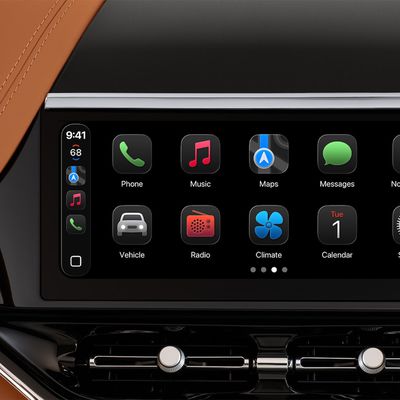
Last year, Apple launched CarPlay Ultra, the long-awaited next-generation version of its CarPlay software system for vehicles. Nearly nine months later, CarPlay Ultra is still limited to Aston Martin's latest luxury vehicles, but that should change fairly soon.
In May 2025, Apple said many other vehicle brands planned to offer CarPlay Ultra, including Hyundai, Kia, and Genesis.
In his Powe...
Apple today confirmed to Reuters that it has acquired Q.ai, an Israeli startup that is working on artificial intelligence technology for audio.
Apple paid close to $2 billion for Q.ai, according to sources cited by the Financial Times. That would make this Apple's second-biggest acquisition ever, after it paid $3 billion for the popular headphone and audio brand Beats in 2014.
Q.ai has...
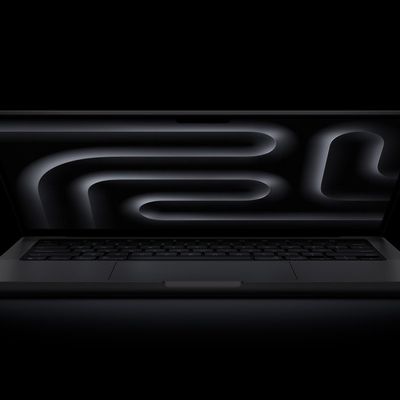
The calendar has turned to February, and a new report indicates that Apple's next product launch is "imminent," in the form of new MacBook Pro models.
"All signs point to an imminent launch of next-generation MacBook Pros that retain the current form factor but deliver faster chips," Bloomberg's Mark Gurman said on Sunday. "I'm told the new models — code-named J714 and J716 — are slated...
Apple recently updated its online store with a new ordering process for Macs, including the MacBook Air, MacBook Pro, iMac, Mac mini, Mac Studio, and Mac Pro.
There used to be a handful of standard configurations available for each Mac, but now you must configure a Mac entirely from scratch on a feature-by-feature basis. In other words, ordering a new Mac now works much like ordering an...
Apple is planning to launch new MacBook Pro models with M5 Pro and M5 Max chips alongside macOS 26.3, according to Bloomberg's Mark Gurman.
"Apple's faster MacBook Pros are planned for the macOS 26.3 release cycle," wrote Gurman, in his Power On newsletter today.
"I'm told the new models — code-named J714 and J716 — are slated for the macOS 26.3 software cycle, which runs from...