Apple Lowers Licensing Costs for Lightning Cables and Other MFi Accessories
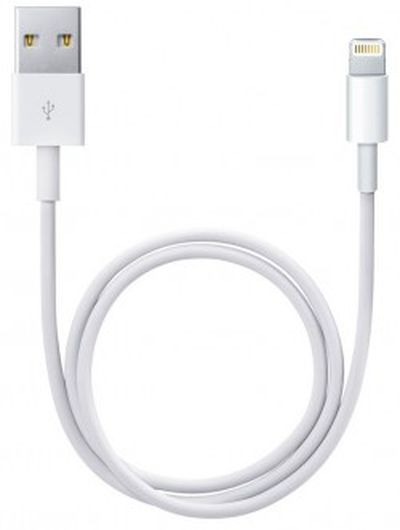 Last month, Apple reportedly reduced the licensing costs for accessory manufacturers who are producing official gear for the iPhone, iPad or iPod. According to Mac Otakara, this reduction applies to Lightning cables as well as other accessories that are part of Apple's MFi (Made for iPod/iPhone/iPad) Program.
Made for iPod (MFi) was launched in 2005 as a licensing and quality control program that allowed iPod accessory makers to ship their products with an Apple-approved "Made for iPod" label. At launch, Apple reportedly charged companies that wanted to participate in this program a 10% fee based on the wholesale cost of the device.
Apple expanded its MFi Program to include the iPhone and iPad as those devices were added to the company's product portfolio, with Apple's Lightning cable introduced last in 2012 falling under the program's guidelines due to the serialized authentication chip embedded in the connectors. At last year's Worldwide Developers Conference, Apple again extended the licensing to include game controllers for iOS devices.
Those game controllers have generally arrived with higher pricing than expected by consumers, with some of the blame for pricing and quality issues being placed on Apple's requirements administered through the MFi Program. One high-profile controller, the SteelSeries Stratus, did, however, see a $20 price cut in the few weeks between announcement and launch last month, and while a cut to MFi licensing fees undoubtedly would not have accounted for the entire price drop, it may have given SteelSeries a bit of flexibility to make its pricing more competitive.
Beyond licensing and technical requirements, Apple allegedly also requires manufacturers in the MFi Program to agree to the company's supplier responsibility code. This code takes steps to ensure that employees have access to safe working conditions and requires companies to submit to inspections that ensure compliance with Apple's Code of Conduct.
Popular Stories
While the iPhone 18 Pro and iPhone 18 Pro Max are not expected to launch for another eight months, there are already plenty of rumors about the devices.
Below, we have recapped 12 features rumored for the iPhone 18 Pro models, as of January 2026:
The same overall design is expected, with 6.3-inch and 6.9-inch display sizes, and a "plateau" housing three rear cameras
Under-screen Face ID...
Apple plans to upgrade the iPad mini, MacBook Pro, iPad Air, iMac, and MacBook Air with OLED displays between 2026 and 2028, according to DigiTimes.
Bloomberg's Mark Gurman previously reported that the iPad mini and MacBook Pro will receive an OLED display as early as this year, but he does not expect the MacBook Air to adopt the technology until 2028 at the earliest.
A new iPad Air is...
Apple today updated its trade-in values for select iPhone, iPad, Mac, and Apple Watch models. Trade-ins can be completed on Apple's website, or at an Apple Store.
The charts below provide an overview of Apple's current and previous trade-in values in the United States, according to the company's website. Most of the values declined slightly, but some of the Mac values increased.
iPhone
...
In select U.S. states, residents can add their driver's license or state ID to the Apple Wallet app on the iPhone and Apple Watch, and then use it to display proof of identity or age at select airports and businesses, and in select apps.
The feature is currently available in 13 U.S. states and Puerto Rico, and it is expected to launch in at least seven more in the future.
To set up the...
iOS 27 is still many months away, but there are already plenty of rumors about new features that will be included in the software update.
The first beta of iOS 27 will be released during WWDC 2026 in June, and the update should be released to all users with a compatible iPhone in September.
Bloomberg's Mark Gurman said that iOS 27 will be similar to Mac OS X Snow Leopard, in the sense...