The "Hey Siri" theory was quickly confirmed by Rambo, who shared both a boot chime for BridgeOS and the setup process for "Hey Siri" discovered within macOS.
Rumors of ARM-based chips being included in Macs have been circulating for some time, and with the T1 chip appearing in the MacBook Pro to drive the Touch Bar last year, the rumor began coming to fruition. The T1 was just the first step in the process, however, with Bloomberg reporting in February that a custom "T310" ARM-based Mac chip similar to the T1 could be included in future Macs and take on some additional functionality such as handling "Power Nap" low-power mode functionality.
In June, Pike's Universum reported that the upcoming iMac Pro will include a Secure Enclave, suggesting the machine would indeed include an ARM-based coprocessor as on the MacBook Pro.
Unveiled at WWDC in June, the iMac Pro is scheduled to launch next month, but Apple has yet to give a specific launch date for the high-end desktop that will start at $4999.
The fifth review of my iPhone X Roundup series focuses on Spigen, OtterBox, LifeProof, Totallee, and Sena. If you've missed my previous posts, I'm taking a close look at iPhone X cases from a range of manufacturers. We don't often feature case reviews on MacRumors, but with the launch of the iPhone X and its new design, we felt it was worth exploring some of the available case options.
For all of these reviews, I'm looking at the general usability of iPhone X cases. Extreme drop tests and in-depth testing aren't covered because those factors are less important than how a case works on an average day, and it's often fairly easy to tell from design how protective a case is going to be.
Factors like bulk, button accessibility, general protection, grip, thickness, and appearance are what I focused on. All of the cases in this review roundup work with wireless chargers unless otherwise mentioned.
OtterBox
OtterBox used to be known primarily for its super bulky, ultra protective cases, but these days, OtterBox makes a lot of other cases that are still just as protective but add less bulk than the traditional Defender series.
Priced at $44.95, the Symmetry series offers OtterBox's slimmest cases. When I say slim, though, I mean in comparison to other OtterBox cases, not "slim" cases in general. The Symmetry is still a very thick case with a hard shell back and a rubber interior that wraps around all sides of the iPhone X.
Symmetry cases are not unattractive, but they're much thicker than I prefer for my iPhone. There is a thick lip that comes up over the display, and while a lip this thick protects the screen, it makes it undeniably more irritating to swipe up from the bottom of the display if you're a person who swipes from the very bottom. The mute switch is difficult to get to because of the thickness of the case, and it may not work with some docks. On the plus side, the volume and power buttons are easy to press. This is definitely a case that feels like it's going to offer a lot of protection from drops.
Apologies for missing last week's iOS gaming roundup, but I've got a good reason: I was in Jordan judging Middle Eastern and North African mobile games for the International Mobile Gaming Awards (IMGA). It's an organization that for fourteen years now has been hosting international competitions looking for the best mobile games.
I've been involved for several years now, and it's awesome actually having game awards specifically for mobile instead of how things usually go — a quick mention on the tail end of other "real" game awards that might vaguely acknowledge mobile. Submissions just started for this year's IMGA's, so if you're an iOS developer and want your game considered, be sure to submit it. Unlike a lot of game awards, submissions are totally free, so go wild.
Kicking things off is the announcement of the release date for the upcoming Reigns sequel, Reigns: Her Majesty. We'll once again be managing our kingdoms via Tinder-style right and left swiping decisions on December 7th. We got a closer look at the game back at PAX West which digs a lot deeper into what to expect than the above launch trailer.
Reigns is an unbelievably great game, and one that you can hand to both the most hardcore gamer and someone who has never played a game before and they'll both enjoy it. We've got a full review of the original up on TouchArcade, and so far it seems like the sequel is exactly what we wanted: More Reigns.
We've been closely following the upcoming global release of Animal Crossing Pocket Camp which, per Nintendo, is due out in "late November." Well, we're rapidly approaching the launch window which led us to suspect that Nintendo might be vague-tweeting a potential launch date reveal... But, in actuality, all it was is this promotional web site where Animal Crossing's Katrina reads your fortune to find your BFF in game. While it isn't a launch date, these sorts of things ramping up are a great sign that Pocket Camp is almost upon us. For what it's worth, I've got my money on it releasing early next week, so it can spread organically as everyone is playing it over family gatherings on Thanksgiving.
The curious thing about covering mobile games is sometimes you find yourself inadvertently at the center of incredibly odd situations, particularly with how ubiquitous mobile has gotten over the year. For instance, the most popular TouchArcade story of all time was when Apple removed games featuring the Confederate flag. Well, this week it came out that Russia was using mobile game screenshots to show "evidence" of US collusion with ISIS. It's a pretty unbelievable situation, but I suppose that's the case with practically everything in the news cycle these days. But, hey, the game they used, AC-130, is pretty fun to fiddle around with if you missed out playing the huge amount of these games on the App Store as they used to be very popular a few years ago.
We're also super excited for the upcoming release of Sky, the upcoming title by Thatgamecompany which Apple showed off at the last keynote. We got a quick look at the first six minutes of gameplay, which is narrated by Thatgamecompany's co-founder, Jenova Chen. The video is packed with so many insights it's hard to focus on just one, but I'm very curious to see how all the social components work out. They're born of people who played Journey, but found themselves wishing they could play with family and friends. I've got a lot of faith in Sky being very good, and I can't wait to try it out when it launches in a few months.

NetMarble's Lineage 2: Revolutionlaunched this week. It's based on the PC MMORPG Lineage 2, and features both realtime 20 vs. 20 and 50 vs. 50 battles. They've been pulling out all the stops when it comes to promoting the game — it was featured at TwitchCon, Conan O'Brien has been playing it, and tons more. The game boasted a massive 1.5 million pre-registrations before launch, and I'm supremely curious to see if it maintains that level of excitement in the following days.
While Playerunknown's Battlegrounds (PUBG) is the biggest thing ever in the PC world right now, the Chinese publisher NetEase has been up to some incredibly curious things when it comes to launching knock-offs on mobile. Last week it launched a game in China with a title that roughly translates to "Wilderness Survival" which was a supremely on the nose PUBG knock-off. It soared to the top of the charts in China, leaving Western gamers curious when they could get a crack at the Battle Royale genre on mobile.
Here's where things get weird: NetEase then released not one, but two PUBG knock-offs on the App Store. Knives Out and Rules of Survival, which at first glance appear to be the exact same game, by the same developer, with different names. We reached out for clarification to find that NetEase apparently has two internal studios that are competing for who can make the most successful PUBG knock-off? Why you wouldn't do some sort of internal play test then decide, "OK, this is the one we're launching" instead of releasing both games is beyond me. But, hey, if you're into PUBG and want to play it on your iPhone... You have your choice between two incredibly similar games made by the same company. I'm sure this makes sense to someone.
Last, but not least, South Park: Phone Destroyer also hit the App Store recently. It's a free to play card-based fighting game, which is fairly ironic considering they've run entire episodes ruthlessly roasting free to play. But, hey, whatever. For what it's worth Phone Destroyer seems to be a pretty good card battler, and we put together a guide on how to win in South Park Phone Destroyer without spending money that's worth a look if you want to avoid spending money in the game.
That's all from me this week, but there's loads more things that have happened in the world of iOS gaming the last couple of weeks, so if you're interested in this scene be sure to swing by TouchArcade where we're posting this sort of thing day in and day out.
The Visitor's Center at Apple's new Apple Park campus opened up to the public this morning, allowing Apple fans to visit the Cupertino location to check out the campus and purchase souvenirs and snacks.
It features a cantilevered carbon fiber roof that was designed to look like it floats, along with staircases, stone walls, and terrazzo floors that match the aesthetic of the rest of the campus.
Inside, there's a large 3D model of Apple Park that provides guests with information about the campus through an augmented reality experience provided through dedicated iPads.
A store area offers a range of Apple products and accessories, including Apple Park-exclusive T-shirts, hats, postcards, baby onesies, playing cards, and tote bags. A cafe built into the Visitor's Center offers coffee, tea, and snacks.
On the roof, there's a roof terrace that offers views of the main building and the landscaping, which includes more than 9,000 trees. While visitors can view the rest of Apple Park from the Visitor's Center, the other areas of the campus are off limits.
The Apple Park Visitor's Center is open from 9:00 a.m. to 7:00 p.m. on Monday through Friday. On Saturdays, it opens at 10:00 a.m. and closes at 6:00 p.m., and on Sundays, it opens at 11:00 a.m. and closes at 6:00 p.m.
For this week's giveaway, we've teamed up with Mophie to offer MacRumors readers a chance to win a powerstation USB-C XXL that's equipped with both USB-C and USB-A, so it can be used with a wide range of devices.
The powerstation USB-C XXL, priced at $149.95, features a 19,500 mAh battery, which Mophie says is enough juice to provide USB-C laptops (the MacBook specifically) with up to 14 hours of additional battery life.
Because it has both a USB-C and a USB-A port, the USB-C XXL can be used to charge all of your Apple devices, from the MacBook to the iPhone and iPad. The USB-C port offers up to 30W of charging, so it can fast charge your iPhone X, iPhone 8, or iPhone 8 Plus when combined with a USB-C to Lightning cable.
With fast charging, an iPhone X, iPhone 8, or iPhone 8 Plus can charge to 50% within 30 minutes, so that's a super handy feature to have available from a portable battery back. At 30W, this charger will work with the 13 and 15-inch MacBook Pro models, but the charging will go more slowly and you won't see much gain while the machines are in use.
Over a standard USB-A to Lightning or micro-USB, the powerstation USB-C XXL offers 2.4A quick charging capabilities to charge your devices faster.
Size wise, the powerstation USB-C XXL is heftier than your average iPhone battery pack, but it's still portable at 6 inches long, 3 inches wide, and an inch tall, plus it looks quite nice with its fabric-wrapped body.
We have four powerstation USB-C XXL units to give away to MacRumors readers. To enter to win, use the Rafflecopter widget below and enter an email address. Email addresses will be used solely for contact purposes to reach the winners and send the prizes. You can earn additional entries by subscribing to our weekly newsletter, subscribing to our YouTube channel, following us on Twitter, or visiting the MacRumorsFacebook page.
Due to the complexities of international laws regarding giveaways, only U.S. residents who are 18 years or older and Canadian residents (excluding Quebec) who have reached the age of majority in their province or territory are eligible to enter. To offer feedback or get more information on the giveaway restrictions, please refer to our Site Feedback section, as that is where discussion of the rules will be redirected.
The contest will run from today (November 17) at 11:15 a.m. Pacific Time through 9:30 a.m. Pacific Time on November 24. The winners will be chosen randomly on November 24 and will be contacted by email. The winners will have 48 hours to respond and provide a shipping address before new winners are chosen.
Apple today seeded the fourth beta of an upcoming watchOS 4.2 update to developers for testing purposes, four days after seeding the third watchOS 4.2 beta and over two weeks after releasing the watchOS 4.1 update.
Once the proper configuration profile has been installed from the Apple Developer Center, the new watchOS 4.2 beta can be downloaded through the dedicated Apple Watch app on the iPhone by going to General --> Software Update.
To install the update, the Apple Watch needs to have at least 50 percent battery, it must be placed on the charger, and it has to be in range of the iPhone.
watchOS 4.2 brings support for Apple Pay Cash, Apple's new peer-to-peer payment service that is designed to let users send money to one another. Apple Pay Cash can be used to send and receive money through the Messages app on the Apple Watch.
Aside from Apple Pay Cash, watchOS 4.2 appears to focus primarily on under-the-hood bug fixes and security updates.
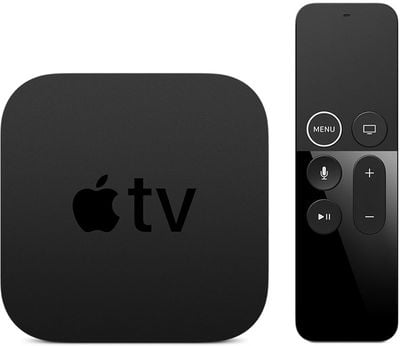
Apple today seeded the fourth beta of an upcoming tvOS 11.2 update to developers for testing purposes, four days after seeding the third tvOS 11.2 update and over two weeks after the launch of tvOS 11.1.
Designed for the fourth and fifth-generation Apple TV models, the tvOS 11.2 developer beta can be downloaded onto the Apple TV via a profile that's installed using Xcode.
According to Apple's release notes, the tvOS 11.2 update enables a new AVDisplayManager feature for developers, designed to allow the device to automatically switch video display modes to match the native frame rate and dynamic range of video content.
The update includes support for switching the Apple TV 4K display output to SDR for apps that are GPU-bound when running in HDR and it re-introduces the Unwatched category in Home Sharing for Movies, TV Shows, and Home Videos.
Apple says tvOS 11.2 also adds new features, bug fixes, and security improvements to the tvOS operating system.
Update: Apple has also seeded a new version of tvOS 11.2 to public beta testers.
Apple today seeded the fourth beta of an upcoming iOS 11.2 update to developers, four days after releasing the third iOS 11.2 beta, more than two weeks after releasing the first major iOS 11 update, iOS 11.1, and one day after the iOS 11.1.2 update.
Registered developers can download the new iOS 11.2 beta from Apple's Developer Center or over-the-air once the proper configuration profile has been installed from the Developer Center.
iOS 11.2 introduces Apple Pay Cash, Apple's new peer-to-peer payments service. Apple Pay Cash works through the Messages app and is designed to allow for quick person-to-person money transfers. It's available as a dedicated iMessage app in Messages, with cash transferred through the app.
Cash can be sent from a linked debit or credit card, while received cash is stored in an Apple Pay Cash card in Wallet that can be used for purchases or sent to a bank account.
On the iPhone X, iOS 11.2 adds a small bar underneath the icons located at the upper right side of the device on the Lock screen, which is designed to make the location of the Control Center gesture more clear. On the iPhone X, Control Center is accessed by swiping down from the top of the device.
In Control Center on all devices, there are two new informational pop-ups that are displayed when using the Wi-Fi or Bluetooth toggles. These pop-ups explain that Bluetooth and Wi-Fi are disabled temporarily rather than permanently when accessed from Control Center.
In iOS 11.2, there's support for faster 7.5W wireless charging for the iPhone X, iPhone 8, and iPhone 8 Plus. The faster speeds will be available when using third-party wireless chargers that support 7.5W charging or more.
The update also addresses an animation bug in the Calculator app that caused some numbers and symbols to be ignored when entered in rapid succession. The update removes the animations from the calculator app so calculations can be done quickly with no need to pause between entering numbers to obtain the correct result.
In addition to these bug fixes, iOS 11.2 introduces a new Now Playing option for controlling content on the Apple TV in Control Center, redesigned camera emoji, a new loading animation for Live Photos effects, and new Live wallpapers for the iPhone X, plus it adds a feature that lets developers offer new customers discounted introductory pricing for auto-renewable subscriptions on the App Store.
Update: Apple has also seeded a new version of iOS 11.2 to public beta testers.
Promise Technology today announced the launch of its new TD-300 Thunderbolt 3 dock, which is designed for Apple's latest MacBook Pro models with USB-C and Thunderbolt 3.
The TD-300 features five USB 3.0 ports (three at the back and two at the front), two Thunderbolt 3 ports, a Gigabit Ethernet port, an audio in/out port, and an HDMI 2.0 port.
There are a range of Thunderbolt 3 docks on the market now, but Promise Technology's TD-300 includes a good number of ports and an SD card slot, something that we've only seen on OWC's TB3 dock. A Thunderbolt 3 cable and power adapter are also included.
Promise Technology's dock supports two 4K displays or one 5K display and delivers up to 60W of power to charge a MacBook Pro. That's sufficient for the 13-inch MacBook Pro models, but may be inadequate for charging a 15-inch MacBook Pro under a heavy load.
"As part of our mission to offer solutions that are optimized for rich media workflows, we're constantly expanding our portfolio of innovative solutions that harness the latest technology," noted Vijay Char, president, Promise Technology USA. "The addition of a Thunderbolt 3 dock brings a new level of efficiency and flexibility to creative professionals. Laptops can be charged at the fastest speeds possible, images from DSLR cameras are easily transferred, peripherals such as hard drives and monitors can be daisy-chained for increased productivity, 4K video can be sent to multiple displays, and more. The possibilities are truly endless."
Apple today announced it has delayed the release of the HomePod until early 2018. The speaker was originally set to launch in December.
In a statement provided to MacRumors and other media outlets, Apple said it needs "a little more time" before the HomePod is ready.
We can't wait for people to experience HomePod, Apple's breakthrough wireless speaker for the home, but we need a little more time before it's ready for our customers. We'll start shipping in the US, UK and Australia in early 2018.
Apple's definition of "early" in a year is generally January through April. Apple did not provide a specific reason for the delay.
Apple unveiled the HomePod at its Worldwide Developers Conference in June. At the time, Apple said the speaker would launch in December for $349, starting in the United States, United Kingdom, and Australia.
HomePod is the first Apple product delayed since the AirPods in October 2016. At the time, Apple also said it needed "a little more time" before the wireless headphones were ready. AirPods eventually launched in December 2016.
HomePod also serves as a "Hey Siri" assistant and HomeKit hub. The high-fidelity speaker is equipped with spatial awareness and Apple-engineered audio technology, including a seven‑tweeter array and high-excursion woofer, and is powered by Apple's A8 chip. A firmware leak reveals it likely has 1GB of RAM.
Apple's next-generation iPhone models released in 2018 will feature Intel's XMM 7560 and Qualcomm's Snapdragon X20 modems, enabling faster LTE transmission speeds, according to KGI Securities analyst Ming-Chi Kuo.
Image: KGI Securities
Kuo highlighted that both new chips support 4x4 MIMO technology, compared to only 2x2 MIMO in the latest iPhone models, which leads him to believe LTE transmission speeds will increase significantly in 2018 iPhones.
In his latest research note, obtained by MacRumors, Kuo predicted Intel will supply Apple with 70 to 80 percent or more of the baseband chips.
New baseband chips from Intel & Qualcomm will significantly boost transmission speed of new 2H18 iPhone models thanks to supporting 4x4 MIMO antenna design: We believe that 2H18 new iPhones will upgrade baseband chips from Intel’s XMM 7480 and Qualcomm's MDM 9655 in 2H17 to Intel’s XMM 7560 and Qualcomm's SDX 20. As both new chips support 4x4 MIMO technology, compared to only 2x2 MIMO in 2H17, we anticipate LTE transmission speeds will increase significantly. We believe Intel will supply Apple with 70-80% or more of required baseband chips.
Kuo also predicted that next year's iPhone models will feature dual-SIM dual standby (DSDS), with support for LTE+LTE connections, which allows two SIM cards to be active simultaneously using only one set of chips.
2H18 iPhone models won't only offer faster LTE transmission speed: We predict that at least one of the 2H18 new iPhone models will support dual-SIM dual standby (DSDS). Unlike existing DSDS phones, which commonly support LTE+3G connections, we believe next-generation iPhone models will support LTE+LTE connections, in a bid to enhance the user experience.
It's not entirely clear if the new iPhones would have a dual SIM card slot or if one of the SIM cards would be embedded into the device.
Apple has authorized coverage within four years from the original purchase date of affected models, according to an internal document distributed to Apple Authorized Service Providers and later obtained by MacRumors.
Eligible models, listed below, qualify for a free display replacement within the four-year coverage period. Check your receipt to determine the exact purchase date of your MacBook or MacBook Pro.
• MacBook Pro (13-inch, Early 2013) • MacBook Pro (15-inch, Early 2013) • MacBook Pro (13-inch, Late 2013) • MacBook Pro (15-inch, Late 2013) • MacBook Pro (13-inch, Mid 2014) • MacBook Pro (15-inch, Mid 2014) • MacBook Pro (13-inch, Early 2015) • MacBook Pro (15-inch, Mid 2015) • MacBook Pro (13-inch, 2016) • MacBook Pro (15-inch, 2016) • MacBook Pro (13-inch, 2017) • MacBook Pro (15-inch, 2017) • MacBook (12-inch, Early 2015) • MacBook (12-inch, Early 2016) • MacBook (12-inch, Early 2017)
Apple's document states that all 2012 MacBook Pro models are no longer eligible since they were discontinued over four years ago.
Apple previously confirmed to us that this repair program continues to be handled internally rather than being publicly announced.
Affected customers can schedule a Genius Bar appointment at an Apple Store using the Apple Support app. Or, on the Get Support page, click Mac → Mac Notebooks → Hardware Issues → Display Issue and options should be presented to initiate a repair or contact Apple via phone, email, or online chat.
Apple's support website will ask for your Mac's serial number, which can be found by clicking on the Apple logo in the top-left corner of the screen and clicking on About This Mac in the dropdown menu.
We've learned that Apple has supposedly prohibited support advisors from mentioning details about the anti-reflective coating repair program in online chat sessions, so visiting an Apple Store may be required. If you contact Apple by phone, asking for your call to be escalated to a senior advisor may help.
Affected customers can also visit an Apple Authorized Service Provider to determine if their notebook is eligible for coverage. Apple's document states that these third-party repair shops can even replace displays with other damage free of charge so long as the anti-reflective coating issues are present.
Apple's internal document also states that customers who already incurred out-of-warranty costs related to this issue continue to be eligible for a refund, which can be initiated by contacting Apple support directly.
Apple first began this repair program in October 2015, and already extended it once, after some MacBook and MacBook Pro users experienced issues with the anti-reflective coating wearing off or delaminating on Retina displays.
The damage appears to be caused by a variety of factors, including the pressure of the keyboard and trackpad on the display when closed, and the use of incorrect third-party cleaning solutions with microfiber cloths.
Over 12,000 customers joined a Facebook group dedicated to the issue, and hundreds of others have claimed to be affected across the Apple Support Communities, MacRumors forums, Twitter, Reddit, and other discussion platforms. The website Staingate.org contains a gallery of damaged displays.
Guardians of the Galaxy Vol. 2 has received a card on the iTunes Movies storefront that encourages users to watch the film in 4K HDR on the Apple TV 4K, suggesting that Disney's 4K video holdout on iTunes may end soon. The change comes after news in September that Disney would be the only major Hollywood studio not supporting 4K versions of its films on the iTunes Movies store, including Walt Disney Animation Studios, Pixar, Marvel, and Star Wars movies.
Right now, Guardians of the Galaxy Vol. 2 appears under the "Now Available to Rent" section of iTunes with a new "Watch It in 4K" card, but when you tap through to the movie's page it's still listed as HD-only as of writing. As such, the mention could be an error, or the first hint at more Marvel and other Disney movies imminently gaining 4K iTunes support.
Spider-Man: Homecoming is another Marvel Studios movie -- a studio which Disney owns -- that's in 4K HDR on iTunes, but it has been 4K since it released on the digital storefront in September due to the distribution rights of the film being owned by Sony, not Disney.
For now, it appears that Guardians of the Galaxy Vol. 2 is the only Disney-related film with a hint of having imminent 4K support on iTunes. Other newly released Disney films, including Cars 3 and Pirates of the Caribbean: Dead Men Tell No Tales, don't have mentions of 4K support anywhere on iTunes yet. Apple's 4K iTunes films are priced at the same point as HD versions -- $20 -- and if you previously owned the movie in HD, Apple automatically upgrades it to 4K HDR without requiring additional payment.
If Disney does begin a wider rollout of 4K support across its iTunes film catalogue, it will be joining 20th Century Fox, Lionsgate, Paramount, Sony, Warner Bros., and Universal Pictures in backing the 4K video format on Apple devices.
Apple's BeatsX deal matches some other retailers, but Amazon and Best Buy each have better deals on the Powerbeats3 Wireless and Solo3 Wireless, with the products on sale for as low as $134.99 and $199.99 respectively.
Like AirPods, the BeatsX, Solo3 Wireless, and Powerbeats3 Wireless are equipped with Apple's W1 chip for instant pairing with an iPhone. They can then simultaneously connect to an Apple Watch, iPad, and Mac via iCloud.
All three headphones feature Fast Fuel. Five minutes of charging provides up to three hours of playback for the Solo3 Wireless, two hours of playback for the BeatsX, and an hour of playback for the Powerbeats3 Wireless.
Apple's special Beats prices are available in the United States only for a limited time.
Disclaimer: MacRumors is an affiliate partner with Amazon and Best Buy and may get paid if you click one of the above links and make a purchase.
With DirecTV Now's latest offer, if you sign up for four months of the streaming TV service at an upfront cost of around $140, you'll get the 32GB Apple TV 4K at no cost. DirecTV Now starts at $35/month for the "Live a Little" package, which adds up to $140 for four months of service (without any additions like HBO or Showtime). Higher tiers increase to $50/month, $60/month, and $70/month with more channels added to each.
If you opt for the lowest tier, you can get Apple's latest Apple TV 4K device for just $140, which is $40 cheaper than its traditional price point of $180 at Apple and other retailers. If you take advantage of the savings and eventually decide you don't want to continue paying for DirecTV Now, you can cancel the service at any time on the company's website.
The sale is for new customers signing up to DirecTV Now, but existing subscribers can likely use another email and credit card combination to get the Apple TV 4K at no cost. The offer will last through the end of 2017, requires a credit card or PayPal payment, and will see the Apple TV 4K delivered in around three weeks from the order date.
Here's more of the fine print, which also mentions that DirecTV Now does not currently support 4K HDR content streaming:
4K Apple TV (32 GB): Must prepay first four months of service at full price. Non-refundable. Online orders will be shipped via FedEx ground to address provided at point of sale. Allow 2-3 weeks for delivery. Offer limited to 1 per DIRECTV NOW account; 2 per household. Not combinable with select offers. 4k HD not avail. w/DIRECTV NOW.
To get started, visit DirecTV Now's website, click "Redeem and Stream," and within the sign-up process you'll encounter the "Special Offer" section with mention of the Apple TV 4K deal. When you're done, be sure to head over to our Deals Roundup and Black Friday Roundup to catch up on all of the latest sales as we head into Black Friday.
Note: MacRumors is an affiliate partner with DirecTV. When you click a link and make a purchase, we may receive a small payment, which helps us keep the site running.
Update: DirecTV Now has sweetened the deal, so head over to our more recent post for the latest information.
Spotify updated its iOS app today with support for iPhone X, exactly two weeks since Apple's latest smartphone launched. The update removes the letterboxing of Spotify's interface on the iPhone X's 5.8-inch OLED display, which should come as welcome news to heavy users of the app, allowing them to see more of track lists and search results on the screen, and more artwork when browsing albums and playlists.
"Stranger Things Mode" before (left) and after Spotify iPhone X update
The music streaming service is unusually late to the game on this front, with many top App Store apps already having updated their interfaces for the iPhone's 1,125 × 2,436 resolution display, which results in roughly 20 percent additional vertical space for content compared to the 4.7-inch displays of the iPhone 6, 7, and 8.
Apple was naturally quick to publish human interface guidelines for developers coding iPhone X apps. The documentation explains the changes that need to be made to ensure apps make the most of the additional space. At the same time, the guidance warns developers away from encroaching on certain areas of the screen, including the rounded corners, sensor housing, and indicator for accessing the Home screen.
Spotify is a free download for iPhone and iPad available on the App Store. [Direct Link]
Apple is "leaning heavily" towards choosing Intel's 5G modems for its future iPhones, according to Fast Company. Apple engineers are said to be already working with Intel on upcoming 5G technology.
Apple's discussions with Qualcomm about 5G modems, meanwhile, have been described as "limited."
Citing a source with knowledge of Apple's plans, Fast Company says that while Qualcomm 5G modems will offer more specialized carrier features, many of those features will not be adopted by carriers, leading Apple to believe Intel's hardware will be sufficient for future devices.
The end game, multiple sources have said, is to build the Intel modem onto an integrated system-on-a-chip (SoC) that would also contain the CPU, GPU, and other iPhone components. The SoC would be co-designed by Intel and Apple and would be fabricated at an Intel facility.
Intel reportedly has "multiple thousands" of people working on 5G technology in an effort to catch up with Qualcomm and win the contract from Apple.
Intel this morning said that it had made "substantial advances" in its wireless product roadmap to accelerate the adoption of 5G. According to Intel, an end-to-end 5G call based on early 5G silicon has been completed successfully, which Intel says is a "key milestone in its development."
Intel expects its first 5G chips to roll out in 2019, ahead of the wide rollout of 5G networks. T-Mobile just today said that it is planning to roll out its fifth-generation network across the United States by 2020, and most of the carriers in the United States are already experimenting with limited trials.
5G is expected to deliver speeds that are 10 to 100 times faster than the average 4G connection, at a gigabit per second or higher, along with lower latency and other benefits.
Rumors that Apple is considering Intel's 5G technology are in line with previous reports that have suggested Apple is considering eliminating Qualcomm chips from its 2018 iPhones and iPads.
Apple and Qualcomm have been embroiled in a bitter legal battle since the beginning of the year, which has continued to escalate over the months. Apple believes Qualcomm charges unfair royalties for "technologies they have nothing to do with," while Qualcomm claims its technology is "at the heart of every iPhone."
The Pixel Buds, Google's $159 headphones designed to compete with Apple's AirPods, finally launched this week so we thought we'd pit the two devices against one another to see how they measure up.
While the AirPods are widely loved and have received mostly positive reviews from customers and media sites, things aren't looking quite as rosy for the Pixel Buds. In a lot of ways, the Pixel Buds don't measure up to the AirPods, and in the video below, we compare design, features, sound quality, comfort, and other metrics.
Pixel Buds and AirPods both cost $159 and are Bluetooth earphones designed for the Google and Apple ecosystems, respectively, but when it comes to design, they're quite a bit different. The AirPods are entirely wire-free, but the Pixel Buds have an adjustable cord that connects the two earpieces together. Each is stored in a case that provides extra battery.
Both earphones support touch and tap gestures to do things like activate Siri or Google Assistant and control music playback, but each one has shortcomings. There's no volume control on the AirPods, meaning you need to use Siri or your connected device to adjust volume, and on the Pixel Buds, there's no gesture for switching tasks, so you need to use Google Assistant. By the way, when connected to an iPhone, Google Assistant functionality doesn't work.
AirPods have a nifty feature that stops music playback when an AirPod is removed from the ear, and there's no equivalent feature on the Pixel Buds. The Pixel Buds do have a unique translation feature, but as it turns out, it requires Google Translate on a smartphone and isn't too much different from just using your phone for translation purposes.
The W1 chip built into the AirPods allows them to be swapped seamlessly between Apple devices and is one of the best AirPods features, while the Pixel Buds aren't quite as convenient. On Android devices, you need to put the buds back in their case, hold the pair button, and then re-pair when you want to switch.
At their price point, both the AirPods and the Pixel Buds offer relatively decent sound, but we did feel that the AirPods were better in this regard. The Pixel Buds sounded somewhat muddled, especially when using Spotify.
Given some of the shortcomings of the Pixel Buds, the AirPods seem to have them beat, based on our own experience with the two products and a range of less than enthusiastic Pixel Bud reviews from media sites. And of course, as an Apple-centric site with employees that largely use iOS devices, MacRumors is partial to the AirPods.
We may prefer the AirPods to the Pixel Buds, but as with our comparison between the iPhone X and the Google Pixel 2 XL, choosing between the AirPods and the Pixel Buds largely comes down to the ecosystem you're using. If you have an iPhone, iPad, or Mac, the AirPods are the obvious choice.
If you don't have an iPhone or another Apple device, you're not going to get the benefits of the W1 chip, so it may be worth considering the Pixel Buds instead. And, of course, there's always the neither option -- there are hundreds of other Bluetooth headphones on the market.