This week's best deals include a big sitewide sale at Anker, which is an exclusive event only for MacRumors readers. You'll also find great deals on AirPods Max, iPad Pro, and Apple Watch below.
Note: MacRumors is an affiliate partner with some of these vendors. When you click a link and make a purchase, we may receive a small payment, which helps us keep the site running.
Anker
What's the deal? MacRumors readers can get 20% off sitewide
MacRumors readers have a chance to get 20 percent off a collection of Anker's best chargers, power banks, cables, hubs, and docks this week. In order to get this deal, head to Anker's website and add an accessory to your cart, then enter the code Ankermacrumors2025 at checkout to see the discount.
The Frame Pro
What's the deal? Save on Samsung's new The Frame Pro TV
Amazon and Samsung are offering launch discounts on The Frame Pro, Samsung's newest iteration on the popular TV line that just debuted this month. Both retailers have $100 base discounts on the 65-inch, 75-inch, and 85-inch models, although on Amazon you will need to be a Prime member to see the savings.
Additionally, both Amazon and Samsung are throwing in a free Music Frame with any purchase of The Frame Pro, which is a $399.99 value.
Apple Watch
What's the deal? Take up to $100 off Apple Watch SE and Series 10
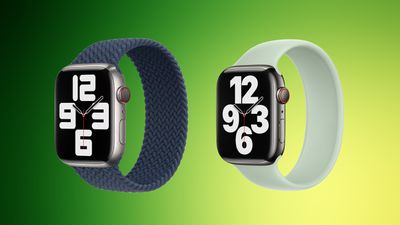
You can get $80 off the Apple Watch SE this week on Amazon, starting at just $169.00 for the 40mm GPS model. Overall, these are both the best prices we've seen so far in 2025. And for Apple Watch Series 10, you'll find numerous all-time lows as Amazon increased its discounts from earlier in the week, now with $100 off multiple models of both the 42mm GPS and 46mm GPS Apple Watch.
Amazon discounted the AirPods Max (USB-C) to $479.99 in every color this week. This is the first time in a few weeks that we've tracked a deal on every color of the AirPods Max.
Amazon is discounting numerous models of Apple's M4 iPad Pro this week. This time around, deals are mainly focused on the 13-inch models of the iPad Pro, with $200 off these models.
If you're on the hunt for more discounts, be sure to visit our Apple Deals roundup where we recap the best Apple-related bargains of the past week.
Deals Newsletter
Interested in hearing more about the best deals you can find in 2025? Sign up for our Deals Newsletter and we'll keep you updated so you don't miss the biggest deals of the season!
Netflix is testing a new search feature powered by OpenAI technology that aims to improve how users discover content on the streaming platform, according to multiple reports.
The new AI-powered search capability will allow subscribers to use more natural language queries beyond traditional searches for genres or actors. Users will be able to search for content based on more specific criteria, including their mood, Bloomberg reports.
Netflix spokesperson MoMo Zhou confirmed to The Verge that the feature is currently being tested with select users in Australia and New Zealand on iOS devices. Zhou added that the test will expand to the United States "in the coming weeks and months," although there are currently no plans to extend the feature beyond iOS.
During Netflix's first-quarter earnings call, CEO Greg Peters spoke about the importance of improving content discovery on the platform.
"There is more room to improve the discovery and recommendation experience, and therefore provide more value for members, and therefore find the biggest audiences for our titles," Peters said.
The new search functionality is opt-in for users, suggesting Netflix is taking a cautious approach with its latest AI feature-in-testing. "It's early days for the feature and we're really in a learn and listen phase for this beta," Zhou said.
AI search comes alongside other user experience improvements, including a redesign of Netflix's TV app homepage – the first major structural change to the interface in over a decade, according to Peters. The company plans to roll out the redesign later this year.
Netflix has employed AI and machine learning for its recommendation algorithms in the past, but this new search function will be an expansion of the company's use of generative AI technology.
Co-CEO Ted Sarandos has previously stated that AI will help improve filmmaking, but it won't replace creative personnel like screenwriters and actors. It's a sensitive topic in Hollywood where many have expressed concerns about AI potentially cutting jobs and reducing costs.
Netflix reported a 12.5% increase in first-quarter revenue, reaching $10.54 billion compared to the same period last year.
Apple's iPhone shipments in China declined by 9 percent in the first quarter compared to the year earlier, and it was the only major smartphone vendor to see a decline, according to data from research firm IDC.
Shipments of iPhones fell to 9.8 million units, giving Apple a market share of 13.7 percent, down from 17.4 percent in the previous quarter. Apple has now had seven straight quarters of decline.
For local vendors, it was another story. Market leader Xiaomi saw shipments rise 40 percent to 13.3 million units. Meanwhile, industry-wide shipments rose by 3.3 percent.
According to IDC, Apple's premium pricing structure prevented the company from capitalizing on new government subsidies introduced at the start of the year that fuelled growth in the first quarter.
Under the subsidies, consumers of electronics get a 15 percent refund of products that are priced under 6,000 yuan ($820). Apple's standard iPhone 16 starts at 5,999 yuan.
Verizon today announced new features for its Unlimited Ultimate plan, which is the company's highest-tier plan at the current time.
Unlimited Ultimate customers now have access to 200GB of premium Hotspot data, which downgrades to 6Mb/s after that. Verizon is also offering unlimited data in more than 210 countries and destinations around the world, plus customers can choose one of 140 countries to get up to 300 minutes of calling from the US per month.
High-speed data worldwide is capped at 15GB per month, and after that, speeds are limited to 1.5Mb/s.
Verizon's Unlimited Ultimate plan is $100 per month, but it drops to $90 per month with Auto Pay enabled. It offers 5G UWB data, up to 4K video streaming, 50 percent off data plans for a watch and tablet, and talk, text, and unlimited data in Mexico and Canada.
The plan also supports adding streaming features like Hulu, Netflix, YouTube Premium, Apple Music, and Max for an additional monthly fee.
Verizon's other unlimited plans include Plus for $90 per month, and Welcome at $75 per month, with $10/month discounts available for Auto Pay.
Instagram today announced the launch of Blend, a new feature that's designed to allow users to connect to their friends in new ways over DMs. Blend is essentially a shared feed of Reels that combines recommendations that users and their friends might like.
To start a Blend with a friend or a group of friends, users can go to a DM and then tap on the Blend icon. From there, everyone in the DM group is able to participate.
The Blend will include Reels that users in the group are interested in, based on what they've browsed individually and what's been shared in the DM thread. Instagram chief Adam Mosseri said that it's a way for users to share their interests with their friends, and to start new conversations.
Blend feeds will refresh with new content each day as a way to keep participants coming back to the conversation. Every chat can have a unique Blend with different participants.
Instagram has been testing Blend with a small group of Instagram users since March, but it is now rolling out more widely.
When U.S. President Donald Trump levied 145 percent tariffs on goods imported from China, Apple CEO Tim Cook started working to score Apple an exemption that would keep iPhone costs down.
According to The Washington Post, Cook had a phone call with Commerce Secretary Howard Lutnick last week, explaining how the tariffs would cause iPhone prices to increase. He talked to senior White House officials about the tariffs, and made sure not to say anything negative in public about Trump's policies that would anger Trump. For Trump's inauguration, Cook also personally donated $1 million.
Cook's efforts paid off, and last weekend, the Trump administration exempted the iPhone, Mac, Apple Watch, iPad, and other electronics from the bulk of tariffs put in place on Chinese goods.
Apple's tariff exemption could be temporary, however, as the day after the announcement, Trump said that there was "no tariff exception" and that no one would be "getting off the hook." Apple and other tech companies will be "moving to a different tariff bucket" as Trump and his administration will be "taking a look" at semiconductors and the electronics supply chain in planned National Security Tariff Investigations.
With the on-again, off-again tariffs, Apple stock has fluctuated quite a bit over the course of the last few weeks. Stock was down as much as 20 percent, but it recovered some of its value after the exemption.
During the first Trump administration, Cook was able to prevent tariffs from impacting Apple devices like the iPhone and the Apple Watch by convincing Trump that the fees would give South Korean company Samsung an edge over Apple.
This time around, Trump has claimed he won't be pressured by companies into lowering tariffs. On Monday, though, he said that he "helped Tim Cook recently," a sign that Cook has an in with Trump that could keep Apple from being hit hard by future tariffs.
Trump insists that Apple could manufacture the iPhone and other products in the United States, but there are significant barriers that would prevent Apple from doing so, including the cost of building factories, a lack of skilled laborers, and the cost of paying U.S. workers.
Apple has pledged a $500 billion investment in the United States, and it plans to manufacture Private Cloud Compute servers at a facility in Houston in partnership with Foxconn. Servers are a much lower volume product that isn't consumer facing, which makes them more feasible to assemble in the U.S.
Note: Due to the political or social nature of the discussion regarding this topic, the discussion thread is located in our Political News forum. All forum members and site visitors are welcome to read and follow the thread, but posting is limited to forum members with at least 100 posts.
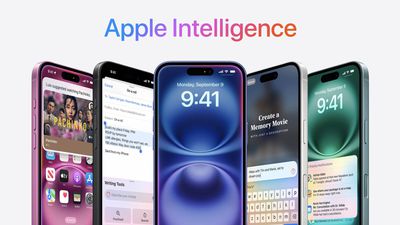
Apple's Beats brand today shared a new ad in its ongoing Pill People series, this time highlighting the various USB-C cables that Beats debuted earlier this week.
The Pill People ad campaign features anthropomorphized Beats Pill speakers with different personalities. Beats has been using the Pill People since it launched the updated Beats Pill last summer.
Apple's Beats brand is now offering several USB-C cables, including USB-C to USB-C, USB-C to USB-A, and USB-C to Lightning. The cables come in 1.5-meter and 20-centimeter options, with both sizes priced at $18.99. The cables come in four colors, and they can be purchased from the online Apple Storeor Apple retail stores.
Google has an illegal monopoly in online advertising, U.S. District Judge Leonie Brinkema said today. Google is guilty of "willfully acquiring and maintaining monopoly power" in the publisher ad server market that websites use for ads and the open-web display ad exchange market that matches advertisers with websites.
Publishers that wanted to use Google's ad exchange were also required to use its ad server, which disadvantaged competing platforms. Google's "First Look" feature gave its ad exchange the first right of refusal for impressions, and "Last Look" let its platform assess bids from competitors before making its own bid.
Google later rolled out Unified Pricing Rules limiting the pricing strategies that publishers used to reduce dependence on Google ads and screen out low-quality content, which the court says favored Google's ad tech growth while harming rival ad tech products. Google's scale and "vast repositories" of data about advertisers, publishers, and users limits competition.
According to the court, Google's actions have resulted in significant harm to advertisers, publishers, and consumers.
Google could be required to divest its publisher ad server and exchange products, make changes to how it operates to prevent anticompetitive practices in the future, and pay fines. The court plans to decide on appropriate remedies at a future hearing.
The cables are available in a variety of colors and lengths, with USB-C to USB-C, USB-C to USB-A, and USB-C to Lightning options. All of the cables have a Beats logo, along with a woven design that increases durability and helps to prevent tangles. In the U.S., prices range from $18.99 to $34.99 for one to two cables.
Notably, this is Apple's first own USB-C to USB-A cable, which could be popular for CarPlay.
Overall, there is nothing extraordinary about these cables, and many cheaper alternatives that are functionally equivalent are available on Amazon.
Apple acquired Beats in 2014, and the popular headphone brand has recently pushed into a few other product categories, including iPhone cases and charging cables. Apple also re-released a Beats Pill portable speaker last year.
OWC's Spring Sale continues this week, offering solid discounts on a variety of USB-C docks, memory cards, external drives and enclosures, and Mac accessories. This time around, all of the deals have been applied automatically and you won't need to wait for any coupons to be applied in your cart in order to see the discounts.
Note: MacRumors is an affiliate partner with OWC. When you click a link and make a purchase, we may receive a small payment, which helps us keep the site running.
There are a few notable deals in this sale, including $100 off the popular 14-Port Thunderbolt Dock for Mac, available for $179.99. If you purchase a qualifying new or used Mac at the same time as this dock, you can get an additional $20 off the accessory at checkout.
If you're on the hunt for more discounts, be sure to visit our Apple Deals roundup where we recap the best Apple-related bargains of the past week.
Deals Newsletter
Interested in hearing more about the best deals you can find in 2025? Sign up for our Deals Newsletter and we'll keep you updated so you don't miss the biggest deals of the season!
More images of a redesigned power cable allegedly for a future Apple "Vision Air" headset were today shared online by the prototype collector and leaker known as "Kosutami."
Yesterday, the leaker explained that the Apple "Vision Air" will feature a thinner design and switch the battery enclosure and several of its internal structures to titanium to reduce the device's overall weight. Most of the exterior of the device will continue to be aluminum, except with a "Midnight" bluish-black finish. Today's Vision Pro is only available in silver.
The latest images of the power cable show an anodized aluminum connector finished in Apple's distinctive Midnight color. Initial pictures of the Lightning-style connector in Midnight purportedly for the next-generation Vision device were first shared yesterday:
The Vision Pro uses a similar connector, except with 12 pins instead of eight, suggesting that the new cable is part of a more significant redesign, at least of the external battery. The audio strap connector appears to be the same design as that of the Vision Pro.
Apple has seemingly had one of its most useful AI tools blocked from Meta's apps. Writing Tools, which is an Apple Intelligence feature, is not available to use in Facebook, WhatsApp, Instagram, Threads, and Messenger.
Apple's Writing Tools include options to proofread, rewrite, and summarize text almost anywhere you can type in iOS 18. A long press in a text input field usually brings up the feature, but not in any of Meta's apps currently.
Brazilian blog Sorcererhat Tech spotted the lack of Writing Tools across Meta's apps, which appears to have been the case since late last year. Developers can choose whether to allow the tools in their apps, so it looks as if Meta has declined the offer.
According to a Wall Street Journal report from June 2024, Apple held discussions with Meta about integrating the Facebook owner's AI model into iOS 18 as part of its Apple Intelligence feature set. However, Apple turned down the AI partnership due to privacy concerns. Apple instead ended up signing a deal with OpenAI to include optional ChatGPT access in its Siri responses.
Given the history of acrimony between the two companies – from Apple device interoperability demands to App Store feuds – it's not all that surprising that Meta would choose to keep Apple's AI out of its apps. Meta has also since rolled out its own AI features across its platforms.
xAI has rolled out a new memory feature for Grok, its conversational AI, making the chatbot smarter and more personalized over time. With memory enabled, Grok can now recall past interactions – like your preferences or previous questions – to provide more relevant recommendations and responses.
According to xAI, this feature brings Grok in line with memory capabilities already found in platforms like ChatGPT and Gemini, where chat history can be revisited and used to enhance future conversations. Users can now rely on Grok to pick up where they left off, improving long-term usability.
The memory feature is currently available in beta on the Grok website and through its iOS and Android apps. However, users in the EU and UK will have to wait, as the feature isn't yet supported in those regions. xAI says it plans to integrate memory into Grok's built-in version on X (formerly Twitter) "soon."
Grok now remembers your conversations. When you ask for recommendations or advice, you’ll get personalized responses. pic.twitter.com/UXhX7BjS57
— Grok (@grok) April 17, 2025
Just like with other memory-enabled AI tools, users have the ability to manage what Grok remembers, although telling Grok to "Forget" referenced chats won't delete them from the user's history.
Apple's iPhone 18 models will adopt TSMC's 2nm manufacturing process for the next-generation A20 chip, which will bring substantial performance and power efficiency improvements to next year's iPhones, but it may also incur significantly more costs that Apple could pass onto the customer.
The latest corroboration that Apple will use TSMC's 2nm process in next year's iPhone models comes from Weibo-based leaker Digital Chat Station, who has sources in the Chinese supply chain. Industry analysts Ming-Chi Kuo and Jeff Pu have previously claimed as much, so it seems all but confirmed that Apple will adopt the more advanced silicon wafer technology.
In 2023, Apple adopted 3nm chips for its iPhones and Macs, an upgrade over the prior 5nm mode. The switch to 3nm technology brought 20 percent faster GPU speeds, 10 percent faster CPU speed, and a 2x faster Neural Engine to the iPhone, and similar improvements on Macs. The upcoming iPhone 17 series is expected to feature processors made using TSMC's N3P chip technology – an enhanced version of the 3nm process – but 2nm adoption in the iPhone 18 is expected to bring significantly more performance and efficiency gains.
The terms "3nm" and "2nm" describe generations of chip manufacturing technology, each with its own set of design rules and architecture. As these numbers decrease, they generally indicate smaller transistor sizes. Smaller transistors allow more to be packed onto a single chip, typically resulting in increased processing speed and improved power efficiency.
TSMC plans to start manufacturing 2nm chips in late 2025, and Apple is expected to be the first company to receive chips built on the new process. TSMC is building two new facilities to accommodate 2nm chip production, and working on approval for a third. TSMC generally builds new fabs when it needs to increase production capacity to handle significant orders for chips, and TSMC is expanding in a major way for 2nm technology.
However, with Apple expected to be the first major beneficiary of the new process, it is also likely to face significantly increased costs, which could see the iPhone 18 face another round of price hikes on top of possible price increases on this year's iPhone 17 models due to U.S. import tariffs. Apple scored a reprieve from the 145 percent tariff impacting goods imported from China and the 10 percent tariff on goods imported from other countries, but it doesn't sound like that's going to last.
U.S. President Donald Trump is currently working on new semiconductor levies that will likely impact all Apple devices. Trump earlier this week said that no one is "getting off the hook" and there "was no tariff exception." Apple and other tech companies are "just moving to a different tariff bucket," with the 20 percent "Fentanyl Tariffs" still in place, and additional tariffs coming.
Apple has quite a few security features that it's added to iPhones, iPads, and Macs over the years. Now more than ever, it's important to make sure you're taking advantage of the built-in security tools that are available to keep yourself and your data safe, so we've rounded up a list of the most important options.
If you don't already have these enabled, you might want to consider turning some of them on.
Two-Factor Authentication
With two-factor authentication, you need to verify your identify when you sign into iCloud on a new device or on the web. It works by sending a six-digit code to a device where you're already signed in, and it won't authorize a sign-in on the new device unless you input that code from your existing device.
If you have an iPhone and want to sign into your iCloud account on your Mac, for example, when you enter your Apple Account name and password, you'll get a pop-up on your iPhone with a code that you input for identity verification. Alternatively, you can set a trusted phone number where you can also get a code in case you forget your password.
Apple tries really hard to get people to use two-factor authentication, so chances are you have it enabled, but if you don't, it's a first line of defense to protect your data. There are even some iOS features that don't work without it.
You can manage two-factor authentication by going to Settings > Sign-In and Security.
Security Keys
For an extra layer of protection with two-factor authentication, you can add physical security keys, such as the YubiKey. With a security key set up, you verify your identity with a physical dongle via USB-C or NFC.
Security keys make sure no one can break into your account even if they have access to one of your trusted devices, but you definitely don't want to lose a security key. You can set this up in the two-factor authentication section of the Settings app.
Stolen Device Protection
Stolen Device Protection is a feature that Apple added after criminals got clever and started watching people enter their passcodes before stealing an iPhone.
When you turn on Stolen Device Protection, a passcode won't work for accessing sensitive information like passwords and credit card data. Instead, Face ID or Touch ID biometric authentication is required, so if a thief has your iPhone and your passcode, they won't be able to get into your accounts.
There's also a security delay that keeps your Apple Account password from being changed without two instances of biometric authentication and an hour-long delay.
Thieves are blocked from accessing passwords, making purchases, turning off Lost Mode on an iPhone, applying for an Apple Card, using an iPhone to set up a new device, and accessing credit cards and Apple Cash. There are delays for signing out of an Apple Account, changing a password, resetting settings, and turning off Stolen Device Protection.
By default, Stolen Device Protection is only on when you're away from familiar locations like your home or your work, but if you want it on at all times, you just need to change the toggle to Always.
You can get to the Stolen Device Protection settings by opening up the Settings app, going to the Face ID and Passcode section, and tapping on Stolen Device Protection.
Private Relay
Private Relay is more of a privacy feature than a security feature, but it's something that you should have on. It hides your IP address and browsing activity in Safari and protects unencrypted internet traffic so no one can see what you're doing even if you're on an unsecured network.
Private Relay is an iCloud+ feature that you get access to as long as you pay Apple at least $0.99 a month for 50GB of iCloud Storage, and it's well worth it. You should also take advantage of Hide My Email whenever possible, as it will give you temporary email addresses that you can revoke at any time.
Private Relay can be enabled by opening up Settings, tapping on your profile picture, and tapping on the iCloud section.
Advanced Data Protection
By default, some of the data that's saved in iCloud backups and uploaded to iCloud is not end-to-end encrypted, which means that Apple can provide iCloud backup data to law enforcement.
Advanced Data Protection encrypts your iCloud data so that it cannot be decrypted except for on your personal devices signed into your Apple Account. It is Apple's highest security option for cloud data.
The feature protects device backups, Messages backups, iCloud Drive files, Notes, Photos, Reminders, Safari bookmarks, Siri Shortcuts, Voice Memos, and Wallet Passes, all of which can otherwise be accessed in iCloud backups by subpoena.
Advanced Data Protection is a good idea to turn on, but keep in mind that it means even Apple can't recover your data if a password is lost. To use Advanced Data Protection, Apple requires you to have a recovery key saved or a recovery contact set up as a way to regain access to your account should you lose your password.
You can get to Advanced Data Protection by opening up the Settings app, tapping on your profile picture, selecting iCloud, and then scrolling down to the Advanced Data Protection section. You can also turn it on in the Privacy and Security section of the Settings app.
Lockdown Mode
Lockdown Mode is an extreme security option that most people won't want to turn on, but it's good to know where it is in case you need it.
Apple designed this feature for journalists, activists, government employees, and others who might be in danger of being subject to sophisticated cyber attacks and mercenary spyware.
Lockdown Mode disables a lot of iPhone features, blocking Message attachments, web technologies like JIT (just-in-time JavaScript compilation), FaceTime calls from unknown contacts, shared albums in the Photos app, invites for Apple services from unknown people, physical device connections, and configuration profiles.
It essentially removes common attack vectors by limiting iPhone functionality, so it's not something you're going to want to use day-to-day unless you need it. Lockdown Mode can be turned on by opening up Settings, going to Privacy and Security, and tapping on the Lockdown Mode option.
Contact Key Verification
Similar to Lockdown Mode, Contact Key Verification is designed for a limited number of people who need to confirm the identify of who they are speaking to. It provides an option to compare contact verification codes with someone in person or over the phone, so no one can impersonate that person at a later date.
Apple today released a new update for Safari Technology Preview, the experimental browser that was first introduced in March 2016. Apple designed Safari Technology Preview to allow users to test features that are planned for future release versions of the Safari browser.
Safari Technology Preview 217 includes fixes and updates for CSS, Forms, JavaScript, Media, Rendering, SVG, Tables, Web API, Web Extensions, Web Inspector, and WebRTC.
The current Safari Technology Preview release is compatible with machines running macOS Sonoma and macOS Sequoia, the newest version of macOS.
The Safari Technology Preview update is available through the Software Update mechanism in System Preferences or System Settings to anyone who has downloaded the browser from Apple’s website. Complete release notes for the update are available on the Safari Technology Preview website.
Apple’s aim with Safari Technology Preview is to gather feedback from developers and users on its browser development process. Safari Technology Preview can run side-by-side with the existing Safari browser and while it is designed for developers, it does not require a developer account to download and use.
Apple today started sending out emails to Apple Card users, letting them know about a new Booking.com promotion. From now through May 15, Apple Card users can get five percent total Daily Cash back when using Apple Card with Apple Pay.
Booking.com is a site that allows users to reserve flights, hotel stays, car rentals, cruises, and more.
Apple Card owners can get up to $500 Daily Cash back on eligible hotel stays and car rentals using the Apple Card Booking.com link.
Booking.com is also providing two percent in Booking.com Travel Credits on eligible stays and car rentals that are booked through the Apple Card, which is on top of the 5 percent Daily Cash back.
Right now, Apple is also offering an Apple Card promotion for referrals, offering anyone who is referred to Apple Card a $75 Daily Cash bonus. The invitee will need to open a new Apple Card and make a purchase within 30 days of opening the account.
Introduced in the United States in 2022, as part of iOS 16.1, the optional Clean Energy Charging feature enables iPhone users to charge their devices at times of the day when the electric grid is relatively cleaner. Apple says the feature can reduce your carbon footprint by selectively charging when lower carbon-emission electricity is available.
In a new document, obtained by MacRumors contributor Aaron Perris, Apple said the Clean Energy Charging feature will be enabled by default on all iPhone and iPad demo units in U.S. stores, reducing the carbon footprint of those devices. To ensure that the demo units are always ready to be used by customers, Apple said devices will resume charging immediately in the event that they drop below 50% battery life.
Clean Energy Charging is enabled by default for customers too. On iOS 16.1 and later, the feature can be managed in the Settings app, under Battery → Battery Health & Charging. The feature is still available in the contiguous United States only.
It is unclear exactly when the feature will be enabled on iPhone and iPad demo units.