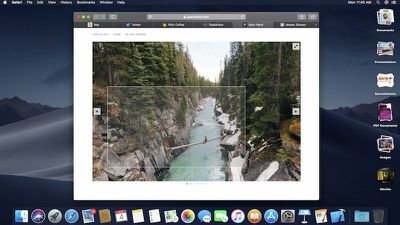
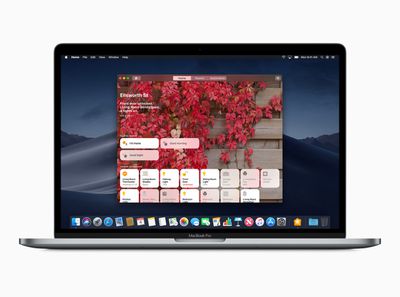
Recognizing the utility of Markup annotation tools, Apple has extended their availability in recent versions of iOS, but it's worth bearing in mind that you can access a similar and equally useful annotation toolset within several native Mac applications.
In macOS, accessing an application's Markup toolbar lets you draw on and annotate images or PDF documents within the app using arrows, shapes, and text. You can also use it to quickly sign a document with your digital signature.
We've highlighted which native apps support Markup in this article. But before you can access the toolset in desktop apps, you'll need to check that the relevant extension is enabled on your Mac. Keep reading to learn how it's done.
Apple is set to close its last remaining pop-up shop dedicated to Apple Watch next month. Signs displayed at the Tokyo shop, located in Shinjuku's high-end Isetan department store, were shared on Twitter announcing the closure.
The message reads, "This is a notice that Apple Watch at Isetan Shinjuku will close as of Sunday, May 13. Thank you very much for your continuous patronage."
The closure of the pop-up shop follows last month's opening of Apple's Shinjuku store, which is situated directly opposite Isetan and offers the full range of Apple products and services, including Apple Watch.
Japan's pop-up shop is notable for being the first of its kind to open, coinciding with the launch of the original Apple Watch in 2015. Apple has only operated three pop-up shops worldwide selling Apple watches and bands. The other two operated out of Galeries Lafayette in Paris and Selfridges in London. Both closed in 2017.
The closures appear to be part of Apple's recent strategy of promoting Apple Watch as a health and fitness accessory first and a haute couture fashion detail second. The pop-up shops specialized in selling Apple Watch Edition models, gold versions of which sold for at least $10,000 and up to $17,000 when they hit the market.
The pop-up shops were essentially outlets for Apple's remaining inventory of 18-karat Gold and Rose Gold Apple Watch Edition models, which were discontinued in 2016 and replaced with the ceramic Edition models the company continues to offer online and in-store to this day.
Today is Earth Day, and around the globe people are celebrating the annual event through demonstrations and gatherings aimed at showing support for the planet and protecting the environment. Apple began celebrations this past week in its retail stores, sending green shirts for its employees to wear and lighting up the Apple logo with a green leaf to mark the April 22 global event.
On Friday, April 20, Apple held one of its annual Beer Bash concerts with a performance by Ziggy Marley. In a tweet, the musician explained that his performance at Apple's campus was his "first set fully powered by solar energy." Marley continued by thanking Apple: "Thank you for the example you set for companies around the world."
Also in attendance during the performance was Lisa Jackson, Apple's vice president of environment, policy, and social issues. In a tweet this morning Jackson reminded Apple Watch users about today's Earth Day Challenge, which requires you to do any workout for 30 minutes or more before the day ends, and record your activity within the Workout watchOS app or any other app that adds workouts to the Health iOS app.
The company is also celebrating Earth Day across its services, with a few themed playlists, iTunes movies, and iBooks getting top-billing today on each respective platform. On Apple Music, you can find the "Mixtape for Mother Earth," which Apple Music editors describe as a soundtrack for Earth Day with songs "inspired by our planet's natural wonders." Artists and songs include Radiohead's "Bloom," The Beatles's "Sun King," Tegan and Sara's "Our Trees," and more, totaling 30 tracks.
While "Mixtape for Mother Earth" is the main playlist currently being promoted on the Browse tab, if you search for "Earth Day" you can also find playlists like "What are Earth's favorite songs?" and other curated collections from previous Earth Day events.
Over on the iTunes Movies store, Apple has a collection of $0.99 rentals for films that all include messages about the environment. The list of just over 40 films has a mix of scripted movies and documentaries, including "FernGully: The Last Rainforest," "Beasts of the Southern Wild," "Fly Away Home," "Blackfish," "March of the Penguins," "An Inconvenient Truth," "A Plastic Ocean," and more. There's also a collection of Disneynature documentaries priced at $9.99, including topics like Oceans, Bears, African Cats, and Monkey Kingdom.
iBooks readers can also get in on the Earth Day celebrations thanks to a "Protect the Planet" section of the Featured tab within Apple's digital books app. The books in the new collection "include meditations on Mother Nature's delightful quirks, rallying cries for biodiversity, and blueprints for how to play a part in passing on a healthier planet." The collection is split up into three sub categories called "Explore the Natural World," "Get Informed & Inspired," and "Do Your Part." Books include "Unstoppable" by Bill Nye and Corey S. Powell, "Voices in the Ocean" by Susan Casey, and "A Hole in the Wind" by David Goodrich.
Earlier this month, Apple announced that its global facilities, including retail stores, offices, data centers, and more, are powered with 100 percent clean energy. Apple went into further detail about how it has lessened its overall environmental impact with the 2018 Environmental Responsibility Report, sharing stats about its reduced greenhouse gas emissions, lowered energy footprint, and more. The company also updated its trade-in and recycling initiatives into a new "GiveBack" program, and introduced a new iPhone disassembly robot named Daisy.
Apple today announced a new worldwide battery replacement program for some 13-inch MacBook Pro models that do not have a Touch Bar. Affected machines were manufactured between October 2016 and October 2017.
Apple says that a limited number of these units feature a component that can fail and cause the built-in battery to expand. It is not a safety issue, according to the company, and Apple will replace all eligible batteries.
Customers who want to see if their machines are eligible for a fresh battery should use the serial number checker on the MacBook Pro Battery Replacement page. You can find your serial number by clicking on the Apple logo in the menu bar and selecting "About This Mac." The serial number is located at the bottom of the information window.
Affected customers who are eligible for a new battery will need to visit an Apple Authorized Service Provider, make an appointment at an Apple retail store, or mail their device into an Apple Repair Center after initiating a repair with Apple Support.
Apple suggests customers who are getting a battery replacement back up their machines ahead of time. Apple also says that if the MacBook Pro in question has damage that will impair the replacement of the battery, it must be addressed prior to the battery replacement process.
Any customer who has already paid for a replacement battery can contact Apple Support about a refund.
The battery replacement program covers affected MacBook Pro models for five years after the first retail sale of the unit.
Each year, Apple offers free WWDC scholarships to students and STEM organization members who don't have the $1,599 necessary to purchase a ticket to the company's annual developer conference.
For the upcoming 2018 event, Apple accepted scholarship applications from March 26 to April 1, and since then, Apple has been going through the submissions and choosing winners. As of today, all scholarship applicants who are being awarded with free WWDC attendance are receiving emails from Apple.
Apple is awarding up to 350 scholarships, all of which include a free WWDC ticket, free lodging, and a free one year Apple developer membership.
Scholarship applicants were asked to create a short, three-minute interactive scene in Swift Playground. Apple judged applications based on technical accomplishment, creativity of ideas, and content of written responses on the accompanying application.
All applicants were required to be enrolled part-time or full-time in an accredited course of study or were required to be members of a STEM organization. Apple held its developer ticket lottery back in March and notified developers who won a full-price ticket on March 23.
#WWDCScholars#WWDC2018 Okay, WOW I just can’t believe it. This is my last year as a student, so this was my last chance to get a WWDC scholarship. To say that I put my soul into this is to say nothing. But it’s still a HUGE surprise for me. Wow. Huge. pic.twitter.com/fNX46lCea5
— Oleg Dreyman (@olegdreyman) April 20, 2018
This year's Worldwide Developers Conference will kick off on Monday, June 4 and it will last through Friday, June 8 at the McEnery Convention Center in San Jose, California. Apple is expected to hold a keynote on June 4 where new software and perhaps new hardware products will be unveiled.
Scholarship students and developers who were not chose to attend the event will be able to follow along with the conference using the WWDC app.
The United States Department of Justice today launched an antitrust investigation to determine whether U.S. carriers, including Verizon and AT&T, have coordinated to prevent consumers from easily switching wireless carriers, reports The New York Times.
AT&T, Verizon, and GSMA, an industry group that sets mobile standards, were asked in February for documents related to their efforts to hinder the implementation of eSIMs. An embedded SIM, or eSIM, is a standardized chip that's designed to replace a physical SIM card.
With eSIM technology, there is no need to swap out SIM cards when switching carriers, making it easier to make a switch from one carrier to another. eSIMs are designed to be compatible with all major carriers, regardless of network type.
eSIMs are a major change from physical SIM cards, which require customers who wish to switch carriers to obtain a new SIM card when changing providers. eSIMs make it simpler for customers to swap carriers while traveling, and, of interest to device makers, they free up space currently taken up by a SIM card.
AT&T and Verizon are accused of colluding with the GSMA to create standards that would allow devices with eSIM technology to be locked to their networks. Representatives from the two carriers attended a meeting for a private task force called GSMA North America earlier this year and advocated for the ability to keep eSIM devices tied to a single carrier.
Verizon reportedly claimed that phones needed to be locked to its network in order to prevent theft and fraud.
At the heart of the investigation is whether the nation's biggest wireless carriers, working with the G.S.M.A., secretly tried to influence mobile technology to unfairly maintain their dominance, in a way that hurt competition and consumers and hindered innovation in the wider mobile industry.
AT&T and Verizon together control about 70 percent of all wireless subscriptions in the United States. A technology that made it easy to switch carriers could lead to more churn and fewer subscribers for them.
The Department of Justice launched began the probe several months ago following formal complaints from at least one device maker and one wireless carrier. The investigation may include other carriers beyond Verizon and AT&T.
AT&T, Verizon, and other U.S. carriers have long resisted features that would make it easier for customers to switch carriers at will without being tied to a specific network. Verizon, for example, refused to allow Apple to offer Verizon service through the Apple SIM built into newer iPads. The Apple SIM, a multi-carrier SIM card, is designed to make it easier for customers to choose a carrier after an iPad purchase and switch to a new carrier when traveling.
Apple, Google, Microsoft, and other wireless carriers in the United States are proponents of the eSIM. Apple, for example, is said to want to use eSIM technology in its 2018 iPhones, but may instead opt for dual-SIM technology because "some carriers are resistant to the idea."
Apple has already implemented eSIM technology in the Apple Watch Series 3 models equipped with LTE connectivity. The eSIM is also a feature of the Google Pixel 2 smartphone and the Microsoft Surface.
Update: According to CNBC, all four major U.S. carriers received requests from the U.S. Justice Department.
Update 2: Apple is one of the companies that submitted a complaint to the Department of Justice, according to Bloomberg.
Earning a featured spot in the revamped iOS App Store can increase app downloads by up to 800 percent, according to new data sourced from app analytics site Sensor Tower and shared by TechCrunch.
The data, collected from September 2017 to the present, suggests an app that's highlighted using either the "App of the Day" or "Game of the Day" feature in the U.S. sees the greatest increase in downloads.
Specifically, "Game of the Day" apps have seen a median download increase of 802 percent for the week following the feature, while "App of the Day" apps have seen a boost of 685 percent.
Other features, such as a developer story or an app list can increase downloads by up to 240 percent. Stories resulted in a 222 percent boost in downloads, while app lists increased downloads by 240 percent. A theme feature had the lowest impact at a 164 percent increase in downloads.
Sensor Tower has also outlined what kind of data Apple has chosen to highlight through the new App Store design. Many of the top publishers that have been featured are larger companies, like Electronic Arts, Warner Bros., Square Enix, Gameloft, Noodlecake Studios, and King, which is unsurprising as these companies have put out some of the most popular apps in the App Store.
13 of the top 15 featured publishers had at least one million U.S. iPhone downloads since the launch of the new App Store.
Apple has, however, also focused on highlighting indie apps. 29 percent of apps featured since the launch of the new App Store have been from publishers who had fewer than 10,000 downloads at the time.
"While it's clearly the case that big publishers are more likely to receive the largest number of features, small publishers still very much have their chance to benefit from a feature on the App Store," said Sensor Tower's Mobile Insights Analyst, Jonathan Briskman.
Apple introduced the redesigned App Store in iOS 11 to offer additional opportunities for exposure to app developers. The new App Store includes a "Today" section that's updated daily with app suggestions, featured spots, app lists, developer features, and more, and it splits apps and games into two distinct categories.
Content featured in the new App Store is chosen and curated by Apple's App Store editorial team, which ensures high-quality recommendations that don't rely solely on popularity rankings.
As noted by TechCrunch, Sensor Tower's data suggests that Apple's goal of increasing developer exposure through the new App Store design has largely been a successful venture.
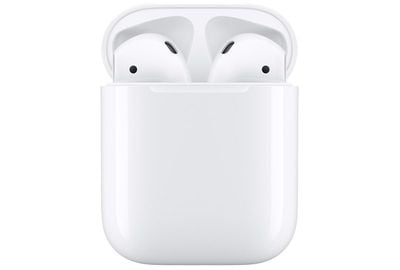
For this week's giveaway, we've teamed up with ColorWare to give MacRumors readers a chance to win a set of custom-painted AirPods, which are available in dozens of different colors.
ColorWare is a company that's been around for quite some time, offering custom paint jobs and unique skins for a range of electronic devices. AirPods can be ordered from ColorWare in custom colors for a fee of $299, with an additional $40 fee to paint the case a matching shade.
At $299 (or $349 with the case), there's a premium for choosing AirPods from ColorWare, but ColorWare is the only site that offers one-of-a-kind color options you can't get anywhere else.
ColorWare's AirPods can be ordered in one of several solid or metallic colors, with both gloss and matte finishes available. Traditional black, gold, silver, and gray shades are options, but there are also a several bright shades in every color of the rainbow. If you want AirPods in teal, red, green, purple, or pink, ColorWare is the way to go.
You can choose to have both AirPods custom painted in the same color along with the case, or you can get each AirPod and the case all in different colors, meaning there are quite a few available color combinations.
ColorWare has been custom-painting devices since 1998 and has had a lot of time to perfect the painting process. The company uses a coating process that includes a primer, an application of a proprietary color formula, and an X2 liquid plastic coating that protects the new color.
Because ColorWare is using traditional AirPods, full AirPods functionality is intact, with a W1 chip for easy pairing, a long battery life, a built-in accelerometer for ear detection, iCloud support for quick device switching, and support for gestures.
We have one set of custom-painted AirPods and Charging Case to give away, with the winner to choose the color and finish of their choice. We've also teamed up with ColorWare to offer MacRumors readers an exclusive 30 percent discount on all iPhone, iPad, and Mac skins, which is a more affordable way to get a fresh device color.
To get the discount, just visit ColorWare's site and click on the MacRumors banner at the top of any page.
To enter to win our giveaway, use the Rafflecopter widget below and enter an email address. Email addresses will be used solely for contact purposes to reach the winners and send the prizes. You can earn additional entries by subscribing to our weekly newsletter, subscribing to our YouTube channel, following us on Twitter, or visiting the MacRumorsFacebook page.
Due to the complexities of international laws regarding giveaways, only U.S. residents who are 18 years or older and Canadian residents (excluding Quebec) who have reached the age of majority in their province or territory are eligible to enter. To offer feedback or get more information on the giveaway restrictions, please refer to our Site Feedback section, as that is where discussion of the rules will be redirected.
The contest will run from today (April 20) at 10:00 a.m. Pacific Time through 10:00 a.m. Pacific Time on April 27. The winner will be chosen randomly on April 27 and will be contacted by email. The winner will have 48 hours to respond and provide a shipping address before a new winner is chosen.
Visa, Mastercard, American Express, and Discover are planning to combine their online payment options into "a single button," hoping to make customers' shopping easier and reduce friction in the checkout process. The button will be a major competitor to PayPal, and combat what's called "the NASCAR effect," where multiple payment logos and options dot the purchasing interface on online marketplaces "like the side of a race car" (via Bloomberg).
The new project is being headed by Visa and Mastercard, which announced during an industry conference that they will integrate the Visa Checkout and Masterpass payment options into the button. Afterwards, spokespeople for American Express and Discover announced they are joining the project as well. With all of these platforms located behind one button, users who already have payment options saved in each will be able to checkout "with a few clicks."
Still, the project is in early stages, with a name and the visual design of the button still undecided. Visa and Mastercard hope to start moving customers enrolled in Visa Checkout and Masterpass to the new program by the end of this year, and expanded checkout support is expected in 2019.
With all of the major credit and debit card companies joining forces, the new button is believed to be a direct competitor to PayPal, which amalgamates a customer's credit cards, debit cards, and bank accounts into one place for easier checkouts.
The aim, according to the card networks, is to make online shopping simple, letting people finish with a few clicks -- an experience pioneered by PayPal Holdings Inc. Yet some analysts say the coordinated effort may ratchet up competition between cards and PayPal, something long seen as a potential risk to that company’s meteoric growth.
“This is always kind of a looming threat to PayPal,” said Thomas McCrohan, an analyst at Mizuho Americas after the first announcements this week.
In a recent survey, 58 percent of merchants said they accepted PayPal in 2017, followed by Apple Pay at 48 percent, Visa Checkout at 26 percent, Masterpass at 16 percent, and AmEx Express Checkout at 9 percent. By providing a less splintered landscape for online shopping, the credit card companies hope to increase visibility among the "one-button concept" marketplace, where people currently "think of PayPal and Amazon Pay," analyst Raymond Pucci said. "People don't really say, 'Oh yeah, Visa and Mastercard.'"
PayPal has been facing increased pressure from rival payments processors recently, with eBay in February detailing plans to phase out its 15-year-long partnership with PayPal to integrate Adyen as its primary payments platform.
PayPal and eBay have an operating agreement to stay partners through mid-2020, so the Adyen alliance will begin slowly by educating buyers and sellers about the new processor in late 2018 and throughout 2019. By 2021, eBay wants to have "transitioned a majority" of its marketplace customers to Adyen, at which time PayPal will be relegated to a secondary checkout option.
Mastercard, Discover, American Express, and Visa also plan to make checkouts simpler in physical stores, this month eliminating the signature requirement for purchases.
Apple will release an updated iPhone SE in May, according to case makers who spoke with Japanese website Mac Otakara at the Global Sources Mobile Electronics trade show in Hong Kong this week.
The case makers said the second-generation model will retain the same physical size as the current iPhone SE, and Touch ID is expected to remain, suggesting the device will continue to have a four-inch display sandwiched between top and bottom bezels for the home button, camera, and earpiece.
Following in the footsteps of the iPhone 7 and beyond, the case makers do not expect the new iPhone SE to have a 3.5mm headphone jack. If accurate, and with the iPhone 6s and iPhone 6s Plus likely to be discontinued in September, Apple would no longer sell any iPhone model with a headphone jack.
Also like the iPhone 7 and iPhone 7 Plus, the new iPhone SE will supposedly be powered by Apple's last-generation A10 Fusion chip, up to 40 percent faster than the A9 processor in the current iPhone SE. The chip will likely enable support for the HEIF image format and HEVC video compression standard.
The report speculates that the new iPhone SE may have a glass back with wireless charging capabilities, like the iPhone 8, iPhone 8 Plus, and iPhone X, but evidence is said to be inconclusive at this time.
It's unclear how and where the case makers obtained this information, but they are likely compelled to dig up details from the supply chain in order to be first to the market with properly fitting cases and accessories.
If history repeats itself, the regulatory filings in April do lend credence to a new iPhone SE debuting next month. DigiTimes also predicted May or June. Apple has only debuted new products in May twice in the past five years, including the fifth-generation iPod touch in 2013 and a refreshed 15-inch MacBook Pro in 2015.
WWDC 2018 in June could also provide Apple with stage time to introduce the new iPhone SE, but that hasn't happened since the iPhone 4 in 2010. A press release in May could be more fitting if the update is insignificant.
iPhone SE rumors have been all over the map in recent months. A sketchy report from Chinese website QQ.com, for example, claimed the second-generation model will have a larger 4.2-inch display, Touch ID, A10 Fusion chip, 2GB of RAM, and metal back and frame, available with 32GB or 128GB of storage.
Apple is likely most focused on making under-the-hood improvements to the iPhone SE, as the device is now outdated by a few years. At its $349 price point, its new design is unlikely to resemble the iPhone X.
KGI Securities analyst Ming-Chi Kuo, who relays information from Apple's supply chain in Asia, recently cast some doubt on rumors about a second-generation iPhone SE launching in the second quarter of 2018.
If there really is a so-called iPhone SE 2 on Apple's roadmap, Kuo expects it will have few outward-facing changes. He predicts the device would likely have a faster processor and a lower price, rather than iPhone X-like features like a nearly full screen design, 3D sensing for Face ID, or wireless charging.
The current iPhone SE looks much like the iPhone 5s, including its smaller four-inch display preferred by a subset of customers. The device is powered by Apple's A9 chip, like the iPhone 6s and iPhone 6s Plus, and it has 2GB of RAM, a 12-megapixel rear camera, a 3.5mm headphone jack, and Touch ID.
Apple hasn't fully refreshed the iPhone SE since it launched in March 2016, but it did double its available storage capacities to 64GB and 128GB in March 2017. It also dropped the device's starting price to $349 last September.
AT&T is planning to add a new streaming service to its lineup called "AT&T Watch," priced at a low cost of $15 per month with the removal of all sports channels. The service will be one of the cheapest streaming bundles available on the market, and will even be free for AT&T wireless subscribers on unlimited plans (via The Wall Street Journal and Variety).
As of now not much else is known about AT&T Watch, including exactly what channels will be on offer, what platforms it will launch on, or even a specific launch date besides "in the next few weeks." When it does debut, the service will undercut Sling TV's cheapest $20/month streaming tier, and be more of a competitor to Philo's $16/month option, which predominantly advertises itself as the over-the-top bundle for people who don't watch sports.
The upcoming skinny bundle was announced yesterday by AT&T CEO Randall Stephenson, during his time on the witness stand where he defended his company's intent to acquire Time Warner. Stephenson mentioned AT&T Watch after the Justice Department argued that AT&T continuously raises prices for traditional DirecTV subscribers, reportedly "emphasizing" the new service and DirecTV Now's entry level $35/month tier, "while acknowledging price increases for traditional DirecTV subscribers."
Often speaking directly to the judge, Stephenson testified on the origins and rationale for the merger, but his examination also veered into other topics, like an email exchange he had with Facebook CEO Mark Zuckerberg following last year’s Allen & Co. Sun Valley conference. He even revealed a new product offering, AT&T Watch, a $15-per-month bundle of channels, countering the Justice Department’s point that AT&T is still raising prices on its traditional DirecTV satellite service.
AT&T's other streaming service, DirecTV Now, extends beyond the entry level $35/month for 60+ channels to $50/month for 80+ channels, $60/month for 100+ channels, and $70/month for 120+ channels. Additionally, the service includes an Apple TV 4K offer that's been ongoing since November 2017, providing the device to new subscribers at no extra cost when they pre-pay for anywhere between three to four months of service.
LG Display is widely considered to be ramping up its OLED display production capabilities in hopes of securing orders for Apple's next-generation iPhone lineup, expected to be released later this year, but mass production challenges have caused the company to fall behind schedule, according to The Wall Street Journal.
The report, citing people familiar with the matter, claims that Apple recently subjected LG to a third round of prototype production for the OLED displays, described as an extra step that most suppliers don't go through for many components.
As a result, opinions within Apple are divided on whether LG Display will complement Samsung as a second source of OLED displays for the upcoming iPhones, according to the report. However, analysts at investment firm Susquehanna estimate that LG will supply as much as 20 percent of OLED displays for the 2018 lineup.
By securing orders from both Samsung and LG for OLED displays, Apple could benefit from more competitive prices and increased supply. Samsung is also one of Apple's largest rivals, so it's easy to see why Apple is aiming for diversification.
Should LG not be in a position to supply Apple with OLED displays for the next iPhones, it's unlikely that customers will notice much of an impact. If anything, availability of Apple's second-generation iPhone X and rumored iPhone X Plus could be slightly tighter, but supplies are typically limited at launch regardless.
In celebration of Earth Day, which takes place on Sunday, April 22, Apple has started tweaking the logos of some of its retail stores with green leaf accents, in a departure from the usual uniformly white design.
Apple Orchard Road Store, Singapore (Images courtesy of Stanford Chong)
For example, Singapore's Apple Orchard Road store has already been updated with the green logo, as Apple gears up for its annual Earth Day celebrations at multiple retail locations around the world.
In typical fashion, Apple store staff are also encouraged to wear green shirts instead of their usual blue ones to promote the event. Apple may also be planning to hold a special Earth Day celebratory event at its Cupertino headquarters, as it has done in the past.
Apple often uses Earth Day as a way to highlight its environmental efforts and reaffirm its commitment to recycling, renewable energy, and other initiatives. This year it is explicitly tying the event to its new GiveBack trade-in program, which offers customers credit and/or free recycling on old Apple devices, as well as a donation to Conservation International.
On Thursday, Apple published its environmental report outlining all of the improvements and changes that were implemented throughout 2017 and early 2018 to lessen the company's overall environmental impact.
In addition, Apple shared details on initiatives that support its goal of making its products using only recycled or renewable materials, and introduced a new iPhone disassembly robot named Daisy – an improved version of Liam, its first disassembly robot launched in 2016.
Also on Thursday, Apple Watch owners received a notification about an Earth Day activity challenge. If previous years are anything to go by, customers can expect more Earth Day-related goings-on from Apple over the coming days.
As part of its 2018 environmental report, Apple today unveiled the latest iteration of its recycling robot, named Daisy. Daisy is an upgraded version of Liam, the recycling robot Apple debuted in 2016. Daisy is smaller, faster, and more efficient than Liam, able to disassemble 200 iPhones per hour and obtain their component parts for recycling.
In response to Apple's environmental report and details about the new robot, Greenpeace has released a statement suggesting Apple's focus should be on product longevity rather than recycling robots.
Daisy, Apple's newest recycling robot.
In a statement, Greenpeace Senior analyst Gary Cook said Apple needs to work on product designs that better accommodate upgrades and repairs, allowing for devices to be used for a longer period of time. Cook says customers clearly want to keep their devices for longer, citing demand for battery replacements under Apple's discounted battery program.
"Rather than another recycling robot, what is most needed from Apple is an indication that the company is embracing one of its greatest opportunities to reduce its environmental impact: repairable and upgradeable product design. This would keep its devices in use far longer, delaying the day when they'd need to be disassembled by Daisy.
Customers want to keep their devices longer, as evidenced by a 3 to 4 week wait for a battery replacement at Apple retail stores earlier this year, when Apple was compelled to dramatically reduce the replacement cost.
Greenpeace often champions device repairability and longevity, especially in regard to Apple products. Last summer, for example, Greenpeace teamed up with iFixit to rate the repairability of Apple devices, accusing Apple of shortening device lifespan with difficult, proprietary repair processes and components, ultimately leading to more electronic waste.
For its part, Apple in its environmental report says that device durability and longevity is one of its goals, citing its efforts to provide parts and repairs for five years after a product is no longer manufactured. "When products can be used longer, fewer resources need to be extracted from the earth to make new ones," reads the report.
While Greenpeace criticized Apple's lack of focus on repairability, it did laud Apple's efforts to cut down on greenhouse gas emissions in comparison to Apple competitors. Samsung, for example, operates on 1 percent renewable energy, a sharp contrast to Apple's operations that now run on 100 percent renewable energy.
"Apple's latest environment report highlights the company's continued leadership in aggressively deploying renewable energy to tackle the greenhouse gas footprint of not only its own operations, but also its suppliers who are responsible for the vast majority of its emissions. Apple's leadership on climate change contrasts sharply with its main competitor, Samsung Electronics, who currently operates on only 1% renewable energy.
Greenpeace regularly gives Apple high marks for the company's dedication to environmental improvements, which is close to unparalleled in the tech world. Apple received a B- in Greenpeace's latest Guide to Greener Electronics, beating out Google, Amazon, Microsoft, Sony, Samsung, Lenovo, Huawei, HP, LG, and more.
Note: Due to the political nature of the discussion regarding this topic, the discussion thread is located in our Politics, Religion, Social Issues forum. All forum members and site visitors are welcome to read and follow the thread, but posting is limited to forum members with at least 100 posts.
Apple today shared its 2018 environmental report [PDF], outlining all of the improvements and changes that were implemented throughout 2017 and early 2018 to lessen the company's overall environmental impact.
As was announced earlier this month, Apple recently hit a major milestone and longtime environmental goal, with 100 percent of its operations around the world powered by renewable energy. Apple has also convinced 23 of its suppliers to commit to using 100 percent renewable energy so far.
A map of Apple's renewable energy projects
These efforts allowed Apple to cut down on its total carbon footprint in 2017. During the year, Apple was responsible for 27.5 million metric tons of greenhouse gases, down from 29.5 million metric tons in 2016.
A breakdown of Apple's carbon footprint
Through its unwavering commitment to renewable energy, improvements to energy efficiency, and a reduction in emissions from aluminum manufacturing, Apple has reduced emissions by 54 percent worldwide since 2011, and as of 2018, 66 percent of the renewable energy Apple procures comes from Apple's own projects.
Over the course of 2017, Apple worked to implement energy efficiency improvements to its facilities around the world, including Apple retail stores. Upgrades were made to LED lighting, heating, ventilation, and air-conditioning systems, resulting in an overall electricity savings of 3.7 million kilowatt-hours per year.
Apple's overall energy footprint was reduced by 14.7 million kWh and 225,000 therms in fiscal 2017, and combined with other efficiency measures implemented since 2011, Apple cumulatively saves 70 million kWh of electricity and 2.4 million therms of natural gas per year. The company has also worked directly with its suppliers to audit facilities and find opportunities for better energy efficiency, with the program saving an annualized 320,000 metric tons of C02e from entering the atmosphere in 2017.
Today's environmental report highlights Apple's newest recycling robot, Daisy. Daisy can disassemble 200 iPhones per hour, removing and sorting components more efficiently than Apple's previous recycling robot, Liam. Daisy removes and sorts components from the iPhone, allowing Apple to collect more materials than it would get from traditional recycling methods.
Daisy has a smaller footprint than Liam and can disassemble multiple models of iPhone with higher variation compared to the earlier robot. Using Daisy, Apple was able to make progress towards its goal of creating products without mining materials from the earth, aka the closed loop supply chain that it announced as a goal in 2017.
Apple says that in 2017, it invited "key stakeholders" to small "closed-door roundtables" in Europe, the U.S., and China to get targeted feedback on its closed-loop supply chain ambitions. Apple spoke with academics, NGOs, industry leaders, and other companies.
The company has also been investing in research to figure out the barriers to implementing a closed-loop system, and it has been launching pilot programs to determine possible solutions. Apple outlines several materials and programs it's currently focusing on, including aluminum (sourced from old iPhones), cobalt (battery scrap is now shipped to a recycler), copper (reducing copper usage on PCBs), glass (new reuse and reprocess methods), paper (sustainable forests), plastics (aiming to eliminate plastics), rare earth elements (exploring new recycling technologies), steel (increasing recycled content), and tungsten (recovered from the Taptic Engine and sent to specialty recycler).
Apple's main accomplishment in 2017 was the use of 100 percent recycled tin for the solder on the main logic board in the iPhone 6s. Recycled tin is now being used for the iPhone 7, iPhone 7 Plus, iPhone 8, and iPhone 8 Plus.
For those interested, Apple's full environmental report [PDF] goes into much greater detail on landfill usage, water usage, dangerous materials, recycling, product efficiency, and more, and it's well worth reading if you want to brush up on Apple's environmental protection efforts.
Best Buy currently has a limited-time sale hitting the 15-inch MacBook Pro from mid 2015, with a 2.2 GHz Intel Core i7 processor, 16GB RAM, and 256GB flash storage. Under the sale, those interested can get this model for $1,499.99, priced originally at $1,999.99. Students and parents of students can knock the price down an additional $50 to $1,449.99.
Note: MacRumors is an affiliate partner with these vendors. When you click a link and make a purchase, we may receive a small payment, which helps us keep the site running.
Although it's three years old at this point, Apple still sells this configuration of the 15-inch MacBook Pro as an entry-level option for those customers not interested in the more recent additions to MacBook Pro models, like the Touch Bar and Touch ID. Best Buy's discount is also $200 cheaper than it's ever been before in our tracking, and the deal will last today only.
Best Buy's sale on the 2017 MacBook Pro models is still going on as well, with savings of up to $200 or more. Prices start at $1,149.99 for the 13-inch MacBook Pro (2.3 GHz, 8GB RAM, 128GB HD), or as low as $1,099.99 with Student Deals.
In a separate one-day-only sale, Amazon's Gold Box Deal of the Day for today is also focused on MacBooks from 2015. Sold by Woot, these are certified refurbished models of the original 12-inch MacBook that Apple introduced in early 2015, with prices starting at $779.99 (1.2 GHz, 8GB RAM, 256GB HD) and rising to $969.99 (1.2 GHz, 8GB RAM, 512GB HD).
Below is a quick rundown of other sales currently happening on Amazon:
Twelve South - Get $30 off the HiRise Duet with the MacRumors exclusive promo code 30DUET (expires April 28)
Twelve South - Fermata headphone charging stand for $49.99, down from $79.99
Apple owned-company FoundationDB today announced that the FoundationDB core has been open sourced with the goal of building an open community with all major development done in the open.
FoundationDB, a database company, was purchased by Apple back in 2015. As described in today's announcement, FoundationDB is a distributed datastore that's been designed from the ground up to be deployed on clusters of commodity hardware.
By open sourcing the project to drive development, FoundationDB is aiming to become "the foundation of the next generation of distributed databases.
The vision of FoundationDB is to start with a simple, powerful core and extend it through the addition of "layers". The key-value store, which is open sourced today, is the core, focused on incorporating only features that aren't possible to write in layers. Layers extend that core by adding features to model specific types of data and handle their access patterns.
The fundamental architecture of FoundationDB, including its use of layers, promotes the best practices of scalable and manageable systems. By running multiple layers on a single cluster (for example a document store layer and a graph layer), you can match your specific applications to the best data model. Running less infrastructure reduces your organization's operational and technical overhead.
Following the open sourcing of FoundationDB, the company believes the quantity and variety of FoundationDB layers will develop rapidly. FoundationDB has adopted a new set of project governance rules and a code of conduct for community development.
The source for FoundationDB is available on Github as of today, and those who wish to join the project are encouraged to visit the FoundationDB community forums, submit bugs, and make contributions to the core software and documentation.
Ahead of Earth Day on Sunday, Apple today announced a few initiatives that support the company's commitment to the environment, including its goal of making its products using only recycled or renewable materials.
Apple's new iPhone disassembly robot Daisy
First, for every device traded in or recycled at Apple Stores or on Apple.com worldwide between today and April 30, the company will make a donation of an undisclosed amount to the non-profit environmental organization Conservation International, which has worked to protect the nature in more than 30 countries.
Apple has streamlined its trade-in and recycling options into a new GiveBack program, available on its website and at its participating retail stores.
Second, Apple introduced a new iPhone disassembly robot named Daisy as an improved version of Liam, its first disassembly robot launched in 2016. Daisy is located in Austin, Texas, with a second robot coming to Breda, Netherlands.
Daisy is made from some of Liam's parts and is capable of disassembling nine versions of iPhone and sorting their high-quality components for recycling. Daisy can take apart up to 200 iPhone devices per hour, removing and sorting components, so that Apple can recover materials that traditional recyclers can't — and at a higher quality.
Apple's environmental chief Lisa Jackson:
At Apple, we're constantly working toward smart solutions to address climate change and conserve our planet's precious resources. In recognition of Earth Day, we are making it as simple as possible for our customers to recycle devices and do something good for the planet through Apple GiveBack. We're also thrilled to introduce Daisy to the world, as she represents what's possible when innovation and conservation meet.
Apple has also released its 2018 Environment Report today, detailing the company's environmental progress in three priority areas: reducing its carbon footprint by using renewable energy sources, conserving precious resources, and pioneering the use of safer materials in its products and processes.
Last week, Apple announced its global facilities are now powered with 100 percent clean energy, including its retail stores, offices, data centers and co-located facilities across the United States and 42 other countries.
Last, Apple Watch owners today will receive a notification about an Earth Day activity challenge, as we revealed earlier this week. To earn the badge, users will have to complete any workout for 30 minutes or longer on April 22.