Apple today seeded the second beta of an upcoming tvOS 13 update to its public beta testing group, one week after seeding the first public beta and a day after seeding the third developer beta.
Public beta testers can download the new update by going to the Settings app on the Apple TV and navigating to the Software Updates section under "System." "Get Public Beta Updates" will need to be toggled on, and once it is, the Apple TV will download the beta software.
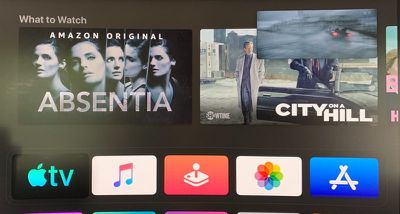
tvOS 13 includes a new Home screen that's aimed at making it easier to find new content, with support for autoplaying videos to show off new TV shows, movies, and apps, similar to Netflix.
Multi-user support is new in tvOS 13, letting each member of the family have their own customized Apple TV interface with separate recommendations, music playlists, and Watch Now lists. A new Control Center lets you swap between profiles.
tvOS 13 gets the Apple TV ready for Apple Arcade, Apple's new gaming service that's coming to the Apple TV, iOS, iPadOS, and macOS later this year. Apple Arcade will offer unlimited access to more than 100 new and exclusive games, for one subscription fee.
Apple Arcade preparations include support for the Xbox Wireless Bluetooth Controller and the PlayStation DualShock 4 Controller, both of which can be connected to an Apple TV over Bluetooth.
Apple is also adding new under-the-sea themed screensavers made in partnership with the BBC Natural History unit, also known for "Blue Planet," and the new software brings support for a picture-in-picture mode that lets you watch TV while doing other things on the Apple TV.
Apple in June launched a voluntary recall and replacement program for 15-inch MacBook Pro models with Retina display sold between September 2015 and February 2017, citing defective batteries that could overheat and pose a fire safety risk.
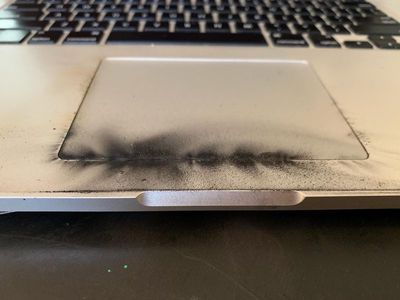
Right after the replacement program was announced, designer Steven Gagne shared some images of a MacBook Pro that caught fire, and those images were today surfaced by PetaPixel, giving us a look at why 2015 MacBook Pro owners should take this recall seriously.
Gagne said that the battery in his MacBook Pro exploded, causing a small fire and filling his house with smoke. He heard the sound of the battery popping, and then smelled a strong chemical scent. The MacBook Pro wasn't plugged in and it was in sleep mode.
He was able to get to it quickly enough to extinguish the fire before it did real damage, but the seriousness of the damage to the MacBook Pro emphasizes that this could have been far worse.
Apple has asked customers with a 15-inch MacBook Pro from 2015 to stop using it until the battery inside can be replaced. Apple has a website outlining the recall program, with MacBook Pro able to enter a serial number to see if they need a battery replacement.
The recall affects the 15-inch MacBook Pro from 2015 and does not impact later models released in 2016 and beyond. Those with 15-inch 2015 machines will need to visit an Apple retail location, an Apple Authorized Service Provider, or contact Apple support to arrange a mail-in repair.
You can determine which Mac you have by clicking on the Apple logo in the menu bar and selecting "About This Mac." The year of the machine is listed in parentheses, and affected machines will say "15-inch, Mid 2015."
According to the U.S. Consumer Product Safety Commission, Apple has received a total of 26 reports of batteries overheating, including five reports of minor burns and 17 reports of minor damage to nearby personal property.
Apple sold approximately 432,000 affected MacBook Pro units in the United States and 26,000 in Canada.
The most recent beta of iOS 13 was released yesterday, and it brought an interesting new "FaceTime Attention Correction" feature that changes the way that FaceTime works.
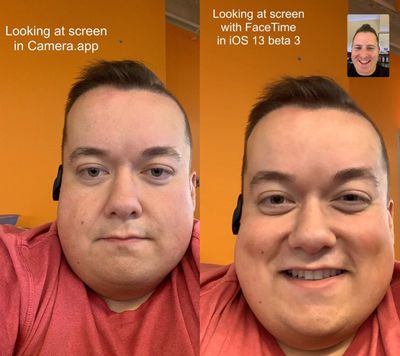
FaceTime Attention Correction, when enabled, adjusts the set of your eyes so that it looks like you're making eye contact with the person you're FaceTiming even when you're looking at the iPhone's screen rather than the camera itself. It's a little difficult to explain, so we've made a hands-on video to demo how it works.
When you're using FaceTime, you naturally want to look at the display to see the other person you're talking to rather than the camera, which has the effect of making you look like you're not maintaining eye contact.
As can be seen in the video, iOS 13 corrects this and makes it so that when you're looking at the iPhone's screen, your gaze appears to be on the camera, allowing eye contact to maintained be maintained while still letting you keep your gaze on the friend or family member you're FaceTiming with.
In iOS 12 and with FaceTime Attention Correction disabled, FaceTime looks like it always does - with no direct eye contact.
FaceTime Attention Correction appears to use an ARKit depth map captured through the front-facing TrueDepth camera to adjust where your eyes are looking for a more personal and natural connection with the person that you're talking to.
Twitter users have discovered the slight eye warping that Apple is using to enable the feature, which can be seen when an object like the arm of a pair of glasses is placed over the eyes.
You can access FaceTime Attention Correction on iPhone XS, iPhone XS Max, iPhone XR, and 2018 iPad Pro models running the third developer beta of iOS 13. It's a setting that's available in the FaceTime section of the Settings app.
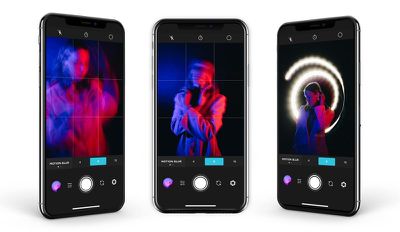
Popular photography app Pro Camera from Moment is getting a major new feature today that's going to make it easier to capture long exposure shots.
The new Slow Shutter shooting mode provides manual long exposure controls for blurring parts of images, such as rushing water or cars driving by on a road. It can also be used to create an image without people, if, for example, you're taking a photo in an area that's often crowded but where people pass by frequently.
There's a simple interface that's designed to let you select the motion and the time, and there are options for motion blur or light trails. You can select a pre-determined time or use the Bulb setting to leave the shutter open as long as desired.
The Slow Shutter feature takes images in the background and then blends them together, and all photos are saved as Live Photos so you can use them as photos or short videos.
Moment is the company behind the popular Moment lenses that attach to an iPhone. The app is designed to be used with the Moment lenses, but it also works without them, serving as a standalone photography app with manual controls.
To celebrate the launch of the new feature, Moment is providing anyone who downloads the app with a 15 percent off code to be used in the Moment store.
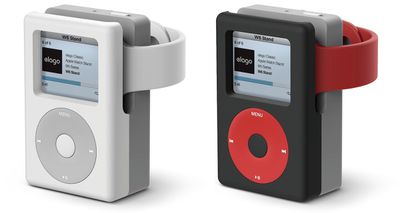
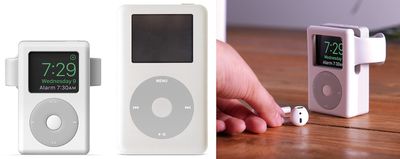
Elago is known for selling Apple Watch stands that house Apple's wearable device inside cute replicas of older tech, like a classic Macintosh or an original Nintendo Game Boy. The company is back this week with its latest product, the W6 Stand, which is designed to look like an iPod Classic.
The W6 Stand works with all Apple Watch models and is compatible with Nightstand Mode. The accessory is made of a scratch-free silicone that protects the Apple Watch when it's sitting inside the stand. To use it, users simply place the Apple Watch's inductive charging puck into the stand's cutout and slide their Apple Watch into the opening for the iPod's "display."
Elago is selling the W6 Stand in White and Black on its own website and on Amazon. The accessory is cheaper on Amazon, where it's priced at $12.99 for the white color option, while on Elago's website it's running for $14.99 for both colors.
Besides the previous W3 Stand for Apple Watch, Elago has also released the M4 Stand for iPhone, which turned an iPhone 7, 6s, or 6 into a classic Mac.
Note: MacRumors is an affiliate partner with Amazon. When you click a link and make a purchase, we may receive a small payment, which helps us keep the site running.
A new feature in the latest iOS 13 beta makes users appear as if they're looking directly at the camera to make eye contact during FaceTime calls, when actually they're looking away from the camera at the image of the other person on their screen.
The FaceTime Correction Feature as demoed by Will Sigmon (@Wsig)
The new "FaceTime Attention Correction" feature, first spotted by Mike Rundle on Twitter, can be turned on and off in the FaceTime section of the Settings app, although it only appears to work on iPhone XS and XS Max devices in the third iOS 13 beta sent out to developers on Tuesday.
Why the feature is limited to these devices right now remains unknown. It clearly relies on some form of image manipulation to achieve its results, so maybe the software algorithms require the more advanced processing power of Apple's latest devices.
Rundle predicted in 2017 that FaceTime attention correction would be introduced by Apple in "years to come," but its apparent inclusion in iOS 13, due to be released this fall, has surprised and impressed him.
For more details on the many features coming to iPhones with iOS 13, be sure to check out our comprehensive MacRumors roundup.
Update: As demonstrated by Dave Schukin, the feature uses ARKit depth maps to adjust eye position to make it appear the user is looking at the camera.
How iOS 13 FaceTime Attention Correction works: it simply uses ARKit to grab a depth map/position of your face, and adjusts the eyes accordingly.
Notice the warping of the line across both the eyes and nose. pic.twitter.com/U7PMa4oNGN
— Dave Schukin 🤘 (@schukin) July 3, 2019
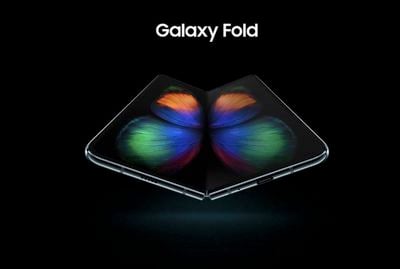
Samsung has completed its redesign of the Galaxy Fold to resolve the multiple display failures that led to its delay, Bloomberg reported on Tuesday.
According to the publication, the smartphone maker is now in the "final stages" of producing a version that's ready for the consumer market, but it's still unable to give a firm launch date.
The South Korean company originally planned to roll out its $1,980 foldable phone on April 26, but was forced to delay the launch after several units sent out to reviewers broke during testing.
All of the issues were related to the device's screen, which was later shown to be vulnerable to debris ingress, thanks to an iFixit teardown that was later removed at Samsung's request.
The company has reportedly fixed these problems, according to people familiar with the matter who spoke to Bloomberg.
It has now stretched the protective film to wrap around the entire screen and flow into the outer bezels so it would be impossible to peel off by hand, said the people, who have seen the latest versions. It re-engineered the hinge, pushing it slightly upward from the screen (it’s now flush with the display) to help stretch the film further when the phone opens.
That tension makes the film feel harder and more a natural part of the device rather than a detachable accessory, they added. The consequent protrusion, almost imperceptible to the naked eye, may help reduce the chance of a crease developing in the middle of the screen over time, one of the people said.
Samsung on Monday announced plans to hold an event on Wednesday, August 7 in New York City, where it will unveil its next-generation Galaxy Note device.
Samsung may also use the August event to provide more detail on when we can expect the delayed Galaxy Fold to launch.
Changes found in the latest iOS 13 beta, released to developers on Tuesday, suggest users may be able to transfer data between two devices over a direct wired connection when setting up a new device or restoring one from a backup.
New graphic found in latest iOS 13 beta (Image via 9to5Mac)
As things stand, iOS users have two restore options in any device setup process. One requires them to download and install a backup stored on a computer via iTunes. The other involves using iCloud and wirelessly transferring data from an old device nearby to a new one logged into the same Apple ID.
However, new assets in the iOS 13 beta spotted by 9to5Mac's Guilherme Rambo include an icon that appears to resemble an iPhone with Face ID connected to an iPhone with Touch ID using a cable, indicating a direct wired transfer option will be available when setting up devices.
In addition, a related code snippet uncovered in the beta includes the user request, "Keep your other iPhone connected to this iPhone and connected to power until the transfer is complete," which perhaps refers to the use of a wireless charging mat during the direct transfer process.
It's unclear how any direct wired connection would work between two iPhones, since Apple doesn't sell a Lightning to Lightning cable that would enable such a physical link. Perhaps Apple intends to make such a cable available when iOS 13 is launched to the public in the fall.
Another possibility is that devices in Apple's new iPhone line-up, expected in September, will replace the iPhone Lightning port with a USB-C port. Apple already offers Lightning-to-USB-C cables for connecting iPhones to newer Macs.
According to Bloomberg, Apple is testing some versions of the 2019 iPhone lineup that include a USB-C connector instead of a Lightning port. It's not known if the company's final plans will include a transition to USB-C, but Apple analyst Ming-Chi Kuo believes Apple is going to stick with Lightning for the 2019 iPhone lineup.
Apple today released its newest transparency report, which outlines the government data requests that the company received during the second half of 2018. The PDF can be read in its entirety on Apple's website for full details, but there are a few notable highlights worth pulling out.
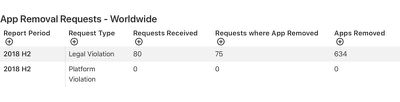
As TechCrunch points out, the newest report includes a section covering the number requests its received from governments asking to have an app removed from the App Store.
Apple received a total of 80 requests from 11 countries to remove 634 apps from various App Stores in different countries. While Apple did not provide specific details on which apps it was asked to pull, requests from China made up the bulk of total takedown requests.
China asked Apple to remove 626 apps, and Apple ultimately pulled 526 of those. Apple also pulled a smaller number of apps at the request of Vietnam, Austria, Kuwait, Lebanon, the Netherlands, Norway, Russia, Saudi Arabia, Switzerland, and Turkey.
According to Apple, the vast majority of the apps pulled in China related to either illegal gambling or pornography. Other reasons apps were pulled in various countries include violations of privacy law, pornography, unlicensed gaming, copyright infringement, and violations of local transportation law.
Apple in the second half of 2019 received 29,183 worldwide government requests for data from 213,737 devices and provided data in 22,691 of cases (78 percent). Apple says that in the U.S., the high number of devices specified in requests for data were due to stolen device and fraud investigations. Apple has similar notices for Germany, Poland, Russia, and South Korea.
There were also a higher number of government financial identifier requests in Canada, Germany, Spain, and the U.S. due to iTunes gift card and credit card fraud investigations.
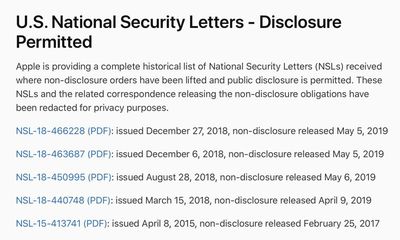
In the United States, Apple received between 3 and 499 National Security Letters (Apple is required to report a range) for between 1,505 and 1,999 accounts.
Three of the National Security Letters received are no longer subject to non-disclosure orders and have been published by Apple for the first time. Apple also published two other NSLs that were issued earlier in 2018 and in 2015. National Security Letters are issued by the FBI and Apple is forbidden from disclosing them for a set period of time.
Apple says that in its next report, it plans to begin reporting on appeals received pursuant to government requests to remove apps from the App Store. The full transparency report is available from Apple's website for those interested, along with breakdowns by country.
Note: Due to the political nature of the discussion regarding this topic, the discussion thread is located in our Politics, Religion, Social Issues forum. All forum members and site visitors are welcome to read and follow the thread, but posting is limited to forum members with at least 100 posts.
Apps designed for the Mac often don't receive as much attention as apps made for iOS devices, so we have a series here at MacRumors that's designed to highlight useful and interesting Mac apps that are worth checking out and potentially investing in.
This month's picks include apps for making your Touch Bar more functional, adding quick switches to the Menu bar, creating to-do lists, replacing the dashboard that's now defunct in macOS Catalina, and easily accessing Spotify and iTunes controls.
- Pock (Free) - Pock is a simple little Mac app that's designed to make your Touch Bar more useful by adding your dock to your Touch Bar so you can quickly access your apps and even files within folders. The Pock options are customizable, so you can choose what you need most, adding options like a now playing widget for controlling music, a status widget for getting info like WiFi connection of battery level, and more.
- One Switch ($4.99) - One Switch is a nifty Mac menu bar app that adds various switches to the Mac's menu bar. You can add toggles that will do things like hide desktop options, activate dark mode, keep the Mac awake, connect to headphones, toggle on Do Not Disturb, activate Night Shift, bring up the Screen Saver, and more. Options are customizable so you can make your One Switch menu do just want you need.
- Microsoft To-Do (Free) - Microsoft earlier this month brought its popular Microsoft To-Do app to the Mac, making it more functional than ever because it's now available across all of your devices. Mac users no longer have to rely on the web app, and can access features like task syncing between devices, file attachments, list sharing, color coding, and reminders for due dates, among other options.
- Flotato (Free) - Flotato is designed to create web apps from your favorite website, so you can get quick access to the web services that you use most often. Flotato web apps can be dragged right into the dock, so you can set up quick access for things like Google Docs, Facebook Messenger, Netflix on the web, favorite news sites, and more.
- Spotmenu (Free) - Spotmenu is another Mac app that's super simple but super useful, especially for Spotify and iTunes users. Spotmenu lets you access Spotify and iTunes content from your menu bar, allowing you to see what song is playing, pause music, play music, and skip tracks.
If you have a favorite must-have Mac app that we haven't highlighted yet, let us know in the comments, and we might feature it in a future video. For more of our Mac app picks, make sure to check out our Mac app archives.
Regal Cinemas will soon launch an unlimited movie ticket subscription service in the United States, according to a new report from Deadline.
The service is set to launch in late July, and while the details are still being ironed out, it is expected to have three pricing tiers: $18, $21, and $24 per month. Each pricing tier will provide unlimited ticket subscriptions, and the pricing options are going to vary based on location. Regal has more than 500 theaters across the United States.
Those purchasing a top-priced tier will have access to any Regal Cinema (i.e., from Valencia, CA to 42nd Street in NYC), while the lowest tier gets access to about half of the chain's national footprint. If someone purchased a subscription at a low tier and ventures to an out-of-network Regal in a higher tier (like a major city), there's apt to be a surcharge (not final, but around $2-$3) on a gratis ticket.
Each tier also includes 10 percent off concessions and Regal may offer discounted pricing when purchasing a subscription for an entire year. What's not known is whether premium options like IMAX, Dolby 3D and others will be included in the monthly subscription price.
Regal's upcoming movie ticket subscription service will compete with AMC's Stubs A-List program, which costs between $19.95 and $23.95 per month depending on the state and provides access to three movies per week.
Movie ticket subscription options became popular when MoviePass launched its $9.95 per month unlimited ticket program, but that ultimately failed due to the low pricing. MoviePass is still around, but charges $20 per month and restricts access to some movies.
Following a recent interview with The Times, Apple iTunes chief Eddy Cue sat down with GQ to share further thoughts on Apple Music and Apple TV+, Apple's upcoming streaming television service.
According to Cue, Apple plans to differentiate its streaming service by offering "the best shows," such as "For All Mankind," an upcoming space drama from Ronald D. Moore that explores what would have happened had the Soviet Union landed on the moon first and had the space race never ended.
Cue says that Apple worked with "the best people in the business" to create a show with a lot of attention to detail. "Like, we took the Houston control panel. We were able to get a lot of the original stuff. We didn't create fake ones," said Cue.
Contrary to some reports, Cue says that Apple executives have not been involved in script editing and have not had input on the Apple TV+ shows in an editorial capacity.
"I saw the comments that myself and Tim were writing notes on the scripts and whatever," says Cue. "There's never been one note passed from us on scripts, that I can assure you. We leave the folks [alone] who know they're doing."
"I can assure you that was 100 per cent false. He didn't say, 'Don't be so mean.' He didn't say anything about a script."
Cue says that Apple is aiming to create shows for everyone, from children to mature adults. "We're going to do a lot of different shows," he said. Apple will have television shows that aren't family friendly, such as "The Morning Show" with Reese Witherspoon and Jennifer Aniston.
"The Reese Witherspoon-Jennifer Aniston show [The Morning Show is a workplace drama set behind the scenes of breakfast TV]. It's a show about women in the workplace and some of the issues that happen to them are definitely not appropriate for you to watch with an eight-year-old."
As for the show that he's most excited about, Cue says that he can't wait for "Dickinson," a show about the life of poet Emily Dickinson that stars Hailee Steinfeld.
Cue also commented on the upcoming music lyric syncing feature in iOS 13, which scrolls through lyrics as a song plays.
"It just takes an inordinate amount of money to try to do this and to try to figure out how to do this the right way," says Cue. And while Apple is naturally starting with the most popular tracks, Cue says it doesn't intend to stop there. The plan is to add synced-up lyrics to every song in the Apple Music library.
"I honestly don't know the exact number of people who are working on it. In our ideal world it would be zero because we'd get them all from the labels. But we discovered that it wasn't going to work. In general it takes hundreds of people to do.
Cue's full interview can be read over at GQ, and for a rundown of all of the TV shows Apple has in the works, make sure to check out our guide. For details on how the Apple TV+ service will work, we have a guide for that too.
Apple today seeded the third betas of iOS 13 and iPadOS to developers for testing purposes, two weeks after releasing the second betas and a month after unveiling the new operating system at the Worldwide Developers Conference.
Registered developers will need to download the profile for the iOS 13 and iPadOS betas from Apple's Developer Center. Beta 3, like Beta 2, can be downloaded over-the-air once the proper profile has been installed.
Apple split iOS 13 and iPadOS into separate updates in 2019, one designed for iPhone and one designed for iPad. iPadOS is identical to iOS 13 in almost every way, though there are some iPad-specific features such as new multitasking capabilities. For the most part, the two operating systems share the same features.
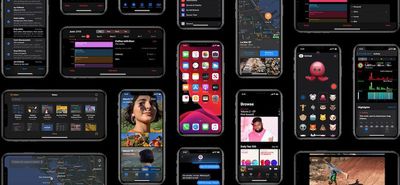
iOS 13 is a major update with a long list of new features. Perhaps the most noticeable outward-facing change is a new systemwide Dark Mode that changes the entire look of the operating system from light to dark, darkening everything from system elements to apps.
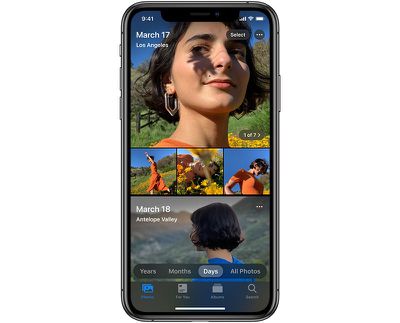
Apple overhauled the Photos app, introducing a new Photos tab that curates your entire Photos library and shows you a selection of highlights organized by day, month, or year, and there are revamped Photo editing tools.
For the first time, you can edit video right in the Photos app, cropping, rotating, applying filters, and adjusting lighting and color. There's a new High-Key Mono lighting effect, and for Portrait Lighting in general, intensity can be adjusted.
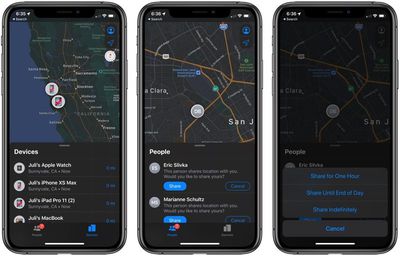
There's a less obtrusive volume HUD, a new Find My app that combines Find My iPhone and Find My Friends and lets you track your devices even with they don't have an LTE or WiFi connection.
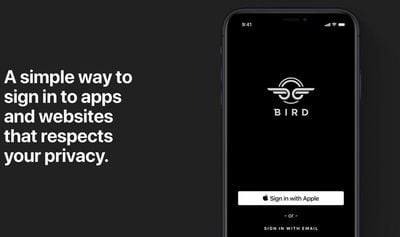
A Sign In with Apple feature (not yet active) gives you a convenient and data safe way to sign into apps and websites, providing an alternative to Facebook and Google sign in options. Apple's even able to generate single-use randomized email addresses so you don't have to give your real info to apps and websites.
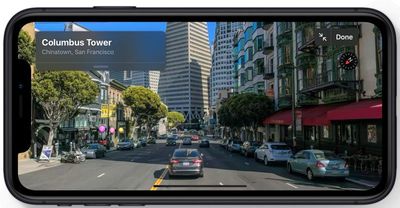
Maps has a new street-level "Look Around" mode and a Collections feature for making lists of places, Reminders has been entirely overhauled to make it more functional, there's a profile feature in Messages along with new Memoji and Animoji stickers, and Siri has a new voice.
CarPlay in iOS 13 has been overhauled with a new look, multiple sets of AirPods (or Powerbeats Pro) can be connected to the same phone so you can share music with a friend, Siri on HomePod can detect multiple voices for multi-user support, and HomePod also supports Handoff.
There are a ton of additional new features and changes coming in iOS 13, and for a full rundown of what you can expect, you should check out our iOS 13 roundup. For a list of what changed in beta 2, make sure to check out our what's new in beta 2 post. Not much changed, but some features that weren't previously working were activated. We'll also be adding beta 3 changes below once we've had a chance to install the new OS.
The beta testing period will allow Apple to work out bugs ahead of the release of iOS 13 and iPadOS, and it will let developers build iOS 13 and iPadOS features into their apps ahead of a public release coming this fall.
What's New in iPadOS
- Split View In iPadOS, Split View now shows which side of the display is actively receiving text input.
It's subtle, but iPadOS 13 beta 3 shows which app in Split View is actively receiving text input.
Watch the pill-shaped indicator at the top. This has been an issue since Split View launched in iOS 9. pic.twitter.com/VkJyOGFMFh
— Federico Viticci (@viticci) July 2, 2019
What's New in iOS 13
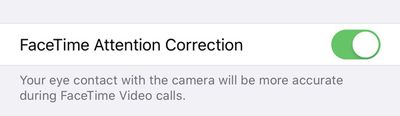
- FaceTime Attention Correction - In the Settings section of FaceTime, there's a new "FaceTime Attention Correction" option that changes the way your attention is focused on the iPhone during a call. The setting says that eye contact with the camera will be more accurate during FaceTime Video calls.
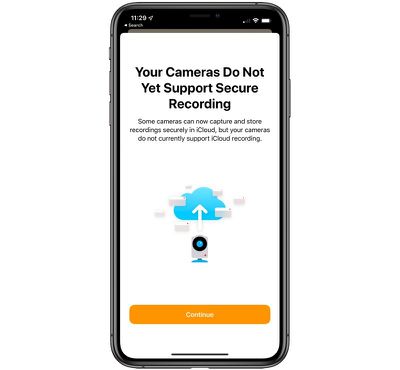
- Home app - In the Home app, there's a new popup that lets you know your cameras do not support secure recording, an iOS 13 feature, if you have HomeKit-connected cameras.
- Find My - There's a new "Me" tab in the Find My app that displays your current location.
- Apple Arcade - When opening the App Store and selecting the Arcade tab, there's a new video highlighting the upcoming Apple Arcade service.
Apple today seeded third beta of an upcoming tvOS 13 update to developers, two weeks after seeding the second beta and a month after unveiling the tvOS 13 software at the Worldwide Developers Conference.
Designed for the fourth and fifth-generation Apple TV, the new tvOS 13 developer beta can be downloaded onto the Apple TV via a profile that's installed using Xcode.
tvOS 13 introduces an updated Home screen aimed at making it easier to discover new content. Apps are now able to play full-screen video previews right on the Home screen, similar to Netflix.
Multi-user support is available for the first time, letting more than one profile exist on the Apple TV so each family member can have their own customized Apple TV interface with separate recommendations, music playlists, and Watch Now lists.
Switching between profiles can be done with the new Control Center, which offers up profiles, the time and date, search, a Now Playing widget, AirPlay controls, and a sleep option.
tvOS 13 gets the Apple TV ready for Apple Arcade, Apple's new gaming service that's coming to the Apple TV, iOS, iPadOS, and macOS later this year. Apple Arcade will offer unlimited access to more than 100 new and exclusive games, for one subscription fee.
As part of the Apple Arcade preparations, Apple has implemented support for the Xbox Wireless Bluetooth Controller and the PlayStation DualShock 4 Controller, both of which can be connected to an Apple TV over Bluetooth.
There are new under the sea themed screensavers created in partnership with the BBC Natural History Unit, which also created "Blue Planet." Though not mentioned by Apple, beta 2 included a new Picture-in-Picture feature. Picture-in-Picture lets you continue to watch TV shows or movies while using a different app, adjusting settings, or otherwise navigating through the tvOS 13 operating system.
tvOS 13 is available to registered developers and public beta testers at this time. The latest beta should be made available to public beta testers later this week.
Apple today seeded the third beta of watchOS 6, the software that runs on the Apple Watch. The third beta comes two weeks after the second beta and a month after Apple first unveiled the new update at the Worldwide Developers Conference.
To install the watchOS 6 beta, you'll need the proper configuration profile, which can be obtained through the Apple Developer Center. Once the profile is in place, the beta can be downloaded using the dedicated Apple Watch app on the iPhone by going to General > Software Update.
Installing the software requires the Apple Watch to have 50 percent battery. It also must be placed on the charger and it must be in range of the iPhone. It would be wise to install the beta on a secondary device instead of a primary device given that this is an early version of the watchOS 6 software that still has bugs to be worked out.
watchOS 6 is a major update that offers up a long list of new features. First and foremost, there's an App Store right on the Apple Watch, so you can find and download new Apple Watch apps on your wrist.
Apple Watch apps no longer need to have an iPhone component, which means developers can create standalone Apple Watch apps for the first time. Apps are also able to take advantage of new APIs so you'll be able to do things like follow along with a workout or listen to streaming music from third-party services.
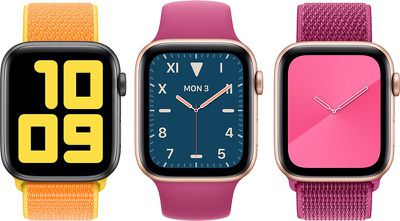
There are several new watch faces in watchOS 6, including Numerals Mono and Duo with huge numbers, Modular Compact, a Gradient watch face that shifts over the course of a day, a Solar Dial watch face that visualizes the sun in a 24 hour path around the dial, and the California watch face with a mix of standard numbers and roman numerals.
A new Taptic Chimes feature provides a silent touch on the wrist at every hour, and if sound is turned on, you'll hear an audible chime. You can also hold two fingers on the Apple Watch's display to hear the time spoken out loud.
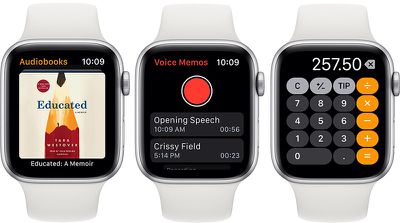
There are new Audiobooks, Voice Memos, and Calculator apps, along with a new Noise app that warns you if you're exposed to sound that's too loud and a new Cycle Tracking app for period tracking. Activity Trends, visible on the iPhone, are also available to chart your fitness progress and make sure your fitness trends are improving.
New complications are available for wind speed, chance of rain, and the new Noise app, plus there's a Voice Memos complication for recording a memo quickly, a cellular strength complication, and a complication for the Calculator that opens up the app.
Siri can now provide full web search results right on the watch when asked a question, and for Mac users, the Apple Watch can now approve Mac security prompts.
When it launches in the fall, watchOS 6 will be available on all Apple Watch models with the exception of the original Apple Watch, released in 2015. For more on what's new in watchOS 6, make sure to check out our watchOS 6 roundup.
Update: In watchOS 6 beta 3, some of the stock apps are now able to be deleted, a feature that was previously reported but is now activated. There are also multiple new colors for the California watch face.
Apple today seeded the third beta of macOS 10.15 Catalina for testing purposes, two weeks after seeding the second macOS Catalina beta and a month after the new Mac operating system update was first unveiled at the Worldwide Developers Conference.
The new macOS Catalina beta can be downloaded using the Software Update mechanism in System Preferences. As with all new betas, macOS Catalina should not be installed on a primary machine as it is early release software and could have major bugs.
macOS Catalina removes the iTunes app, splitting it into Music, Podcasts, and TV apps. The Apple Music and Apple Podcasts apps are available now, while the Apple TV app is coming later this year.
The new apps are similar in function to iTunes, but are split up by feature. iOS device management is still available on the Mac, but it's now done through Finder rather than iTunes.
With a new Sidecar feature, you can turn your iPad into a second display for your Mac with just the click of a button. The Apple Pencil works with Sidecar, so you can turn your iPad into a drawing tablet in apps like Photoshop and Illustrator.
Your Apple Watch can be used to approve security prompts in macOS Catalina, and Macs with a T2 chip support Activation Lock. There's a new Find My that brings the Find My Mac app to the Mac for the first time and even lets you track your devices when they're offline.
Screen Time is now available on the Mac as well as iOS devices, and Project Catalyst, a new Apple initiative, will let developers easily port their iPad apps over to the Mac.
There's a new Photos interface that surfaces your best photos organized by day, month, or year, there's a new start page in Safari, Mail has new tools for muting email threads and blocking senders, and the Reminders app has been overhauled.
32-bit apps no longer work in macOS Catalina, which is something to be aware of before installing the beta. For more details on macOS Catalina, make sure to check out our macOS Catalina roundup.
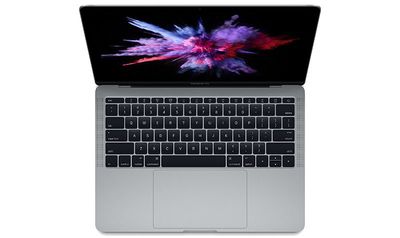
Apple this week received FCC approval for an unreleased MacBook Pro with a model number of A2159, which is one of the model numbers that was recently registered with the Eurasian Economic Commission.
In the FCC documentation, Apple specifies that the unreleased A2159 machine is a MacBook Pro, which is curious as the MacBook Pro already received a 2019 refresh in May.
A2159 is a model that was not included in the May update, and it's not entirely clear what it is. As a Reddit user points out, the back of the machine says that it's rated at 20.3V - 3A Max, which is equivalent to 61W, perhaps suggesting a refreshed 13-inch MacBook Pro.
From the FCC filing
There's a possibility that Apple is planning to launch an updated 13-inch MacBook Pro without a Touch Bar, which is one of the machines that did not receive a May update. The non-Touch Bar 13-inch MacBook Pro has not seen a refresh since 2017.
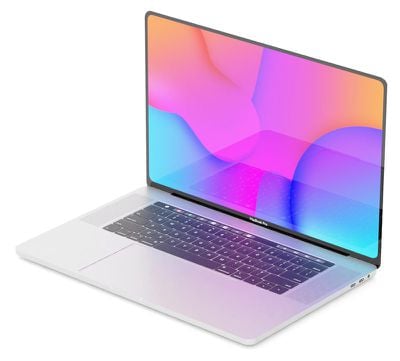
Apple is also said to be developing a 16-inch MacBook Pro that features a new design and larger display perhaps enabled through slimmer bezels, though it's not clear if that is the machine outlined in the FCC document given the power information specified.
A mockup of what a 16-inch MacBook Pro might look like
FCC approvals tend to be published right when a new machine launches, so we could see the A2159 MacBook Pro model quite soon.
Update: The FCC has pulled all of the documentation on the new A2159 machine.
T-Mobile has reached a divestiture deal with Dish Network that perhaps brings it one step closer to earning government approval for its planned merger with Sprint, reports CNBC.
Dish Network and T-Mobile had been discussing a deal for Sprint's Boost Mobile brand and some wireless spectrum to ease antitrust concerns over the merger.
Though the two companies have much of the divestiture deal in place, sources that spoke to CNBC said that there are still issues that the Justice Department is "actively focused on" before it would allow a deal.
The government continues to be concerned that the agreement between Dish and T-Mobile isn't enough to make sure that Dish would provide meaningful competition in the U.S. cellular market.
The DoJ wants Sprint and T-Mobile to ensure that there continues to be a fourth major carrier in the United States following their merger. The combination of Sprint and T-Mobile, which would be called T-Mobile and would be led by John Legere, would leave the U.S. with three major carriers: T-Mobile, AT&T, and Verizon.
T-Mobile wants to limit Dish's spectrum capacity to 12.5 percent, while T-Mobile parent company Deutsche Telekom wants to limit any strategic Dish investor to five percent, restrictions the DoJ may not be happy with.
Sprint and T-Mobile first announced a merger agreement in April 2018, but the completion of the deal continues to require government approval. As of May, U.S. regulators were said to be "leaning against" approving the merger unless some of T-Mobile and Sprint's assets were sold off, and T-Mobile and Sprint have been working toward that goal.