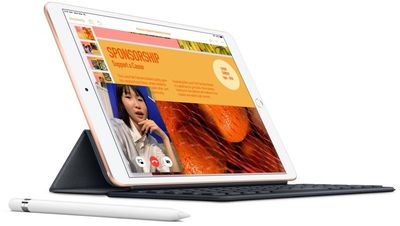
Logitech today announced the launch of the Slim Folio Pro, a new keyboard case that's designed for the 11 and 12.9-inch iPad Pro models.
The Slim Folio Pro is a folio-style case for the iPad Pro with a built-in backlit keyboard that's an alternative to the Smart Keyboard offered by Apple.
Logitech's Slim Folio Pro connects to the new iPad Pro models using a Bluetooth connection rather than through the Smart Connector, but the battery lasts for up to three months on a single charge so you shouldn't need to charge it often.
There are several different configurations you can use with the Slim Folio Pro for purposes like typing and drawing. Positioning the iPad upright within the case allows you to type on the keyboard, which Logitech says features "the perfect bounce" for fast and accurate typing.
The keyboard spans from edge to edge and features a row of iOS shortcut keys for doing things like adjusting key backlight brightness, changing the volume, and more using keystrokes.
There's also a sketching position that puts the iPad Pro into an ideal configuration for drawing with the Apple Pencil. The sides of the case are left accessible so the second-generation Apple Pencil can be charged. A magnetic latch holds the Apple Pencil in place when not in use so it won't get lost.
For use while reading or browsing the web, the keyboard of the Slim Folio Pro folds back so it's out of the way, leaving the display accessible.
When everything is closed up with the magnetic latch, the Slim Folio Pro is designed to keep the corners of the device protected and prevent scratches and scuffs.
Logitech's Slim Folio Pro will be available starting in April from the Logitech website. The Slim Folio Pro for the 11-inch iPad Pro will be priced at $120, while the Slim Folio Pro for the larger 12.9-inch iPad Pro will be priced at $130.
Apple today updated its website to announce that it will share its earnings results for the second fiscal quarter (first calendar quarter) of 2019 on Tuesday, April 30.
Apple's second quarter earnings results will give us a look at how well Apple's products are doing following the first fiscal quarter of 2019, which saw Apple unexpectedly lower its revenue guidance due to fewer than anticipated iPhone upgrades.
Apple has dropped prices on iPhones and other products in China and some other emerging markets, plus it has shifted towards focusing on trade-in deals and monthly payment plans that lower the cost of the newest iPhones.
Apple's guidance for the second fiscal quarter of 2019 included expected revenue of $55 to $59 billion and gross margin between 37 and 38 percent. Apple in Q2 2018 brought in $61.1B in revenue, so the company is expecting a year-over-year decline in Q2 2019 based on its provided guidance.
As announced back in November, this will be the second quarter where Apple will not provide specific unit sales data for iPhone, iPad, and Mac.
Apple's quarterly earnings statement will be released at 1:30 p.m. Pacific/4:30 p.m. Eastern, with a conference call to discuss the report taking place at 2:00 p.m. Pacific/5:00 p.m. Eastern. MacRumors will provide coverage of both the earnings release and conference call on April 30.
Bragi, a company known for making some of the first wire-free headphones to compete with the AirPods, has exited the wearables market, reports Wareable.
Bragi says that its product business has been sold to a third-party buyer and that while it will continue to license its IP and artificial intelligence, it will no longer be making new devices.
From the company's CEO:
"Bragi's technology suite is applied beyond our own products to partners and headphone brands. The Dash Pro featured groundbreaking ultra efficient AI and software that could be updated with new features such as Amazon Alexa, language translation and personalised hearing. With the sale of our product business, Bragi has completed its transformation into a software, AI and IP licensing company."
The first wire-free headphones from Bragi, The Dash, debuted on Kickstarter in 2014. The company raised millions, and ahead of when the AirPods launched, Bragi announced an AirPods competitor, "The Headphone."
The Headphone was a cheaper version of The Dash designed specifically to compete with the AirPods, but Apple's AirPods were a major hit with Apple customers and we heard little else from Bragi after the launch of the Headphone and a follow up to the Dash called the Dash Pro. Bragi's products were decent, but were never quite able to measure up to the AirPods.
All products were out of stock on Bragi's website as of January 2019, though Bragi's CEO did not initially admit to the imminent closure of the company.
Bragi did not unveil who purchased the rights to its headphones products, but said Bragi customers who own Bragi devices will continue to be able to access support.
Apple was desperate to secure deals with The Washington Post or The New York Times for its recently announced Apple News+ service but was ultimately unable to persuade them to sign up despite a "vigorous courtship," according to a new report from Vanity Fair.
Shortly after Apple's Texture deal last spring, Apple began discussions with the two news sites, putting a "tremendous" amount of pressure on them and promising to significantly increase their readership.
"Eddy Cue was in and out of their offices really trying to woo them." Cue's elevator pitch, according to people familiar with the discussions, was, "We'll make you the most-read newspaper in the world."
Apple was aiming for access to the full content from the two newspapers, rather than a pared down offering or a selection of stories on a specific set of topics. Apple is said to have not wanted "limitations in terms of content."
Neither The New York Times nor The Washington Post could be convinced to join Apple News+. Both publications have successful online subscription offerings already. The New York Times charges $15 per month for a basic digital subscription, while The Washington Post charges $10. The newspapers get to keep 100 percent of the revenue brought in by those subscriptions.
Apple wanted to include full access to the content from the news sites for the $9.99 per month asking price of Apple News+. According to prior reports, Apple keeps 50 percent of the subscription revenue for Apple News+ and splits the other 50 percent among publishers based on how much time is spent consuming their content.
If The New York Times and The Washington Post joined Apple News+, their existing subscribers would have little reason to keep paying them $10 to $15 per month instead of paying the $9.99 subscription to Apple News+, which would also include other news content and magazines. Apple believes its huge subscriber base would ultimately bring more readers to the news sites, but neither newspaper was swayed by that argument.
Meredith Kopit Levin, the chief operating officer for The New York Times, told Vanity Fair that the newspaper wants to have a direct relationship with its readers.
"We've been pretty deliberate about saying that the best place you can experience journalism is through a relationship with a news provider. So far for us, that has meant a direct relationship with users. The more we have a relationship with users, the better we think our business will be, and the better the experience that we can provide to them."
A spokesperson for The Washington Post said that the paper's focus is on growing its own subscription base, which meant joining Apple News+ "just did not make sense" at the current time.
While Apple was not able to secure deals with either The Washington Post nor The New York Times, it did ink a deal with The Wall Street Journal. The full content from The Wall Street Journal is unlocked for Apple News+ subscribers even though a standard subscription starts at $19.49 per month for the first year, after which it goes up to $38.99.
There are caveats, though. A limited selection of general news and opinion pieces are promoted through Apple News+, and other content from The Wall Street Journal must be manually searched for. Apple News+ also only provides three days worth of archives from The Wall Street Journal.
According to Vanity Fair, The Wall Street Journal has less to lose than other news sites. Its main subscriber base consists of corporate accounts and "high net-worth individuals" interested in business and finance news rather than the more general news content that will be promoted via Apple News+.
Apple has also secured deals with hundreds of magazines, and much of Apple News+ comprises access to magazines like National Geographic, Vogue, The New Yorker, and other high profile titles. Magazines also have less to lose than digital sites already offering subscriptions as most don't have established digital subscription businesses.
Publications that do not have large audiences paying for digital access each month have the potential to be more successful with Apple News, but for sites like The New York Times and The Washington Post, there's a real risk that joining would cannibalize existing subscribers.
It's not yet clear if Apple News+ will ultimately be successful for Apple's media partners, and it's possible that if it is, news sites that have declined joining will do so in the future.
Apple's 2019 iPhones are going to have a two-way wireless charging feature that will allow the iPhone to charge other devices like the AirPods, Apple analyst Ming-Chi Kuo again confirmed in a report sent out to investors today.
Kuo previously mentioned the feature briefly in a February note, and today he goes into a bit more depth about the suppliers who will benefit from the feature.
Two-way wireless charging as demonstrated in the Galaxy S10+
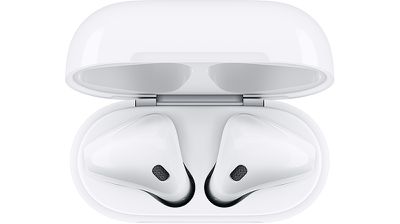
Two-way wireless charging, or bilateral charging, will let the Qi-based iPhones coming in 2019 charge another iPhone or the new AirPods with Wireless Charging Case. You'll essentially be able to charge any Qi-based device with your iPhone, as it will work as a wireless charger itself. From Kuo:
We expect the new 2H19 iPhone models will support two-way wireless charging. Though the iPhone is not the first high-end smartphone to be equipped with two-way wireless charging, this new function could make it more convenient for users to charge the new AirPods and create a better integrated user experience of the iPhone and AirPods.
This is a feature that Samsung has already debuted in its 2019 Galaxy smartphones, and in those devices, it's known as Wireless PowerShare. Wireless PowerShare allows the 2019 Galaxy smartphones to charge other Qi-based accessories, including the iPhone.
According to Kuo, suppliers such as Compeq (will supply battery boards) and STMicro (will supply two-way wireless charging controller) stand to benefit from Apple's inclusion of two-way wireless charging as it will increase the average selling price of key components.
To accommodate two-way wireless charging, Kuo believes battery boards included in 2019 iPhones will increase in size, as will battery pack capacity. Kuo says that battery capacities for the 6.5-inch iPhone XS Max successor could increase by 10 to 15 percent, while the battery capacity of the 5.8-inch OLED iPhone XS successor could grow by 20 to 25 percent. The iPhone XR successor isn't expected to see much of a gain, though, with Kuo predicting growth of 0 to 5 percent.
Apple has lowered the prices of several products in China this week, including the latest iPhones, iPads, and AirPods.
As noted by CNBC, the iPhone XR now starts at 6199 RMB on Apple's online store in China, nearly five percent lower than its previous 6499 RMB price tag. The higher-end iPhone XS and iPhone XS Max models each received a 500 RMB price cut as well and now start at 8,199 RMB and 9,099 RMB respectively.
Likewise, the second-generation AirPods with the standard Lightning charging case now start at 1,246 RMB, down slightly from 1,279 RMB, and the 11-inch iPad Pro has been discounted to 6,331 RMB from 6,499 RMB previously.
The price cuts appear to be due in part to a reduction in China's value-added tax (VAT) that went into effect today to help boost the economy there, but regardless of the reason, any price cut could be good news for Apple as it seeks to bolster sales in China.
Last quarter, Apple issued its first revenue warning in 16 years due to "fewer iPhone upgrades" than it anticipated and "significantly greater" than expected economic weakness in the Greater China region. Apple already discounted iPhone prices at third-party resellers in China to improve results.
It's been ten months since DirecTV Now ended its last Apple TV offer, and today the company has debuted a new version of the deal to coincide with its recently-launched subscription bundles. This time around, if new subscribers prepay for four months of DirecTV Now's cheapest subscription tier (now $50/month, due to price hikes), they'll get a 32GB Apple TV 4K at no extra cost.
In the end, you'll be paying around $200 for four months of DirecTV Now and a brand new Apple TV 4K, which would traditionally total to $380. As with the previous deals, you can cancel your DirecTV Now subscription after you receive the Apple TV 4K, and still gain access to the service for the remainder of the first four months.
AT&T's resurfaced deal isn't as good as its previous incarnation, which required users to prepay for 3 months of DirecTV Now (previously priced at $35/month at its cheapest) to receive the 32GB Apple TV 4K at no cost, with the total price reaching $105. This meant you were getting the $179 Apple TV 4K discounted in addition to a few months of DirecTV Now.
The new $200 deal is more expensive than the $179 MSRP of a 32GB Apple TV 4K, so you'll need to be interested in DirecTV Now to get the most out of the offer. During its fourth quarter earnings report for 2018, DirecTV Now reported that it lost 267,000 subscribers. This was attributed to the closure of discount bundles like the original Apple TV 4K offer, so it appears the company is trying out a new version to entice new subscribers into signing up.
Those interested can head to DirecTV Now's website to find more information and place their order before the sale expires on April 30, 2019.
The calendar has once again turned over to the first of April, and that means that April Fools' Day pranks will be running rampant online for the next day or so. With that in mind, as you browse the internet today you should be very wary of everything you read, particularly regarding any stories or announcements by major brands.
As a point of comparison, last year companies teased their customers with tennis shoes that had smartphone features (T-Mobile), socks that could control your TV (Roku), and beer that made you fluent in another language (Duolingo). This year you can expect the usual companies to join in on the pranks, potentially including Google, Netflix, T-Mobile, and more.
April 1, 2019 is also the 43rd anniversary of Apple, founded by Steve Jobs, Steve Wozniak, and Ronald Wayne on April 1, 1976. Apple products and services are usually targets of April Fools' Day pranks, but the company itself doesn't typically go all out for the event, besides a few humorous jokes sometimes added to Siri.
Check out the highlights from this year's April Fools' Day hoaxes in the list below.
T-Mobile Phone BoothE
T-Mobile is again fighting one of the so-called pain points of the wireless industry with the launch of the Phone BoothE, a completely sound-proof and high-tech phone booth that lets T-Mobile customers escape from noisy areas to make their phone calls. Inside the Phone BoothE you can charge your devices, connect to a smart screen called "Magenta Pages" to mirror your smartphone display, and adjust the lighting to take great selfies.
In regards to the name, T-Mobile is taking a shot at AT&T's misleading 5GE label: "The Phone BoothE is an evolution towards the new world of mobility. Like many in the tech and wireless industry today, we decided that by adding an "E" to the name, you would know it's a real technology evolution."
“It’s 2019 and people are walking around with a finger in their ear, trying to have a conversation! The T-Mobile Phone BoothE solves this problem,” said John Legere, CEO of T-Mobile.
“The whole point of having a mobile phone is so you can converse on the go, but there are certain conversations that call for privacy. This is a major evolution in how we think about mobility – now the busiest street corner can be your cellular sanctuary.”
Although this is an April Fools' Day joke, T-Mobile has actually built the Phone BoothE and deployed them in select locations around New York City, Seattle, and Washington, DC, where anyone will be able to use them. The company on Monday also revealed the T-Mobile Phone BoothE Mobile EditionE, which is more in line with a straightforward April Fools' Day hoax, as it's "literally a magenta cardboard box with a hole in it."
It's not unprecedented for T-Mobile to follow through on its April Fools' Day prank with a real product. Last year, the company rebooted the T-Mobile Sidekick in the form of a shoe that could make calls and communicate with nearby Sidekicks with "toe tap" technology. Of course, the version T-Mobile actually sold to customers for $65 was just a basic lookalike shoe that lacked any connected features.
HyperDrive Ultimate Ultimate Hub
Hyper has revealed a new USB-C hub for users frustrated with the lack of port diversity on modern Apple notebooks, which goes above and beyond any USB hub ever built and includes 40 total ports. This hub features 9 USB-A ports, 9 USB-C ports, 2 microSD ports, 2 SD ports, one audio jack, one HDMI port, and one Ethernet port.
That's not all, because the HyperDrive Ultimate Ultimate Hub also features a 3.5" floppy disk drive, a built-in airline-safe battery, a 2-in-1 speaker and space heater, one VGA port, and much more. Hyper says that the hub is regularly offered at a price of $9,999.99, but for a limited time it's on sale for $99.99.
Nanoleaf Light Panes
Nanoleaf, the company behind the HomeKit-connected Aurora wall panels, has announced its latest lighting product: the Nanoleaf Light Panes. The solar-powered Light Panes use the company's SunSync technology and LOYW (Look Out Your Window) software architecture to provide a hyper-realistic representation of the sun's glow based on your location, resulting in a high-tech version of a basic window.
The Light Panes are modular and come in squares, hexagons, and triangles, which the company says will fit into any home decor. The new product also has a companion accessory called the Nanoleaf Curtain, which lets you customize colors, brightness levels, and provides real-time scheduling. Nanoleaf says the Light Panes are launching in winter 2019 and will be priced at $299.99.
Duolingo Push
Duolingo is addressing a problem for subscribers this month with a new push notification update called Duolingo Push. Instead of sending basic iOS push notifications that users can easily ignore, the company has a new premium feature that causes its owl mascot, Duo, to show up wherever you are in an effort to encourage you to complete your language lesson for the day.
Duo reminders include "Disappointed Duo" at $100/month, "Passive Aggressive Duo" at $50/month, and "Encouraging Duo" at $25/month. The company says that with any of these tiers, Duo is guaranteed to show up anywhere you're located, be it at work, at the gym, or at home.
Shutterstock's Brick-and-Mortar Library
Shutterstock has revealed plans to build its first brick-and-mortar stock image library to house all of the content that you can find on the company's traditional website. This includes over 250 million volumes of imagery, a full floor that will showcase over 14 million reels of film, and a listening bay where visitors can enjoy over 20,000 songs, all of which will include Shutterstock's well-known visual and audio watermarks.
Shutterstock says image collections that you can browse at the library include "Happy Millenials Holding Sparklers," "Tube Sock Vectors: An Anthology," and "Portraits of Disgruntled Ostriches." The library will be run by a group of AI robots called Cyanotypes, and construction on the Brooklyn location is expected to begin in 2020. The tagline for the Shutterstock physical library is: "Because sometimes innovation means moving backwards."
Microsoft Bans April Fools' Day Pranks
In a bit of counter-programming, Microsoft this year has completely banned its employees from taking part in any public-facing April Fools' Day stunts that can be connected to the company.
In a letter circulated inside Microsoft and seen by The Verge, Microsoft marketing chief Chris Capossela explained the strategy:
Hey everyone,
It’s that time of year when tech companies try to show their creativity with April Fools’ Day stunts. Sometimes the outcomes are amusing and sometimes they’re not. Either way, data tells us these stunts have limited positive impact and can actually result in unwanted news cycles.
Considering the headwinds the tech industry is facing today, I’m asking all teams at Microsoft to not do any public-facing April Fools’ Day stunts. I appreciate that people may have devoted time and resources to these activities, but I believe we have more to lose than gain by attempting to be funny on this one day.
Please forward to your teams and internal partners to ensure people are aware of the ask to stand down on external April Fools’ Day activities.
It appears that Microsoft is hoping to lead the way in changing the tide of April Fools' Day pranks within the tech industry, but as of this year many of the usual suspects have still performed their expected pranks.
Parody Apple Ad: "The Sound Gardener"
Filmmakers Ryan Westra and Ben Fischinger have created a cute faux Apple ad called "The Sound Gardener," which reveals the behind-the-scenes process that Apple goes through to produce AirPods at one of its ultra-secret facilities.
In the commercial, it's revealed that AirPods are grown in a lush garden environment by sound gardener and botanist Ken Yamamoto. The botanist waters and studies the AirPods as they grow, and then plucks them from various flora when they're ready.
LEGO "Find my Brick" iOS App
LEGO has taken inspiration from Apple's Find my iPhone app with its April Fools' Day joke this year, dubbed "Find my Brick." With the app, you can select the brick style and color you're looking for and use your iPhone's camera to automatically find it, even among a giant pile of bricks.
The LEGO Twitter account notes that the app is "coming soon," but LEGO enthusiasts shouldn't get their hopes up because this is just the company's April Fools' Day prank for 2019.
Discord deletes light theme - Because so many users often ask for dark mode support, Discord has gone the extra mile and deleted its light theme completely.
Google Maps has temporarily gained a new trick for April Fools', with users of the mobile app able to play a geographical version of the classic game Snake.
To play the game, simply launch the Google Maps app, tap the menu icon in the top-left corner of the interface, then select Play Snake.
Pick which city you'd like to play in – options include Cairo, London, San Francisco, São Paulo, Sydney and Tokyo – and then start picking up as many passengers as you can without bumping into yourself or falling off the map.
Snake rolls out on Android and iOS today, and Google says it will be available to play in the app for about a week. A standalone site has also been set up for anyone who wants to feed their Snake addiction beyond that time.
Apple in 2019 made the unprecedented move of canceling work on the AirPower, the wireless charging mat that was supposed to charge the Apple Watch, iPhone, and AirPods all at once.
There are already a number of AirPower-like alternative products on the market, and we're likely going to be seeing additional replacements in the future. None of these accessories do exactly what the AirPower promised because there are dedicated spots to charge each device, but each option will charge more than one device at one time.
1. Nomad Base Station Apple Watch Edition ($139) - Nomad's Apple Watch Base Station has an Apple Watch charging puck for charging the Apple Watch, along with a double coil Qi wireless charging pad. You can use the wireless charging pad to charge the iPhone horizontally, but if you put the iPhone vertically, it frees up a little spot for charging the AirPods, so all three devices charge at one time. We reviewed the Nomad Base Station and liked it quite a lot, though it is quite expensive.
2. Belkin Boost Up Wireless Charging Dock ($127) - This is another expensive dock, but it's another that we reviewed and liked quite a lot. Belkin's Boost Up Wireless Charging Dock has an upright charging space for wirelessly charging an iPhone and a space for the Apple Watch, but this isn't a dock suitable for the AirPods. Still, it's a good option for dual device charging.
3. ZENS Dual + Watch Wireless Charger (99 euros) - The Dual + Watch Wireless Charger from European company ZENS is another option that we recently reviewed and were impressed with. It has a stand for charging an Apple Watch, along with a base that can wirelessly charge two iPhones at one time. It's 99 euros which is pricy, but ZENS does ship worldwide. This dock is temporarily out of stock, but it's coming back in May.
4. NytStnd AirPods Trio ($109) - The Nytstnd will charge your AirPods, Apple Watch, and iPhone all at once, but there's a catch - there's no wireless charging for AirPods. The Apple Watch charges via a standard Apple Watch charging puck (that you supply), while there's a wireless charging pad for iPhone, a Lightning port for AirPods, and one extra Lighting port. On the plus side, you can charge all three items at once and there's also an extra spot for storing keys or other odds and ends. You also don't need the new AirPods 2 with Wireless Charging Case to use it.
5. Unravel Wireless Charger ($99) - This interesting little charger features three charging stations, one for AirPods, one for Apple Watch, and one for iPhone. You can lay them flat or roll them up in a configuration that works for you if you only need to charge two devices at once. We haven't tried this, but it's a neat design and the reviews look to be largely positive.
6. Moshi Sette Q ($89) - Moshi's svelte-looking wireless charging pad houses dual coil modules for fast-charging an iPhone and a pair of AirPods (or another phone) at up to 15W each. Inside, a high-density ferrite sheet maximizes the amount of charging power directed towards the receiving device, allowing Sette Q to charge through phone cases up to 5mm thick. In addition, the mat features a 5W USB-A port on the front to charge an additional wired device. Moshi also sells a Flekto compact folding Apple Watch charger ($49), which pairs nicely with the spare wired port.
As of writing, the Sette Q comes with a USB-C outlet cable but the power adapter isn't included, so you'll need to make sure the one you use is powerful enough to feed all wireless devices at the maximum 15W charging speed. Moshi recommends a 45W USB-C Power Delivery 3 adapter, but any PD adapter over 45W will work.
Overall, this is a well-made, nice-looking piece of equipment offering a complete wireless charging solution for your Apple devices, although it is a tad expensive given that the Apple Watch charger is sold separately and the power adapter isn't included.
Affordable AirPower Alternatives From Amazon
If you go to Amazon and type in "AirPower" or "Wireless Charging Station" you'll see a whole slew of cheap wireless chargers that promise to charge your Apple Watch, iPhone, and AirPods all at once. We haven't tested any of these options and can't verify whether they work, and at these price points, there's no way they're using Apple-certified components.
Still, if you're looking for an alternative to the AirPower that's super affordable, these might be what you want. We'll list some of the options that are getting better ratings below.
Conido Wireless Charging Station ($42) - This charging station has an upright charger for the iPhone, an Apple Watch charging puck with stand, and a slot for charging the AirPods, but with Lightning instead of wirelessly.
OLEBR Charging Stand ($39) - The OLEBR is similar to the Conido, but it uses Lightning for the iPhone and the AirPods while offering a charging puck for the Apple Watch. So this one isn't wireless at all, but still charges multiple devices at once.
MQOUNY Wireless Charger 3-in-1 ($39) - This stand is rather compact, offering an upright wireless charger for the iPhone, an Apple Watch charging puck, and above that, a holder for the AirPods that charges them over Lightning.
Bestand 3-in-1 Wireless Charging Stand ($48) - This wireless charging stand has an upright wireless charger for the iPhone, a charging arm for the Apple Watch, and a Lightning connector for charging the AirPods.
IBIS 9W Dual Wireless Fast Charging Station 3 ($40) - There's no space for the Apple Watch on this one, but it will charge your iPhones and your AirPods with Wireless Charging Case.
More Charging Options
The iPhone and the AirPods Wireless Charging Case will work with any Qi-based wireless charger on the market, so there are an endless number of single device wireless chargers you can get as well.
Feedback
Have a favorite AirPower alternative that we didn't list here? Let us know in the comments.
Gerard Williams III, lead designer of Apple's custom iOS chips from A7 to A12X, has departed the company, according to CNET. While no indication of a change has been made on his LinkedIn profile, it does offer a glimpse into his design prowess.
Williams' presence goes back even further into Apple device history, as he served as the technical lead for the Cortex-A8 design, ARM's first superscalar core design and the heart of the iPhone 3GS. His role evidently grew over the years, with CPU architecture responsibilities eventually evolving into ownership of the entire system on chip (SoC), which houses CPU, graphics, image processing, secure enclave, motion, and AI cores.
A look at his patent portfolio shows he was a key force behind Apple's foray into mixed CPU core clusters starting with the A10 Fusion chip, and transitioning into full heterogeneous cores with the A11 Bionic. His body of work also includes an emphasis on cache, memory, and energy efficiency. These have become key differentiating features as seen in performance benchmarking from sites such as AnandTech.
He came to Apple with a splash, as the A7 was Apple's first 64-bit CPU core. This design arrived on the market over a full year before competitors like Qualcomm and Samsung could respond and largely cemented the technical prowess of the SoC team Apple had created.
If confirmed, his departure would follow the more well-known CPU architect Jim Keller, who was part of Apple's acquisition of PA Semi. More recently, Apple's SoC team lost its lead Manu Gulati, whose vacated role was assumed by Williams. Apple has had some success at retaining key technical executives, however, as the recent rumors of SVP of Hardware Technologies Johnny Srouji's candidacy for Intel CEO fizzled out. Apple also managed to keep Bob Mansfield despite having announced his retirement.
As for potential destinations, Intel has become the number one destination for high-profile technical leads, as they have lured many key AMD executives, as well as former Apple lead Jim Keller. Intel has been absorbing members of the press as well as it seeks to reclaim its technical leadership in the industry, taking on long-tenured PC Perspective writers, including editor-in-chief Ryan Shrout.
If you're considering buying a new iMac but have yet to pin down which machine in Apple's range is right for you, then keep reading. Our expert guide arms you with all the information you need to ensure the model and configuration you choose is best suited to your specific needs.
Apple offers essentially three types of iMac, two of which come in several base configurations, and you can customize the internal specifications of your chosen iMac at the point of purchase, so it's a good idea to consider what kind of machine you'll need ahead of time.
A well-specced iMac should last you a good few years, and apart from RAM on the 27-inch models, you can't upgrade the internal components of Apple's all-in-one desktops at a later date, so it's important to choose wisely. First, let's take a look at Apple's 4K and 5K iMacs, the two models in the company's range that have received the most recent bump in configuration and specs options.
4K and 5K iMacs (2019/2020)
In August 2020, Apple refreshed its 5K iMac all-in-one desktop computers, upgrading the 27-inch models with new processors and graphics chips, but sticking with the same tried-and-tested overall design it has used since 2012. Other than a change to the base storage configuration, the 21.5-inch iMac retained the same specifications that Apple introduced in March 2019.
Which of these two iMac sizes you should buy is likely going to be driven by display size for most people, as both models are very capable machines for the average user. The 27-inch model does offer more horsepower, however, so if you're looking for maximum performance you'll want to opt for the larger, more expensive size.
In terms of connectivity, every iMac comes with two Thunderbolt 3 ports, four USB 3 ports, an SD card slot, a headphone jack, and Gigabit Ethernet.
Apple says the 21.5-inch iMac models, updated in March 2019, deliver up to 60 percent faster performance than the previous generation. Meanwhile, Apple says the new 27-inch iMac models deliver faster performance than the previous generation when using a range of pro-level apps, narrowing the gap between the high-end standard iMac and the iMac Pro workstation.
When compared to the previous-generation 8-core 27-inch iMac, the new iMac delivers:
Up to 65 percent more plug-ins in Logic Pro X.
Up to 40 percent faster 8K ProRes transcode in Final Cut Pro X.
Up to 35 percent faster rendering with Arnold in Autodesk Maya.
Up to 25 percent faster build time in Xcode.
21.5-inch 4K iMac
Apple sells two base configurations of the new 21.5-inch 4K iMac, both running on eighth-generation Intel processors. The iMac with 3.6GHz quad-core Intel Core i3 processor starts at $1,299, while the iMac with 3.0GHz six-core Intel Core i5 processor (with Turbo Boost up to 4.1GHz) starts at $1,499. See below for a breakdown of their key features.
3.6GHz quad-core 8th-generation Intel Core i3 CPU
8GB 2666MHz DDR4 memory, configurable to 32GB
256GB SSD storage
Radeon Pro 555X with 2GB of GDDR5 memory
Retina 4K 4096-by-2304 P3 display
Two Thunderbolt 3 ports
Magic Mouse 2
Magic Keyboard
3.0GHz 6-core 8th-generation Intel Core i5 CPU with Turbo Boost up to 4.1GHz
8GB 2666MHz DDR4 memory, configurable to 32GB
256GB SSD storage
Radeon Pro 560X with 4GB of GDDR5 memory
Retina 4K 4096-by-2304 P3 display
Two Thunderbolt 3 ports
Magic Mouse 2
Magic Keyboard
In August 2020, Apple updated the base configuration 21.5-inch iMacs to come standard with SSDs across the line for the first time. However, customers can still choose to configure their 21.5-inch iMac with a Fusion Drive.
27-inch 5K iMac
Apple sells three base configurations of the new 27-inch 5K iMac: Two mid-range models that feature tenth-generation Intel six-core processors, and a high-end model that boasts a tenth-generation Intel eight-core processor. The memory in all three models can be configured with up to 128GB of memory.
The 5K iMac with the 3.1GHz six-core Intel Core i5 processor (with Turbo Boost up to 4.5GHz) starts at $1,799, the iMac with the 3.3GHz six-core Intel Core i5 processor (with Turbo Boost up to 4.8GHz) starts at $1,999, and the iMac with the 3.8GHz eight-core Intel Core i7 processor (with Turbo Boost up to 5.0GHz) starts at $2,299. See below for a breakdown of the key features found in the three models.
Like with the 4K iMacs, customers can swap out the included Magic Mouse 2 for a Magic Trackpad 2 for an extra $50, or choose to receive both for an additional $129.
Display and Resolution
The main thing that sets apart Apple's 4K and 5K iMacs is of course screen size and resolution. The 5K 27-inch iMac has a resolution of 5120 by 2880, while the 4K 21.5-inch iMac has a resolution of 4096 x 2304, and both models feature 500 nits brightness and wide color support for vivid, vibrant colors and impeccable picture quality.
True Tone technology is included on the 27-inch iMac, which automatically adjusts the white balance of the iMac display to match the color temperature of the light around you. Apple says this provides a more natural viewing experience.
Nano-Texture glass is also available as a $500 upgrade option on the 5K 27-inch iMacs. Also available on the Pro Display XDR, Apple says this finish "maintains contrast while scattering light to reduce glare to the barest minimum."
Screen size and display quality shouldn't be the only deciding factor when buying an iMac though, because Apple has packed its entire 5K iMac range with beefed-up internals for faster performance.
Processor Choice
Apple largely stuck with Intel's eighth-generation processors when it updated the iMac lineup in 2019, but Apple said its chosen processors deliver up to 2x the performance of the previous generation iMacs. When Apple upgraded its 5K 27-inch iMac models in 2020, the lineup gained 6- and 8-core tenth-generation Intel processors. The 27-inch iMac also gained a 10-core processor option for the first time, with Turbo Boost speeds reaching 5.0GHz for up to 65 percent faster CPU performance, according to Apple.
The biggest gains in CPU performance generally can be gauged by the processor's number of cores, which is why all 5K iMacs come with at least six cores, and why the jump to Intel's ten-core i9 processor costs an additional $500 on the 5K mid-tier configuration.
If you're considering a 21.5-inch 4K iMac for undemanding tasks like emailing, web browsing, and general productivity, then a quad-core i3 processor should suit your needs well, but if you're looking to do something more CPU-intensive like gaming or video-editing then it's worth paying the extra $300 on the mid-tier configuration for a six-core i5 processor.
The story is a little different with the 5K iMacs because whichever configuration you choose you're getting a very decent level of processing power, but if you plan to be doing graphic design or any kind of rendering then you'll likely benefit from a higher-clocked six-core CPU or even an eight-core i7 processor, which is where the real power lies.
Graphics Cards
Apple continues to offer AMD Radeon Pro graphics across its entire range of new 4K and 5K iMacs, so if you're an NVIDIA fan then you're out of luck.
The mid-range 21.5-inch iMac features either a Radeon Pro 555X GPU or a Radeon Pro 560X by default, but if you want more power you can configure a custom high-end 21.5-inch model with a Radeon Pro Vega 20 GPU (with 4GB of memory) for an extra $350. Graphics on the 27-inch models include the Radeon Pro 5300 and Radeon Pro 5500 XT GPUs for prebuilt models, with the Radeon Pro 5700 and Radeon Pro 5700 XT (with 16GB of GDDR6 memory) available as custom options for the highest configuration.
RAM Options
All of Apple's new iMacs come with faster 2,666MHz DDR4 memory, but the base models come with just 8GB of RAM installed, which is considered a bare minimum these days, and certainly not sufficient for most professional multi-tasking workloads.
Customization options for the 4K iMac range include up to 32GB of RAM (an additional $600), while all of the 5K 27-inch iMac models offer up to 128GB of memory, which slaps a whopping $2,600 onto the total cost if you max it out.
Apple has always made customers pay a premium at purchase for more RAM, but fortunately you can upgrade the memory yourself at a later date, but only on the 27-inch models – the new iMacs include a user-accessible memory slot on the rear, and third-party memory upgrade kits are the invariably cheaper option. Upgrading the RAM on the 21.5-inch models can be done yourself, but it's a rather tricky process and not sanctioned by Apple.
Storage Options
All of Apple's 4K 21.5-inch iMac and 5K 27-inch iMac base models come with either 256GB or 512GB SSD storage. A 1TB Fusion Drive remains an option on the 4K 21.5-inch iMacs, and is basically a Serial ATA drive "fused" with a solid-state drive. Frequently accessed data is stored on the faster flash portion of the drive, while less frequently accessed files live on the mechanical hard drive.
The idea is that combining the two storage technologies allows users to benefit from both fast access and voluminous capacity at a much lower cost than solid-state drives of equivalent capacity. However, Fusion Drives have been known to throw up issues such as "splitting" drives, and they're still vulnerable to the same mechanical failures at traditional Serial ATA drives.
At any rate, a traditional mechanical platter drive should be regarded as a serious bottleneck for any modern Mac, and we highly recommend that you stick with the base 256GB SSD storage or pay the extra to get an iMac with 512GB ($200) or 1TB ($400) of solid-state storage instead. (On the highest end 5K iMac base model, Apple also offers a 4TB and 8TB SSD option for $1,200 and $2,400, respectively.)
21.5-inch Non-Retina iMac
Apple still sells a low-spec 21.5-inch iMac for $1,099. This model didn't see any upgrades in 2019 or 2020, and has a slower dual-core Intel i5 processor, a non-Retina 1080p display, and less powerful integrated Intel Iris Plus graphics.
It's a low-cost option if you don't plan to use your iMac for CPU-demanding or graphics-heavy tasks, but most users looking for a desktop solution are probably better off buying Apple's much more powerful Mac mini and supplying their own display and peripherals. The features of the 21.5-inch Non-Retina iMac include the following:
Apple's Mac mini presents an excellent option for anyone looking to buy a desktop Mac without breaking the bank. The Mac mini was refreshed in October 2018, and in March 2020 Apple doubled the storage capacity of its standard configurations. Going down this route means you're free to choose your display and peripherals separately.
The Mac mini, which comes in Space Gray, features quad-core and six-core 8th-Generation Intel Core processors that are up to five times faster than the previous Mac mini, four Thunderbolt 3/USB-C ports, support for up to 64GB RAM, and all SSD configurations with up to 2TB of storage available. It also includes Apple's T2 chip for added security.
iMac Pro
Released in October 2017, the 27-inch iMac Pro was designed by Apple as a workstation for creative professionals who are looking for an all-in-one desktop with cutting edge hardware and blistering performance.
As a result, the iMac Pro narrows the gap between the highest-end 5K iMac and Apple's redesigned Mac Pro, which launched in December 2019. It features the same design as the standard iMac, but with an all-flash architecture and a thermal design that supports an Intel Xeon processor with up to 18 cores and a top-of-the-line Radeon Pro Vega graphics.
In August 2020, Apple made a minor update to the iMac Pro, equipping the base configuration with the 10-core 3.0 GHz Xeon W chip that was previously an upgrade option.
As you'd expect, the iMac Pro comes with a premium price tag, starting at $4,999 and going up to over $14,000, but then it is the most powerful all-in-one desktop machine Apple has ever built. That said, the last update to the standard iMac means the gap is no longer as big as it once was, and most users should find them more than powerful enough for their needs.
Mac Pro
Apple in December 2019 launched an updated Mac Pro, marking the first new Mac Pro since 2013, when Apple released the cylinder-shaped "trash can" machine that never saw any updates after dual GPUs fell out of favor and focus shifted to more powerful single GPU options.
The new Mac Pro is a high-end high-throughput machine designed for Apple's pro user base, and as such, it's an expensive beast. Pricing on the Mac Pro starts at $6,000, so this is a machine that was unquestionably created for professionals who need the absolute best performance available. With all available hardware upgrade options, pricing on the Mac Pro is over $52,000. And that doesn't even include a display.
All said, the Mac Pro is designed to appeal to a different market than the iMac, so if you're a mainstream consumer, the Mac Pro shouldn't really be on your radar.
So... Which iMac Should You Buy?
As we noted above, display size is likely the main factor for most buyers, so you'll have to decide for yourself whether you want the smaller 21.5-inch 4K model or the larger 27-inch 5K model. Both have great displays and will offer plenty of performance for the average consumer.
Once you've decided on a display size, you'll need to choose your base model and any upgrade options. We recommend upgrading the size of the SSD storage if your budget allows, and avoiding the Fusion Drive option if possible.
Everybody's needs are different, but we think for most users just looking for a desktop machine to be used primarily for email and web browsing, the default specs are likely enough. If you're planning on doing gaming, video production, or other demanding tasks, then it's time to look toward upgrades for the processor, RAM, graphics, and storage capacities. Fast Thunderbolt 3 ports give you some flexibility to add accessories like external storage drives later, so definitely think most carefully about components like the processor and graphics card that can't be upgraded later.
We don't recommend purchasing the $1,099 entry-level 21.5-inch model, as apart from a recent switch to SSD storage as a base option, it hasn't been updated in several years, and was already a barebones machine when it first launched. It's only for those on a very tight budget or for educational bulk purchases, as its lower-resolution display and internals lag significantly behind modern specs.
Apple last week surprised us with a brand new iPad in the iPad Air family and a new iPad mini 5, both of which are outfitted with Apple's latest chip technology.
Both the iPad mini 5 and the iPad Air 3 began shipping out to customers, and, as of today, are available in stores. We picked up both tablets to give MacRumors readers a look at Apple's new middle-tier iPads.
Priced at $399 for the iPad mini and $499 for the iPad Air, Apple's refreshed iPads are not as expensive as the iPad Pro (starts at $799) nor as affordable as the 6th-generation 2018 iPad (starts at $329), and the hardware and design match up with a middle-of-the-road tablet.
The iPad Air is using the same design as the 10.5-inch iPad Pro, while the iPad mini 5 uses the same design as the previous-generation iPad mini 4. Both tablets feature thick top and bottom bezels, with the bottom bezel housing a Touch ID Home button for biometric authentication purposes.
In comparison, the iPad Pro has much slimmer bezels thanks to the removal of Touch ID in favor of Face ID, while the $329 iPad has the same general design but a body that's not as slim.
When it comes to the screen, both of these tablets are using a laminated Retina display that supports wide color for vivid, true to life images and True Tone for adjusting the white balance to match the ambient lighting in the room. It's a better display than the non-laminated display on Apple's cheapest iPad, but lacks the ProMotion technology used in the iPad Pro for a variable refresh rate up to 120Hz.
The iPad Air and the iPad mini support the original Apple Pencil, so for the first time, Apple's entire iPad lineup works with either the original Apple Pencil or the Apple Pencil 2.
Inside, the iPad Air and the iPad mini are using the A12 Bionic chip, which is the same chip that's in the 2018 iPhone lineup. The $329 iPad is still using an A10 Fusion chip from the iPhone 7 era, while the iPad Pro models use a faster A12X chip.
Functionally, both the iPad Air 3 and the iPad mini 5 are the same tablet with the same specs, with the only difference between the two being screen size and Smart Keyboard compatibility. The iPad Air has a Smart Connector that can be used with a Smart Keyboard, which costs $159. There's no Smart Keyboard for iPad mini because it lacks a Smart Connector.
The two iPads have mediocre 8-megapixel rear cameras, the same camera that's in the $329 iPad, but the 7-megapixel front-facing camera is the same camera (minus Face ID technology) used in the iPad Pro. It's odd to have front and rear cameras that are nearly on par, but it makes sense if you think of the iPad as a FaceTiming device more so than a photography device.
Both of these iPads offer significant performance improvements over their predecessors. The iPad mini 5 is a good deal faster than the iPad mini 4, and the iPad Air is faster than the 10.5-inch iPad Pro (though it lacks the same ProMotion technology). It's also leagues faster than any previous iPad Air model as that was a line that was last refreshed in 2014 before being revived in 2019.
Old iPad Air on left, new iPad Air on right
If you're using an older iPad and are in need of an upgrade, you're not going to go wrong with the iPad mini 5 or the iPad Air 3 given the incredible speed boosts these tablets bring thanks to the A12 chip. As everyday tablets, the iPad mini and iPad Air are a solid value and a welcome addition to Apple's iPad lineup, which was previously split between high end (iPad Pro) and low end (iPad). Check out our iPad Buyer's Guide for help choosing an iPad if you're not sure which one is right for you.
You can get the iPad mini for $399 for 64GB of storage, and 256GB is available for $549. The iPad Air starts at $499 for 64GB of storage, with 256GB available for $649. Cellular models are available too, for an extra $130 over each base price.
What do you think of the new iPad mini and the new iPad Air? Have you purchased one or are you planning to get one? Let us know in the comments.
Kwamaine Jerell Ford, a Georgia hacker who was caught breaching the Apple accounts of professional musicians and athletes, today pled guilty to accessing those accounts and stealing credit card information from his victims.
According to the U.S. Attorney's Office for the Northern District of Virginia (via The Verge), Ford targeted high-profile athletes and musicians and tricked the victims into providing their Apple account passwords.
"The high profile victims in this case are an example that no matter who you are, hackers like Ford are trying to get your personal information," said Chris Hacker Special Agent in Charge of FBI Atlanta. "This case demonstrates the need to be careful in protecting personal information and passwords, especially in response to suspicious e-mails. Hopefully this is a lesson for everyone, not just the victims in this case."
Starting in March 2015, Ford used a phishing scheme to get the login credentials for the Apple accounts. He targeted NBA players, NFL players, and rappers, sending thousands of phishing emails spoofing legitimate customer service accounts.
Posing as an Apple support representative, Ford asked victims to send their usernames, passwords, and answers to security questions.
After getting this information, Ford would log into the Apple accounts and attempt to take them over. According to Apple, there were hundreds of unauthorized logins to victims' Apple accounts.
Stolen credit card details were then used to pay for things like air travel, hotels, furniture, money transfers, and more. He has been charged with six counts each of wire fraud, computer fraud, access device fraud, and aggravated identity theft. He pled guilty to one count of computer fraud and one count of aggravated identity theft.
For Apple users concerned with hacking attempts, it's always best to be wary. Apple does not email or cold call users asking for account information, so calls and emails requesting data are fake.
Apple has a dedicated support page with information on how to avoid phishing emails and other scam techniques that malicious individuals employ to extract information from Apple users.
Apple today canceled AirPower, the charging mat that it first announced in 2017, because of an inability to meet its high standards for hardware, reports TechCrunch.
AirPower was designed to charge the Apple Watch, iPhone, and AirPods all at once, but after Apple announced the device in 2017, there were persistent rumors of difficulties and no product ever launched. Apple says work on the product has been canceled entirely because the company has been unable to achieve what it was aiming for with the AirPower.
"After much effort, we've concluded AirPower will not achieve our high standards and we have cancelled the project. We apologize to those customers who were looking forward to this launch. We continue to believe that the future is wireless and are committed to push the wireless experience forward," said Dan Riccio, Apple's senior vice president of Hardware Engineering in a statement provided to TechCrunch.
AirPower was introduced in September 2017 alongside the iPhone X, and at the time, Apple said it would launch in 2018. 2018 came and went with no sign of AirPower and no word from Apple on when it would materialize.
There were, however, continual rumors of production, engineering, and manufacturing difficulties. Rumors suggested that there were problems with heat management, inter-device communication, and interference because Apple wanted to design a charging device where you could put an iPhone, Apple Watch, or AirPods anywhere on the mat to charge.
This required layering multiple charging coils, resulting in a device that ran too hot, which turned out to be an engineering issue Apple couldn't solve.
AirPower was supposed to work with the Wireless Charging Case for the AirPods that was released last week, and it was also meant to charge Apple Watch Series 3 and 4 models and all iPhones that support Qi-based wireless charging. With Apple having released the AirPods Charging Case just recently, there was speculation that an AirPower launch was imminent.
The cancelation of AirPower comes as a shock as there have been continual signs that the product was still in the works. AirPower mentions were still included on the newly launched AirPods Charging Case, and Apple recently secured a trademark for the AirPower name. There have also been ongoing rumors of a spring launch, so it appears that Apple worked for months on AirPower solutions before ultimately deciding to nix the project.
Ending work on a project that was already announced and shown off is unprecedented in Apple's recent history.
For this week's giveaway, we've teamed up with Southern Straps to offer MacRumors readers a chance to win a set of Apple Watch bands and a Watch Roll that's designed to organize your all of your Apple Watch bands and accessories.
Southern Straps makes a range of Apple Watch bands in nylon and leather, and recently expanded into organization with the launch of the Watch Roll, a clever little roll up pouch that's perfect for Apple Watch.
The Watch Roll, priced at $90, is available in either black suede or brown suede, both of which are soft to the touch but durable enough that it's going to last for years to come.
The Watch Roll has three large pockets for carrying watches or other accessories, while three smaller pockets are sized for carrying additional Apple Watch straps. The Watch Roll is great for Apple Watch and its accessories, but also ideal for watch collectors who have more than one watch.
Southern Straps sells the Watch Roll on a standalone basis, but the company also offers combo packs that combine the Watch Roll with several watch bands at a discount.
Southern Straps makes high-quality nylon bands in a range of colors, along with leather bands in either black or brown, both of which match well with the Watch Roll. The nylon bands are durable and comfortable, while the leather bands are supple and hand stitched.
All of Southern Straps' bands come with a multi-year warranty and are available in multiple sizes and with lugs to match multiple Apple Watch finishes.
There are several discounted band and Watch Roll combos that Southern Straps offers to meet each individual's tastes and needs. All of the combos come with a Watch Roll, two nylon bands, and one leather band for $150.
Combo 1: Brown Suede Watch Roll, Green Nylon Band, Sand Nylon Band, and Brown Leather Band
Combo 2: Brown Suede Watch Roll, Blue/White/Red Nylon Band, Blue/White Nylon Band, and Black Leather Band
Combo 3: Black Suede Watch Roll, Black/Red/Green Nylon Band, Black/Gray Nylon Band, and Black Leather Band
Combo 4: Black Suede Watch Roll, Blue/Green Nylon Band, Blue/Red Nylon Band, and Grown Leather Band
We have five Strap & Roll Combos to give away to MacRumors readers, with winners able to select the combo of their choice along with size and lug color. To enter to win, use the Gleam.io widget below and enter an email address. Email addresses will be used solely for contact purposes to reach the winners and send the prizes. You can earn additional entries by subscribing to our weekly newsletter, subscribing to our YouTube channel, following us on Twitter, following us on Instagram, or visiting the MacRumorsFacebook page.
Due to the complexities of international laws regarding giveaways, only U.S. residents who are 18 years or older and Canadian residents (excluding Quebec) who have reached the age of majority in their province or territory are eligible to enter. To offer feedback or get more information on the giveaway restrictions, please refer to our Site Feedback section, as that is where discussion of the rules will be redirected.
The contest will run from today (March 29) at 11:00 a.m. Pacific Time through 11:00 a.m. Pacific Time on April 5. The winners will be chosen randomly on April 5 and will be contacted by email. The winners will have 48 hours to respond and provide a shipping address before new winners are chosen.
AT&T this week is offering customers the chance to buy one iPhone and get another at no extra cost, as long as both are purchased on an AT&T Next installment plan with an eligible wireless line. iPhones eligible for the offer include: iPhone 8, 8 Plus, X, XR, XS, or XS Max (priced up to $1,449.99).
Note: MacRumors is an affiliate partner with AT&T. When you click a link and make a purchase, we may receive a small payment, which helps us keep the site running.
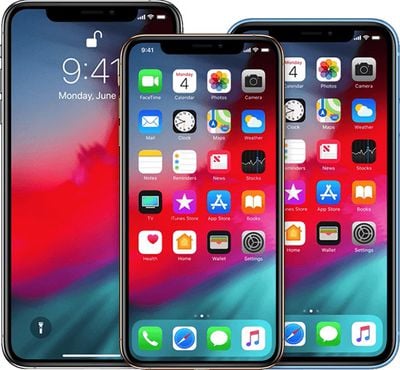
With the deal, if you buy one of these iPhones then AT&T will give you up to $750 in credits, which will cover the entire cost of an iPhone 8, 64GB iPhone 8 Plus, or 64GB iPhone XR. You can also choose to put the $750 credit towards a 256GB iPhone 8 Plus, 128GB or 512GB iPhone XR, iPhone X, iPhone XS, or iPhone XS Max.
The credit will start within three bill cycles, and AT&T will send catch-up credits once it starts. The credit will be applied monthly over the entire agreement term. This includes either AT&T Next for 30 months or AT&T Next Every Year for 24 months.
AT&T's offer ends on Sunday, March 31, so if you're interested head to the carrier's website to browse for a new iPhone. More deals and discounts can be found in our full Deals Roundup.
Texture is a subscription-based magazine service that Apple acquired last year to serve as the foundation of its own Apple News+ magazine and newspaper subscription service launched earlier this week.
As noted by TechCrunch, this news is unfortunate for Texture subscribers who use Android, as Apple News+ is only available on the iPhone, iPad, and Mac. Apple News+ costs $9.99 per month in the United States, the same price as Texture, and is also available for $12.99 per month in Canada.