Apple today released watchOS 6.1.3, the fifth update to the watchOS 6 operating system designed to run on modern Apple Watch models. watchOS 6.1.3 comes three weeks after the release of watchOS 6.1.2.
watchOS 6.1.3 can be downloaded for free through the dedicated Apple Watch app on the iPhone by going to General > Software Update.
To install the new software, the Apple Watch needs to have at least 50 percent battery, it needs to be placed on a charger, and it needs to be in range of the iPhone.
The watchOS 6.1.3 update includes important bug fixes, addressing an issue that could prevent the irregular heart rhythm notification feature from working properly for Apple Watch owners in Iceland.
Apple has also released watchOS 5.3.5 for Apple Watch models not able to run watchOS 6 due to the use of an older iPhone.
Ongoing delays from the coronavirus outbreak in China will likely cause Apple to miss its schedule for mass producing the low-cost iPhone, and inventories of existing models could remain low until April or longer, according to new information shared today by Japanese site Nikkei.
iPhone suppliers, on average, are said to be operating at 30 to 50 percent capacity at the current time, and to ramp up to full production, hurdles that include labor shortages and transportation logistics need to be overcome.
Apple was planning to begin mass production on the upcoming low-cost iPhone in February, but sources that spoke to Nikkei said that meeting that target is "very challenging" and production could be delayed until March.
Current rumors have suggested Apple plans to unveil the new iPhone at an event that's set to take place in March, perhaps on March 31, with Apple then releasing the device on April 3. Though there are issues with production, multiple sources have said the new iPhone is still going to launch on time.
"The suppliers are doing their best to produce and ship the [cheaper] iPhone within four weeks. ...The delay can't be too long, otherwise it will affect the sales strategy of Apple's new products in the second half of this year," one of the people, who has direct knowledge of the matter, told Nikkei.
Apple was hoping to have its suppliers produce 80 million iPhone units in the first half of 2020, including 15 million low-cost iPhones, but the company's production plan is now uncertain. Apple yesterday said that it will not meet its revenue goals for the March quarter due to constrained iPhone supplies and low customer demand for Apple products in China amid the outbreak.
Factories in China are counting on having more employees back at work as soon as next Monday, when a quarantine period for those who returned from outside provinces will end. Travel logistics are said to be a "major headache" at the current time, as suppliers need to change truck drivers when crossing provincial borders due to quarantine requirements.
The coronavirus has infected more than 73,000 people, and there have been 1,870 deaths, primarily in China.
Sprint has Apple's 512GB iPhone XS discounted to $599.99 today while supplies last, down from an original price of $1,249.99. This solid $650 discount is for the full price of the device and not on a monthly installment plan.
Note: MacRumors is an affiliate partner with Sprint. When you click a link and make a purchase, we may receive a small payment, which helps us keep the site running.

If you purchase the iPhone XS, you could also combo this sale with Sprint's current Apple Watch offer: get any iPhone (7 or above) and get an Apple Watch for 50 percent off. The Apple Watch discount will be applied via monthly bill credits and requires a 24-month Installment Billing agreement, new watch plan activation, and one active handset.
There are a few other Sprint offers running right now, including an iPhone 11 for $0/month when you trade in an eligible smartphone and activate a new line of service. The 10.2-inch iPad is also down to $4.17/month when you sign up for a 24-month Installment Billing agreement and activate a new line on a qualifying plan.
Be sure to visit our full Deals Roundup to shop for even more Apple-related products and accessories.
First Alert today announced that its Onelink Safe & Sound, an all-in-one smoke detector, carbon monoxide detector, and speaker system, now supports AirPlay 2 for multi-room audio playback.
AirPlay 2 enables multi-room audio playback with other AirPlay 2 devices, such as the HomePod, Apple TV, and select speakers from Sonos, Bose, Bowers & Wilkins, and others. Users can select where the music is playing in Control Center on an iOS device or ask Siri to play music in a specific room or the whole home.
Introduced at CES 2018, the Onelink Safe & Sound distinguishes itself from a traditional smoke detector with a built-in speaker and noice-canceling microphones, plus support for Amazon Alexa.
With existing HomeKit support, homeowners can add the Onelink Safe & Sound to the Home app and receive push notifications if smoke or carbon monoxide are detected. HomeKit also allows the detector and music playback to be controlled with Siri using an iPhone, iPad, Apple Watch, Apple TV, or HomePod.
Regularly priced at $249.99, the Onelink Safe & Sound is currently on sale for $178.25 on Amazon in the United States.
Note: MacRumors is an affiliate partner with Amazon. When you click a link and make a purchase, we may receive a small payment, which helps us keep the site running.

Apple Music has introduced a new UI for alternate albums in an effort to declutter artist pages and make it easier to find these albums. Now, when an alternate version of an album is available (a non-explicit version or a remaster, for example), it will be listed underneath the main album's track list (via MacStories).
This way, the "Albums" section on the artist's main Apple Music page is a bit more focused on their main studio albums and doesn't have clutter of deluxe editions, live albums, or explicit and non-explicit versions. This update does appear to be rolling out slowly, however, as some artist pages still have numerous versions listed under the "Albums" section.
To find if an album has the "Other Versions" list, simply open the album in Apple Music, scroll down past the track list, and if there are alternate options you'll see them listed at the bottom of the page. If any of your friends have listened to the album, "Other Versions" will be stacked beneath "Friends Who Listened."
Apple has made quiet changes like this to its music streaming platform in the past, previously revamping artist pages with enlarged portraits and a shuffle all "play" button. More recently, the service gained a new "For You" tab layout that updates throughout the day with artists, songs, and moods that match various themes.
Yesterday, Apple also launched the "Replay 2020" playlist for its users, which will keep track of their most streamed songs throughout the year.
Shanghai-based manufacturing company Universal Scientific Industrial will begin supplying the system-in-package for Apple's upcoming Ultra Wideband item tracking tags in the second to third quarter of 2020, with shipments to reach tens of millions of units by the end of the year, according to analyst Ming-Chi Kuo.
In a research note with TF International Securities, obtained by MacRumors, Kuo said Universal Scientific Industrial will be the primary supplier of the system-in-package for the tags, fulfilling around 60 percent of orders. Similar to the one inside AirPods, the system-in-package would be a densely packed circuit board, and it would likely include the Apple-designed U1 chip for Ultra Wideband support.
Apple's tag image asset in iOS 13 code
"We believe that the ultra-wideband (UWB) tag will enhance the user experience of iOS's 'find' and augment reality (AR) applications by offering measurement functions in the short distance," wrote Kuo.
It is worth noting that Apple has introduced many of its first-generation hardware products several months in advance of their release, including the original iPhone, iPad, Apple Watch, AirPods, and HomePod, so whether the Ultra Wideband tags are announced in March or June, they might not ship until later in the year.
Announcement vs. shipping for first-generation products:
iPhone: Jan 2007 / Jun 2007 iPad: Jan 2010 / Apr 2010 Apple Watch: Sep 2014 / Apr 2015 HomePod: Jun 2017 / Feb 2018
— Joe Rossignol (@rsgnl) October 9, 2019
MacRumors uncovered evidence of Apple working on Tile-like item trackers in iOS 13 code last year, including an unreleased "Items" tab in the Find My app and a potential "AirTag" name for the small, circular tags.
Users would receive a notification when they are separated from a tagged item and, if necessary, they would be able to tap a button in the Find My app that would result in Apple's tag chiming. It would also be possible to disable notifications for "safe locations" such as a home or workplace.
Apple's internal "Items" tab in the Find My app for its Ultra Wideband tags
Apple's tags will likely incorporate augmented reality. Last year, for example, MacRumors discovered that a 3D red balloon could help a user pinpoint a lost item after scanning a room with their iPhone. In his research note today, Kuo echoes that the Ultra Wideband tags will benefit augmented reality applications.
iPhone 11 and iPhone 11 Pro models are also equipped with an Apple-designed U1 chip with Ultra Wideband, which Apple's website says will lead to "amazing new capabilities," and AirTags will likely be one of them.
Best Buy is offering a collection of Apple's official iPhone cases at notable low prices in today's flash sale, and Amazon is matching a few of the discounts. During the event, you can get the iPhone XS Smart Battery Case for $64.99 ($65 off) and the Leather Folio for $49.99 ($50 off).
Note: MacRumors is an affiliate partner with these vendors. When you click a link and make a purchase, we may receive a small payment, which helps us keep the site running.

You'll find every iPhone case on sale today in the lists below, along with relevant links to Amazon if they apply. Case styles include Smart Battery Cases, Leather Cases, and Silicone Cases, and all of them are Apple's first party accessories.
Berkshire Hathaway sold $800 million in Apple stock over the last quarter, according to SEC filings published on Friday. Depending on when Warren Buffett's real estate company sold the 3.7 million Apple stock, it will have earned between $806 million and nearly $1.1 billion.
According to Business Insider, what might look like a massive sale is actually only a small portion of Buffett's investment in the tech company. Berkshire is Apple's biggest shareholder with a 5.4 percent stake worth $72 billion, according to Bloomberg data.
It's unclear what prompted the sale, but the company may have wanted to diversify its holdings, given some of its other investments in the last quarter, such as Kroger and Biogen. Apple accounts for 30 percent of Berkshire Hathaway's portfolio. Another possible reason for the sell-off is to cash out after Apple's stock surged by a third last quarter, from around $219 to $294.
Historically, Buffett has shied away from investing in technology companies, but the business magnate has suggested he sees Apple more as a consumer company and has been a long-term investor in the iPhone maker.
Last month, Apple reported quarterly revenue of $91.8 billion and net quarterly profit of $22.2 billion, or $4.99 per diluted share, compared to revenue of $84.3 billion and net quarterly profit of $20.0 billion, or $4.18 per diluted share, in the year-ago quarter. The quarter was the best in Apple's history, topping the first fiscal quarter of 2018.
Bloomberg this morning reports that Apple's new low-cost iPhone is still on course for launch next month, despite the impact of the coronavirus outbreak on production, although new iPad Pro models originally scheduled for the first half of 2020 could yet face delays or constraints.
The [low-cost iPhone] is still on track to launch in March, though the plans are still fluid, according to people familiar with the matter. Apple has also been preparing updated iPad Pro models with a new camera system for the first half of 2020 and the virus may yet impose delays or constraints on those plans.
Bloomberg's sources don't conflict with noted analyst Ming-Chi Kuo's latest predictions for the new low-cost iPhone, which is rumored to be based on the iPhone 8, but with upgraded internals. In a research note seen yesterday by MacRumors, Kuo reiterated his belief that the "iPhone 9" or "iPhone SE 2" is still expected to launch in the first half of this year in spite of the impact of the viral outbreak on production.
Rumors have been pointing toward a significant iPad Pro update in the first half of this year, including a new triple-lens rear camera system supporting 3D sensing for immersive augmented reality experiences. Today's report also broadly aligns with claims made on Monday by DigiTimes that production on the new iPad Pro models has been slow to ramp up following the extended Lunar New Year holiday, although the Taiwan-based website maintains that launch of the new devices is still expected "around March."
Aside from potential delays, Apple's spring media events have often occurred in March, and the list of products with rumored imminent updates has pointed toward one of those spring events being held again this year. A report yesterday claimed that Apple plans to hold a media event at the very end of March, with Tuesday, March 31 being the most likely date. The launch of the new low-cost iPhone is said to follow on Friday, April 3.
In addition to the new low-cost iPhone, rumors suggest Apple is planning to release an updated 13-inch MacBook Pro, while more outlying launch possibilities for the first half of 2020 include a MacBook Air update, Apple's Tile-like "AirTags" item trackers, and perhaps a wireless charging mat.
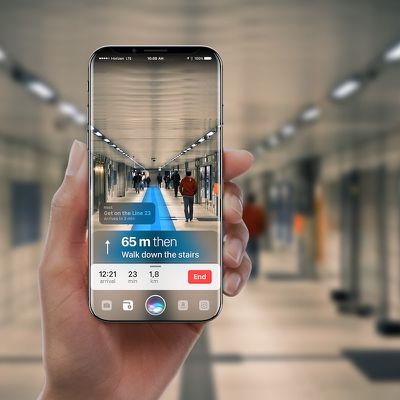
Over the last 48 hours, Apple Maps has expanded its transit directions coverage across Europe. Using the app, travelers in cities across France, Germany, Spain, and possibly other countries in the EU are now able to access departure times and transit routes for various modes of public transport including buses, trams, metro trains, and more.
Apple has yet to update its official list of locations for which Maps offers Transit data, possibly because some of the real-time information is still being deployed. There have been a few reports that some cities in the aforementioned countries are still displaying uneven transit coverage.
Google Maps has supported transit directions for several years now, but Apple Maps has been steadily catching up with detailed routing information in recent years.
Transit coverage began in 2015 with an initial rollout in Baltimore, Berlin, Boston, Chicago, London, Los Angeles, Mexico City, New York, Philadelphia, San Francisco, Sydney, Toronto, and China. Since then, Apple has expanded the feature to many other regions around the world.
Apple today issued an update on its financial guidance for the March quarter, announcing that the company will not meet its revenue goals due to the impact of the COVID-19 coronavirus epidemic in China.
Our quarterly guidance issued on January 28, 2020 reflected the best information available at the time as well as our best estimates about the pace of return to work following the end of the extended Chinese New Year holiday on February 10. Work is starting to resume around the country, but we are experiencing a slower return to normal conditions than we had anticipated. As a result, we do not expect to meet the revenue guidance we provided for the March quarter due to two main factors.
Apple cites both constrained iPhone supplies worldwide and lower customer demand for Apple products in China as the main impacts on performance for the quarter.
On the iPhone supply side, Apple says all of its manufacturing partner facilities are located outside of the Hubei province epicenter for the epidemic and have reopened, the ramp-up to full production has been slower than expected.
As for customer demand in China, Apple says store closings and limited hours have significantly reduced customer traffic, although corporate offices and contact centers have reopened and online stores have remained open.
Apple says it is continuing to monitor the situation and will provide additional information on its quarterly earnings call in April. Apple also says it is more than doubling its previously announced donation to help in the public health fight against the Wuhan coronavirus.
Apple had predicted in its earnings release at the end of January that it would see revenue of $63–$67 billion for the March quarter, a somewhat wider guidance range than usual as Apple acknowledged the coronavirus situation was leading to some uncertainty, but it appears the impact will be even larger than Apple had accounted for.
The response to COVID-19 has touched the lives of so many in the Apple family, and I want to thank everyone for their dedication, empathy, understanding, and care. Today, we more than doubled our donation to support the historic and global health response.
Our paramount concern is with the people who make up Apple’s community of employees, partners, customers, and suppliers in China. I also want to recognize the many people across our teams who have been working around the clock to manage Apple’s global COVID-19 response with diligence and thoughtfulness.
Corporate offices and contact centers have reopened across China, and our stores are starting to reopen, but we are experiencing a slower return to normal conditions than we had anticipated. This afternoon, I shared this update with our community of shareholders and investors to note that we do not expect to meet the revenue guidance we provided for the March quarter. Outside of China, customer demand across our product and service categories has been strong to date and in line with our expectations. Apple is fundamentally strong, and this disruption to our business is only temporary.
Our first priority - now and always - is the health and safety of our employees, supply chain partners, customers, and the communities in which we operate. Our profound gratitude is with those on the front lines of confronting this public health emergency.
March is the most common month for Apple's spring media events, and the relatively long list of products with rumored imminent updates has pointed toward one of those spring events being held again this year.
A new report [Google Translate] from German site iPhone-ticker.de claims that Apple is planning to hold a media event at the very end of March, with Tuesday, March 31 being the most likely date. A launch of the new low-cost iPhone, variously dubbed the "iPhone SE 2" or "iPhone 9" in rumors, is said to follow on Friday, April 3.
In addition to the new low-cost iPhone, rumors have indicated Apple is planning to release several other products in the next few months, including updated iPad Pro models and an updated 13-inch MacBook Pro. Wildcard rumors for the first half of 2020 also include a MacBook Air update, Apple's Tile-like "AirTags item trackers, and perhaps a wireless charging mat.
Apple this morning shared a trailer for upcoming Apple TV+ science fiction series "Amazing Stories," which is a reimagining of the original 1980s series of the same name.
"Amazing Stories" was one of the first TV shows that Apple picked up for Apple TV+, and each episode will focus on a new topic, much like "Black Mirror" and "Twilight Zone." The original was created by Steven Spielberg, who serves as executive producer on the reboot.
Earlier this year, Apple said that each episode of the series will "transport the audience to worlds of wonder through the lens of today's most imaginative filmmakers, directors and writers."
Stars in "Amazing Stories" include Dylan O'Brien ("Maze Runner," "Teen Wolf"), Victoria Pedretti ("You"), Josh Holloway ("Lost," "Yellowstone"), Sasha Alexander ("Rizzoli & Isles," "Shameless") and Robert Forster ("Twin Peaks").
"Amazing Stories" will launch on Friday, March 6, and there will be 10 episodes in the first season of the show.
Update: "Amazing Stories" is now available to watch on Apple TV+.
Amazon is discounting a few models of the latest 2019 iMac, including 21.5-inch and 27-inch models. These sales offer up to $150 off the iMac, and each discount has been automatically applied so you won't need a coupon code.
Note: MacRumors is an affiliate partner with these vendors. When you click a link and make a purchase, we may receive a small payment, which helps us keep the site running.

To start, you can get the 21.5-inch 4K iMac (3.6GHz quad-core, 8GB RAM, 1TB hard drive) for $1,199.00, down from $1,299.00 ($100 off). If you're looking for the high-end 21.5-inch model, you can get this configuration (3.0GHz 6-core, 8GB RAM, 1TB Fusion Drive) for $1,349.99, down from $1,499.00 ($149 off). Best Buy is matching the price on this model as well.
For the larger-screened iMac, you can get the 27-inch 5K iMac (3.7GHz 6-core, 8GB RAM, 2TB Fusion Drive) for $2,149.00, down from $2,299.00 ($150 off). This is another high-end model, representing the most expensive model of the 27-inch 5K iMac that you can buy from Apple, besides available upgrades to storage and processors.
Head to our full Deals Roundup to shop for even more discounts on Apple products and related accessories.
We've been hearing for some time that Apple is planning to launch a new low-cost iPhone based on the iPhone 8, but with upgraded internals. This device has been referred to in rumors as the "iPhone SE 2" or "iPhone 9," although concerns over the impact of the Wuhan coronavirus on production have raised some questions about timing for the launch.
In a new research note seen by MacRumors, noted analyst Ming-Chi Kuo briefly mentions that the iPhone SE 2 is still expected to launch in the first half of this year. The mention comes in a larger report about smartphone camera lens suppliers, with Kuo noting that the iPhone SE 2 will not include a 7-element plastic (7P) lens, and so will not contribute toward shipments of those advanced lenses.
Because Apple expects that the new iPhone SE2 released in 1H20 will not use a 7P lens, it will not help the 7P lens shipment momentum.
It's unsurprising that the iPhone SE 2 won't include a 7P lens, as the iPhone 8 includes a 6P rear camera lens. With Apple looking to keep pricing on the new phone as low as possible, it will almost certainly be reusing components wherever possible, with the exception of key performance-related components like the A-series chip, which is rumored to move from the A11 chip in the iPhone 8 to Apple's latest A13 chip.
A separate report today claims that an update to Apple's iPad Pro lineup is expected "around March," so it's possible we could see a media event next month for Apple to introduce several new products.
Last November, Apple launched new "Replay" playlists within Apple Music, letting its subscribers discover which songs they listened the most to every year they've been using Apple Music. At the time of the announcement, the company said that users would be able to track their listening habits throughout 2020, and now it has made the "Replay 2020" playlist available to add to your Apple Music library (via Federico Viticci on Twitter).
To do so, head to Apple Music on the web to get your Replays, then scroll all the way down on the page to find the yearly Replay playlists. "2020 Replay" should be the first one you see, and you can add it to your library by clicking "Add." Afterwards, the playlist will appear on Apple Music across your Apple devices, and as you listen to music throughout the year, new songs will rise up to the top of the playlists, and songs you don't listen to as much will descend. Up to 100 songs will eventually occupy "2020 Replay" by the year's end.
These Replay playlists are Apple's response to Spotify Wrapped, which provides Spotify users with interesting stats on who their most listened to artists, songs, genres, and more were throughout the year. Apple Music Replay is a bit more straightforward, listing your top 100 favorite songs of each year, but you can find more about your favorite albums and artists on Apple Music on the web. Apple Music's ability to showcase your top music from each specific year is also an advantage over Spotify Wrapped.
Apple Music subscribers can access Apple Music Replay on the web and add the playlists to iOS or Mac devices. At one point, Replay was available directly from the Apple Music app on iOS (on the Browse tab), but this was only a temporary feature highlighting the end of 2019.
Rumors have been pointing toward a significant iPad Pro update in the first half of this year, including a new triple-lens rear camera system supporting 3D sensing for immersive augmented reality experiences.
MacRumors concept of iPad Pro with triple-lens rear camera system
In a new paywalled blurb published today, DigiTimes claims that production on the device has already begun with a launch expected "around March," which is Apple's usual timeframe for a spring media event in years that it chooses to hold one. The blurb also says that production has been slow to ramp up following the Lunar New Year holiday, with impacts from the Wuhan coronavirus epidemic presumably also playing a role.
Apple is scheduled to launch its new iPad Pro series around March, with related suppliers already kicking off production for the model ahead of the Lunar New Year holiday. However, their output has started growing slowly after the extended Lunar New Year break in China with shipments unlikely to peak until after April, according to industry sources.
It's looking like Apple has a fairly significant slate of products ready for updates, so the company may indeed hold a spring media event this year. In addition to updated iPad Pro models, we're also expecting a new low-cost "iPhone SE 2" or "iPhone 9," an updated 13-inch MacBook Pro with the improved scissor-switch keyboard from the 16-inch model, and possibly a few other products.
We'll update this article with any additional details once DigiTimes expands its blurb into a full story.
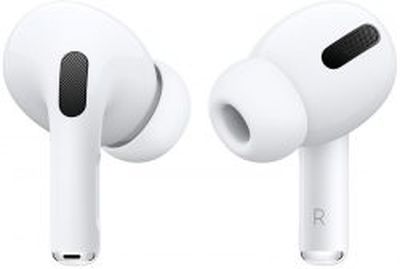
Last week, Taiwanese industry publication DigiTimes made a passing reference to upcoming "AirPod Pro Lite" earphones without offering any details on the product, leading to confusion about whether this would be a third-generation version of the regular AirPods or a new member of the AirPods Pro family.
While we still don't have a full picture of what to expect with these upcoming earphones, DigiTimes today published another short paywalled blurb specifically describing AirPods Pro Lite as an "entry-level version of Apple's AirPods Pro series" and saying that production will not kick off in the second quarter of this year as originally planned.
Production of the AirPods Pro Lite, an entry-level version of Apple's AirPods Pro series, is unlikely to kick off in the second quarter as originally planned, according to industry sources.
We haven't heard any specific rumors about these AirPods Pro Lite earphones, or updates to the AirPods and AirPods Pro. The AirPods Pro were just released in October, so we're not expecting an update for some time yet, while the second-generation AirPods are coming up on a year old in March.
We'll update this article with any additional details once DigiTimes expands its blurb into a full story.