Apple will be offering customers of its newly launched Indian online store free AirPods with an iPhone 11 purchase beginning on October 17.
Apple has yet to publish full details about its Diwali offer, and the promotion's end date is unknown at the current time. Though not explicitly specified, it is likely that the company will extend the offer to iPhone 11 Pro purchases as well.
Launched on September 23, Apple's Indian online store offers a full range of Apple products and accessories with shopping assistance from Apple Specialists, EDU pricing for students, free no-contact delivery, financing options, a trade-in program for iPhone sales, and more.
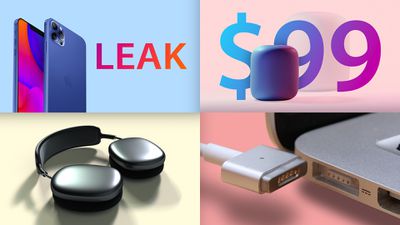
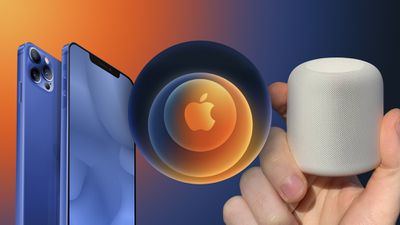
Apple's iPhone 12 event is nearly upon us, and leaks and rumors have been flying around in the final days. We've got new details on the iPhone 12 and its launch timing, a smaller HomePod, and more.
In addition, we're still looking at a number of other new products including AirPods Studio, AirTags, and the first Apple Silicon Macs, so read on below for the latest on all of these!
Apple Event Announced for October 13: Here's What to Expect
As with its Apple Watch and iPad event in September, Apple will be hosting this event virtually with a video streamed from its Apple Park campus in California, and we've shared a guide on how to watch the event.
Full Details of iPhone 12 Lineup Allegedly Leaked Ahead of Next Week's Apple Event
The iPhone 12 will undoubtedly be the star of next week's event, and a fresh round of leaks from Weibo source Kang claims to share a host of details about the upcoming lineup.
According to the leak, all four iPhone 12 models will have OLED Super Retina XDR displays and a new hardened "Ceramic Shield" glass screen, and all are capable of shooting Dolby Vision video, offering higher dynamic range.
In addition, all phones will support 5G, but only the U.S. models of the iPhone 12 lineup will reportedly support the faster mmWave 5G band. Other notable details in the leak include a "Smart Data Mode" to switch between 4G and 5G to save power, photography improvements for Deep Fusion and Night Mode, and more.
As for launch timing, the rumor claims the two 6.1-inch models will launch first with pre-orders on October 16 and a release on October 23. The 5.4-inch iPhone 12 mini and 6.7-inch iPhone 12 Pro Max are said to launch on November 13 and 20 respectively, with pre-orders for each starting a week ahead of time.
Pricing is said to start at $699 for the iPhone 12 mini, $799 for the iPhone 12, $999 for the iPhone 12 Pro, and $1099 for the iPhone 12 Pro Max.
Leaker: HomePod 'Mini' Will Launch Next Month Costing $99
After hearing earlier this week that a smaller, cheaper HomePod is close to launch, a new rumor from Kang claims this "HomePod mini" will indeed be launching next month and will cost just $99.
The speaker is said to be 3.3 inches high compared to the 6.8-inch height of the original HomePod, and it is allegedly powered by an S5 processor, which is used in the Apple Watch Series 5 and Apple Watch SE.
The HomePod mini is said to go on sale on November 16, and previous reports have indicated the new speaker could include just two tweeters, rather than the current model's seven, in order to drive down costs and save space. Hopefully Apple will share details on the new speaker at next Tuesday's event.
Apple to Allegedly Rekindle 'MagSafe' Brand for Magnetic iPhone Case and Wireless Charging Accessories
Alongside the iPhone 12 lineup, Apple is reportedly planning to revive its "MagSafe" branding with a new iPhone case accessory and a pair of magnetic charging pads.
While it's not completely clear what function the magnets will perform, the two official Apple wireless chargers are said to be called "MagSafe Charger" and "MagSafe Duo Charger," one or both of which will have a 15-watt power output.
Prosser: AirPods Studio to Start at $350 But Won't Feature at Next Week's Apple Event, AirTags Delayed Until March 2021
Two things missing from today's big leak about the iPhone 12, HomePod mini, and MagSafe chargers are mentions of AirTags and AirPods Studio, two heavily rumored new Apple products.
Their omission suggests they may not make their debut at next week's event, and leaker Jon Prosser says that while an AirPods Studio launch may be just a few weeks away, they will indeed not appear at the event. Prosser says the over-ear headphones will be priced at $350 for the cheaper, sporty model and $600 for the "luxury variant" previously seen in a leaked photo.
Prosser also says that Apple's Tile-like Bluetooth item trackers known as AirTags similarly won't be unveiled at Tuesday's event, with their launch instead being pushed back to March 2021.
Bloomberg: First Mac With Apple Silicon Will Be Announced in November
One other 2020 product launch we've been waiting for is Apple's first Mac based on its own Apple Silicon chips rather than Intel processors. Apple has said that the first Apple Silicon Mac will launch before the end of the year, but it looks like we may not see it at next week's event.
A fresh report from Bloomberg's Mark Gurman claims the new Mac, which could be a 13-inch MacBook Pro or MacBook Air, should launch in November, and it seems likely it would warrant its own virtual media event at that time.
MacRumors Newsletter
Each week, we publish an email newsletter like this highlighting the top Apple stories, making it a great way to get a bite-sized recap of the week hitting all of the major topics we've covered and tying together related stories for a big-picture view.
One of the big new features of iOS 14 is Home Screen widgets, which provide information from apps at a glance. The widgets can be pinned to the Home Screen in various spots and sizes, allowing for many different layouts.
Many third-party apps have released widgets, and now evidence that Spotify is developing its own official widget has appeared in a TestFlight beta.
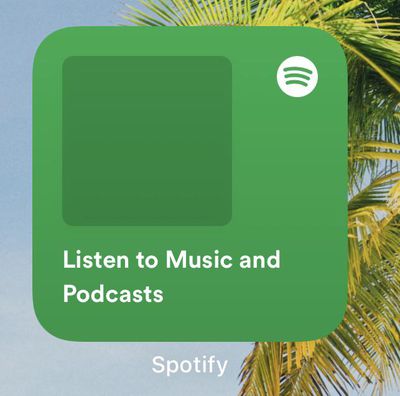
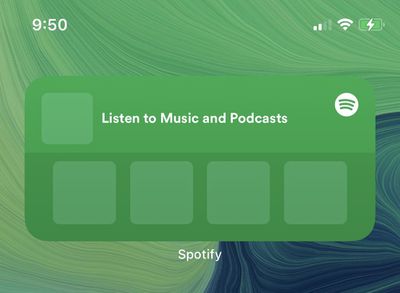
The widget is currently available in small and medium sizes, with the former designed to display the artwork of the last played artist, song, or album, while the latter size shows four of the same content elements.
Unfortunately there are no play, pause, or next song buttons, since Apple only allows widgets to present read-only information, with interactive elements such as scrolling elements or switches not allowed, presumably due to battery life considerations.
Instead, both widgets include the text "Listen to Music and Podcasts," and tapping the widget opens the Spotify app. Based on user reports on Reddit, the Spotify widgets don't yet display album artwork, but the fact that they exist at all proves that Spotify is working on them.
Last month, we reported that Spotify is testing dedicated support for direct audio streaming to Apple Watch without being connected to iPhone.
There's no indication that the appearance of the beta feature is tied to a particular version of watchOS or iOS, but hopefully it won't be long before the ability to stream Spotify from the wrist will be available to all subscribers.
A California judge today denied Epic Games' request for a preliminary injunction that would have required Apple to allow Fortnite back into the App Store, which means the app will continue to remain unavailable on Apple's iOS platform for the duration of the legal battle between the two companies.
While the Fortnite app for iOS devices will not be reinstated into the App Store, Epic did successfully win an order that will require Apple to continue to allow Epic to operate its Unreal Engine developer account.
The decisions made today by the court are not a surprise and echo the ruling made during a request for a temporary restraining order, where the judge made the same determinations and allowed Apple to ban the Fortnite app but prevented the Cupertino company from blocking the Unreal Engine.
The court says that in regard to Fortnite, preliminary injunctive relief is "rarely granted," with the ruling pointing out that an order for injunctive relief would require Epic to establish that it is likely to succeed in the legal battle, it is likely to suffer irreparable harm without relief, the balance of equities tips in its favor, and that an injunction is in the public interest, none of which Epic Games was able to do.
Epic Games has claimed that it should be given injunctive relief because it should not have to comply with an anti-competitive App Store contract, but the court has rejected this argument multiple times because Epic Games deliberately breached its contract with Apple and caused Fortnite to be banned.
Epic Games cannot simply exclaim "monopoly" to rewrite agreements giving itself unilateral benefit. Its other identified bases: damage to its reputation and the Fortnite gaming community cannot constitute irreparable harm where such harm flows from Epic Games' own actions and its strategic decision to breach its agreements with Apple. While consumers are feeling the impact of this litigation, the fact remains: these are business disputes.
To assist, the Court even offered to require the 30% to be placed in escrow pending resolution of the trial which Epic Games flatly rejected. The refusal to do so suggests Epic Games is not principally concerned with iOS consumers, but rather, harbors other tactical moves. Epic Games admits that the technology exists to "fix" the problem by easily deactivating the "hotfix."
Apple and Epic Games are not expected to be back in court to continue the legal dispute until May of 2021, so Fortnite fans will be without access to the game on Apple's devices for some time. Apple in August terminated the Fortnite developer account.
Update: In a statement provided to Bloomberg, Apple said that it's "grateful" to the court for the decision.
Our customers depend on the App Store being a safe and trusted place where all developers follow the same set of rules. We're grateful the court recognized that Epic's actions were not in the best interests of its own customers and that any problems they may have encountered were of their own making when they breached their agreement. For twelve years, the App Store has been an economic miracle, creating transformative business opportunities for developers large and small. We look forward to sharing this legacy of innovation and dynamism with the court next year.
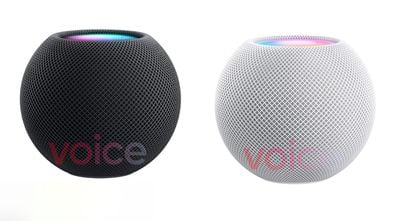
Finally, Blass has shared images of the HomePod mini in black and white with a more spherical design than its larger sibling.
Our original What to Expect guide continues below.
Apple's second fall 2020 event, "Hi, Speed," is set to be held on Tuesday, October 13. Apple already held an event in September, but it was focused on the iPad Air and the Apple Watch rather than iPhones as usual.
October's event is expected to be much more exciting, because it will see Apple unveil the much-anticipated iPhone 12 lineup with some of the biggest changes we've seen to the iPhone in years, including a redesign. Rumors suggest we could maybe see other long-awaited products such as the AirTags, smaller and more affordable HomePod, AirPods Studio over-ear headphones, and perhaps even an Apple Silicon Mac.
We've rounded up everything we know about the products that Apple might announce at the event so you know what to expect on Tuesday. Note that the images below are mockups of what we're expecting based on rumors and leaks, unless otherwise stated.
The iPhone 12 Lineup
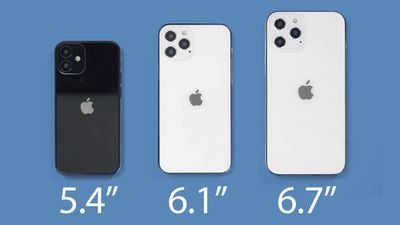
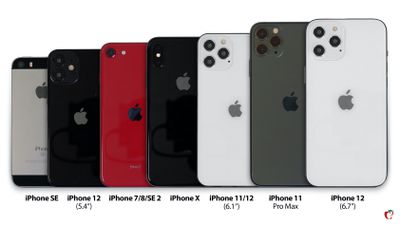
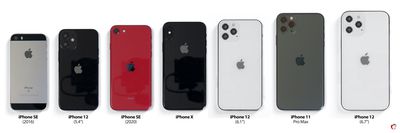
There will be four iPhones in three different sizes in 2020, with some of the most radical changes that we've seen to iPhone design since the iPhone 6 launched in 2014. There will be two lower-cost affordable iPhones that will be similar to the iPhone 11, and two higher-priced Pro models.
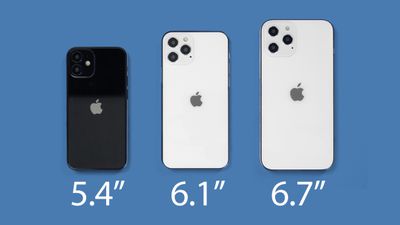
The lower-cost iPhones will be available in 5.4 and 6.1-inch sizes, while the more expensive models will be available in 6.1 and 6.7-inch sizes. The smallest iPhone, which rumors suggest could be called the "iPhone 12 mini," will be the smallest iPhone that Apple has introduced since the 2016 iPhone SE and it will appeal to those who have been desiring a smaller iPhone.
The 6.7-inch iPhone will be the biggest iPhone that's been released to date, while the 6.1-inch models will fall in the middle.
All four of the new iPhones will feature edge-to-edge displays with notches for the Face ID camera equipment, and while there were some early rumors that the iPhone 12 lineup would have a smaller notch, later renderings, schematic leaks, and components have suggested that's not the case. The notch is going to be the same size with the exception of the 5.4-inch iPhone, which seems to have a slightly smaller notch to match its smaller size.
In the past, the more affordable iPhones have had LCDs, but this year, Apple is going for an all OLED lineup for the first time, introducing "Super Retina XDR" displays. All of the new iPhones will have the same display quality and LCD vs. OLED will no longer be a differentiating factor. Apple is also supposedly using a new hardened "Ceramic Shield" glass screen that will perhaps be more resistant to scratches and damage from drops.
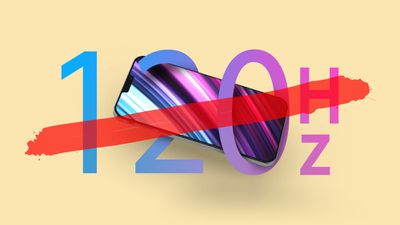
There were rumors that Apple would introduce a 120Hz "ProMotion" refresh rate in the iPhone 12 models, but it doesn't sound like that's going to happen this year. There have been persistent rumors about ProMotion technology coming to the iPhone since it was introduced in the iPad Pro, but we may need to wait until next year.
Apple supposedly needs to adopt LTPO display technology to deal with the battery drain of a faster refresh rate, and that's not happening in the iPhone 12 models.
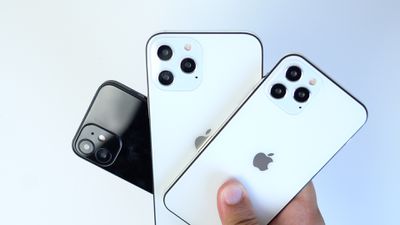
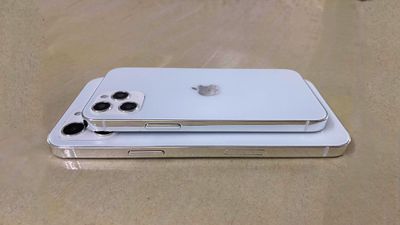
When it comes to the chassis, that's where we're going to see some of the most major design changes. Rather than the smooth, rounded edge design we've had since the iPhone 6, this year's iPhone models are going to have a flat-edge frame that's similar to the iPhone 4 or the iPad Pro. In fact, the iPhone 12 models will look like mini iPad Pros, adopting that design language.
The Pro models will have a stainless steel frame while the more affordable models will have an aluminum frame, and all models will have glass fronts and backs. Pro models will likely come in the standard silver, gold, and graphite (in lieu of space gray), but there will also be a blue shade that may match the blue introduced in the Apple Watch Series 6.
As for the more affordable models, there's a good chance we'll see iPhone 11-style color options and rumored colors include black, white, red, blue, and green.
The iPhone 12 Pro models will have three camera setups, and at least one of the Pro models will feature a LiDAR Scanner like the iPad Pro, though it's possible that both models will have LiDAR sensors. LiDAR Scanners will bring new AR capabilities, but also could bring upgrades to portrait mode, night mode, low light capabilities, and more.
The iPhone 12 Pro models could also feature an improved telephoto lens with better optical zoom and improved Smart HDR for better low-light performance. Sensor-shift image stabilization, which adds stabilization at the camera level instead of the lens level, may bring image stabilization to the ultra wide-angle lens along with improved performance in poor lighting conditions. Rumors also suggest the Pro models might be able to shoot 4K video at 120 and 240 frames per second, and that the iPhone 12 Pro Max will have the best camera of the bunch with a 47 percent larger sensor than the sensor in the iPhone 12 Pro and an "Expansive" capability for the super wide-angle lens.
The non-Pro iPhone 12 models will have dual-lens camera setups and no LiDAR Scanner to keep costs lower, but we should still see some improvements in camera technology. As with last year's model, we can expect the standard models to have a wide-angle lens and an ultra wide-angle lens, while the Pro models will get those two lenses and a telephoto lens.
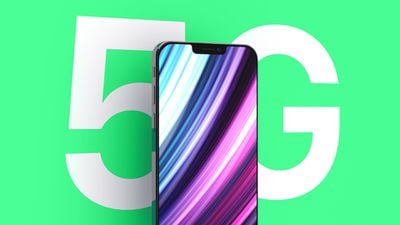
Another major change in this year's iPhone is the introduction of 5G, and all of the iPhone 12 models will use 5G modems sourced from Qualcomm. While all of the 2020 iPhones will have 5G, there are two kinds of 5G, and the iPhone 12 Pro models may be the only ones that will support the fastest 5G, mmWave 5G. The other possibility is that 5G will be implemented by country, and one rumor says that only the U.S. iPhone 12 models will support the fastest mmWave 5G.
mmWave 5G is short range and will be available in cities and urban areas, while Sub-6GHz 5G is slower than mmWave but longer range and more appropriate for use in suburbs and rural areas. For more on the differences between Sub-6GHz and mmWave 5G, check out our 5G guide. Apple is said to be adding a "Smart Data Mode" to the iPhone 12 models that's designed to swap between 4G and 5G to preserve battery life as needed, as 5G will drain more battery.
All of this year's iPhones will have a faster, more efficient 5-nanometer A14 chip that brings performance and efficiency improvements for speedier operation and perhaps longer battery life to compensate for the extra drain of a 5G modem. When it comes to RAM, the Pro models are expected to get 6GB RAM while the standard models could have 4GB RAM.
Apple put the A14 chip in the iPad Air too and benchmarks have already leaked, suggesting we'll see some good speed improvements compared to the A13 chip. The A14 earned a single-core score of 1583 and a multi-core score of 4198. Comparatively, the A13 Bionic features an average single-core score of 1336 and a multi-core score of 3569.
Upgrading iPhones this year? This is how much faster an A14 #iPhone12 will be when upgrading from:
• iPhone 6s / SE - 196% Faster • iPhone 7 / Plus - 117% Faster • iPhone 8 / Plus / X - 75% Faster • iPhone XR / XS - 44% Faster • iPhone SE (2020) / 11 / 11 Pro - 18% Faster
— MacRumors.com (@MacRumors) October 8, 2020
5G hardware is expensive, so Apple is going to cut costs by eliminating the power adapter and EarPods that normally come with a new iPhone. These accessories will need to be purchased separately, but Apple does perhaps plan to ship the iPhone 12 models with a USB-C to Lightning cable that has a more durable braided design.
Storage on the standard iPhone 12 models is expected to start at 64GB with 128 and 256GB options available, while storage on the iPhone 12 Pro models is expected to start at 128GB with 256 and 512GB options available.
As for pricing, a leak that allegedly features full details for the iPhone 12 lineup suggests the iPhone 12 mini will be priced at $699, the iPhone 12 will be priced at $799, the iPhone 12 Pro will be priced at $999, and the iPhone 12 Pro Max will be priced at $1099.
While the new iPhones are all expected to debut in October, Apple is planning a staggered launch. The 6.1-inch iPhone 12 and 6.1-inch iPhone 12 Pro are expected to become available for preorder on October 16, with a launch date to follow on October 23.
Based on a last minute leak, the iPhone 12 mini will become available for pre-order on November 6, with a launch date to follow on November 13. The iPhone 12 Pro Max will launch the latest, with preorders to kick off on November 13 and a launch to follow on November 20.
For a more complete rundown on everything that we know about the upcoming iPhone 12 models complete with part leaks, renderings, schematics, and more, take a look at our iPhone 12 roundup.
Update: A new series of tweets from leakers fills in a few details about the iPhone 12 capabilities.
Dynamic Zoning Algorithm - Allows for faster Face ID
Improved Digital and Optical Zoom
Night Mode for Telephoto sense
One hour of battery life increase
Many of the changes appear to be related to the cameras on the new iPhone 12, which Apple typically does year over year. Faster Face ID and longer battery life should also be a welcome improvement.
Smaller HomePod
Apple is working on a new version of the HomePod, but it's not a second-generation version of the original model, it's a new, smaller and more affordable HomePod that will likely be sold alongside its larger sibling. It could be called the "HomePod mini."
The original HomePod has struggled due to its high price point in comparison to competing products like the Amazon Echo and Google Home, which is why Apple is aiming for something more compact, and more importantly, less expensive.
Not a whole lot has been said about the new HomePod, but it's expected to feature the same general HomePod form factor, just smaller, measuring in at 3.3 inches high (compared to the 6.8-inch size of the standard HomePod). With the smaller size, Apple will need to remove some of the internals, so the audio quality won't quite measure up to the larger model, and it will be powered by the S5 Apple Watch processor. Rumors suggest the HomePod mini will be priced at $99.
The new HomePod mini is expected to be available for purchase in November, perhaps November 16.
Apple killed the much-anticipated AirPower charging mat in March 2019, but behind the scenes, Apple engineers have continued working on some kind of Apple-designed wireless charging option.
Apple analyst Ming-Chi Kuo, who often provides accurate info about Apple's future plans, believes that Apple is working on a "small wireless charging mat." There haven't been other reliable rumors about the charging mat that's in development, but other sketchier sources have said that work on the AirPower is ongoing internally.
A last minute iPhone 12 leak said that Apple is going to introduce two wireless chargers called the "MagSafe Charger" and the "MagSafe Duo Charger," both able to output 15 watts. These two chargers will supposedly work with a new magnetic iPhone case that has "MagSafe," which may just be a word being used to describe magnets.
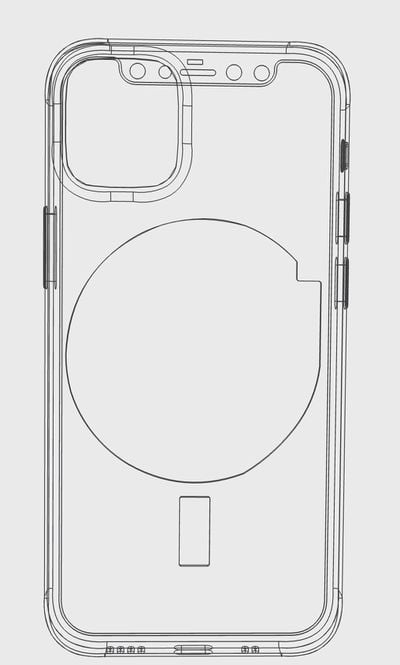
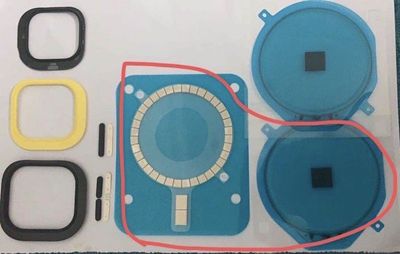
Leaked iPhone 12 components suggest there's a curious magnet ring inside of the devices, which could be designed to work with these wireless chargers, connecting them magnetically and holding them in place.
Other Possibilities
AirTags
Apple's long-rumored Tile competitor AirTags could be unveiled at the October event alongside new iPhones, but it's not guaranteed. In fact, a leak Friday morning unveiled everything that's going to be at the event, and the AirTags weren't mentioned.
Leaker Jon Prosser, who has a mixed track record, says the AirTags have been delayed and will not be at the event, with the accessories instead set to be unveiled in March 2021.
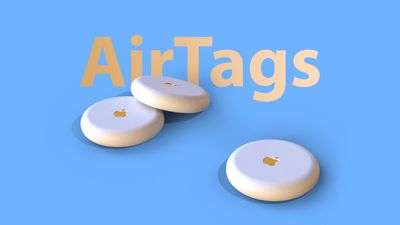
AirTags are small trackers that are equipped with Bluetooth and are designed to attach to important but easily lost items like wallets, cameras, and keys. AirTags (and the items they're attached to) can be tracked right inside the Find My app alongside iPhones, iPads, and Macs, so you can keep an eye on all of your important belongings in one place.
Info about AirTags has been leaking since the release of iOS 13, but we're still not sure what the AirTags will look like. Based on some simple images found in iOS, they could be small, circular tags with built-in Bluetooth and ultra-wideband support. Ultra-wideband, a feature first introduced in the iPhone 11 lineup, is key because iPhones that have a U1 chip will be able to track AirTags with much more accuracy than Bluetooth alone.
If your keys fall down the couch cushion or your wallet gets kicked under the bed, for example, the iPhone will be able to locate the exact part of the room where they're located. This kind of functionality will make AirTags more accurate and more useful than other Bluetooth trackers on the market.
AirTags might attach to items with rings or adhesive, and the bottle cap-sized trackers are rumored to come with a keychain that has a leather pouch on it, which may be one of the attachment methods.
There have been mixed rumors on charging methods. One rumor has pointed towards a built-in rechargeable battery that works with an Apple Watch-style charging puck, while another suggests the AirTags will run on a replaceable CR2032 battery. Either way, it sounds like they'll last for a good amount of time rather than featuring a non-replaceable battery.
Anything that you lose will show up on the Find My map with an associated address, and when the iPhone is close to a lost item, you might see an augmented reality map with specific positioning that makes it easier to find the missing item. AirTags will also be able to play a sound when triggered in the Find My app.
With iOS 13, Apple introduced a feature that's designed to let Apple products communicate with one another when offline, letting a lost iPhone ping off of someone else's iPhone it comes into contact with even without a cellular or WiFi connection. This function will likely come to AirTags as well, letting millions of iPhones and Apple devices all around the world track lost items.
Apple is adding to its AirPods lineup with high-end over-ear headphones that could be called the "AirPods Studio," which will join the AirPods and the AirPods Pro, and there's a chance that the AirPods Studio could see a mention during the October event.
That's not certain, though, because the same leak that failed to mention the AirTags also didn't mention the AirPods Studio, so they might not be ready to be unveiled. Leaker Jon Prosser also claims that the AirPods Studio will not be included at the event, but details on the headphones are below just in case they are. Note that if AirPods Studio don't come out at the event, they could be unveiled later in October or November.
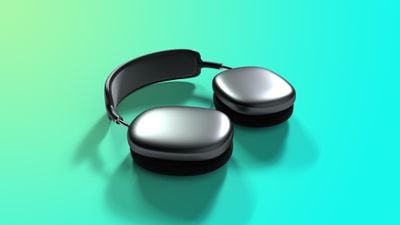
An alleged leaked version of the AirPods Studio
The AirPods Studio will have superior sound quality and Active Noise Cancellation to minimize ambient noise. Other features include equalizer adjustment options available through an iOS device or a Mac, and head and neck detection, which would presumably work like the ear detection in the AirPods but would be able to tell if the headphones are on the head or pulled down onto the neck, pausing content.
An orientation feature may let the AirPods Studio detect the left and right ears for routing audio channels, and there will be no right or wrong side for wearing the headphones.
According to Bloomberg, Apple is working on two designs for the AirPods Studio. One is a higher-end premium model made from high quality materials like leather, while another is more fitness focused and made from breathable, lighter weight materials.
Alleged leaked images of the AirPods Studio show headphones with long oblong ear cups and gray fabric padding at the top of the headband, with the headphones sporting a retro-style look.
Both versions of the AirPods Studio are expected to include magnetic ear cups and headband padding that can be swapped out for a customizable look, similar to Apple Watch bands. There's no solid word on what the AirPods Studio will cost, but rumors have suggested Apple may sell them for around $349.
Apple in June officially announced its work on Arm-based Apple Silicon chips designed for Macs, confirming years of rumors about Apple's transition away from Intel's chips.
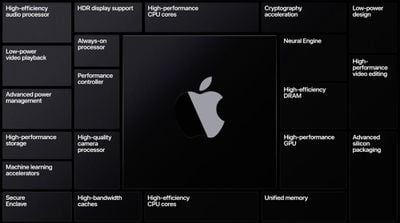
Apple Silicon chips will be similar to the A-series chips used in Apple's iPhones and iPads, with the chips designed in-house by Apple and manufactured by TSMC. Apple Silicon chips will lead to improved performance and more efficient Macs that have deeper integration between hardware and software.
Future Macs will not use Intel's chips, with Apple planning to use its own chips for the entire Mac lineup. The transition to Apple Silicon starts in 2020, and Apple plans to release the first Arm-based Mac before the end of the year.
We don't yet know which Mac will get an Apple Silicon chip first, but there are a few candidates. Rumors suggest Apple is working on a new MacBook Air or a new 12-inch MacBook, so the lower-cost MacBook line could be the first to be updated. It's unlikely we're going to get a new 13-inch MacBook and a revived 12-inch MacBook, so some of the rumors may be confusing one of these machines for another given the similarities.
There are also rumors of a new 14-inch MacBook Pro with an Apple Silicon chip and a redesign similar to the 16-inch MacBook Pro, which could come before the end of the year, and there's also a new 24-inch iMac in the works that will replace the 21-inch iMac.
At least one of the Apple Silicon Macs is coming out this year, and it's quite possible we'll hear something the Mac at Apple's October event. Apple does have a couple more months before the end of the year, though, so it's not a sure thing yet, and Bloomberg just recently said that the first Apple Silicon Macs aren't expected until November.
Bloomberg's Mark Gurman believes the first Mac laptop with an Arm-based processor "will emerge at another launch in November," which perhaps suggests a third November event or a launch through a press release.
Event Coverage
Apple will live stream its October 13 event on the Apple Events website, YouTube, and in the Apple TV app on the Apple TV and other platforms.
Apple is planning to use its retail store locations as distribution centers to ship products to consumers more quickly, reports Bloomberg. This would be a departure from the current strategy that sees products shipped from warehouses or direct from China.
Items that are in stock are now able to be shipped from a network of close to 300 stores across the United States and Canada, and Apple told staff members that this will allow the company to offer faster delivery times for customers who live closer to stores than the distribution centers.
The move to shipping from stores has been popularized by some grocery stores in recent years and has expanded to other retailers. The practice reduces costs, potentially improving product margins, and is beneficial to the environment, Apple told its staff.
Depending on what's purchased, some orders will be delivered as soon as a day after a customer places an order, with Apple planning to ship through FedEx in the United States and United Parcel Service in Canada.
The direct from store shipping will be available to customers who live within 100 miles of an Apple retail location, but customers will not be able to choose a ship-from-store option nor will customers be aware when a device is shipped from a store. Choosing where to ship an item from will be handled internally by Apple's operation team.
According to Bloomberg, Apple started testing the new shipping program with a small number of stores when store locations began reopening earlier this year, and has since expanded it, but not all retail stores in the U.S. and Canada are participating.
Apple on Tuesday plans to announce new iPhone 12 models and a smaller HomePod, plus there are other major products on the horizon such as Apple Silicon Macs and AirPods Studio, so some customers who purchase these devices could see quicker deliveries. Apple in September launched the Apple Watch Series 6 and Apple Watch SE, but most initial orders of these devices appeared to ship direct from China rather than retail stores.
Apple's shift to store-based shipping will provide a way for Apple to make use of Apple retail locations that have remained closed due to the ongoing global health crisis. Bloomberg says that Apple is also considering converting some stores into online support or sales call centers should those stores need to be shuttered again.
Apple is not interested in purchasing short-form streaming video service Quibi, according to a new report from The Information detailing Jeffrey Katzenberg's efforts to sell Quibi.
Katzenberg apparently approached several tech executives, including Apple's software and services chief Eddy Cue, but no one has been interested in buying the Quibi service.
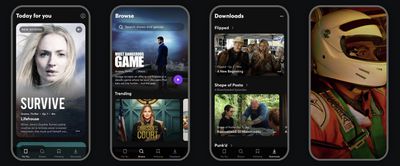
For those unfamiliar with Quibi, it's a short-form streaming video platform that launched in April 2020. It's similar to Netflix or Hulu, but the video content that it features is provided in a shorter 5 to 10 minute format that's designed to be watched on a smartphone in portrait mode.
Quibi spent more than $1 billion on creating original content, leading to more than 175 shows and over 8,000 episodes, but it has failed to gain popularity. In May, Katzenberg said that he believed Quibi's slow start and inability to catch on was due to the pandemic, and said the launch had been "not close to what we wanted."
At the current time, Quibi has around 400,000 to 500,000 paying subscribers (including those who have it free through T-Mobile), according to The Information, well short of the projected 7.4 million subscribers Quibi expected to have in the first year after launching.
Katzenberg also approached WarnerMedia and Facebook, but he has had no luck finding a buyer for Quibi as of yet. Katzenberg has been suggesting a "strategic partnership" to buyers, which would allow him to stay with the company. He believes Quibi has content and connection to top talent, but needs a partner to reach more people.
Unfortunately, Quibi's licensing deals aren't appealing to potential buyers. Quibi's content is exclusive to Quibi for just two years with creators then able to license it to other services, and after seven years, creators get back show ownership. Quibi is also embroiled in a lawsuit with interactive video company Eko, who claims Quibi stole its horizontal/vertical video content technology.
Apple retail stores around the world are receiving shipments of new devices that are likely to be the new iPad Air models, according to Bloomberg's Mark Gurman.
In a tweet, Gurman said that new devices have started arriving at Apple Stores "for opening at a later date." These new devices are likely the iPad Airs that are set to go on sale at some point in October as it's too early for the iPhones to be arriving in stores as of yet.
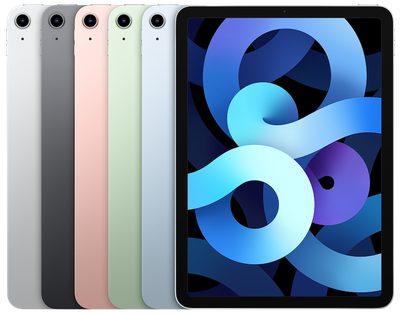
When the new iPad Air models were unveiled during Apple's September 15 event, there was no specific launch date provided beyond October. Because the new iPad Air models use the same A14 chip that's in the iPhone 12 lineup, Apple may have been holding back to prevent benchmarks and details on the chip from leaking out ahead of the iPhone announcement.
If that was the plan, it didn't work and A14 benchmarks leaked out anyway, so we at least know we can expect great performance from both the new iPad Air and the iPhone 12 lineup.
With iPad Air shipments arriving at retail stores, we could potentially see a launch as soon as Tuesday, October 13, after the Apple event, but there's still no concrete word on when the new tablets are coming out.
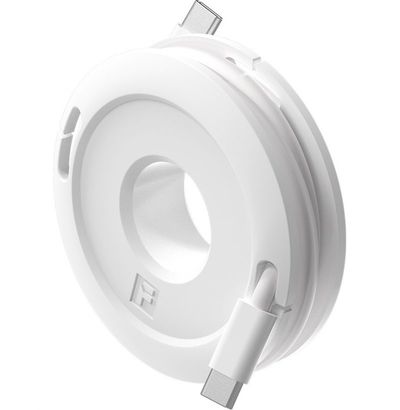
For this week's giveaway, we've teamed up with Fuse to offer MacRumors readers a chance to win a full set of cable organizers for Apple's iPhones, iPads, Apple Watches, and Macs from Fuse.
Fuse used to focus on Mac cable organizing options, but last November, the company came out with a full line of cord management options for Apple's full device lineup, and with many people working from home these days, Fuse's cable wrangling accessories are perfect for keeping home offices neat and tidy.
From the Side Winder that keeps the MacBook Pro's USB-C cable organized to the Watch Side Winder for rolling up the Apple Watch cord and charging, Fuse has something for everyone, and all of the products are on sale for a limited time.
Snap Backs for iPhone, iPad, and MacBook
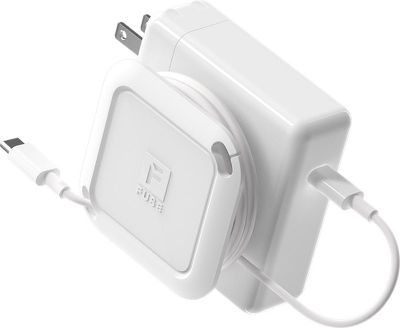
Available for $9.99 to $11.99, the Snap Backs can be purchased for the 12W iPhone and iPad charger, the 18W iPad Pro/iPhone charger, the 5W iPhone charger, and the 29/30W MacBook charger.
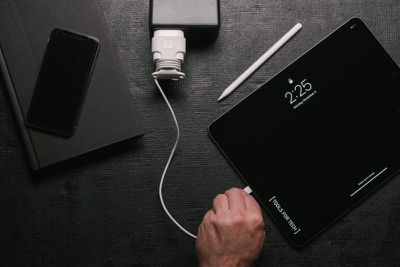
Each Snap Back fits over one of Apple's chargers, with the reel at the bottom used to wind up the cord, so you can pull out as much cord as you need with no excess. It's ideal for travel because you can roll up the entire cord to keep it organized when its tucked in a backpack or bag.
Side Winders for Cables of All Sizes
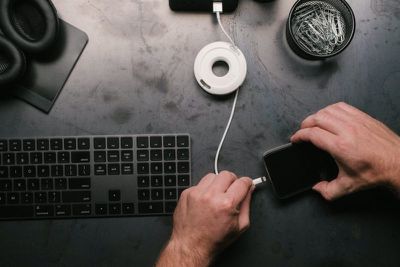
Priced starting at $7.99, Fuse makes small Side Winders for iPhone cables, headphone cables, iPad cables, and more. The Side Winder is donut shaped and lets you roll the cord around the middle portion before securing the end of the cable using the included groove.
The Side Winder Mini ($7.99) is perfect for iPhone cables, micro-USB cables, corded headphones, and more. It can be used with cables one foot to five feet in length.
The Side Winder Max ($8.99) is identical to the Side Winder Mini but it's bigger in size so it works with USB-C cables and can wrap up cables between one foot and 10 feet in length.
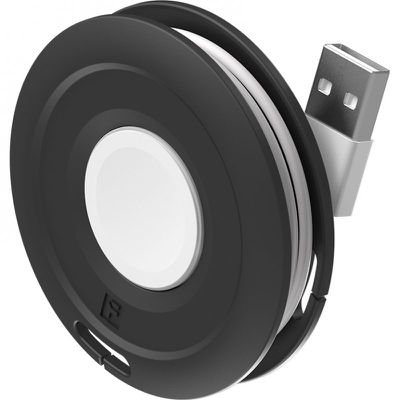
The Side Winder Watch ($8.99) is designed specifically for the Apple Watch. It wraps up the Apple Watch cable and has a cutout in the center for the watch so it can be used as a charging base in addition to a cable management option.
The Side Kick
The Side Kick, priced at $12.99, is designed to work with Apple's MacBook, MacBook Air, and MacBook Pro chargers. It's a little pop out socket that attaches to the side of a MacBook power adapter using adhesive.
When popped out, it can be used to wrap up a MacBook's cord neatly, allowing the power adapter and the cord to be transported with no cable mess. When you're using the cable, the Side Kick pops back in so it adds little bulk to an Apple power adapter.
The Side Winder
Priced at $19.99, the Side Winder is designed for the MacBook Air and MacBook Pro models, and it's meant to wind up both the USB-C (or MagSafe) cable of a MacBook along with the extension cable.
The MacBook's power adapter goes in the center and the two cables wrap up in the reel around it. You can pull out just the right amount of cable so you never have excess cable to deal with. This model is designed specifically for the power adapter with extension, and if you just have a standard USB-C cable for charging and no extension cable (USB-C Macs don't come with them by default) the Side Kick is the better option.
Other Products
If you like Fuse's cable winders and organizers, you might want to check out the company's latest product, the Amp Light, which is on Kickstarter now. The Amp Light is a mounted webcam light designed to make you look your best when working from home, with a design that allows it to be attached anywhere. It won't be out until next year and so it won't be included as an option in this giveaway, but Fuse has discounted versions available for Kickstarter backers.
Enter the Giveaway
We have 10 home office organization setups to give away to MacRumors readers, with each winner able to choose any five cable organizing products from Fuse.
To enter to win, use the Gleam.io widget below and enter an email address. Email addresses will be used solely for contact purposes to reach the winners and send the prizes. You can earn additional entries by subscribing to our weekly newsletter, subscribing to our YouTube channel, following us on Twitter, following us on Instagram, or visiting the MacRumorsFacebook page.
Due to the complexities of international laws regarding giveaways, only U.S. residents who are 18 years or older and Canadian residents (excluding Quebec) who have reached the age of majority in their province or territory are eligible to enter. To offer feedback or get more information on the giveaway restrictions, please refer to our Site Feedback section, as that is where discussion of the rules will be redirected.
The contest will run from today (October 9) at 11:00 a.m. Pacific Time through 11:00 a.m. Pacific Time on October 16. The winners will be chosen randomly on October 16 and will be contacted by email. The winners will have 48 hours to respond and provide a shipping address before new winners are chosen.
Apple is set to host its next event on Tuesday, October 13, where it is widely expected to unveil its iPhone 12 lineup and more, but those waiting for the first Apple Silicon Mac may have to be patient for a little bit longer.
Bloomberg's Mark Gurman today reported that the first Mac with a custom Apple Silicon processor will be announced as part of "another launch" in November. Gurman said this Mac will be a notebook, but rumors have conflicted on whether it will be a new 13-inch MacBook Pro, a new MacBook Air, or a revived 12-inch MacBook.
Gurman previously said the first Apple Silicon Mac would be announced "by" November, but today's wording narrows this down to "in" November, making it unlikely that we will be hearing about Apple Silicon Macs at next week's Apple event.
During its WWDC keynote in June, Apple announced that it will be switching from Intel to its own custom-designed processors for Macs starting later this year, promising industry-leading performance per watt. At the time, Apple said that it plans to ship the first Mac with Apple Silicon by the end of the year and complete the transition in about two years.
Apple Silicon processors are based on Arm architecture, meaning that future Macs will be able to run thousands of iPhone and iPad apps without any recompilation. These apps will be distributed through the Mac App Store, unless a developer opts out.
This week's addition to Apple Arcade is The Survivalists, an island-themed sandbox game where players explore, build, craft, trade, and even train monkeys with up to three friends in a desperate bid to survive.
Available on the iPhone, iPad, Mac, and Apple TV, The Survivalists comes from British game studio Team17, known for games like Overcooked, Worms, and The Escapists.
From the App Store description:
Hunt (or be hunted by!) animals for food and an array of mythical enemies, who aren't necessarily pleased to see you. Get quests from a Mysterious Stranger or find them washed up on the shore. Prepare to trek into a procedurally generated wilderness, with a variety of biomes, for an adventure that's unique to every player.
Apple Arcade is Apple's subscription-based gaming service, priced at $4.99 per month or $49.99 per year. The service provides users with access to over 100 games across the iPhone, iPad, Mac, and Apple TV, with no ads or in-app purchases. The games can be downloaded from the Arcade tab of the App Store with an active subscription.
The Survivalists is also launching on the Nintendo Switch, Xbox One, PlayStation 4, and PC today.
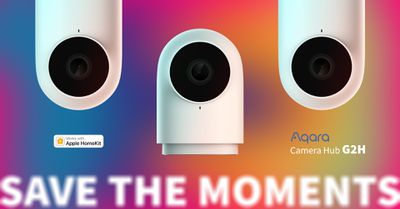
Smart home device company Aqara has today launched the "G2H" home security camera with HomeKit Secure Video support.
HomeKit Secure Video allows the G2H to stream end-to-end encrypted video via Apple's Home app, and the camera will store up to 10 days of footage on iCloud accounts with at least 200GB of space.
Activity detected by the G2H can be analyzed by the HomeKit home hub device to determine if humans, animals, or moving objects are present, and in turn users can receive relevant notifications. The camera also features real-time two-way audio, one-click video messages, 1080p recording, a 140-degree ultra wide-angle lens, IR night vision, and a rotatable magnetic stand.
The G2H can also function as a hub to control all other Aqara sensors and devices. As part of this, the camera creates a unique "Event Timeline," which marks all use of Aqara sensors and devices in the home, so that users can more easily locate a record period on the timeline without fast forwarding through the video footage.
The Aqara G2H is now available on Amazon for $69.99, with a 25% discount until October 15 with the code "AQARAG2H."
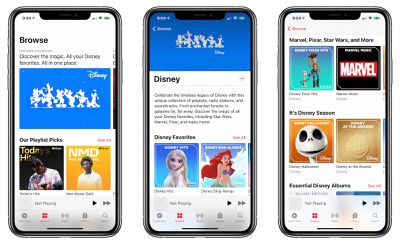
Playlists are available for Disney favorites like Frozen, Disney classics like Mickey Mouse and Winnie-the-Pooh, Disney Channel and Disney Junior shows, Marvel and Star Wars films, the Disney+ series The Mandalorian, and more. There is also a curated playlist of songs played at Disney Parks, like the Magic Kingdom in Florida.
At launch, a Disney Halloween playlist is featured, and content will be updated regularly. The launch also includes a Disney Hits Radio special on the new Apple Music Hits radio station, hosted by Hollywood Records' artist Sofia Carson.
Microsoft's vice-president of gaming, Phil Spencer, has told employees that the company is still intending to bring Game Pass streaming to the iPhone and iPad, according to Business Insider.
Project xCloud was the working title of Microsoft's Game Pass cloud streaming service, which it says is its "vision for game-streaming technology that will complement our console hardware and give gamers more choices in how and where they play." The streaming service is bundled as part of the Xbox Game Pass Ultimate subscription for $14.99 per month, with more than 100 games available.
Despite extensive testing via TestFlight on iOS, xCloud's launch on iOS was indefinitely postponed in August. Apple's App Store rules meant that Microsoft was unable to stream multiple games from the cloud via a single app, because Apple believes that its inability to review each game in the service's library is a potential security risk. Game Pass streaming would only be viable if each game was available as its own app under Apple's rules.
However, Microsoft seems to have renewed its intention to get Xbox cloud streaming on Apple devices using a workaround that would avoid the App Store. "We absolutely will end up on iOS," Spencer told Microsoft employees, according to Business Insider's sources.
Microsoft is reportedly targeting 2021 for the release of a "direct browser-based solution" to get around Apple's App Store restrictions and reach a considerably larger number of potential customers.
At the end of last month, Microsoft began publicly testing a new version of its Xbox app that lets Xbox users play games remotely on their iPhones and iPads using streaming over WiFi.
According to Prosser, three separate sources of his have now confirmed that "AirPods Studio will NOT be in the event." That prediction falls in line with Prosser's claim earlier this week the headphones won't reach mass production until October 20.
Prosser thinks AirPods Studio could instead be announced via press release at the end of the month. It's also worth noting that as of late September Apple stopped selling third-party audio accessories like speakers and headphones, suggesting a new HomePod "Mini" or AirPods Studio launch is imminent.
In addition, Prosser claims the image renders floating about are of the "luxury variant" and will retail for $599, while another "sport-like variant" will be made of cheaper materials for $350, which is notably the same pricing as the current Beats Studio in the Beats lineup.
In another tweet this morning, Prosser says he is being told that Apple has "pushed back the announcement and launch of Apple's AirTags to March 2021." "AirTags" are said to be the name of Apple's Tile-like Bluetooth tracking devices, designed to be attached to items like keys and wallets. These item trackers will let you keep an eye on your possessions right in the Find My app.
For what it's worth, Prosser believes Chinese leaker Kang's information regarding the iPhone 12 and rumored HomePod Mini is accurate, and Prosser may have amended his own claims about AirTags and AirPods Studio in light of their absence from Kang's hefty pre-Apple event leak dump.
Earlier today, Chinese leaker "Kang" shared allegedly accurate information for the products set to be announced at the upcoming Apple event on October 13, including details on the full iPhone 12 lineup.
According to the leaker's information, which was later modified with corrections for product availability timeframes, the 5.4-inch "iPhone 12 Mini" will be available to preorder on November 6 or 7, with a launch date of November 13 or 14.
Meanwhile, the 6.7-inch iPhone 12 Pro Max will allegedly be available to preorder on November 13 or 14, with a launch date of November 20 or 21.
Bloombergbelieves that Apple will stagger the iPhone launches in 2020, while DigiTimes has previously suggested the two 6.1-inch iPhone 12 models could come out first in October, with the 6.7 and 5.4-inch models to follow. Leaker Jon Prosser today has also claimedDigiTimes was correct earlier in the year.
It's worth noting that Apple traditionally doesn't open iPhone pre-orders or launch products at weekends, and some of the initial dates in the two-day timeframes provided by Kang – November 7, November 14, and November 21 – fall on Saturdays. Depending on the time of day when preorders kick off, a Friday in the U.S. could already be Saturday in some parts of the world, although the actual launches typically occur on Fridays no matter the location.
Assuming therefore that Kang's dates are ballpark accurate, preorders for the "iPhone 12 mini" will commence on Friday, November 6 and the device will launch on Friday, November 13 – the same day that pre-orders for the iPhone 12 Pro Max would be expected to commence. Apple's largest ever handset would then launch one week later on Friday, November 20.
With likewise adjustments, pre-orders for the 6.1-inch iPhone 12 and iPhone 12 Pro models could begin on October 16, the Friday immediately following Apple's "Hi, Speed" event, and the first iPhone 12 shipments and an official launch could happen on Friday, October 23.
Of course, nothing is certain, but we'll know for sure when the iPhone 12 lineup is announced at Apple's event on Tuesday, October 13 at 10:00 a.m. Pacific Time.
A Chinese Weibo account going by the name "Kang" this morning posted allegedly accurate information for every product set to be announced at the upcoming Apple event on October 13, including details and launch dates for the full iPhone 12 lineup, and the rumored HomePod mini.
In addition, the original post also claims that Apple will announce a new magnetic iPhone case with "MagSafe" and two official Apple wireless chargers called "MagSafe Charger" and "MagSafe Duo Charger," one or both of which will have a 15-Watt power output.
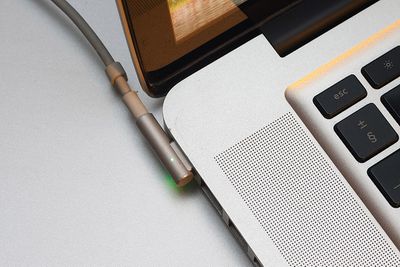
The "MagSafe" brand name will resonate with readers who remember Apple's magnetically attached MagSafe power connector, which first appeared on MacBook Pro models in 2006 but despite its popularity was eventually discontinued across all Apple product lines between 2016 and 2019 and replaced with USB-C.
Back in August, images shared on Weibo that were said to be from the iPhone 12 depict a circular array of magnets in the body of the device. The leak was met with speculation that the magnets could be for alignment purposes should Apple release its own wireless charger.
EverythingApplePro, who shared the images on Twitter, also posted an image of an alleged iPhone 12 case with a similar array of magnets built in, which he suggested are "likely for perfect alignment with Apple's wireless chargers."
For months ahead of their unveiling, last year's iPhone 11 series was rumored to feature a Qi-based device-to-device charging feature, allowing for an Apple Watch, AirPods, and other accessories to charge on the back of the iPhones. The feature was expected to be similar to Wireless PowerShare on Samsung's Galaxy S10. According to Ming-Chi Kuo, however, the feature was abandoned because the charging efficiency did not meet Apple's requirements.
As it stands, Apple hasn't released any native wireless chargers for iPhone. The company canceled its much-anticipated AirPower charging mat last year due to quality concerns. Rumors persist that it continues to work on an AirPower-like charging mat, although faked images have been shared in support of this.
MagSafe power connector on MacBook Pro
Today's comprehensive leak appeared in Chinese and an image of the original post on Weibo has been tweeted by leaker Ice Universe, who has provided accurate information on unreleased Apple products in the past.
A Chinese Weibo account going by the name "Kang" this morning posted allegedly accurate information for every product set to be announced at the upcoming Apple event on October 13, including the rumored smaller form-factor HomePod speaker.
An image of the original post in Chinese has been tweeted by leaker Ice Universe, who has provided accurate information on unreleased Apple products in the past.
According to the leak, the the official name of the speaker is HomePod Mini, which will be priced at $99. The size of the speaker is said to be 3.3-inches high (the height of the original HomePod is 6.8-inches) and it is allegedly powered by an S5 processor, which is used in the Apple Watch Series 5 and Apple Watch SE.
The HomePod Mini is said to go on sale on November 16-17. Bloomberg's Mark Gurman has suggested the new speaker could include two tweeters, rather than the current model's seven, in order to drive down costs.