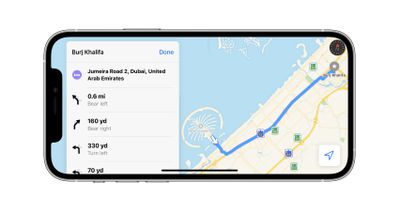
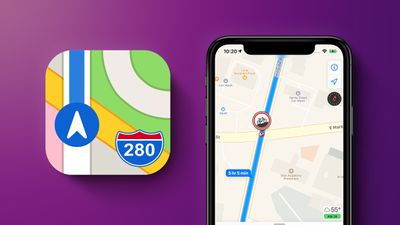
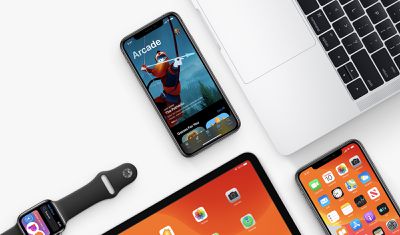
Apple has expanded its turn-by-turn navigation in Apple Maps for the United Arab Emirates. The app now offers more detailed directions for driving and walking, with options to book a ride through Uber also showing within the app.
Still missing for users in the UAE is public transit information, lane guidance and speed limits, although given that the addition of turn-by-turn directions is part of an ongoing improvement to Apple Maps, these are likely to follow.
Rival Google Maps has been the de facto navigation app in the UAE for some time, thanks to its driving, walking, and public transport modes.
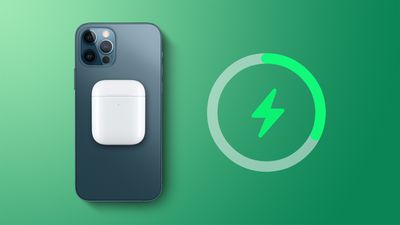
Apple is unlikely to allow devices like Apple Watch, AirPods, and iPhone to wirelessly charge each other "in the near future," according to Bloomberg'sMark Gurman.
In a report outlining the development of MagSafe battery accessories for the iPhone 12 lineup, Bloomberg says that Apple has "internally discussed a goal of letting many of its mobile devices like Apple Watches, AirPods, and iPhones charge each other," however, the report notes that it's unlikely to be launched in "the near future." With the launch of the iPhone 11 series in 2019, Apple was planning, but then later scrapped plans to allow the iPhone to reverse charge AirPods, according to the report.
Earlier this week, evidence discovered by MacRumors in iOS 14.5 hinted at a possible MagSafe battery accessory. Code within the beta software reads, "To improve charging efficiency and maximize available battery life, the battery pack will keep your phone charged at around 90%."
Apple has been researching the ability for devices to charge each other for some time. Patents discovered in January reveal a concept of a future MacBook wirelessly charging an iPhone or Apple Watch on either side of the trackpad. The patent envisions an ecosystem in which devices are reliant on each other for charging, and presumably syncing.
Despite the feature not being officially released, the technology itself is already available within the iPhone 12. According to FCC filings, all models in the iPhone 12 lineup have the ability to reverse charge an Apple accessory on the back. The iPhone would serve as a wireless charging pad for devices with wireless charging compatibility such as the AirPods (second generation), AirPods Pro, and the Apple Watch Series 3 and later.
In theory, Apple could enable the feature with an iOS update, although there's no indication the company will. It could be holding off on enabling the feature until it releases the newly reported MagSafe battery accessories.
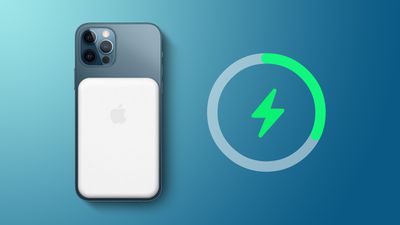
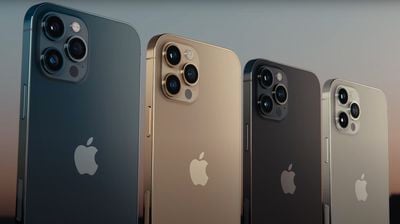
Apple is working on a magnetic battery pack attachment for iPhone 12, according to a new report from Bloomberg's Mark Gurman.
Apple has been developing the attachment for at least a year and it has been scheduled to launch in the months following the release of the iPhone 12 line, according to people with knowledge of the product. The iPhone 12 models were introduced in October.
The battery pack would attach to the back of an iPhone 12 using the MagSafe system, which all the new phones use for charging and pairing other accessories like cases and wallets. Some prototypes of the battery pack have a white rubber exterior, said one of the people, who asked not to be identified because the product isn’t yet public. The new accessory would differ from Apple battery add-ons for previous iPhones in that it only provides additional battery life and doesn’t serve as a full protective case.
Some MagSafe users have criticized the strength of the magnets used by Apple in the iPhone 12 for their perceived weakness and inability to keep MagSafe accessories like Apple's leather Wallet firmly attached, but Apple has reportedly tested to make sure the battery pack's magnetic attachment system is strong enough for the charging unit to stay in place.
However, the accessory's development has reportedly been hindered by software issues, such as the attached iPhone indicating in error that the battery pack is overheating. Apple has also been working to fix problems that arise when the user switches between using the device when a case is on the iPhone and when the case is removed.
In light of these developmental hurdles, the battery pack could ultimately be delayed or scrapped, according to Gurman's sources.
Potential evidence of a future MagSafe battery accessory was recently discovered by MacRumors in a non-specific reference to a battery pack in the latest iOS 14.5 beta. "To improve charging efficiency and maximize available battery life, the battery pack will keep your phone charged at around 90%," read the text.
New ‘Mobile Charge Mode’ in iOS 14.5 beta 2 for an as-yet-unannounced ‘Battery Pack’ and not a case presumedly because it uses MagSafe for charging iPhone 12 devices. Also interestingly it keeps your iPhone charged to 90% for ‘battery efficiency’. https://t.co/CPZXkBXkEcpic.twitter.com/jHHrrz4Qir
— Steve Moser (@SteveMoser) February 16, 2021
According to Gurman, Apple has also weighed up the possibility of other MagSafe accessories internally, including the potential for an in-car attachment, although that product reportedly hasn't made it to formal development.
Apple remains guarded about announcing charging accessories after the AirPower vaporware debacle. Apple publicly announced the device in 2017, but the product never materialized because of problems in development. Apple ultimately cancelled AirPower in March 2019 and apologized that it was unable to deliver a version of the product that achieved its "high standards."
IKEA is rolling out Apple HomeKit support for the Motion sensor and Shortcut button in its TRÅDFRI range of smart home products, according to release notes for an upcoming Gateway software update.
First spotted by Dutch blog iCulture, the next Gateway firmware version (1.13.21) coming down the line will include HomeKit support for the sensor and button, allowing the accessories to be used to operate other HomeKit products.
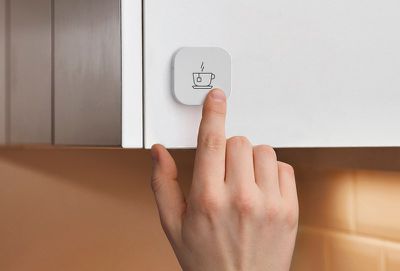
The Shortcut button, which comes with stickers that can be used to indicate their function, will allow owners to quickly activate HomeKit scenes and switch off lights, for example.
It's not clear exactly when the firmware update will propagate for the TRÅDFRI gateway bridge, which allows IKEA smart home products to work with platforms like HomeKit, but the release notes are dated February 18, so it shouldn't be long now before users start seeing the update as available.
The Shortcut button recently became available in Europe, and is expected to make its way to IKEA stores in the U.S. soon.
In an interview with He Shijie, a senior at the Beijing University of Posts and Telecommunications, Apple CEO Tim Cook called 2020 Apple's "top year of innovation ever."
In 2020, Apple released a number of new products, ranging from the iPhone 12 lineup, to brand new iPads, the Apple Watch Series 6 and SE, and of course, new Apple Silicon Macs. Putting all of that together, Tim Cook says Apple innovated in 2020 more than any other year, but notes that "there's no formula for innovation."
Shijie asked Cook about the stress, and process that Apple goes through to release new products every year. The CEO says it's enabled largely by putting people with diverse skills, backgrounds, and passions together, allowing them to do their lives' best work, and that "one plus one has always been more than two at Apple."
What we do is we have a culture of creativity and a culture of collaboration. And these two things together, when they intersect, create enormous innovation. You put people together that have different skills, that look at the world differently, maybe they're from different places, they have different backgrounds. Some are hardware, some are software. Some are services. Some may be musicians and artists. But you put them all together on a common purpose, to design an incredible product, and it is amazing what can come out of it.
On the new iPhone 12 lineup, Cook says Apple's having "an incredible time with it," reiterating comments he made at the company's latest earnings call. Regarding the new Apple Silicon Macs, Cook called the performance of the M1 chip "jaw-dropping," and that "it screams. It's so fast."
Apple's business in China continues to be a backbone for the company. In Q4 of 2020, iPhone 12 sales in the country hit 18 million units, and Tim Cook called the response "phenomenal" earlier last month. Shijie, living in China, asked Cook about whether there are features that are based on customers' feedback from China. Cook named a few, including iOS 13 dark mode, QR readers, specific keyboards, and 5G.
There's a ton of features there that are. Whether it's specific keyboards, whether it's QR Code mode. 5G in a lot of ways was energized in China because China is so far ahead in the coverage model for 5G. Junction view in Maps because of the complex intersections and so forth. Night mode was another one where the inspiration for Night Mode came from China. And so we listen very carefully to our customers there and wind up creating things based on that, that is then given to the world. We get a lot of feedback from China.
Shijie also brought up the subject of his grandmother, who he notes is having a hard time learning how to use an iPhone. He asks Cook what Apple can do to "give wings to the elderly and to the digital world."
Well, we try really hard to design our products for everyone. And we try very hard to design the product like the mind works, so you don't have to have an instruction manual, you can pick it up and it works the way that you would think it would work. We have classes in Apple Retail, where we'd love to train your grandmother on using her iPhone right there in the class. And we have telephone support and so forth for people that need that. But our hope is and our desire is always to design the product in such a way that it works as you would expect it to do, so that no instruction is needed.
The remainder of the interview covers topics such as Cook's past trips to China and his love for interacting with people, the importance of education and expanding access to it around the world, and advice for people who are still seeking to find the job they love. You can watch the interview with English and Chinese subtitles here.
Apple is set to open its second store in South Korea next week in the busy business hub of Yeouido, in Seoul, the company has announced (via the Yonhap News Agency).
Apple will hold a press preview for the new retail location in Yeouido, Seoul on February 24. The store itself is expected to open just a few days following the preview. Apple announced the store in November of last year but provided no further information on an opening, or preview. Apple's South Korean website has been teasing the store for a few months, saying it'll be a "space for everyone to blossom their ideas and creativity" (machine translation):
South Korea's second Apple Store is coming soon in the heart of vibrant, energetic Seoul. Apple Yeouido is designed as a space for everyone to blossom their ideas and creativity. We hope that you will be able to unleash your imagination in this place where you can explore all the possibilities, communicate freely with others, and receive the energy to create something that is not in the world.
The new store will mark the second Apple Store opening in South Korea, following the first store opening in January of 2018. Apple is expected to open more stores in the country with a third store being planned in Myeongdong, a popular tourist hotspot, and a fourth store in the city of Busan, according to Yonhap News Agency.
Apple's iPhone production in India is starting to feel the impact of geopolitical tensions between India and China, due to limitations in the issuances of entrance visas, the South China Morning Post reports.
India and China have been in a state of heightened tension following clashes at the border earlier last year. India has banned a number of Chinese apps, and is now issuing visas to Chinese nationals to enter the country at a slower pace than normal. According to people familiar with the situation, India has been at a near standstill with issuing visas for Chinese engineers, who are needed for Apple suppliers in the country to set up factories or get production underway.
It's important to note that countries around the world have beefed up border control measures amid the global health crisis. The South China Morning Post fails to address the health crisis as possibly being the reason that India has been slow to issue visas. Either way, however, India's tight border control does seem to be hindering production.
The news comes following reports this week that Prime Minister Narendra Modi's government is set to announce a new PLI (performance-linked incentive) scheme to bolster the country's exports of IT products such as tablets, servers, and PCs. Apple's reportedly nudging the government to increase the scheme's budget as it hopes to begin iPad production in the country.
Apple suppliers such as Foxconn and Pegatron have already engaged with the Indian government on past schemes by increasing investment in the country and operating mass production lines for select models of the iPhone. This is all part of an overarching push by Apple to de-prioritize China as its main production hub, and instead move to countries such as India or Vietnam.
Note: Due to the political or social nature of the discussion regarding this topic, the discussion thread is located in our Political News forum. All forum members and site visitors are welcome to read and follow the thread, but posting is limited to forum members with at least 100 posts.
The second season of popular Apple TV+ series "For All Mankind" launched today, with the first episode now available to watch on all devices where the Apple TV app or web access is available.
Developed and written by Ronald D. Moore, "For All Mankind" is a science fiction series that imagines what the world might have been like if the global space race had never ended and the space program had remained a priority in the United States.
Season two of "For All Mankind" picks up in 1983, which is jump of a decade after the first season. It's the height of the cold war, with the U.S. and the USSR fighting over resources available on the moon.
Season two of the space drama picks up a decade later in 1983. It's the height of the Cold War and tensions between the United States and the USSR are at their peak. Ronald Reagan is president and the greater ambitions of science and space exploration are at threat of being squandered as the US and Soviets go head-to-head to control sites rich in resources on the moon. The Department of Defense has moved into Mission Control, and the militarization of NASA becomes central to several characters' stories: some fight it, some use it as an opportunity to advance their own interests, and some find themselves at the height of a conflict that may lead to nuclear war.
Prior to the launch of the second season of "For All Mankind," Apple released a special "Time Capsule" augmented reality app that let users uncover memories from "For All Mankind" astronauts Gordo and Tracy Stevens in the decade between season one and season two.
Join Danny, teenage son of astronauts Gordo & Tracy Stevens, as he examines interactive keepsakes full of details about life, love, and the world of For All Mankind. Every object tells a story: a simple mixtape unveils how young love first began. A home computer holds the secrets to the teens' changing lives. And items as ordinary as a newspaper and answering machine shed light on impactful events in the lives of Gordo and Tracy Stevens, revealing more about the alternate world of For All Mankind and what's coming in season 2.
Apple also this week launched "For All Mankind: The Official Podcast," which will discuss the series as season two progresses. Hosted by Krys Marshall, who plays Commander Danielle Poole, the podcast will feature space experts, former astronauts, and "For All Mankind" cast and creators.
"For All Mankind" stars Joel Kinnaman, Michael Dorman, Wrenn Schmidt, Shantel VanSanten, Sarah Jones, and Jodi Balfour.
Apple CEO Tim Cook tonight announced that Apple plans to donate to local, community-based organizations across Texas to support relief efforts in the state.
Texas has been enduring harsh winter weather this week, with freezing temperatures and snow. The infrastructure has been unable to keep up with energy demands, and power has been out across much of the state.
Our hearts are with everyone across Texas and around the US, including many of our team members, as they endure the impact of the harsh winter storms. Apple will be making a financial contribution to local, community-based organizations to support their relief efforts.
— Tim Cook (@tim_cook) February 19, 2021
Millions of people have been without electricity in cold temperatures, and in some areas, the water has become unsafe due to electrical failures. Pipes have also burst due to the extreme temperatures and lack of heat, leading to flooding in some homes.
Apple often donates money during natural disasters and has donated several times to fund wildfire relief in California over the course of the last year.
Over on our YouTube channel, we have an ongoing video series that's meant to highlight new, interesting, and useful apps for the iPhone and the iPad that we think are worth downloading and checking out.
There are so many apps in the App Store that it can be difficult to find new high-quality apps to download, plus it's easy to overlook awesome apps that are a bit older. Our February picks include apps for customizing your Apple Watch and iPhone, finding and managing Apple Music, keeping track of TV shows, taking notes, and more.
Soor ($4.99) - Soor is a music player that integrates with Apple Music and aims to make it easier to find new music. There are multiple themes, along with full Apple Music controls for searching for content, liking songs, sharing content, and adding songs to playlists. It comes with a set of widgets that can be added to either the Home screen or the Today center, and it has an attractive Now Playing interface.
TV Forecast (Free) - TV Forecast lets you keep track of the TV shows that you're watching, providing an easy way to mark which episode you're on. There are notifications when a new episode is about to air, and you can share progress with friends and family. There's information on actors in TV shows, and you can get recommendations for new shows to watch. TV Forecast is free for five shows, but costs $0.99 per month for more.
Moloko (Free) - Moloko is a theme app that makes it easier to customize your iOS Home screen by swapping out the icons. It offers up a range of themes that have customized icons for both built-in and third-party apps, and they're simple to install so you don't need to use the Shortcuts app and replace icons manually. Note that you will need to install a profile to use the quick icon swapping.
Aviary ($3.99) - Available on all Apple devices, Aviary is a third-party Twitter client that can be used in lieu of the default Twitter apps. It has a simple, clean interface that can be customized the way you like it, plus it supports modern features like polls, hashflags, trends, and more.
Craft (Free) - Craft is a document creation and management tool that you can use for taking notes and organizing your thoughts. It supports Markdown, backlinks, code snippets, images, and videos, and anything you create can be shared via a weblink. Craft is free, but there is a $4.99 per month "Pro" subscription option. The Pro version supports larger file options, offers more storage, and has a version history feature.
BuddyWatch (Free) - BuddyWatch is an app that makes it easier to create new watch faces for your Apple Watch. You can share watch faces, see watch faces designed by other people, and get watch face suggestions based on your preferences.
Kitty Letter (Free) - Designed by The Oatmeal's Matthew Inman, who also created popular game Exploding Kittens, Kitty Letter is a word game where you create words from a jumble of letters to form an exploding cat army to attack your neighbor and defend your home. You can play the single player campaign or go head to head against your friends.
Have a favorite iOS app? Let us know in the comments. We're always looking for new iOS app ideas, and we always check out suggestions from MacRumors readers. You can see our recommendations from previous months, and don't miss our Mac app series featuring great Mac apps worth taking a look at.
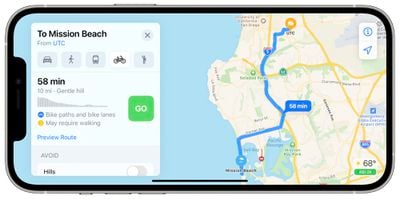
Apple in iOS 14 added cycling directions to Apple Maps, providing specific directions for bike riders with bike lanes, bike paths, and bike-friendly routes that highlight steep inclines, stairs, and other obstacles.
Cycling directions have been limited to a handful of locations since launch, but as of this week, Apple appears to have expanded availability to San Diego, California and Portland, Oregon.
iPhone users in these areas began receiving notifications about cycling directions yesterday. Apple also sent out notifications in the San Francisco Bay Area, New York, London and Los Angeles, where the cycling directions were already available. The notifications may suggest an expansion of cycling direction availability in these locations.
Apple maintains a list of all of the areas where cycling directions are available on its website, but Portland and San Diego have yet to be added. Cycling directions are officially available in China, London, New York, Los Angeles, and San Francisco.
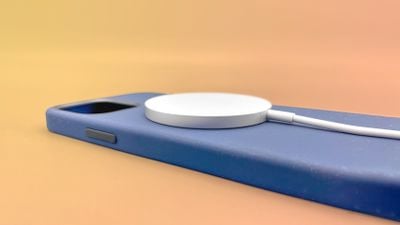
Besides Apple's first-party MagSafe cases, there are a few options for third-party cases that include magnets within each case that are built to align directly with iPhone 12 devices. An iPhone 12 or iPhone 12 Pro placed within one of these cases can then connect to additional MagSafe accessories, like Apple's MagSafe Charger.
Of course, an iPhone 12 within a thin enough case that lacks magnets will be able to attach to other MagSafe accessories as well. For this reason, there aren't many companies who have released iPhone 12 cases specifically with magnets inside for MagSafe, but below we've rounded up a few options from some of the best third-party companies online.
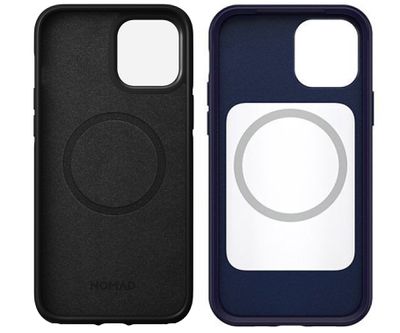
The difference in construction on the cases should be noted as well. Nomad and Moment, for example, have built magnets directly into the backs of each case, similar in style to Apple. Otterbox, on the other hand, places an adhesive sticker inside its cases that acts as the "MagSafe" portion of the accessory. Although they function the same, this design is worth noting. You can see the adhesive strip in more detail in the Otterbox case in our video on the MagSafe Charger.
Nomad
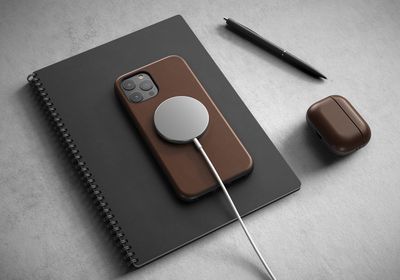
Nomad is the company with the most recent launch for set of MagSafe compatible iPhone cases. It's selling versions of its existing "Rugged" branded cases, now all with MagSafe included in every case.
The new cases are available for all four iPhone 12 models, and include brown, black, and natural color variants. There's also two case styles: the Rugged Leather case or the Rugged Folio.
Rugged Leather cases range in price from $49.95 to $59.95, while the Rugged Folio ranges in price from $69.95 to $79.95. You can find all of the Nomad cases for purchase on the company's website.
Otterbox
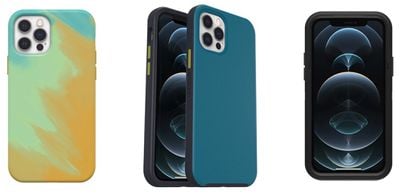
Otterbox has a few iPhone cases with MagSafe, including the slimmer Symmetry Series+ line and the tough Defender Series Pro XT case. This week, when you purchase an iPhone case you can save ten percent by bundling in a screen protector.
Sandmarc's cases easily attach to the company's line of lenses and filters, and are priced at $49.99 in brown and black color options. They're only available for the iPhone 12 Pro and iPhone 12 Pro Max.
Pad & Quill
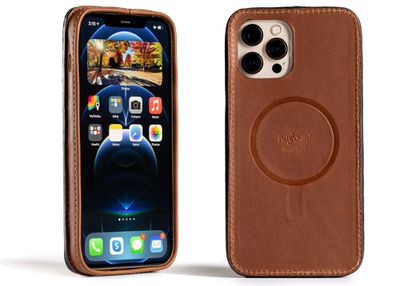
Pad & Quill's line of MagSafe cases include one option made of leather and one made of wood. The Traveler LeatherSafe iPhone 12 case is made from artisan leather with a built-in magnetic ring and a secure tension fit that shapes to the iPhone 12.
It features two-meter drop protection and the design leaves ports and cameras accessible. The volume buttons are functional and accessible through the leather. The Traveler Case is priced from $59.95 to $69.95 and is available for the iPhone 12, iPhone 12 Pro, and 12 Pro Max.
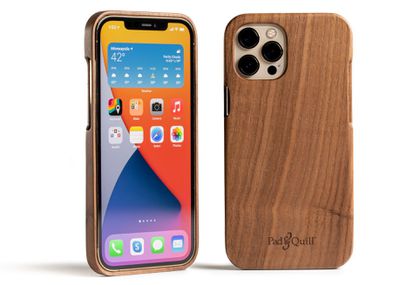
The Woodline Edition iPhone 12 Cases are made from a single piece of walnut or cherry hardwood and have a built-in magnet hidden in the wood case to make them compatible with Apple's MagSafe charger and accessories. The Woodline Case is priced at $49.95 and is available for the iPhone 12, iPhone 12 Pro, and 12 Pro Max.
Moment
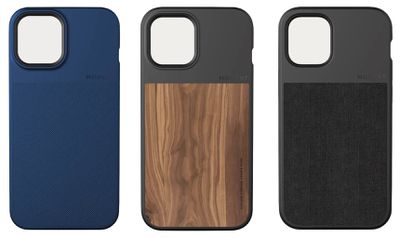
At Moment, you can pre-order a wide selection of iPhone MagSafe cases, with shipping estimates ranging from next week to March. Moment's cases have a built-in magnet array that's compatible with MagSafe.
Additionally, they're built for Moment's line of iPhone photography accessories. Each case has a wrist strap connection on the bottom and includes a drop-in lens mount in order to make them compatible with any M-Series mobile lens sold by Moment.
The full collection of Moment's MagSafe lineup, including mounts and cases, can be found on the company's website.
Cyrill
Cyrill has a few MagSafe iPhone 12 cases priced at $29.99, with designs including semi-transparent cases and premium vegan leather. Be sure to click on the cases that say "MagSafe Supported" to see the Cyrill cases with magnets built into them.
Casely
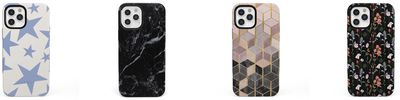
Casely has the most colorful collection of MagSafe cases for the iPhone 12, with the "bold" line of cases including designs like tie-dye, rainbows, florals, polka dot, animal prints, and more. When shopping for these cases, be sure to select an iPhone 12 model and the "Bold + MagSafe" option under "select a case type."
These cases include a built-in magnet that is compatible with Apple's MagSafe accessories. Currently, you can also save 40 percent on the cases by entering the code CAKE at the checkout screen, and Casely offers free shipping in the United States on orders over $20.
SwitchEasy
Lastly, SwitchEasy has a line of "MagEasy" iPhone 12 cases with built-in magnets and compatibility with Apple's MagSafe accessories. You can purchase a MagClear Case ($24.99), MagSkin Case ($29.99), and MagCrush Case ($24.99).
Buyer's Guide
Read our iPhone 12 Cases Buyer's Guide for more information on some of the best cases available for the iPhone 12, iPhone 12 mini, iPhone 12 Pro, and iPhone 12 Pro Max.
Note: MacRumors is an affiliate partner with some of these vendors. When you click a link and make a purchase, we may receive a small payment, which helps us keep the site running.
The University Health Network today announced the launch of a new study that will aim to find out how the Apple Watch can help with the early identification of heart failure progression.
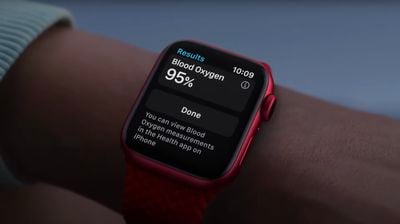
Cardiologist Dr. Heather Ross is teaming up with Apple to compare data collected by the Apple Watch to data routinely collected from the physical tests heart failure patients undergo. The study will determine whether the health sensors and features in the Apple Watch, including the Blood Oxygen app and mobility metrics, can provide early warning signs, and whether patients can perform traditionally clinic-based assessments in their own homes.
Patients from the Peter Munk Cardiac Centre will be asked to participate in a three month active monitoring study, with each patient using an iPhone and an Apple Watch Series 6, which is the Apple Watch model that offers the Blood Oxygen app.
Apple's vice president of Health, Sumbul Desai, said that studies like this and heart health insights have an important role in the evolution of the Apple Watch.
"Surfacing heart health insights has played a key role in the evolution of Apple Watch and we're continually humbled by the responses we hear from users on the impact it has had on their lives," says Dr. Sumbul Desai, Apple's vice president of Health. "We're thrilled to be collaborating with UHN and Dr. Heather Ross to better understand how the powerful sensors in Apple Watch can potentially help patients better manage heart failure, from the comfort of their own home."
Dr. Ross, who is leading the study, said that she believes that biometric data from the Apple Watch "may provide comparable, precise, and accurate measurements of fitness, prognostic markers and early warning signals, compared to traditional diagnostics."
The Apple Watch has been the subject of multiple heart-related studies in the past, including a study Apple did in partnership with Stanford Medicine to determine whether the Apple Watch can detect atrial fibrillation.
The study determined that the Apple Watch can indeed detect irregular heart rhythms, and the Apple Watch has a built-in feature in many countries that allows it to alert wearers when an abnormal heart rhythm is detected. Other Apple Watch-related studies are under way, focusing on asthma, heart failure, early detection of COVID-19, and cognitive decline.
Microsoft today announced the upcoming launch of Office 2021, which is set to launch later this year for both Windows and Mac machines. The 2021 version of the software is aimed at customers who do not want to use the cloud-based Microsoft 365 options.
There's no detail on the features that might be included in Office 2021, but Microsoft plans to support it for five years through its one-time purchase model. More detail will be provided closer to when the software launches.
Office 2021 will be accompanied by Office LTSC (Long Term Servicing Channel), which is a new version of Microsoft Office that's being introduced for commercial customers.
The software is designed for regulated devices that cannot accept feature updates for years at a time or for devices that are not connected to the internet. Like the one-time purchase Office 2021, Office LTSC will be supported for five years.
Microsoft says that it is committed to serving customers who need or prefer one-time purchase software, even though the cloud is where the company invests and innovates.
Apple today shared an updated version of its Platform Security Guide [PDF], providing a comprehensive overview of the latest security advancements across iOS 14, iPadOS 14, macOS Big Sur, tvOS 14, watchOS 7, and more.
For example, the guide provides security details about Safari's optional Password Monitoring feature on iOS 14 and macOS Big Sur, which automatically keeps an eye out for any saved passwords that may have been involved in a data breach. Apple also outlines the security of its new digital car keys feature on the iPhone and Apple Watch.
Apple updated its "commitment to security" preamble, touting the security advantages of Apple-designed chips across the iPhone, iPad, Apple Watch, and Mac:
Apple continues to push the boundaries of what's possible in security and privacy. This year Apple devices with Apple SoC's across the product lineup from Apple Watch to iPhone and iPad, and now Mac, utilize custom silicon to power not only efficient computation, but also security. Apple silicon forms the foundation for secure boot, Touch ID and Face ID, and Data Protection, as well as system integrity features never before featured on the Mac including Kernel Integrity Protection, Pointer Authentication Codes, and Fast Permission Restrictions. These integrity features help prevent common attack techniques that target memory, manipulate instructions, and use javascript on the web. They combine to help make sure that even if attacker code somehow executes, the damage it can do is dramatically reduced.
New sections have been added for Macs with Apple silicon, outlining the security of the boot process, boot modes, startup disk, Rosetta 2 translation process for running Intel-based Mac apps, FileVault, Activation Lock, and more.
As expected, the guide confirms that kernel extensions will not be supported on future Macs with Apple silicon (emphasis ours):
In addition to enabling users to run older versions of macOS, Reduced Security is required for other actions that can put a user's system security at risk, such as introducing third-party kernel extensions (kexts). Kexts have the same privileges as the kernel, and thus any vulnerabilities in third-party kexts can lead to full operating system compromise. This is why developers are being strongly encouraged to adopt system extensions before kext support is removed from macOS for future Mac computers with Apple silicon.
macOS Catalina was the last version of macOS to fully support kernel extensions. Apple says kernel extensions are no longer recommended for macOS, noting that they pose a risk to the integrity and reliability of the operating system.
Starting with macOS Catalina, developers have been able to use system extensions that run in user space rather than at the kernel level. System extensions running in user space are granted only the privileges necessary to perform their specified function, which increases the stability and security of macOS, according to Apple.
Apple includes a document revision history section in the Platform Security Guide with a list of all new and updated information.
Accessory maker Sonnet today introduced the Echo 11 Thunderbolt 4 Dock, which greatly expands a Mac's connectivity options for storage drives, external displays, and more. The dock is equipped with four Thunderbolt 4 ports, four USB-A ports (three 3.2 and one 2.0), one Gigabit Ethernet port, one 3.5mm combo audio jack, and one SD card slot.
The dock is compatible with all Intel-based and M1-based Macs with Thunderbolt 4/Thunderbolt 3 ports, and provides up to 90W of pass-through charging with a single-cable connection. Depending on the Mac, the dock also supports connecting one external display with up to 8K resolution or up to two external displays with up to 5K resolution.
Given that Thunderbolt 4 shares the same connector design as USB-C, the dock can also be used with 2018 and newer iPad Pro models, as well as the fourth-generation iPad Air. It can also connect to USB-C external displays.
Sonnet says the dock will be available in early April in the United States, priced at $249.99, with international availability to follow in May. For a limited time, customers in the United States and Canada may sign up on Sonnet's website to receive a promotion code that will allow them to purchase the dock for $199.99 when it is available.
OWC and CalDigit also introduced Thunderbolt 4 docks recently, priced at $249 and $179.99, respectively, so it's worth checking out all three options. Those two brands also announced availability of Thunderbolt 4 cables today.
Apple today seeded the second public beta of an upcoming macOS Big Sur 11.3 update to its public beta testing group, with the new software coming two weeks after the first public beta.
Public beta testers can download macOS Big Sur 11.3 from the Software Update section of the System Preferences app after installing the proper profile from Apple's beta software website.
macOS Big Sur 11.3 introduces more customization options for Safari, adding a way to rearrange the different sections on the Start Page like Favorites, Reading List, Siri Suggestions, Privacy Report, and more. Developers also have access to a new integration to develop features for the Start Page.
The update includes optimizations for using iOS apps on M1 Macs. When running iPhone and iPad apps on M1 Macs, there's a Touch Alternatives preference pane that allows users to set keyboard commands for touch input alternatives, plus iPadOS apps launch with a larger window if the Mac's display allows it. Touch Alternatives can be enabled for iPhone or iPad apps by clicking on the app's name in the menu bar and then selecting the Preferences option. Touch Alternatives let you customize taps, swipes, and drags.
macOS Big Sur 11.3 also adds support for the latest PlayStation 5 DualSense and Xbox Series X/S controllers for use with macOS games.
In the Reminders app, reminder lists can be sorted by Due Date, Creation Date, Priority, or Title, and there is an option to print lists by going to File > Print. Reminders can also be moved manually across lists with drag and drop, something that wasn't possible before.
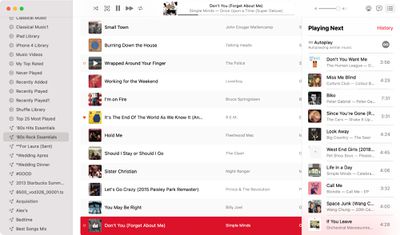
Apple is adding a new "Made For You" library shortcut in Apple Music for finding personal mixes and Replay playlists, and the Listen Now section has been updated with support for highlighting live events. In the second beta, there's a new autoplay feature in the Apple Music app that allows the streaming service to continue to play music after a playlist or music queue ends. Apple Music sources music similar to what's in a person's Apple Music library, similar to the autoplay feature added in iOS 14.
With this feature enabled, Apple Music audio will not end even after a playlist or album is over. To check that it's on, play a playlist or album and then click on the three dot/line menu button in the upper right hand corner. From there, make sure the infinity symbol is toggled on.
In the Apple News app, there's a redesigned Apple News+ tab with a dedicated "For You" section and a new Browse tab that makes it easier to browse through available content. The new For You section is designed to help Apple News+ users find favorite magazines and newspapers much faster, plus it adds new tools for managing downloaded issues.
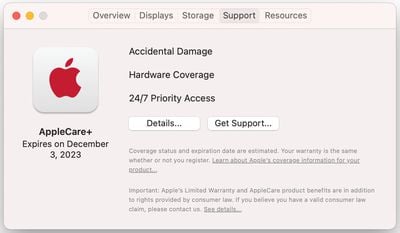
There's also an updated "Support" interface when accessing "About This Mac." The new design includes details on your warranty and it allows for starting a repair right from the Mac interface.
macOS Big Sur 11.3 adds support for HomePod Stereo pairs, allowing a set of paired HomePods to be set as the default sound output option, with the two HomePods showing up as a single selectable speaker rather than separate as in prior versions of macOS.
Code in the update suggests that the Optimized Battery Charging feature will now make sure the Mac's battery is fully charged before a scheduled calendar event. The Mac will charge to 100 percent three hours before a calendar event's start time.
Optimized Battery Charging is designed to preserve the lifespan of the Mac's battery by limiting the amount of time that a Mac sits at 100 percent battery.
In Safari, there's support for WebM video playback, allowing users to play WebM videos using Apple's browser. WebM is a niche video format designed to be a royalty-free alternative to the H.264 codec used in the MP4 format. WebM allows video files to remain small without sacrificing quality and can be played with little processing power, making it ideal for webpages and browsers.
More on macOS Big Sur can be found in our macOS Big Sur roundup. The software is expected to see a release this spring.
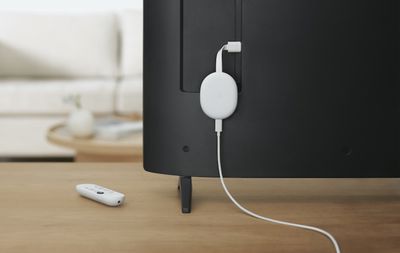
Google today announced that the Apple TV app has launched on the $50 Chromecast with Google TV, which is the latest version of the Chromecast dongle.
Google said in December that the Apple TV app would be coming to Chromecast early in 2021, with the app set to expand to other Android TV devices in the future.
With the Apple TV app now available, Chromecast users can access Apple TV+ content with an Apple TV+ subscription, watch content from Apple TV channels, and access purchased and rented TV shows and movies.
TV shows and movies from Apple TV+ can be added to the Google TV Watchlist, and Google Assistant voice commands are available.