Apple has showcased four design projects created using its products for this year's "Designers of Tomorrow" exhibition in Paris.
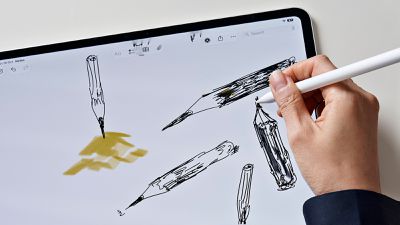
The exhibition explores the theme of presence through furniture and lighting. Architect Salem S. Charabi used a MacBook Pro to sketch and model a lantern, while designer Yoonjeong Lee used an iPad Pro and the Apple Pencil to develop ideas for a combined table and lamp.
Isabel Rower used an iPhone to document her work and Keynote to experiment with visual ideas for a chair featuring ceramic bead fringe. Parafernalia founders Genki Matsumura and Sebastián Zorrilla used Procreate, Messages, and FaceTime to collaborate between Monterrey and Mexico City on a steel piece that opens into a table and stools.
Now in its second year, the program is organized with Design Miami and curated by Rodman Primack. Apple's Molly Anderson helped select the participants as a member of the jury. The exhibition opened at Hôtel de Maisons on October 20. See Apple's full press release for more information.
Apple is continuing to work on 6G, the successor to 5G that's on track to be ready sometime around 2030. Apple has been preparing for the eventual launch of the 6G standard since at least 2020.
Apple is hiring a 6G Cellular Modem Systems Engineer who will "define and build the next generation of cellular technology" as the company transitions to 6G. Apple designs its own modems now, so it will need to be ready when 6G rolls out.
6G is still under development. Spectrum bands haven't been established, and official performance requirements won't be formally approved until later this year. 6G goals include faster data upload speeds, lower latency, and better power efficiency. 5G is already used for home internet, and that will likely expand with 6G.
Companies like Apple, Qualcomm, Nokia, Samsung, and Ericsson are doing 6G research. Apple is a founding member of the Next G Alliance, an industry group established by the Alliance for Telecommunications Industry Solutions (ATIS) to advance 6G in North America.
With just a couple of days to go until the iPhone Duo launches, the first unboxing video has surfaced online from someone who managed to get a device early.
The iPhone Duo ships flat instead of folded, and it is otherwise packaged like any other iPhone.
We've already seen first impressions from members of the media who tried the iPhone Duo in person, but the unboxing video is the first look from outside the press.
We're expecting iPhone Duo reviews to go live as soon as tomorrow, and the device will launch on October 23. New iPhone Duos purchased from Apple's online store won't arrive until January 25, and Apple hasn't said whether stores will have the iPhone Duo for walk-in purchases on the 23rd.
Apple's website is telling people to check back for in-store stock on the 24th, and some Apple retail employees are reportedly being told to warn customers there likely won't be launch-day stock. Apple's websites in Japan, South Korea, and the United Arab Emirates say the iPhone Duo will be limited to customers with a pickup reservation.
Perplexity today said it is updating Perplexity Computer to run fully locally on Mac. The local version runs on Qwen 3.6 or PPLX Pro (a post-trained version of Qwen) in the Perplexity app for Mac on supported Apple silicon Macs.
Perplexity highlights the new Mac mini machines and says 36GB of memory or more is recommended to run locally. With the local setup, the AI model, task planning, reasoning, and file processing are handled on-device. Code and tool execution run in isolated sandbox environments.
Computer can use native apps on the Mac and complete tasks without sending personal data to the cloud. Perplexity says it can work across apps like Notes, Messages, Mail, Keynote, and Numbers.
Perplexity also offers Hybrid Compute, which combines frontier models that run in the cloud with local models to process information privately. It's an alternative for users who want local processing but don't have a Mac that's powerful enough. Hybrid Compute works on Macs with as little as 24GB of memory,
When running Computer locally, if a task requires current information, browser use, or cloud-connected apps, users can authorize cloud access and decide when to spend credits. There's also an option to call on one of more than 15 frontier models for tougher problems when needed.
Local Computer for Mac is available now for Perplexity Pro, Max, and Enterprise subscribers. Users can download Perplexity for Mac and then choose the fully local option to use it.
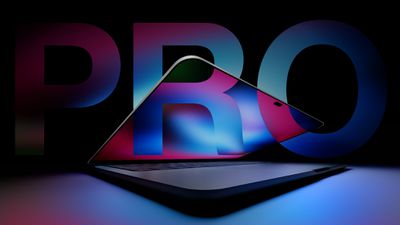
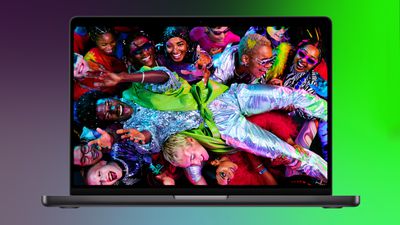
Apple is working on a high-end MacBook Pro, and it's nearly ready to launch. It will have several firsts in a Mac, including an OLED display and a touchscreen.
Design
Apple hasn't redesigned the MacBook Pro since the launch of the M1 Pro and M1 Max models in 2021, so it's due for a new look. The new MacBook Pro is expected to feature some minor design changes. There's only so much you can do in a laptop form factor, but rumors say it will be lighter and possibly a bit thinner than before, which suggests some tweaks to the casing.
Apple plans to get rid of the notch, replacing it with an iPhone-style Dynamic Island. A Dynamic Island could better unify the way Siri AI behaves across the iPhone and the Mac with iOS 27 and macOS Golden Gate, and it will take up less space on the display.
We haven't heard rumors of keyboard or trackpad changes, and neither needs an overhaul.
Size Options
The OLED MacBook Pro will be available in both 14-inch and 16-inch size options. It's not yet clear if it will replace the current models or be sold as a higher-end option alongside them.
Display
Apple's upcoming MacBook Pro will be the first with an OLED display. OLED display technology is already used for the iPhone, Apple Watch, and iPad Pro, but it has taken time for larger-sized OLED screens to come down in price.
OLED will be an upgrade over the current mini-LED display technology in most cases, bringing richer colors and a higher contrast ratio with true blacks. In an OLED display, individual pixels turn off instead of dimming when not in use, so there's less blooming. OLED displays tend to have better HDR than mini-LED, but sometimes don't match the mini-LED brightness levels.
Rumors indicate Apple is using rigid OLED panels with oxide TFT backplanes and advanced tandem OLED structures. Tandem OLED panels are used in the iPad Pro and have a longer lifespan with less burn-in than single-stack OLED panels.
Touchscreen
Along with OLED technology, the MacBook Pro is expected to have the first touchscreen display on a Mac. Users will be able to use their fingers to interact with the Mac's display, similar to an iPad.
Touchscreen capabilities will be used alongside the trackpad and keyboard, suggesting Apple sees touch as supplementary instead of a primary control method. Apple is rumored to be adapting macOS Golden Gate for touch input.
Apple plans to add a reinforced hinge to the MacBook Pro's display so that it doesn't wobble when it's tapped.
Touchscreen Hints in macOS 27
There are features in macOS Golden Gate that hint at a future touchscreen Mac. Apple added direct touch input to Sidecar so users can tap and interact with macOS elements when using the iPad as a Mac display.
macOS Golden Gate supports an iPhone-style pull-to-refresh option, and it can be used across apps like Safari, Mail, News, Podcasts, and Calendar. A pull-to-refresh option makes the most sense on a touch display.
Chips
The current high-end MacBook Pro models are equipped with M5 Pro and M5 Max chips, and Apple plans to use the same chips for the OLED MacBook Pro.
Apple already introduced an M6 chip in the latest Mac mini, and it's expected to appear in a low-end MacBook Pro and an iMac on October 28, but Bloomberg says Apple isn't going to release any other chips in the M6 series. Apple's chip plans changed earlier this year, and the company is now accelerating the launch of the M7 series. The M7 chips feature major neural-processing improvements that will meet demand for machines better able to handle AI tasks.
With no M6 Pro or M6 Max planned, Apple will need to use the M5 Pro and M5 Max so it doesn't have to wait for the M7 series before debuting the OLED MacBook Pro. A second-generation OLED MacBook Pro will use the M7 Pro and M7 Max chips, with that machine planned for late 2027.
Naming
There were rumors that the OLED model would be called the "MacBook Ultra," but that's apparently not happening. Apple's product unveiling has the tagline "Pro and tell," making it clear the new device will keep the Pro name.
Pricing
Apple's OLED MacBook Pro is expected to be a premium product, with a price tag higher than current MacBook Pro models. Apple raised the prices of all Macs in June 2026, so the MacBook Pro could be even more expensive. MacBook Pro pricing went up a minimum of $300 as part of the June price hikes.
The higher-end 14-inch MacBook Pro with M5 Pro chip starts at $2,499 after the price increase, while the 16-inch M5 Pro MacBook Pro starts at $2,999. The M5 Max models start at $4,099 for the 14-inch model and $4,399 for the 16-inch model.
Launch Date
Apple will introduce new Macs on Wednesday, October 28 as part of a "Pro and tell" launch. There won't be a livestreamed event, but some members of the media have been invited to Los Angeles to try out the new devices.
The OLED MacBook Pro could launch as soon as November 6.
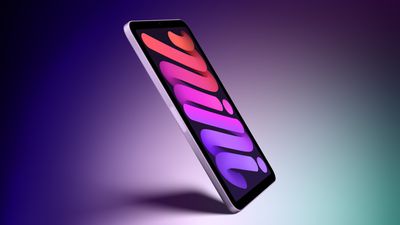
Here are 10 new features and changes expected for the iPad mini 8:
Apple's latest A20 Pro chip, manufactured with TSMC's advanced 2nm process. Expect up to around 1.5× faster CPU performance and up to around 2.5× faster GPU performance compared to the A17 Pro chip in the current iPad mini. A20 Pro also introduces a "dual 16-core Neural Engine" for a total of 32 cores.
With the A20 Pro chip, the next iPad mini will have 12GB of RAM, up from 8GB of RAM in the current model. This means the device will support the ability to customize the pace and expressiveness of Siri AI's voice.
A slightly larger OLED display with better overall image quality compared to the current LCD model, thanks to richer colors and higher contrast ratio with true blacks. Apple has apparently tested both 60Hz and 120Hz (ProMotion) refresh rates for the new model, but it is unclear which option it chose.
Slimmer bezels around the display compared to the current model.
Landscape front camera, meaning the camera will be in the right bezel instead of the top bezel when holding the device in an upright position.
Apple's custom-designed N1 chip with Wi-Fi 7 and Bluetooth 6 support.
Apple's custom-designed C1X or C2 modem for cellular configurations.
A redesigned speaker system with no speaker holes and potentially an iPhone earpiece-like speaker in the top bezel.
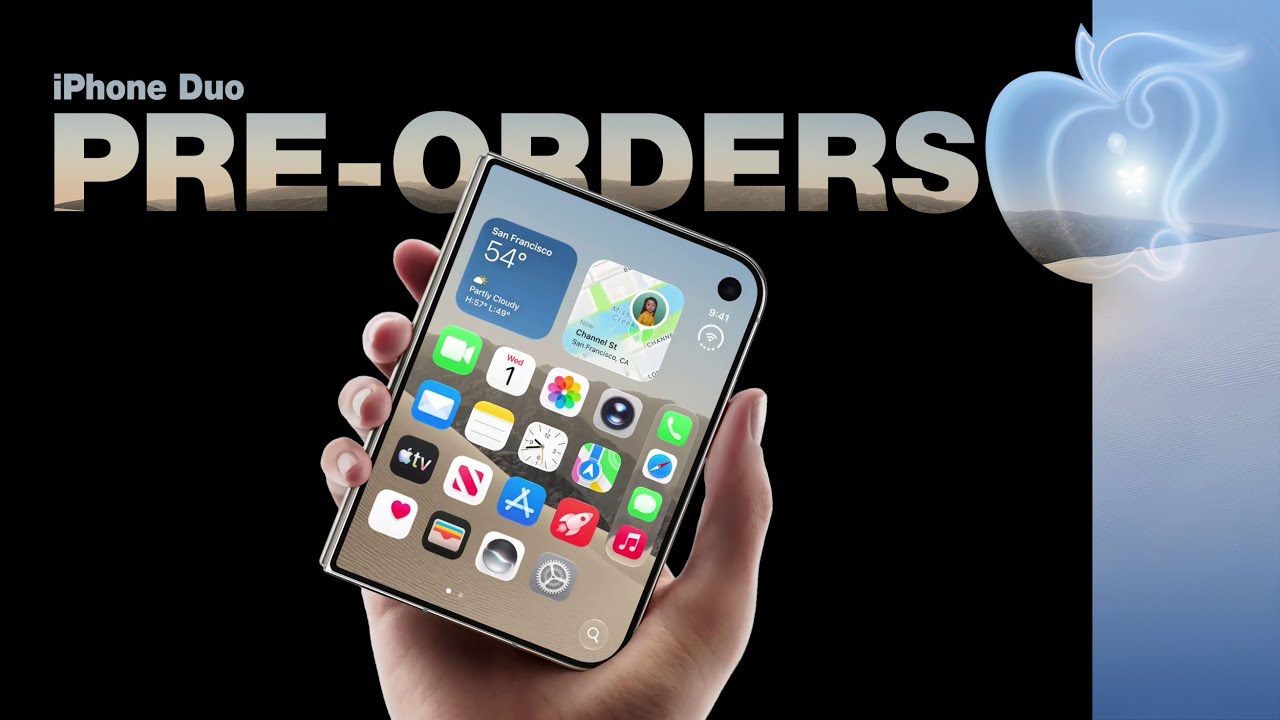
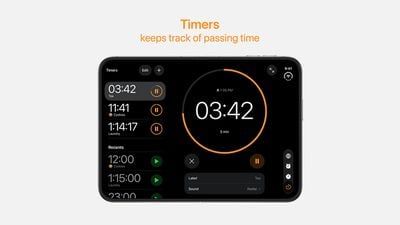
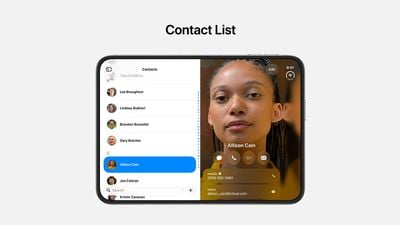
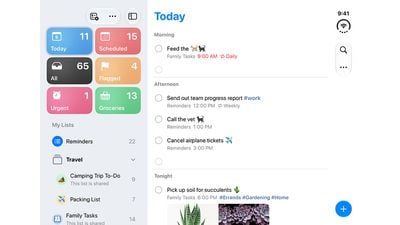
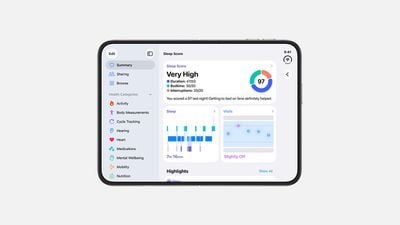
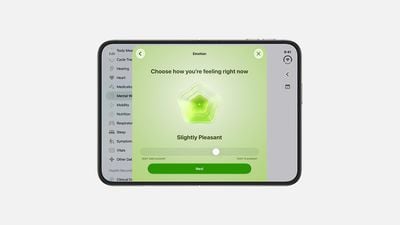
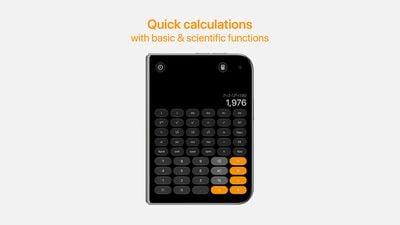
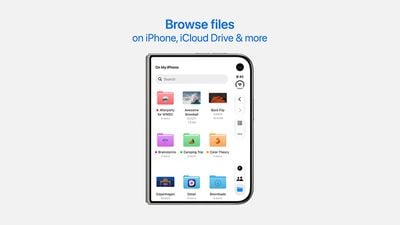
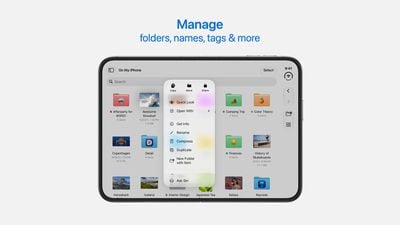
With just three days to go until the iPhone Duo is released, Apple is getting ready for the launch. Behind the scenes, the App Store now has screenshots of Apple's built-in apps running on the Duo. We've seen some apps in marketing materials, but images of the ones we haven't seen give us an idea of what it will be like using the iPhone Duo day to day.
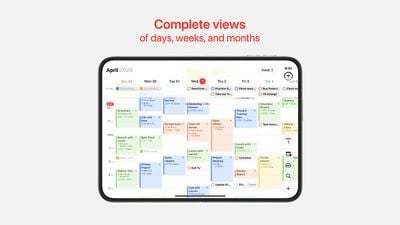
Many apps are shown in landscape orientation with an iPad-like interface that uses some of the screen real estate for sidebar navigation. Other apps use the full screen for more viewing space.
Some apps have a dual view that goes beyond sidebar navigation. In Contacts, the app is divided into a list of names and a view for editing information.
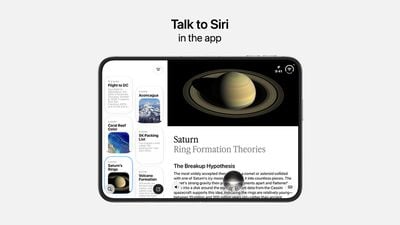
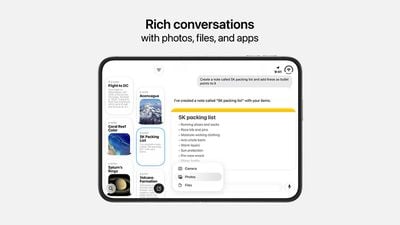
The Siri app doesn't have a traditional sidebar, but it also doesn't get a full split. The left part of the interface is a tiled view of conversations, while the full conversation can be viewed on the right.
The iPhone Duo adopts a vertical dock and vertical navigation bars on the right side of the display in both open and closed views. The exception is an open view with the iPhone Duo held vertically, similar to an iPad in portrait orientation. When positioned that way, navigation bars remain at the bottom of the interface.
Apple's screenshots don't show many apps in the unfolded vertical orientation, but it is a viewing option. Apple says it's ideal for apps that use the keyboard or for browsing in Safari.
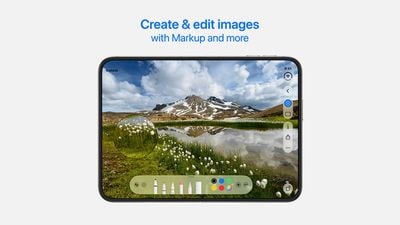
Apps like Preview have palettes at the bottom for selecting tools, and those are combined with sidebars, navigation bars, or both. Markup editing gives a good preview of what drawing and photo editing apps will be like, with a large amount of display space paired with a bottom tool palette.
Apps that don't need large navigation bars have widescreen views that take up the whole display. Apps that do have navigation bars have an option to tap to hide the bar.
Floating popovers show up when you press and hold on an icon. The popovers aren't scaled up and take up less room on the display than they do on Apple's smaller iPhones.
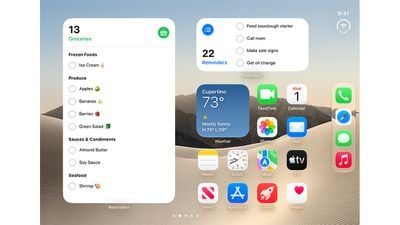
When you're on the Home Screen, you'll see the Today view on the left of the display with your widgets, while app icons are on the right. The status bar is in the upper-right corner, and the Lock Screen icons like Flashlight and Camera are in the bottom right. The inner display doesn't have an always-visible Dynamic Island because there is no Face ID and the FaceTime camera is under the screen. Apple is still using the Dynamic Island, which expands out from the side of the display for Live Activities and alerts. The outer display has a small vertical Dynamic Island that includes the camera cutout.
Most of the App Store screenshots have the iPhone Duo unfolded in landscape orientation, though some also show what apps will look like on the smaller outer display.
Apps will be able to transition quickly from open to closed and to different positions, and Apple made an effort to keep navigation buttons in the same place for a unified experience no matter how you're using it.
Open and closed aren't the only options for the iPhone Duo. Few screenshots show the positions, but the Duo can be used laptop-style at an angle for watching videos or standing in a tent shape with the outer display visible. You can also use it partially open and held like a book.
Screenshots also don't show two apps used side by side or multiple windows of the same app like Safari, both of which are options. We'll see a deluge of iPhone Duo updates for third-party apps when the device comes out.
The iPhone Duo is launching on October 23, which is this Friday. We should be getting media reviews and first impressions as soon as tomorrow since we'll be two days out from release.
In a support document that it has since deleted, Australian carrier Telstra said RCS support would be available starting with an iOS update coming in December. If this timeframe remains accurate, then iPhone users with Telstra will likely be able to use RCS in the Messages app starting with iOS 27.3.
RCS has many benefits over the traditional SMS standard for text messaging with Android users, including end-to-end encryption, read receipts, typing indicators, in-line replies, and more. Apple maintains a list of supported carriers.
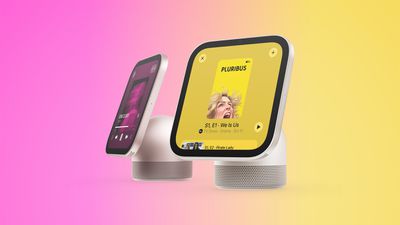
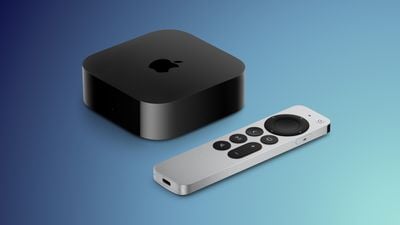
The new fourth-generation Apple TV 4K announced last week can connect to up to four HomePods in front-left, front-right, rear-left, and rear-right positions, enabling an all-Apple surround sound system for home theater setups. There is also a related new feature that has not received as much attention: Whole Room Audio.
Apple says the Whole Room Audio feature spreads sound evenly across four HomePods in a room.
"Whole Room Audio spreads sound evenly across four HomePod speakers for audio that's perfect for parties or game day," says Apple. "Everything from music to sports commentary comes through clearly, no matter where you are in the room."
According to the user "pdfu," who has been digging into Apple's software code in recent months, "Surround Sound" and "Whole Room Audio" will be separate options in tvOS 27.2's audio settings when four HomePods are connected to the new Apple TV 4K.
You'll get new audio controls when you set up four HomePods with the new Apple TV.
Speaker Mode: Surround Sound or Whole Room Audio.
Specifically for Surround Sound: • Spatialize Stereo: Control whether to play a spatially processed mix for video and music. As reported in September, when disabled, normal stereo plays on the front speakers, while rear speakers receive an empty mix. Defaults to On for Video and Music. • Surround Level: Adjust the rear pair relative to the fronts. Supports −8 dB through +8 dB, in 0.5 dB steps. Defaults to Normal (0 db).
There are no audio options for Whole Room Audio, as it uses stereo channels for both speaker pairs. The channels are assigned diagonally: front-left and rear-right share the left channel, while front-right and rear-left share the right channel.
— pdfu (@itspdfu) October 19, 2026
When enabled, "pdfu" said Whole Room Audio assigns the same left or right stereo channel to HomePods positioned diagonally opposite each other. This arrangement is designed to provide a more consistent stereo listening experience throughout a room, regardless of where you are standing or which direction you are facing. As mentioned by Apple, the feature is ideal for parties, where people might not always be facing the TV.
"Whole Room Audio" was previously referred to as "Party Mode" in rumors.
You can connect four of the new HomePod mini 2 speakers to the new Apple TV 4K, or you can mix and match pairs of HomePod mini 2 and full-sized HomePod 2 speakers, so long as the front and rear pairs of speakers match. For example, you can have two full-sized HomePod 2 speakers up front and two HomePod mini 2 speakers in the rear.
Previous-generation Apple TV 4K models remain limited to two HomePods for stereo sound.
The new Apple TV 4K launches on Friday, November 13, while the HomePod mini 2 launches on Friday, October 30. Both devices can be pre-ordered now.
As reported by 9to5Mac, Apple is now selling parts for the iPhone 18 Pro, iPhone 18 Pro Max, new Mac mini with M6 and M5 Pro chips, and new Mac Studio with M5 Max and M5 Ultra chips on its self-service repair store in the U.S., Canada, and Europe.
After ordering parts and tools, customers with the know-how can follow the steps in Apple's repair manuals for each of these devices, allowing them to skip a visit to the Apple Store's Genius Bar or an Apple Authorized Service Provider.
Following an initial wave of pre-order discounts last week, Amazon's $9 discount on the HomeView quietly disappeared. Today, the small pre-order discount has returned for the Rose Pink color, allowing you to get the home hub for $289.99, down from $299.00.
Note: MacRumors is an affiliate partner with some of these vendors. When you click a link and make a purchase, we may receive a small payment, which helps us keep the site running.
Although only a $9 discount, this is the first deal we've seen on the HomeView, and as of writing only Amazon is offering any sort of discount on the device. Amazon's delivery estimates have begun stretching into late November, past the HomeView's launch date of November 13.
In terms of pre-order discounts, Amazon also has the new Apple TV 4K for $289.99, down from $299.00, with an estimated delivery date on launch day of November 13. This beats Apple's current delivery estimates, which have slipped into late November/early December, so it's a great chance to save a little money and get the Apple TV 4K on the 13th.
If you're on the hunt for more discounts, be sure to visit our Apple Deals roundup where we recap the best Apple-related bargains of the past week.
Deals Newsletter
Interested in hearing more about the best deals you can find as we head into the holidays? You can sign up for our Deals Newsletter and we'll keep you updated so you don't miss the biggest deals of the season!
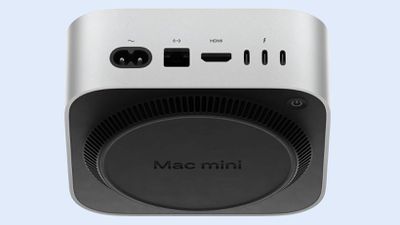
In a press release focused on its latest American Manufacturing Program commitments today, Apple reiterated that Mac mini assembly in the U.S. will begin later this year, with Foxconn expected to build the computer at a facility in Houston, Texas.
In an interview earlier this year, Apple's operations chief Sabih Khan said that Mac mini units assembled in the U.S. would primarily serve the U.S. market, while production would continue in Asia for orders placed abroad.
Note: This discussion thread is located in our Political News forum with special rules.
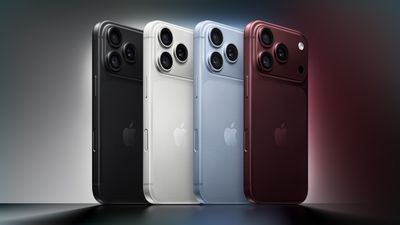
Apple today announced new and expanded partnerships with two U.S. companies for iPhone Duo and iPhone 18 Pro components and materials.
Through its existing American Manufacturing Program, Apple said it will commit up to $100 million over the next three years to Pennsylvania-based manufacturer Perryman, which produces titanium used in iPhone Duo enclosures.
In addition, Apple said Delaware-based Qnity Electronics will produce "advanced films" for the variable aperture camera system on the iPhone 18 Pro models.
"American ingenuity is vital to all our products, from the titanium crafted for iPhone Duo to breakthrough camera innovations in iPhone 18 Pro," said Apple's operations chief Sabih Khan. "We're proud to work with Perryman and Qnity Electronics to continue expanding our American Manufacturing Program and support U.S. jobs."
Apple said U.S. companies produce nearly 100 components in the iPhone Duo and iPhone 18 Pro.
By the end of 2026, Apple said all of the cover glass for all iPhone and Apple Watch models sold worldwide will be produced by Corning in Kentucky.
Apple CEO John Ternus highlighted this U.S. manufacturing announcement in a post on X today.
Note: This discussion thread is located in our Political News forum with special rules.
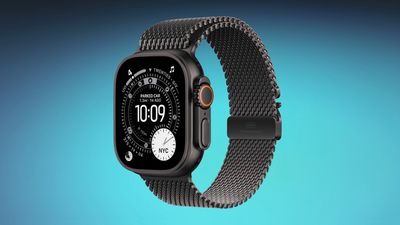
Amazon today has the Black Apple Watch Ultra 3 with the Black Milanese Loop (Large) for $599.97, down from $899.00. This is a massive $299 discount on the previous-generation device, and it comes in around $100 cheaper than the last time we saw this model on sale.
Note: MacRumors is an affiliate partner with some of these vendors. When you click a link and make a purchase, we may receive a small payment, which helps us keep the site running.
If you're shopping for the regular models, you'll find numerous discounts at Amazon and Best Buy this week. You can get the Black and Natural Apple Watch Ultra 3 for $649.00, down from $799.00, which is over $100 under the current sale price of the Ultra 4.
Best Buy has quite a few Apple Watch Ultra 3 models at this low price tag, with both delivery and in-store pick-up options available this week. If you're looking for a detailed breakdown on the similarities and differences between the Ultra 3 and Ultra 4, you can check out our Apple Watch Ultra 3 vs. Ultra 4 Buyer's Guide.
If you're on the hunt for more discounts, be sure to visit our Apple Deals roundup where we recap the best Apple-related bargains of the past week.
Update: This deal has expired.
Deals Newsletter
Interested in hearing more about the best deals you can find as we head into the holidays? You can sign up for our Deals Newsletter and we'll keep you updated so you don't miss the biggest deals of the season!
Apple will announce a second wave of new products on Wednesday, October 28. Like the October 13 "Welcome Home" announcement, "Pro and Tell" isn't going to be a traditional Apple event, but some members of the media have been invited to Los Angeles to get hands-on time with the new devices.
Everyone not invited to Los Angeles will get to see the product announcements via press releases that come out on October 28. Apple could send out press releases at 10:00 a.m. Pacific Time, which is when the media experience will begin. Press release announcements typically come out earlier in the morning around 9:00 a.m. Eastern Time, so that's also a possibility.
The "Pro and Tell" name gives us a strong hint at what's coming: the MacBook Pro. It will be joined by other new Macs and a new iPad.
OLED MacBook Pro
New high-end MacBook Pro models are coming with two firsts for the Mac line: OLED display technology and a touchscreen. Design changes are expected too, but the new MacBook Pro models are going to use the same chips as the current version.
OLED - The MacBook Pro will have an OLED display for improved contrast, richer colors, and power savings.
Touchscreen - macOS 27 is being updated for touch-based gestures, and the MacBook Pro will be the first Mac that has touchscreen capabilities. Touch will be available as a supplementary option alongside the trackpad and keyboard, so you can presumably opt not to use it at all.
Reinforced hinge - Apple is adding a sturdier hinge for support so the display won't move when you tap on the screen.
Design - There's only so much that can be changed when it comes to a notebook computer, but the MacBook Pro will be lighter than the current model. Sizes aren't expected to change, and OLED screens will be available for both the 14-inch and 16-inch models.
Dynamic Island - Apple is getting rid of the notch and will add a Dynamic Island instead.
Chips - Apple isn't adding new chips because there aren't any. The company is reportedly skipping the M6 Pro and M6 Max, and the M7 Pro and M7 Max won't be ready until late 2027. Rumors suggest the new models will use the same M5 Pro and M5 Max chips as the models introduced in March.
Apple might keep selling the current MacBook Pro models and add the OLED models as a higher-end, more expensive option. While there were rumors suggesting the OLED MacBook would be called the MacBook Ultra, it's now clear Apple is sticking with Pro.
OLED displays are expensive, and touch modules also add cost, so the OLED MacBook Pro models will likely cost more than the current MacBook Pro models.
Entry-Level MacBook Pro
The 14-inch entry-level MacBook Pro is expected to get an M6 chip to replace the M5 chip it was updated with in October 2025. No other design changes are expected.
iMac
Rumors suggest Apple will update the 24-inch iMac with an M6 chip too. As with the entry-level MacBook Pro, it won't get external changes.
iPad mini 8
Along with the new Macs that are coming, we're expecting an iPad mini update. The iPad mini 8 is going to get an OLED display, making it the first iPad other than the iPad Pro to adopt OLED.
It's also going to get a design refresh with a vibration-based speaker setup that eliminates speaker holes and allows for a more water-resistant design. It could be the first iPad with an IP rating, able to hold up to splashes and possibly even submersion.
The iPad mini 8 is expected to use the same A20 Pro chip that's in the iPhone 18 Pro models. It's so far unclear whether the iPad mini will continue to have a 60Hz refresh rate or if it will get a 120Hz ProMotion upgrade. The front camera will relocated from the portrait side to the landscape side, a change Apple previously made in other iPad models.
Waterproofing and OLED are expected to push up the price, so the new model could cost around $200 more than the current $599 model.
Launch Date
After an October 28 debut, the new Mac and iPad options could launch as soon as November 6. If this launch goes like the home product launch, the devices will be available for pre-order starting on October 28.
Apple is only allowing customers in the United States to purchase a maximum of two iPhone Duos. Attempting to purchase more than two on the website or the Apple Store app gives the following notice: "A maximum of 2 iPhone Duo can be purchased per customer. Please adjust the total quantity of iPhone Duo in your order before checking out."
Some Reddit users describe the U.S. purchase limit as new, but we couldn't confirm if it was in place when pre-orders started on October 16. The Reddit thread has reports from customers claiming to have been able to purchase four Duos and from those who say they were limited to two.
Apple had clear two-per-customer restrictions listed in countries like China, Singapore, and Hong Kong, but the U.S. website doesn't mention the limit until you try to add more than two Duos to the cart.
Launch day delivery stock sold out within minutes of pre-orders going live, and many customers received delivery dates in November or December. Apple has been moving up some delivery dates, so it may be able to fulfill demand earlier than expected for some customers who pre-ordered early.
Apple acquired AI audio editing app Samplab in June, according to a notice shared today by the European Commission.
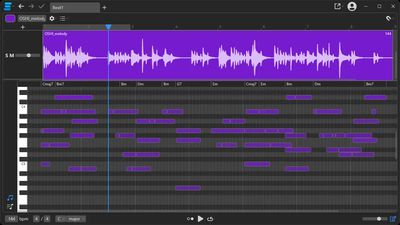
Samplab offered a desktop app and plugins for converting audio to MIDI, detecting and editing chords, stem splitting for isolating different parts of a song, and editing notes in polyphonic audio without affecting the timbre of the original.
Apple could fold the company's tools into Logic Pro or GarageBand. Logic Pro already has Stem Splitter and Chord ID, but polyphonic note editing would be new.
The filing says Apple acquired "certain assets" from Samplab and hired "certain Samplab employees." Apple is considered a "gatekeeper" in the European Union, and the Digital Markets Act requires it to inform the EC about deals involving core platform services, digital services, and data collection.
Samplab shut down on September 17, 2026. The Samplab website now redirects to Apple.com.
The free browser extension allows Safari users to block ad trackers to prevent companies from spying on your web browsing and tracking you across the web.
Privacy Badger has been available on other platforms like Chrome, Edge, and Firefox, but it is new to Safari. It requires Safari 26.5 or later.
The EFF says Privacy Browser can automatically learn to block hidden trackers on the web. It uses algorithmic methods to determine what is and isn't tracking, and it doesn't block ads unless those ads are also trackers.
Safari already limits the amount of information that trackers can access, but it lets trackers load. Privacy Badger blocks the trackers from loading and techniques that bypass Safari's protections don't work.
The extension is also able to block cookies and remove link click tracking from outgoing links on Facebook and Google.
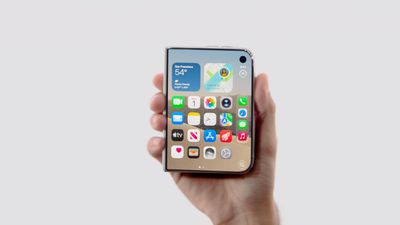
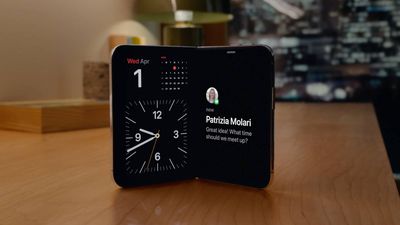
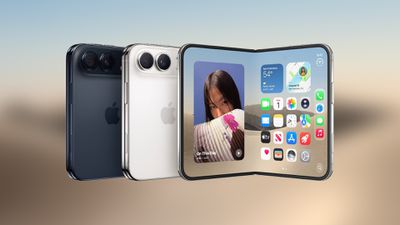
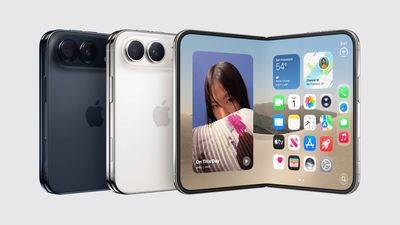
Apple's first foldable iPhone, with a book-style design featuring a 5.4-inch outer display and a 7.6-inch inner display with a minimal crease down the middle.

















 In a
In a 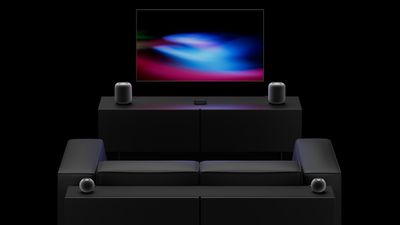
 As reported
  In a press release focused on its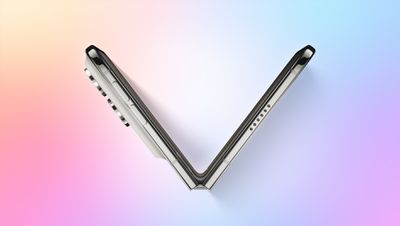
 Note: MacRumors is an affiliate partner with some of these vendors. When you click a link and make a purchase, we may receive a small payment, which helps us keep the site running.